


























Views
Plays

Fiction Elements Worksheet | Grade 3 ELA Printable
Paste this activity's link or code into your existing LMS (Google Classroom, Canvas, Teams, Schoology, Moodle, etc.).
Students can open and work on the activity right away, with no student login required.
You'll still be able to track student progress and results from your teacher account.
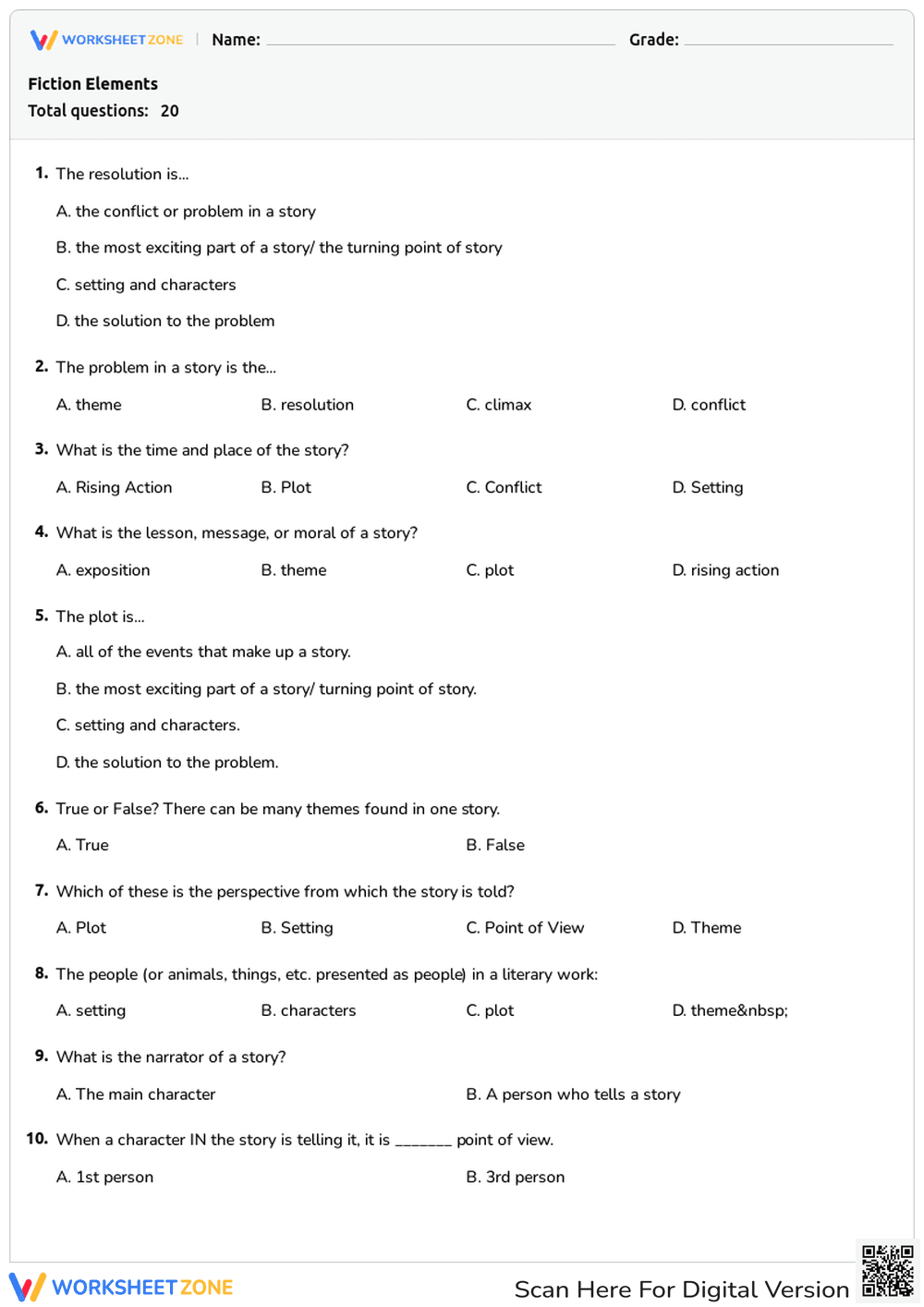
This comprehensive fiction elements worksheet helps third-grade students identify key story components and construct accurate summaries. By evaluating characters, settings, themes, and plot points, learners build the foundational reading comprehension skills necessary to analyze literature and understand narrative structures effectively.
At a Glance
- Grade: 3 · Subject: ELA
- Standard:
CCSS.ELA-LITERACY.RL.3.2— Recount stories and determine the central message or theme.- Skill Focus: Elements of Fiction and Summarizing
- Format: 3 pages · 20 problems · Answer key included · PDF
- Best For: End-of-unit assessment or review
- Time: 25–35 minutes
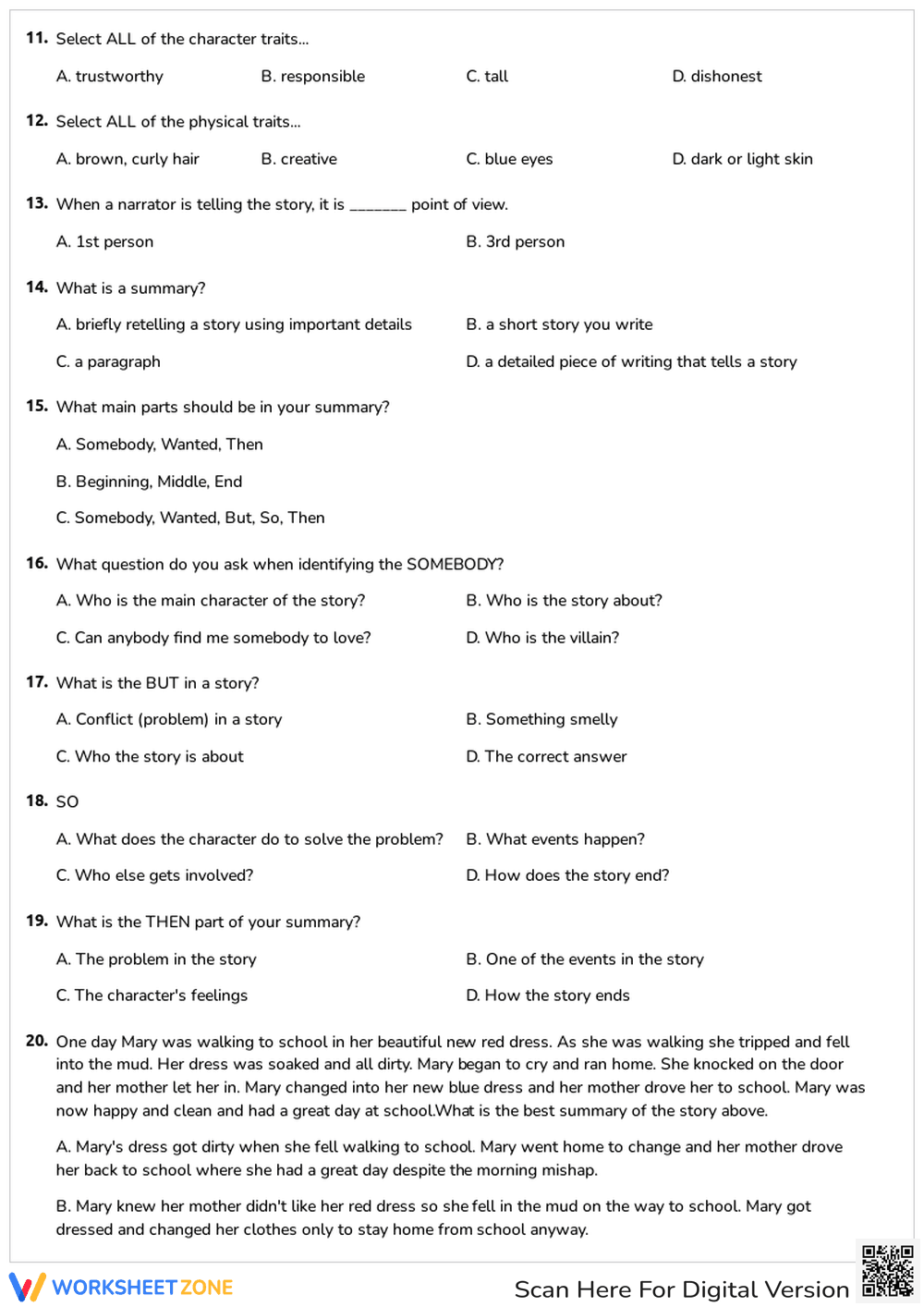
This resource features 20 multiple-choice questions spanning three pages, designed to thoroughly assess a student's grasp of literary elements. The task types include vocabulary matching for terms like climax and resolution, identifying character traits, and applying the "Somebody, Wanted, But, So, Then" framework to summarize a short passage. A complete answer key is provided for quick and accurate grading.
- Guided practice: The first section introduces foundational vocabulary, asking students to define basic terms like setting, plot, and theme with straightforward options.
- Supported practice: Students transition to identifying specific character traits and point-of-view concepts, requiring them to apply definitions to literary concepts.
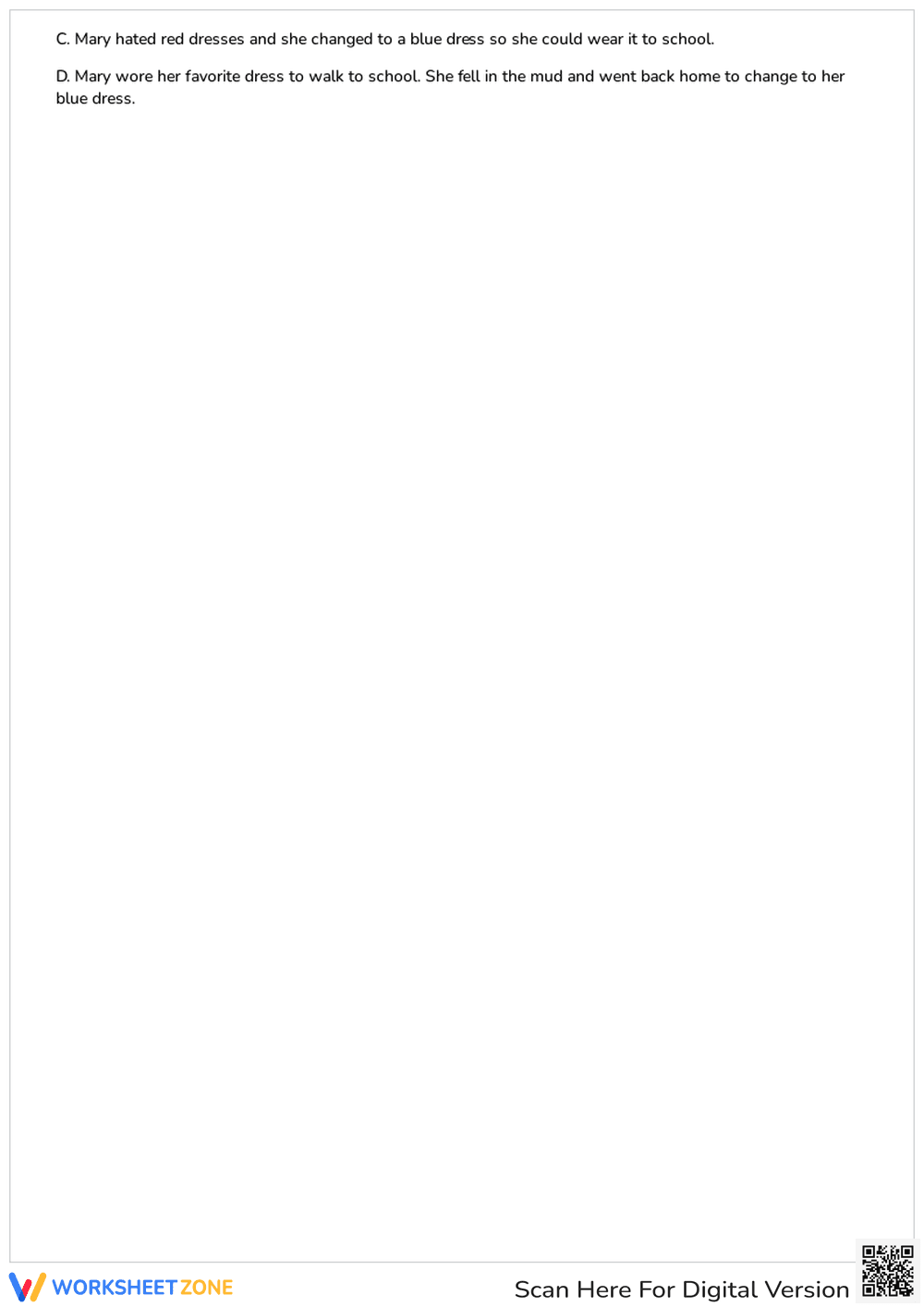
- Independent practice: The final questions demand higher-order thinking as students read a short narrative and select the most accurate summary using the SWBST method.
This structured approach mirrors the I Do, We Do, You Do gradual-release model, ensuring students build confidence before tackling complex reading passages.
Aligned to primary standard CCSS.ELA-LITERACY.RL.3.2, this activity requires students to recount stories and determine the central message, lesson, or moral. It also supports CCSS.ELA-LITERACY.RL.3.3 by having learners identify character traits and motivations. Both standard codes can be copied directly into lesson plans, IEP goals, or district curriculum mapping tools.
Deploy this worksheet as a summative assessment after direct instruction on story elements, or use it as an independent review packet during literacy centers. While students work, teachers can use the summary questions as a formative assessment observation tip to see if learners are struggling to distinguish between minor details and main events. Expect students to complete the full question set in 25 to 35 minutes.
This material is designed for third-grade general education students, though it serves as an excellent review for fourth graders needing foundational reinforcement. For differentiation, teachers can read the final passage aloud to support struggling readers or students with accommodations. Pair this assessment with a visual anchor chart detailing the "Somebody, Wanted, But, So, Then" summarizing strategy for maximum impact.
Mastering CCSS.ELA-LITERACY.RL.3.2 requires students to recount stories and determine the central message or theme, a critical step in developing advanced reading comprehension. According to Fisher & Frey (2014), explicit instruction in narrative structure and summarizing frameworks significantly improves a student's ability to retain and analyze complex texts across all subject areas. When learners can reliably identify the exposition, climax, and resolution, they transition from passive readers to active analytical thinkers who can engage deeply with literature. This targeted practice ensures students internalize these essential literary components, effectively reducing cognitive load when they encounter more rigorous chapter books later in the academic year. By isolating these specific fiction elements in a structured, multiple-choice format, educators provide the exact scaffolding necessary to build long-term literacy proficiency, improve standardized test performance, and foster genuine academic confidence in young readers.


