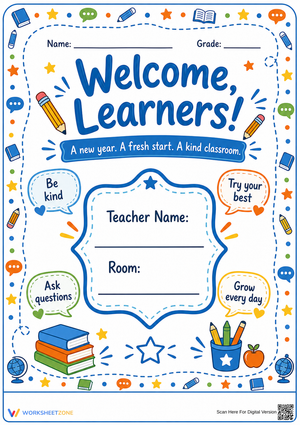
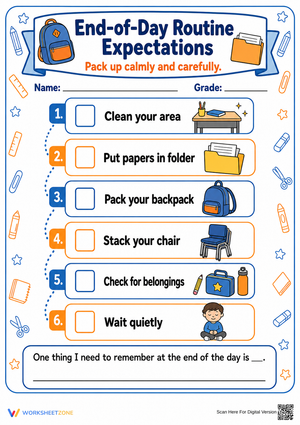
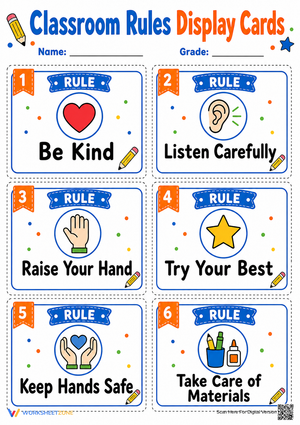
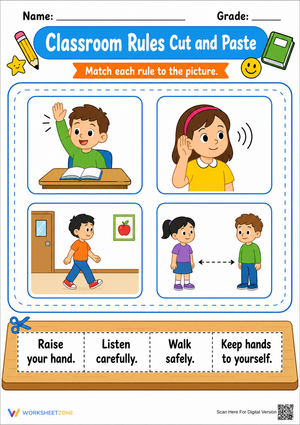
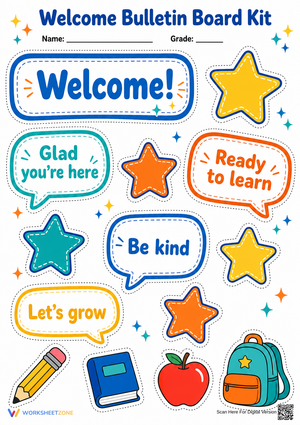
What's Inside the Classroom Rules Templates Collection
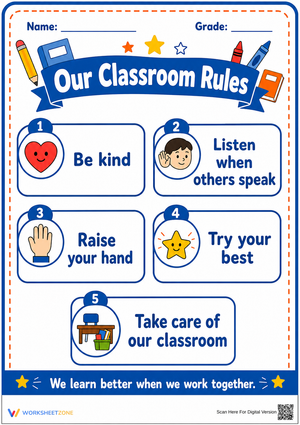
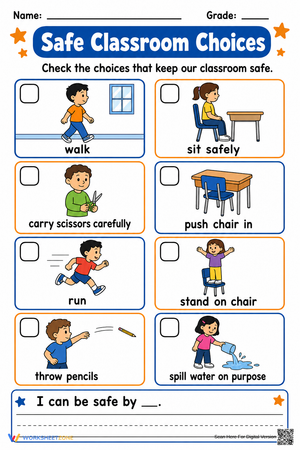
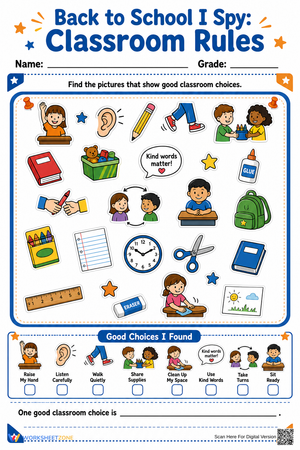
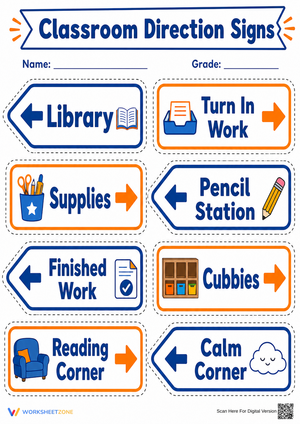
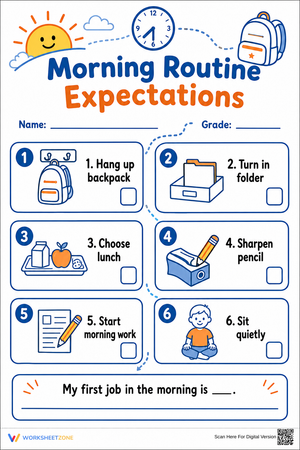
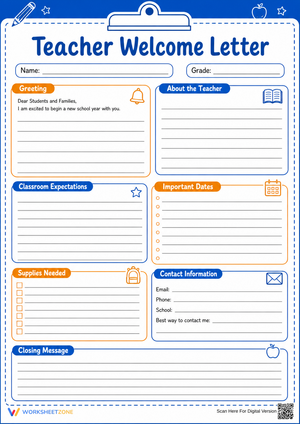
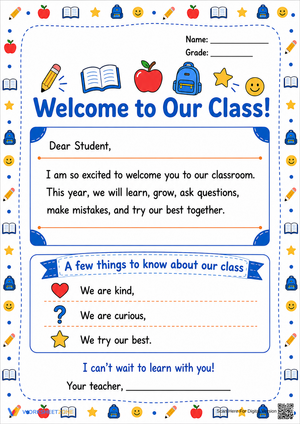
Setting up behavioral expectations is one of the first jobs every teacher tackles, and it usually competes with seating charts, supply lists, and first-day jitters. The Classroom Rules Templates collection on Worksheetzone is built to take that job off your plate quickly. It spans Preschool through Grade 12 and covers general classroom rules, location-specific expectations like hallway and lunchroom conduct, and daily routines that keep transitions calm.
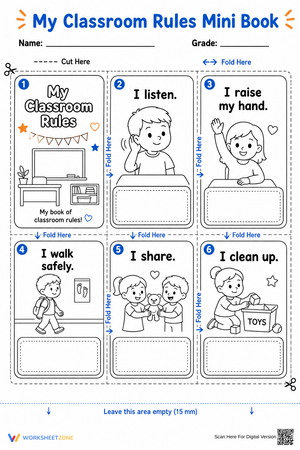
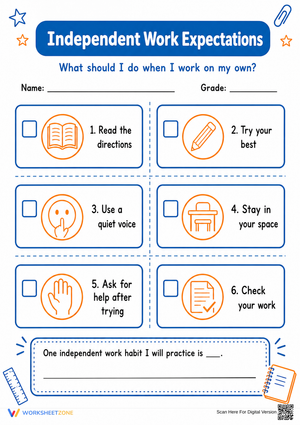
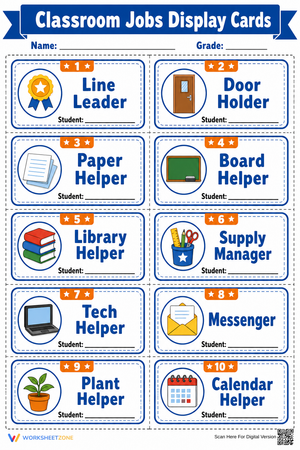
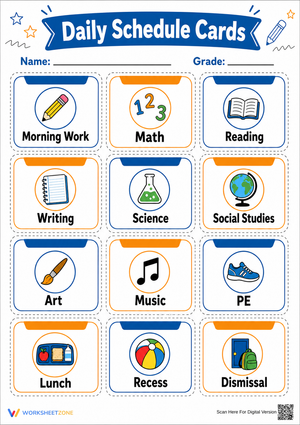
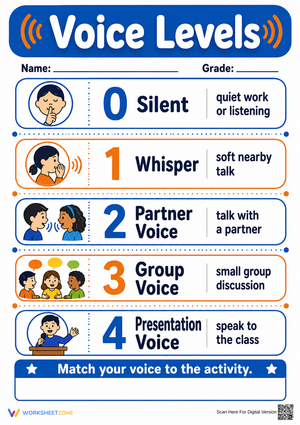
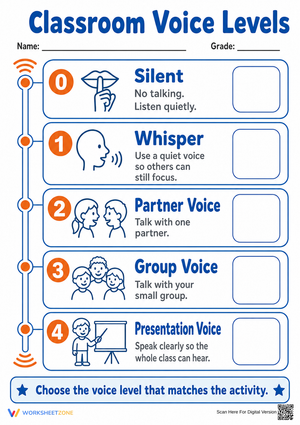
You'll find formats that match how different ages learn: posters and display cards for the wall, mini-books students can keep at their desks, coloring pages for kindergarten, and voice-level charts that give a shared vocabulary for noise. Because the templates are editable, you can drop in your school's wording instead of settling for generic text that doesn't match your building.
Why Templates Save You Planning Time
A blank document is the slowest way to write classroom rules. Templates give you a tested structure, leaving you to adjust the language rather than invent the format. That matters most in the first two weeks, when every saved hour goes toward learning names, teaching procedures, and building relationships.
Templates also keep your rules consistent across the room. When the poster on the wall, the desk card, and the voice-level chart all use the same phrasing, students stop guessing what you mean. Predictable, fairly enforced expectations give learners a secure environment and let them put their attention on academics instead of decoding shifting rules.
Matching Templates to Your Grade Band
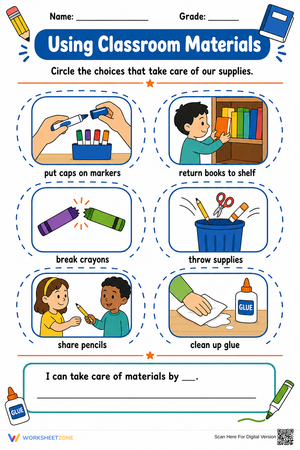
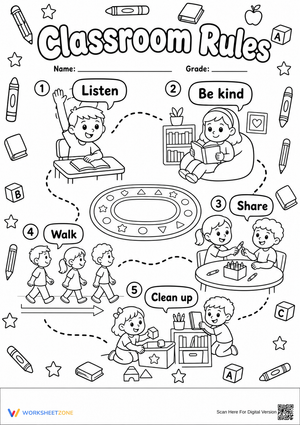
One template style rarely fits a whole school, so the collection is organized by what each age can read and remember. For kindergarten and lower elementary, picture-based rules and coloring pages pair an image with a few words, so a child who can't yet read independently still understands the expectation. A coloring activity also doubles as a quiet first-day task while you handle paperwork.
Upper elementary students can handle written rules, and this is the band where co-creation pays off most. Use a template as a starting scaffold, then let the class revise the wording in their own voice. Middle school benefits from behavior contracts that name specific expectations and the responses that follow, which respects older students' need for clear cause and effect.
The shift from picture-based to text-based rules isn't a single birthday; it's a reading-fluency threshold. Most classrooms can move to fully written rules once students reliably decode short sentences, which typically lands in late first or second grade. A practical middle step is a picture-plus-text card: keep the icon as a memory anchor while the words carry the meaning, so struggling readers and on-level readers both stay supported during the transition.
Location-Specific Rules Beyond Your Four Walls
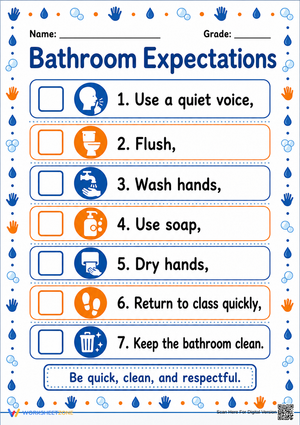
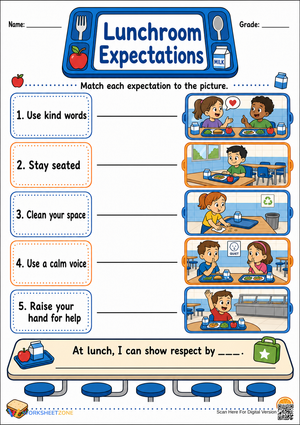
Behavior doesn't stop at the classroom door, and neither should your templates. Hallway, lunchroom, recess, and bathroom expectation templates extend the same clear language to the places where most behavior issues actually happen. A hallway card showing a quiet voice level and a single-file line removes the ambiguity that leads to redirections.
These location templates work best when they echo school-wide norms rather than competing with them. If your building uses a common set of expectations, editable templates let you mirror that exact wording on every chart, so a fifth grader hears the same message in the cafeteria that they hear in your room. That repetition is what turns a posted rule into an automatic habit.
Building Student Ownership Through Co-Creation
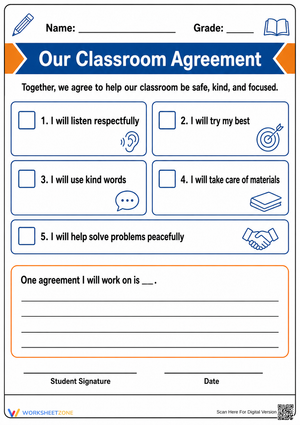
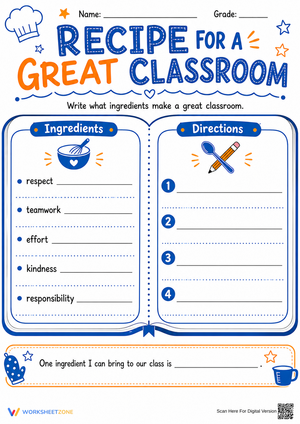
Rules students help write are rules students are more likely to follow. Instead of presenting a finished list, project a template and run a short discussion: What helps us learn? What keeps us safe? Students suggest ideas, you guide them toward three to five positively framed rules, and the template gives the conversation a finish line so it doesn't sprawl.
Classroom Implementation
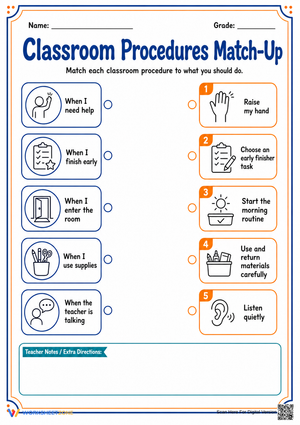
Introduce rules on the first day, but don't just read them. Model each one, role-play the right and wrong version, and connect every rule to a reason students care about. The HMH guides on teaching rules and procedures suggest turning practice into a game so the routine sticks before academic pressure ramps up.
Display the rules where students see them constantly: a poster at the front, desk cards within reach, and a voice-level chart near the activity that needs it. Reference the exact wording when you redirect, so correction feels like a reminder rather than a surprise. Revisit the rules after each long break and again at the semester turn, since classes drift and a quick reset is faster than re-teaching from scratch.
Finally, keep enforcement consistent across students and days. Predictability is what makes rules feel fair, and fairness is what makes students stop testing them. A laminated template you can wipe and update keeps the system flexible without losing that steady structure.
Frequently Asked Questions
1. What should be included in a classroom rules template for elementary students?
Keep it to three to five positively framed rules, each paired with a clear picture for younger grades. Cover safety, respect, listening, and effort. Add space to edit the wording so the template matches your school's language and your specific class.
2. How many classroom rules should a teacher post and enforce at once?
Three to five is the sweet spot. Fewer rules are easier to remember, teach, and enforce consistently, and broad rules like Be respectful can cover many small behaviors without turning your wall into a long list nobody reads.
3. At what grade level should teachers shift from picture-based to text-based rules templates?
Move to written rules once students reliably read short sentences, usually around late first or second grade. A picture-plus-text card makes a smooth bridge, keeping an icon as a memory anchor while the words carry the meaning for developing readers.
4. How do classroom rules templates support community-building goals?
Co-creating rules from a template gives students a voice and shared ownership of the room. Discussing what helps everyone learn and stay safe builds the same skills as community work, and a visible rules chart becomes a reference point for how the class treats one another.












 Interactive Worksheet Maker
 Quiz Maker
 Word Search Maker
 Crossword Puzzle Maker
 Word Scramble Generator
 Sentence Scramble Generator
 Handwriting Worksheet Generator
 Name Tracing Generator
 Fill In The Blank Generator