


























Views
Downloads

Printable Reading Corner Sign | Grade 2 ELA
Paste this activity's link or code into your existing LMS (Google Classroom, Canvas, Teams, Schoology, Moodle, etc.).
Students can open and work on the activity right away, with no student login required.
You'll still be able to track student progress and results from your teacher account.
This printable reading corner sign establishes clear expectations for independent reading time while creating a welcoming classroom environment. By displaying three simple rules, students learn to manage their behavior, care for materials, and build stamina during daily literacy blocks. It sets the foundation for successful independent reading.
At a Glance
- Grade: 2 · Subject: ELA
- Standard:
CCSS.ELA-LITERACY.RL.2.10— Read and comprehend literature independently- Skill Focus: Independent Reading Habits
- Format: 1 page · 3 rules · No answer key · PDF
- Best For: Classroom decor and routines
- Time: 5–10 minutes
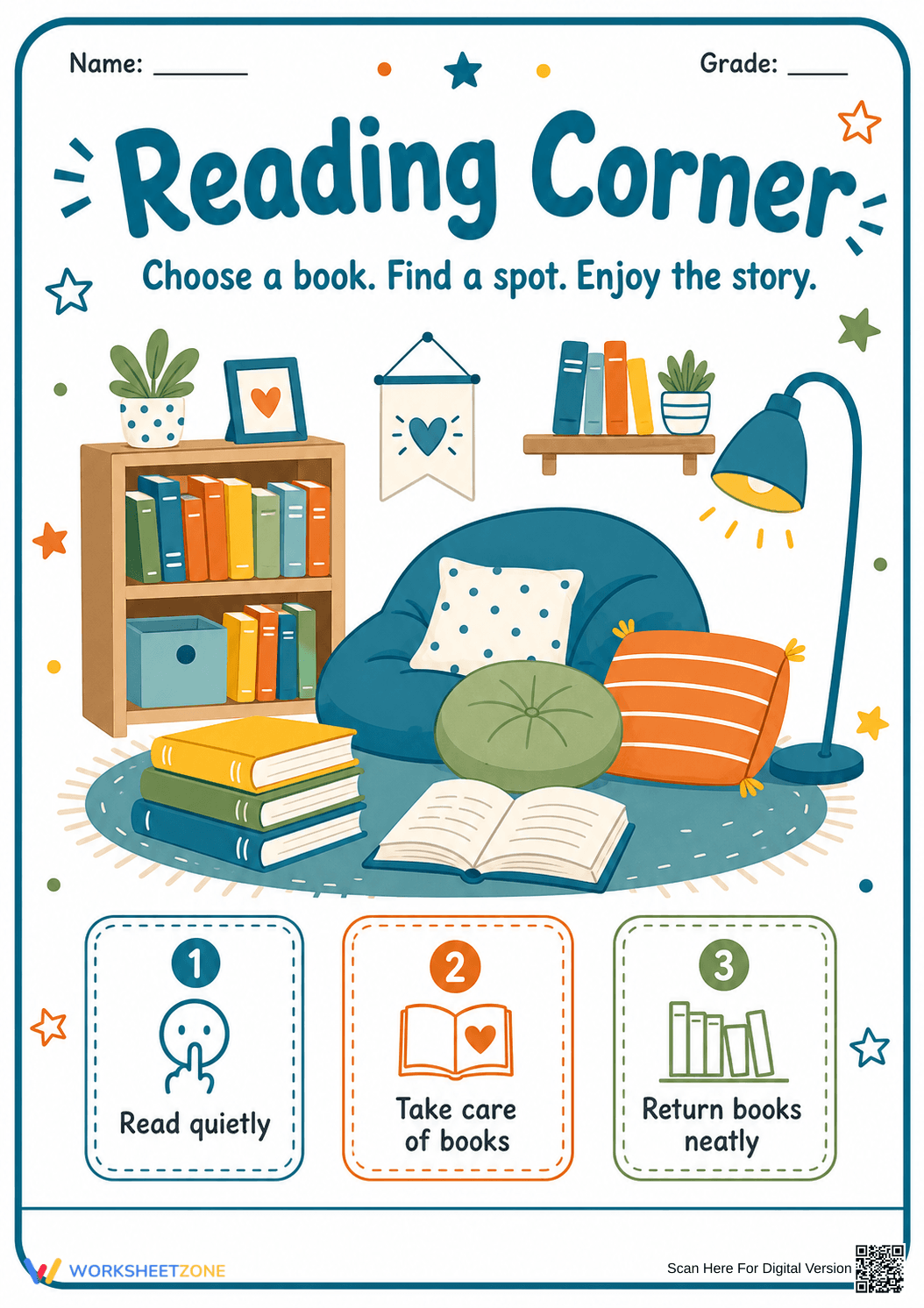
This single-page printable features a cozy, book-themed illustration designed to anchor your classroom library. It includes a welcoming subtitle and three highly visual reminders for student behavior: read quietly, take care of books, and return books neatly. The clear iconography supports early readers and English language learners in understanding classroom expectations without needing constant teacher redirection.
Setting up this resource requires minimal effort, making it an ideal zero-prep addition to your classroom setup.
- Print (1 minute): Download the PDF and print in full color on standard letter-size paper or cardstock for durability.
- Distribute (1 minute): Laminate the sign and hang it directly in your designated reading nook or classroom library area.
- Review (3 minutes): Briefly introduce the three rules to your students during a morning meeting or literacy block kickoff.
Total teacher prep time is under two minutes, making this a perfect quick-print solution for back-to-school or mid-year routine resets.
This resource supports foundational literacy habits aligned with CCSS.ELA-LITERACY.RL.2.10: By the end of the year, read and comprehend literature, including stories and poetry, in the grades 2-3 text complexity band proficiently. Establishing a dedicated, structured environment directly facilitates the stamina required to meet this standard. Both standard codes can be copied directly into lesson plans, IEP goals, or district curriculum mapping tools.
Introduce this sign during the first week of school before launching independent reading centers. Gather students near the library, point to the visual cues, and model what "reading quietly" and "returning books neatly" looks like in practice. As a formative assessment observation tip, monitor the reading corner during center time and praise students who explicitly follow the three posted rules. The initial introduction takes just a few minutes, but the visual reminder lasts all year.
This sign is primarily designed for early elementary students developing independent literacy routines. The visual icons provide essential differentiation for visual learners, students with ADHD who benefit from clear boundaries, and English language learners acquiring classroom vocabulary. It pairs perfectly with an anchor chart detailing how to choose a "just right" book or a direct instruction lesson on library organization.
Establishing a structured environment for independent reading is critical for developing literacy stamina. This resource supports CCSS.ELA-LITERACY.RL.2.10 by helping students read and comprehend literature independently through clear environmental cues. According to Fisher & Frey (2014), explicit instruction in classroom routines, combined with visual anchors, significantly increases student time-on-task during independent literacy blocks. When students understand the expectations for handling materials and maintaining a quiet atmosphere, cognitive load shifts from navigating behavioral boundaries to actual text comprehension. By displaying these three simple rules—read quietly, care for books, and return them neatly—teachers create a predictable, safe space that fosters a genuine love of reading. This foundational structure is essential for moving students from guided practice to sustained, independent engagement with complex texts throughout the academic year.


