


























Views
Downloads

Printable Student Work Display Labels | Grade K-5 Ready
Paste this activity's link or code into your existing LMS (Google Classroom, Canvas, Teams, Schoology, Moodle, etc.).
Students can open and work on the activity right away, with no student login required.
You'll still be able to track student progress and results from your teacher account.
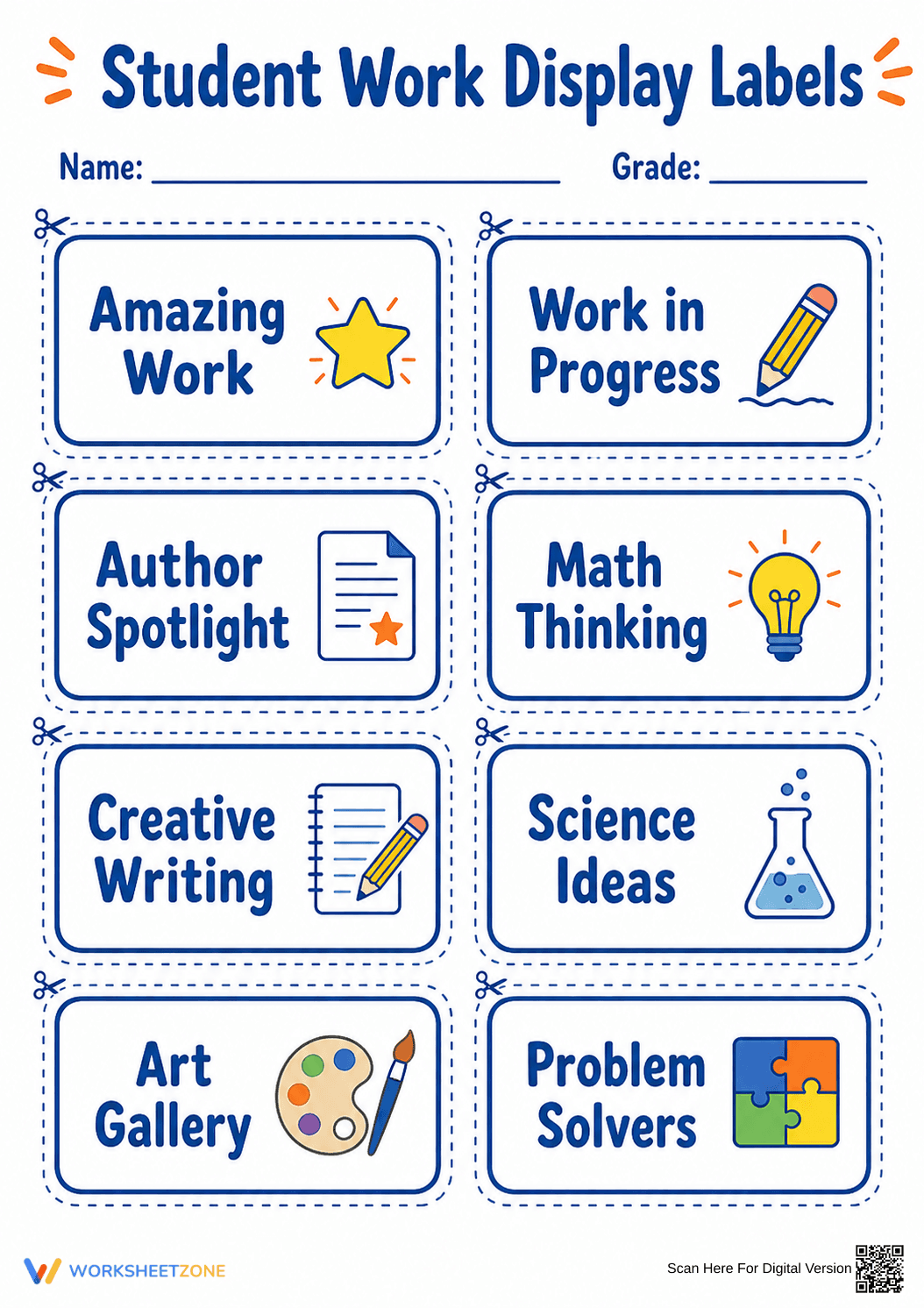
These printable student work display labels provide an immediate solution for organizing classroom bulletin boards and celebrating student achievement. By clearly categorizing assignments, teachers can create a structured environment that highlights growth across multiple subjects. This resource ensures that every piece of student work has a professional and engaging visual anchor to improve classroom culture.
At a Glance
- Grade: K-5 · Subject: Classroom Management
- Standard:
CCSS.ELA-LITERACY.SL.1.5— Add visual displays to descriptions to clarify ideas and feelings.- Skill Focus: Classroom Organization
- Format: 1 page · 8 labels · No answer key included · PDF
- Best For: Bulletin board organization and student recognition
- Time: 5–10 minutes
This single-page PDF contains 8 distinct, high-contrast labels designed for easy cutting. Each label features a unique icon—such as a star, pencil, or lightbulb—to help younger students identify categories visually. The set includes specific headers for Math Thinking, Science Ideas, and Creative Writing, alongside general motivational tags like Amazing Work and Work in Progress. The clean design ensures readability from across the room.
The zero-prep workflow for this resource is designed for maximum efficiency. First, print the single A4 sheet on standard paper or cardstock (1 minute). Second, use the dashed cut lines to separate the 8 labels with scissors or a paper trimmer (3 minutes). Third, laminate the labels for durability and staple them to your designated display areas (5 minutes). This entire setup requires less than 10 minutes of teacher preparation time, making it an ideal task for a morning routine or a quick classroom refresh.
This resource aligns with CCSS.ELA-LITERACY.SL.1.5, which encourages the use of visual displays to clarify ideas and feelings. By labeling student work, educators provide a framework for students to present their findings and creative outputs to an audience. This standard code can be copied directly into lesson plans, IEP goals, or district curriculum mapping tools to document the environmental supports provided for student presentation skills.
Use these labels during the "after instruction" phase to showcase final projects or formative assessments. For a formative assessment tip, observe which students gravitate toward the "Work in Progress" section; this provides a visual cue for who may need additional scaffolding or time. Expected completion for the physical setup is under 10 minutes, allowing teachers to focus on instruction rather than complex decor assembly.
This resource is ideal for elementary general education teachers, special education providers, and art instructors. It pairs naturally with any subject-specific anchor chart or a "Star Student" spotlight lesson. The visual icons make it accessible for English Language Learners and early readers who are still developing literacy skills. It serves as a functional tool for any classroom looking to implement a consistent system for student feedback.
Effective classroom environments rely on clear organizational structures to reduce cognitive load and foster a sense of belonging. According to RAND AIRS 2024, visual cues and designated display areas for student work significantly improve classroom climate and student engagement. These labels support the CCSS.ELA-LITERACY.SL.1.5 standard by providing the necessary visual infrastructure for students to present their work with pride and clarity. Research from Fisher & Frey (2014) suggests that a print-rich environment, which includes labeled displays of student progress, helps bridge the gap between independent practice and public mastery. By utilizing these 8 specific labels, teachers can implement a consistent system for feedback and recognition. This resource is a practical application of evidence-based classroom management strategies that prioritize student agency and the celebration of diverse academic achievements across the elementary curriculum.


