


























1 / 2
0
Views
0
Downloads

0.0
0
Save
0 Likes
Share
The Checks and Balances System: A Civics Guide
0 Views
0 Downloads
Paste this activity's link or code into your existing LMS (Google Classroom, Canvas, Teams, Schoology, Moodle, etc.).
Students can open and work on the activity right away, with no student login required.
You'll still be able to track student progress and results from your teacher account.
Information
Description
What It Is:
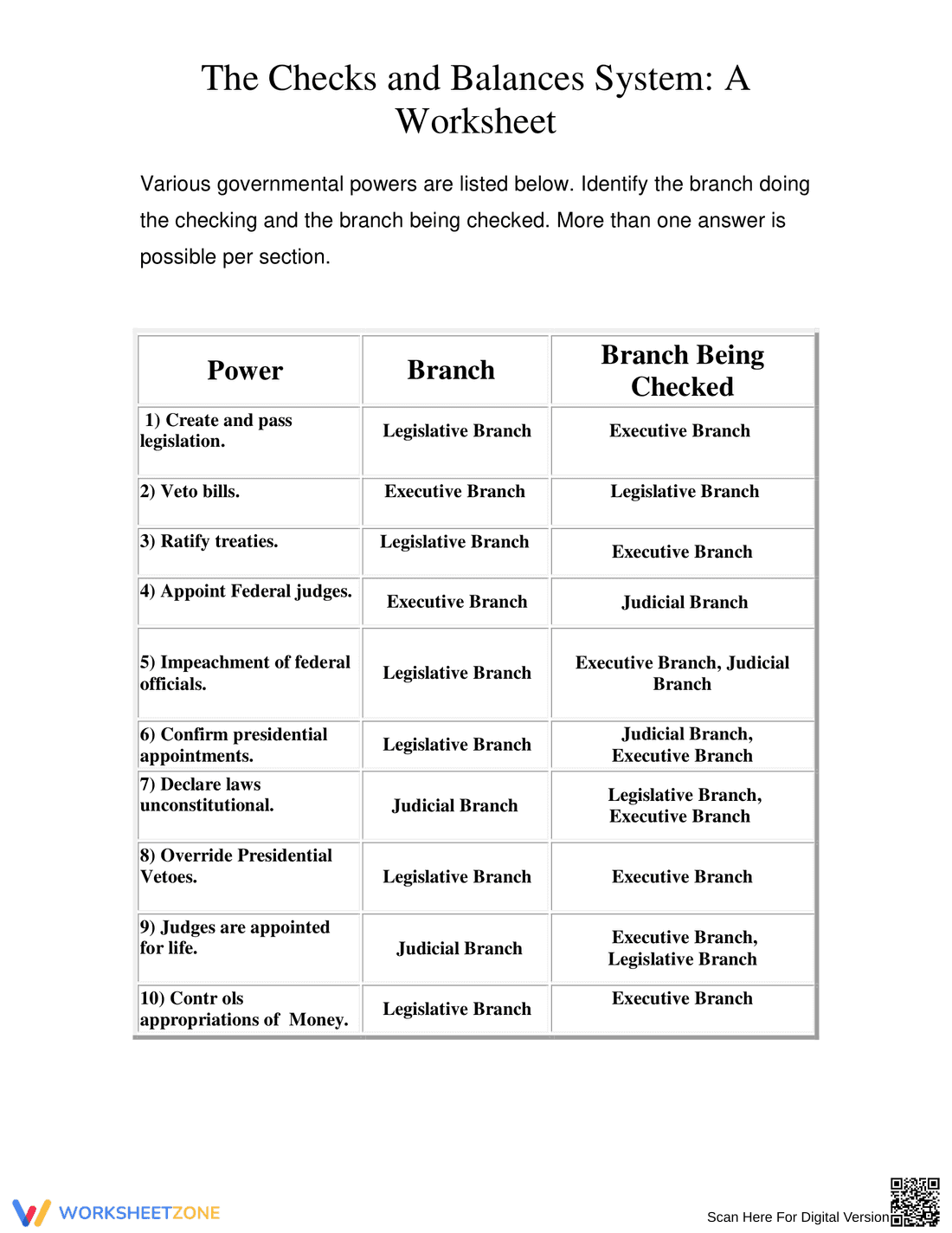
This is a worksheet focused on the Checks and Balances system in government. It presents a table with three columns: 'Power,' 'Branch,' and 'Branch Being Checked.' The 'Power' column lists various governmental powers (e.g., create and pass legislation, veto bills, ratify treaties). The 'Branch' column identifies the branch that exercises that power (e.g., Legislative Branch, Executive Branch, Judicial Branch). The 'Branch Being Checked' column requires the student to identify which branch is being checked by that power.
Grade Level Suitability:
This worksheet is suitable for grades 9-12, specifically high school students studying civics, government, or U.S. history. The concepts of checks and balances and the roles of the different branches of government require a mature understanding of political systems.
Why Use It:
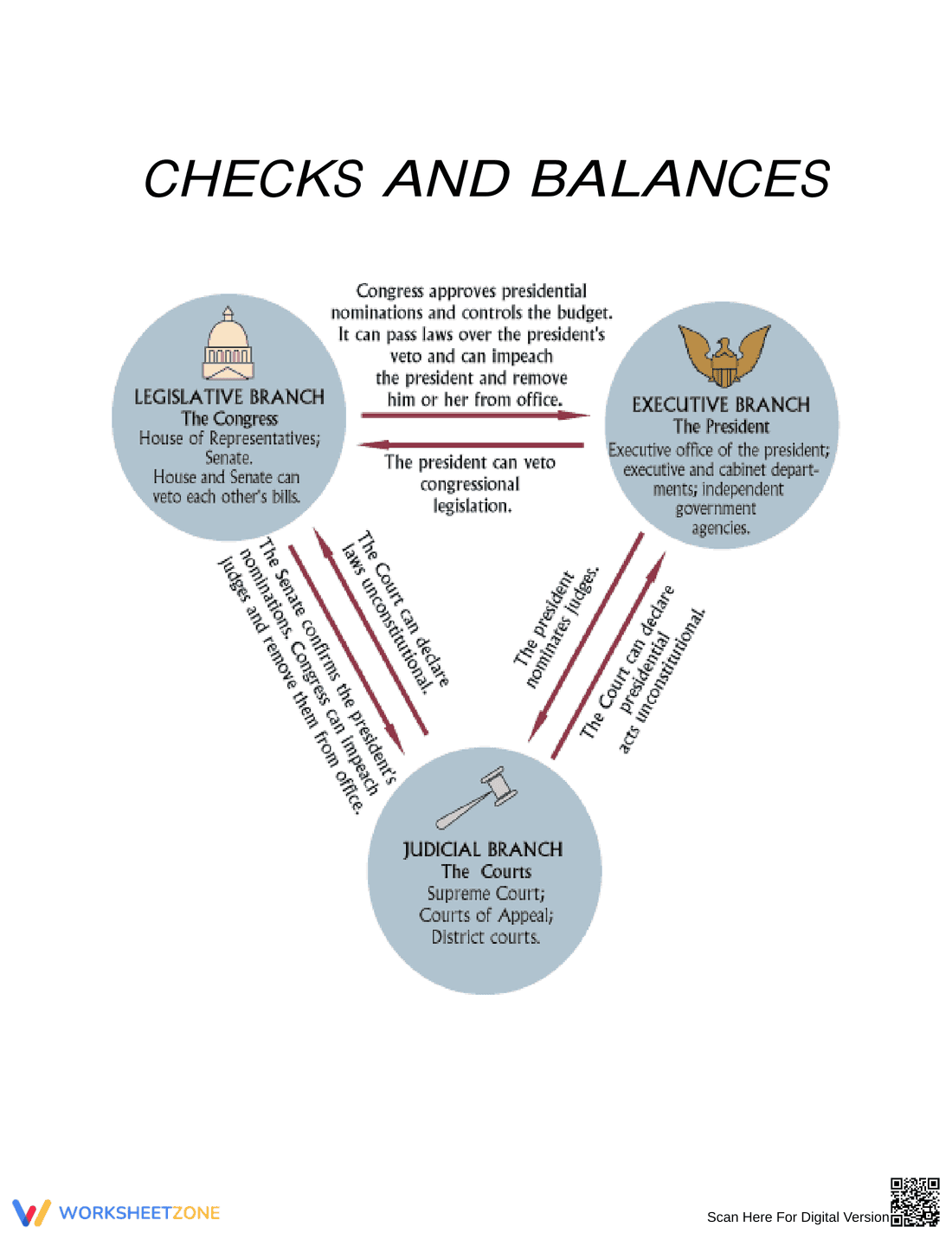
This worksheet helps students understand the complex relationships between the three branches of government and how each branch can limit the power of the others. It reinforces critical thinking skills as students analyze the powers and their effects. It promotes a deeper understanding of the US Constitution and the principles of separation of powers.
How to Use It:
Students should read each governmental power listed in the 'Power' column. Then, using their knowledge of the U.S. government, they need to identify the branch that is being checked by the power, and write it in the 'Branch Being Checked' column. In some cases, more than one branch might be checked by a single power.
Target Users:
The target users are high school students, particularly those enrolled in civics, government, or U.S. history classes. It can also be useful for anyone preparing for a citizenship test or seeking to improve their understanding of the American political system.
This is a worksheet focused on the Checks and Balances system in government. It presents a table with three columns: 'Power,' 'Branch,' and 'Branch Being Checked.' The 'Power' column lists various governmental powers (e.g., create and pass legislation, veto bills, ratify treaties). The 'Branch' column identifies the branch that exercises that power (e.g., Legislative Branch, Executive Branch, Judicial Branch). The 'Branch Being Checked' column requires the student to identify which branch is being checked by that power.
Grade Level Suitability:
This worksheet is suitable for grades 9-12, specifically high school students studying civics, government, or U.S. history. The concepts of checks and balances and the roles of the different branches of government require a mature understanding of political systems.
Why Use It:
This worksheet helps students understand the complex relationships between the three branches of government and how each branch can limit the power of the others. It reinforces critical thinking skills as students analyze the powers and their effects. It promotes a deeper understanding of the US Constitution and the principles of separation of powers.
How to Use It:
Students should read each governmental power listed in the 'Power' column. Then, using their knowledge of the U.S. government, they need to identify the branch that is being checked by the power, and write it in the 'Branch Being Checked' column. In some cases, more than one branch might be checked by a single power.
Target Users:
The target users are high school students, particularly those enrolled in civics, government, or U.S. history classes. It can also be useful for anyone preparing for a citizenship test or seeking to improve their understanding of the American political system.


