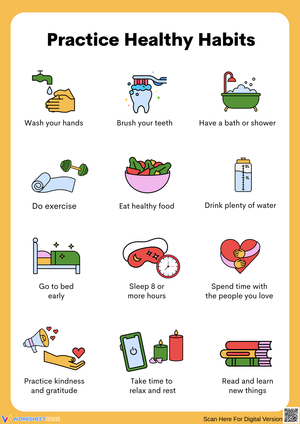
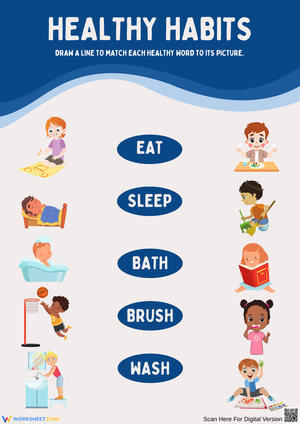
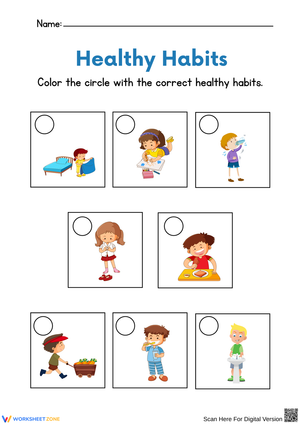
These kindergarten body and health printable worksheets resources give early childhood teachers a direct route into the body awareness and healthy habits content that five-year-olds can see, name, and connect to their own daily routines. Each worksheet holds to one topic at a time — body parts, hygiene sequences, the five senses, food choices, movement, or basic safety — so students build confidence with the vocabulary before the concept shifts. The set moves between morning work, science centers, small-group instruction, and take-home folders without any prep beyond printing.
Skills in Each Worksheet
The tasks across this set stay within what most kindergarteners can handle independently once a teacher has modeled the format once. Skill types include:
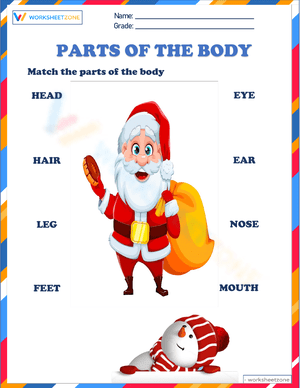
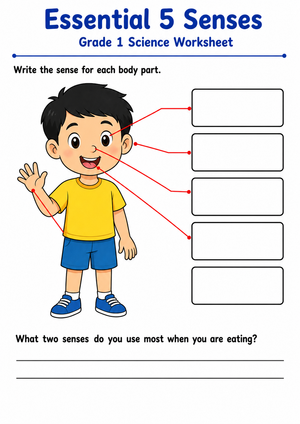
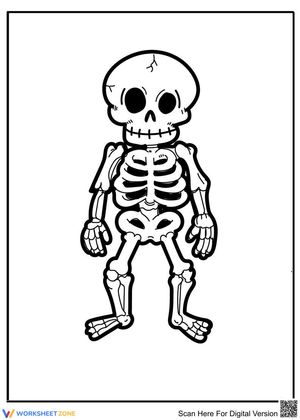
- Body part labeling: Students draw lines from printed labels to the correct location on a simple body outline — head, arms, hands, legs, feet, and facial features.
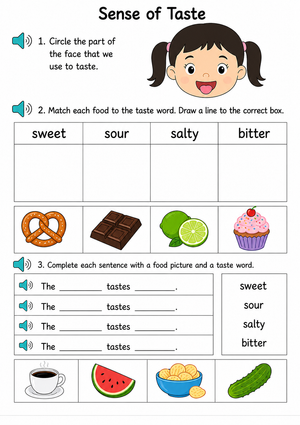
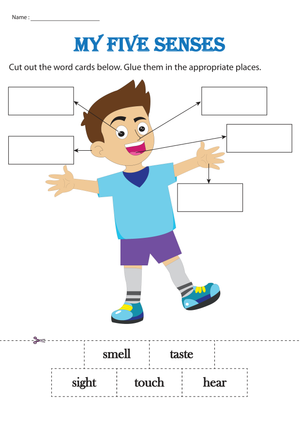
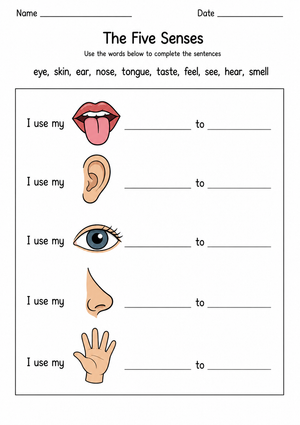
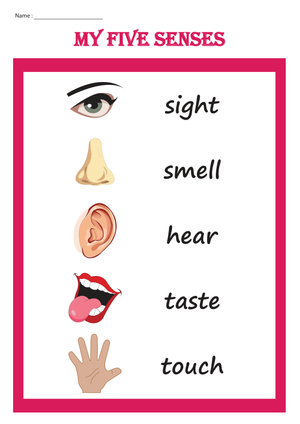
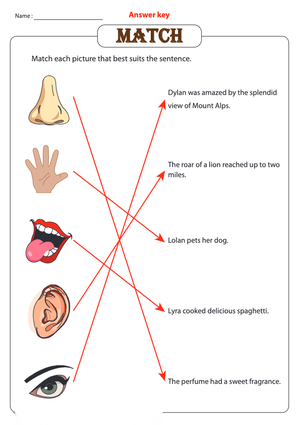
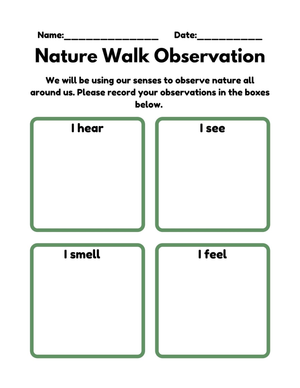
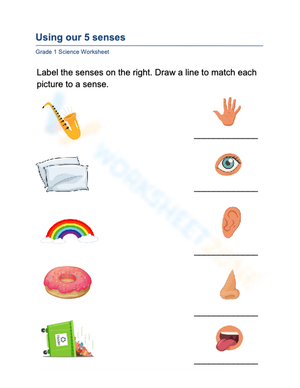
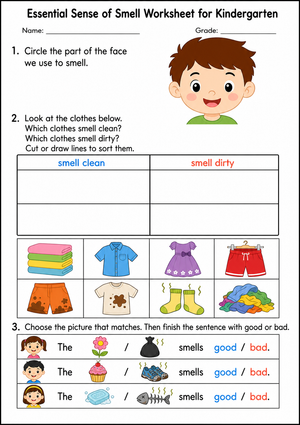
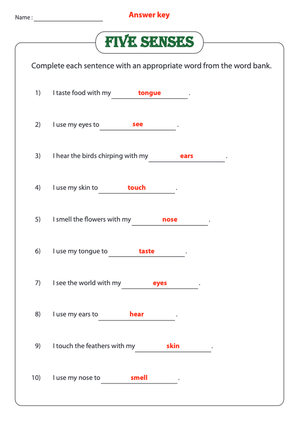
- Five senses sorting: Students circle or cut pictures and sort them under the matching sense — sight, hearing, smell, taste, or touch.
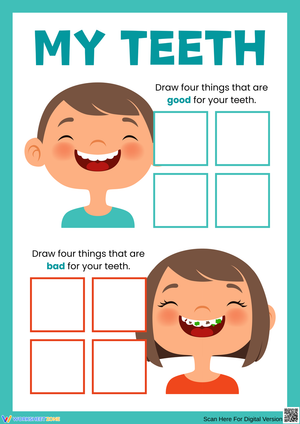
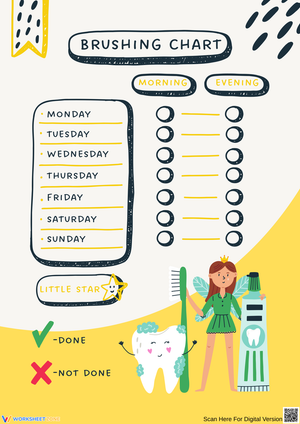
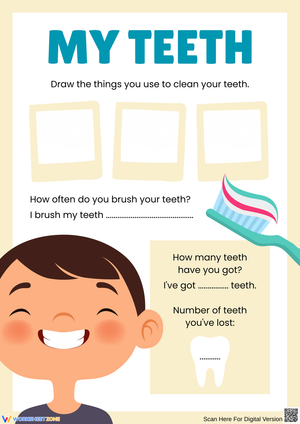
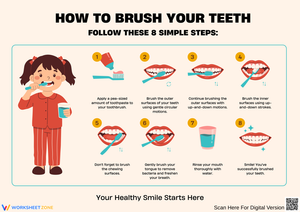
- Hygiene sequencing: Students number illustrated steps for handwashing or toothbrushing in the correct order, practicing both health knowledge and early sequencing logic.
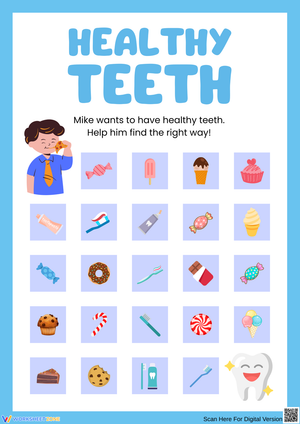
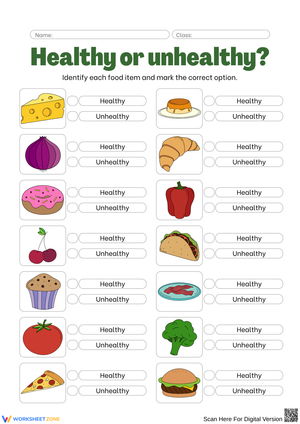
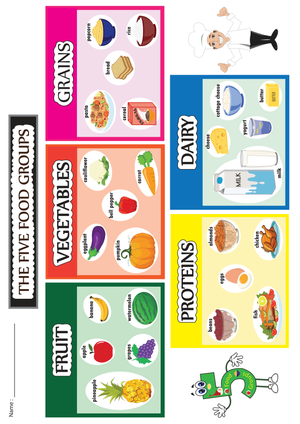
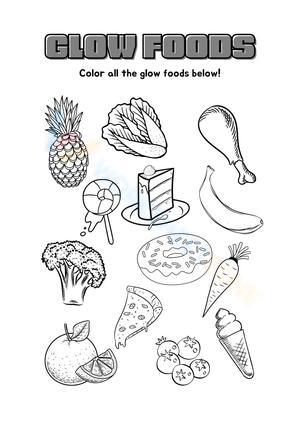
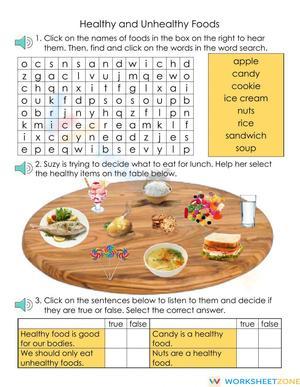
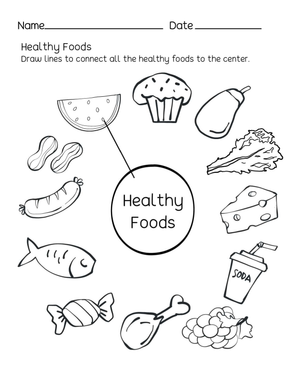
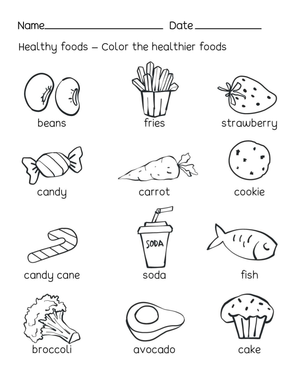
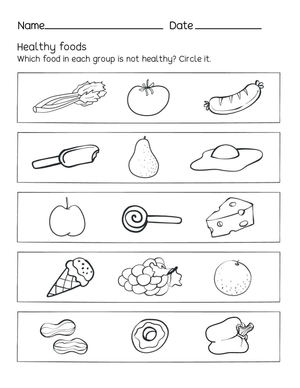
- Healthy food classification: Students sort food images into two groups, applying the same classification thinking used across early science units.
- Vocabulary tracing: Students trace words like wash, eyes, teeth, and fruit beneath matching pictures, building science vocabulary alongside fine-motor control.
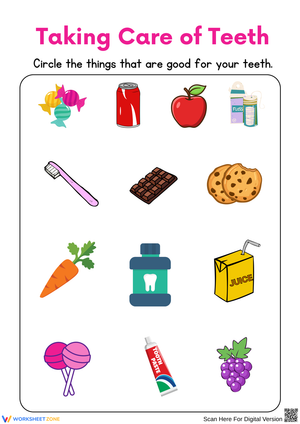
- Safety identification: Students circle the safe choice in illustrated pairs — helmet versus no helmet, clean hands versus unwashed hands.
Every task format appears multiple times across the set, so students spend less mental energy figuring out directions and more of it on the content itself. That repetition of format — not repetition of topic — is what makes these worksheets work efficiently for emerging readers.
Mistakes Students Make That These Worksheets Help You Catch
The five senses worksheets produce the most consistent errors, and the pattern is predictable once you've seen it. Students frequently assign the nose to pictures of foods they associate with eating — pizza, popcorn, soup — and mark those images under taste instead of smell. The confusion is developmentally logical: at five, the sensory experience of food is still a blended one, and students haven't yet separated the olfactory cue from the gustatory experience. When that error cluster shows up in returned work, it's a clear signal to revisit the nose-versus-mouth distinction before moving forward.
Food sorting worksheets surface a different problem. Students often place familiar snack-time foods — crackers, apple juice boxes, string cheese — in the "healthy" column simply because they recognize them from the school day. They're sorting by familiarity, not by any nutritional reasoning. Reframing the two categories as "foods our body loves every day" and "sometimes foods" tends to reduce this confusion more effectively than explanation alone does.
In hygiene sequencing tasks, students who can walk through the handwashing steps correctly in oral discussion will still place steps two and three out of order when working from the illustrated card — water on before soap, soap before scrubbing. Having students physically act out the sequence before completing the worksheet resolves most of those errors before they land on paper.
Building These Worksheets Into Your Teaching Week
The most effective use of kindergarten body and health printable worksheets resources is pairing each worksheet with the actual routine it represents rather than treating it as isolated seat work. A handwashing sequence worksheet completed in the five minutes before lunch becomes an immediate rehearsal — students connect the illustrated steps to the sink they're walking to. That physical follow-through strengthens recall in a way that completing the same task at 9 a.m. and heading to lunch at 11 a.m. simply does not.
Thematic weeks provide natural pacing. A week on body parts and the five senses, a week on hygiene, a week on food and movement — with each worksheet serving as the launch activity, the independent practice task, or the exit check depending on where the lesson falls. In science centers, a body parts labeling worksheet pairs well with a hand mirror and a set of vocabulary picture cards. Students check their own face, then label the diagram. That's not an add-on; it's the lesson.
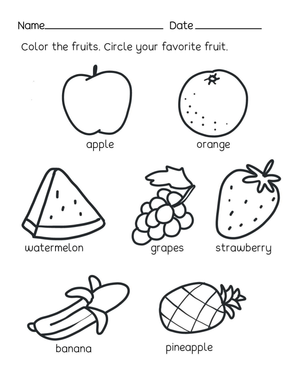
During morning work in a health unit, a short coloring-and-circling worksheet gives arriving students a predictable routine while reinforcing science vocabulary from the previous day. Sub plans built around this set also hold up well — the task formats are clear enough that students rarely need mid-activity clarification from a substitute.
Adjusting the Worksheets for Your Range of Learners
A set of kindergarten body and health printable worksheets resources serves mixed-ability classrooms best when teachers feel free to adjust task demand without changing the content. For students who need more support, remove the writing components entirely — have them point, circle, or move picture cards instead of tracing or labeling. Reading directions aloud before students begin, and keeping only one instruction visible at a time by covering the rest, reduces cognitive load enough that most students participate in the same core content as the rest of the class.
For students who move quickly through tasks, add a sentence frame at the bottom of any completed worksheet: I use my ___ to ___ or A healthy habit I practice every day is ___. That single addition shifts the task from recall to explanation without altering the worksheet itself. Students who finish early extend their thinking rather than wait.
Cut-and-paste sorting worksheets carry one honest limitation worth knowing: scissor-and-glue management often takes longer than the actual sorting, and for some groups the physical process overrides the content goal entirely. In those situations, a circle-the-correct-answer version of the same task protects the learning without losing the skill.
Standard Alignment
These worksheets align with the NGSS kindergarten life science performance expectation K-LS1-1, which asks students to use observations to describe patterns of what plants and animals — including humans — need to survive. The food, water, and movement worksheets connect directly to that standard's focus on basic needs. The hygiene and safety worksheets align with the National Health Education Standards for grades PreK–2, specifically NHES Standard 1 (comprehending concepts related to health promotion and disease prevention) and NHES Standard 7 (practicing health-enhancing behaviors and avoiding health risks). In schools where science and health share limited instructional minutes at the kindergarten level, both NGSS and NHES connections give teachers a clear rationale for keeping this content in the weekly schedule.
Frequently Asked Questions
Are these worksheets usable with students who can't yet read?
Yes. Tasks rely on pictures, matching lines, circling, and coloring rather than reading comprehension. Directions should be read aloud before students begin. The vocabulary tracing tasks require motor control, not word reading, so emerging readers participate in the same worksheets as more advanced students.
Do the worksheets need to be completed in a particular order?
No. Each worksheet stands alone and addresses a single topic. Teachers pull whichever worksheet fits the current lesson, center focus, or take-home skill. There is no required sequence from first to last.
Can these resources be sent home for family practice?
Kindergarten body and health printable worksheets resources work well as take-home materials because the topics are rooted in daily life. A hygiene sequencing worksheet sent home after a dental health lesson gives families a natural entry point to the same conversation students had in class. The black-and-white format makes home printing straightforward.
What distinguishes the body parts worksheets from the health habits worksheets in this set?
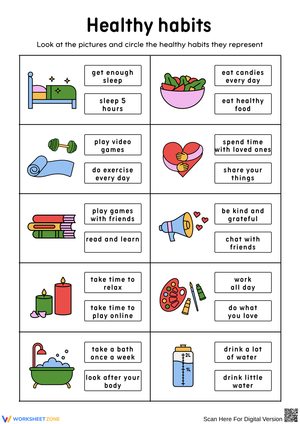
Body parts worksheets ask students to identify and name structures — eyes, ears, hands, knees. Health habits worksheets ask students to think about behaviors: what they do with those structures each day to stay well. Most teachers use the body parts worksheets earlier in a health unit to establish vocabulary, then move into the habits-focused tasks once that foundation is in place.












 Interactive Worksheet Maker
 Quiz Maker
 Word Search Maker
 Crossword Puzzle Maker
 Word Scramble Generator
 Sentence Scramble Generator
 Handwriting Worksheet Generator
 Name Tracing Generator
 Fill In The Blank Generator