


























Views
Downloads
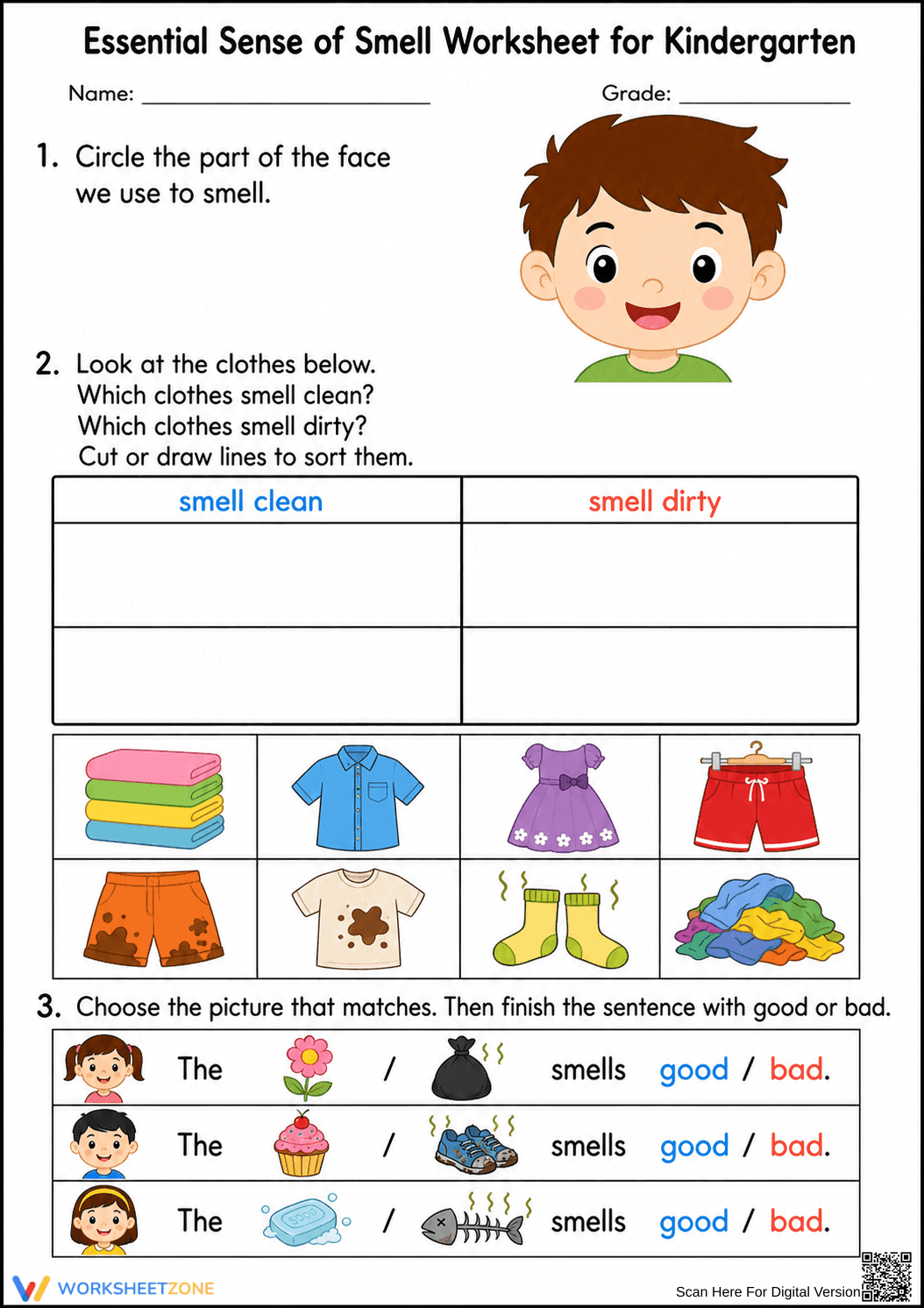

Printable Sense of Smell Worksheet for Grade K
Paste this activity's link or code into your existing LMS (Google Classroom, Canvas, Teams, Schoology, Moodle, etc.).
Students can open and work on the activity right away, with no student login required.
You'll still be able to track student progress and results from your teacher account.
This single-page worksheet introduces Kindergarten students to the sense of smell through engaging sorting and identification exercises. Students learn to distinguish between clean and dirty scents while building essential descriptive vocabulary. By connecting sensory experiences to specific adjectives, learners strengthen early scientific observation and literacy skills.
At a Glance
- Grade: Kindergarten · Subject: Science
- Standard:
CCSS.ELA-LITERACY.L.K.5.A— Sort common objects into categories to understand concepts- Skill Focus: Sensory Vocabulary & Categorization
- Format: 1 page · 12 problems · Answer key included · PDF
- Best For: Independent practice or science centers
- Time: 10–15 minutes
What's Inside
Inside this resource, educators will find three distinct sections designed to scaffold student understanding. The worksheet begins with anatomical identification of the nose, moves into a categorization chart for sorting eight different laundry-themed items, and concludes with three sentence-completion exercises. Clear, colorful illustrations provide strong visual support for pre-readers, while the included answer key ensures quick and accurate assessment.
Zero-Prep Workflow
This resource is designed for immediate classroom integration with a simple three-step implementation process. First, print the single-page document (30 seconds). Second, distribute the materials during your five senses unit (1 minute). Third, review the completed work using the answer key to identify students needing additional support (30 seconds). Total teacher preparation time is under two minutes, making it an ideal choice for emergency sub plans or morning work.
Standards Alignment
This worksheet is strictly aligned to CCSS.ELA-LITERACY.L.K.5.A, which requires students to sort common objects into categories to gain a sense of the concepts the categories represent. By distinguishing between items that smell clean and dirty, students practice high-frequency adjectives and conceptual grouping. Both standard codes can be copied directly into lesson plans, IEP goals, or district curriculum mapping tools.
How to Use It
Use this worksheet as a formative assessment after a hands-on sensory jar activity. During independent work, observe whether students can explain their sorting choices for the laundry items, as this provides valuable insight into their expressive language skills. The activity typically takes 10 to 15 minutes to complete and works exceptionally well as a quiet-time transition or a literacy center rotation focused on functional vocabulary.
Who It's For
The content is tailored for Kindergarten learners, particularly those developing early language skills or English Language Learners who benefit from visual-to-word matching. It pairs naturally with non-fiction sensory passages or interactive anchor charts about the five senses. The clear layout accommodates students with fine motor challenges by providing large targets for drawing lines or circling answers.
According to the RAND AIRS 2024 report, integrating sensory-based vocabulary instruction into early childhood education significantly improves long-term word retention. This worksheet leverages these findings by requiring students to apply categorization to real-world objects. By focusing on 12 tasks related to the sense of smell, learners engage in the repetitive practice necessary for mastery of the CCSS.ELA-LITERACY.L.K.5.A standard, which asks students to sort common objects into categories to understand concepts. The combination of visual cues and descriptive adjectives like good and bad provides a strong framework for sensory exploration. Educators can rely on this resource as an evidence-based tool for building the linguistic blocks required for reading comprehension. This summary highlights the intentional design behind the worksheet's structure, ensuring it meets both developmental needs and rigorous educational standards.


