


























Views
Downloads

Printable Favorite Fruit Coloring Worksheet | Kindergarten
Paste this activity's link or code into your existing LMS (Google Classroom, Canvas, Teams, Schoology, Moodle, etc.).
Students can open and work on the activity right away, with no student login required.
You'll still be able to track student progress and results from your teacher account.
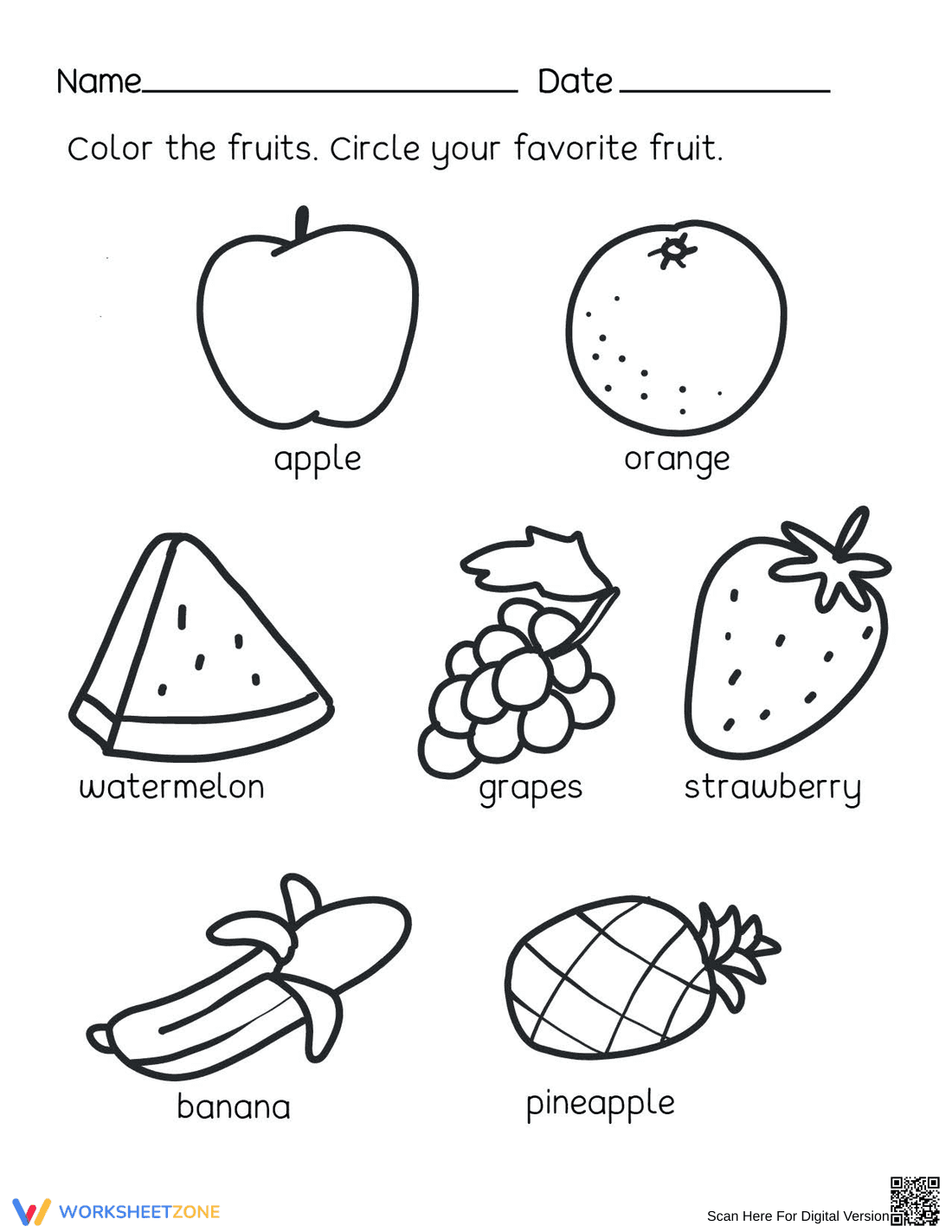
This Kindergarten fruit coloring worksheet introduces young learners to healthy food choices through engaging identification and fine motor practice. Students develop foundational vocabulary by recognizing common fruits while expressing personal preferences. This resource provides an essential starting point for discussions about nutrition and body health in the early childhood classroom.
At a Glance
- Grade: Kindergarten · Subject: Science
- Standard:
K-LS1-1— Describe patterns of what plants and animals need to survive- Skill Focus: Fruit identification and preference expression
- Format: 1 page · 8 tasks · Answer key not required · PDF
- Best For: Early finishers and morning work
- Time: 10–15 minutes
The worksheet features seven high-quality line art illustrations of popular fruits, including apples, oranges, and bananas. Each image is clearly labeled with its name in a child-friendly font to support early literacy. The layout is clean and uncluttered, ensuring that Preschool and Kindergarten students can focus on the specific tasks of coloring and circling their favorite fruit without distraction.
Zero-Prep Workflow
- Step 1: Print. Select the single-page PDF and print a full class set in less than 30 seconds.
- Step 2: Distribute. Hand out the sheets during transition periods or as a quiet morning arrival activity with zero additional setup.
- Step 3: Review. Lead a brief group discussion where students share their choices to spark a conversation about healthy habits.
Total teacher preparation time for this activity is under 1 minute, making it an ideal choice for emergency sub plans or spontaneous health lessons.
Standards Alignment
This resource aligns with K-LS1-1, focusing on the fundamental concept that living things require food to survive and grow. By identifying fruits as a primary food source, students begin to understand biological needs. This activity also supports ELA standard CCSS.ELA-LITERACY.L.K.5.A regarding categorization. Both standard codes can be copied directly into lesson plans, IEP goals, or district curriculum mapping tools.
How to Use It
Use this worksheet as a formative assessment after a read-aloud about healthy eating to gauge student recognition of different food groups. It also serves as an effective hook for a science lesson on plant life cycles. Observation tip: Watch for students who can name the fruits before coloring, which indicates advanced vocabulary development and readiness for more complex nutritional sorting activities.
Who It's For
This activity is designed for Preschool, Kindergarten, and Grade 1 students, particularly those developing fine motor control and basic labeling skills. It is highly effective for English Language Learners (ELLs) as it pairs visual icons with direct vocabulary labels. Naturally pair this resource with a real-life fruit tasting session or a colorful anchor chart displaying the rainbow of healthy foods.
Research by Fisher & Frey (2014) emphasizes that integrating visual arts with core content areas like Science enhances retention in early childhood learners. This worksheet utilizes the K-LS1-1 standard to bridge the gap between simple coloring and scientific observation of biological needs. By requiring students to circle their favorite fruit, the activity promotes cognitive engagement and personal connection to the subject of nutrition. Structured practice in identifying healthy food sources is a critical component of early health literacy programs, helping children build the schema necessary for making informed dietary choices later in life. This 8-task resource provides a focused, printable solution for educators looking to implement high-quality, standards-aligned instruction without the burden of extensive preparation. It serves as a reliable tool for classroom teachers, homeschoolers, and substitute educators seeking essential health science materials that students can access independently and successfully.


