




























Views
Downloads

Printable Healthy Foods Worksheet | Grade K-1 Science

Paste this activity's link or code into your existing LMS (Google Classroom, Canvas, Teams, Schoology, Moodle, etc.).
Students can open and work on the activity right away, with no student login required.
You'll still be able to track student progress and results from your teacher account.
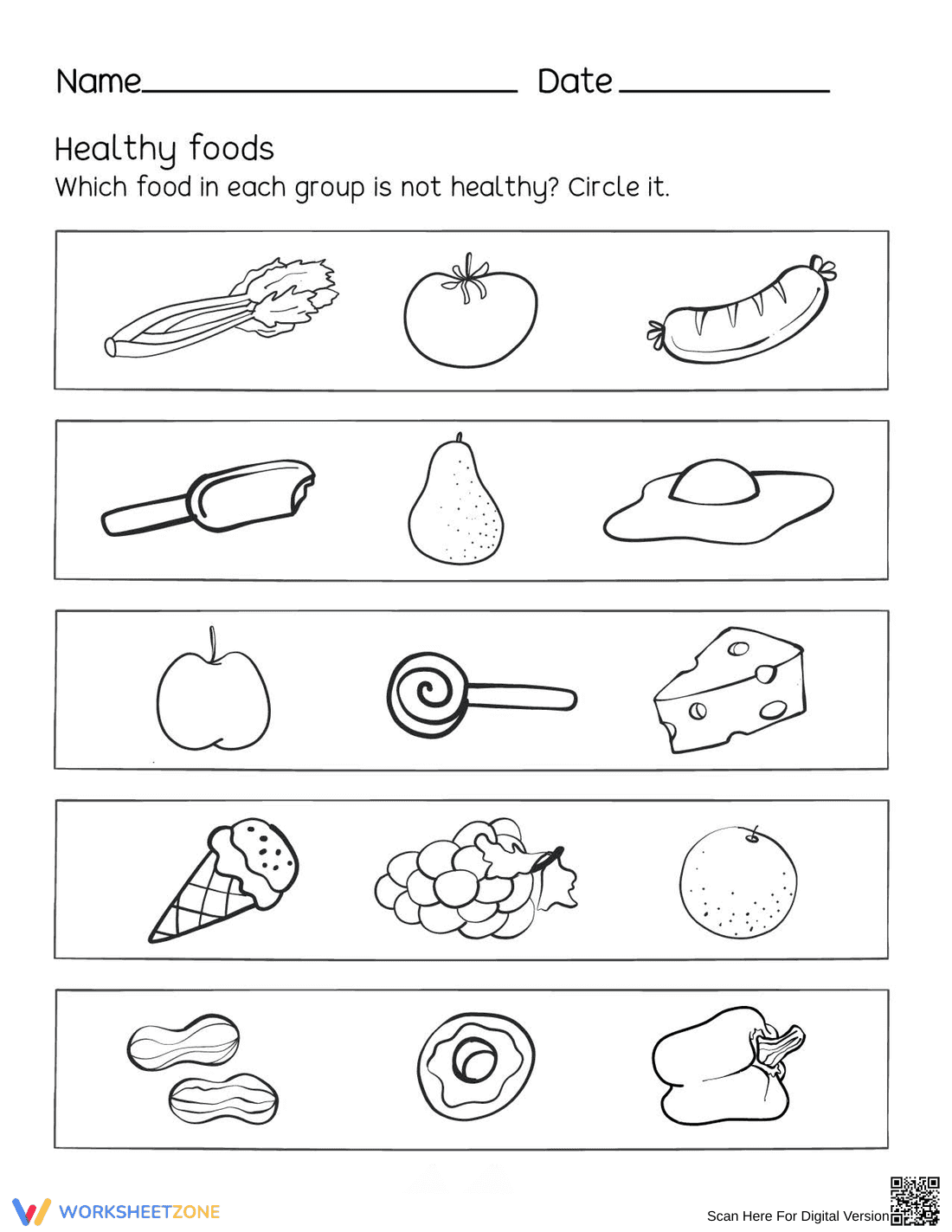
This printable worksheet helps early learners distinguish between nutritious snacks and less-healthy options through visual identification. By analyzing familiar food items, students develop foundational health literacy and decision-making skills. This resource is perfect for introducing the concept of balanced eating in a science or health unit for young children.
At a Glance
- Grade: K–1 · Subject: Health Science
- Standard:
K-LS1-1— Use observations to identify what humans need to stay healthy and survive- Skill Focus: Categorizing healthy vs. unhealthy foods
- Format: 1 page · 5 tasks · Answer key included · PDF
- Best For: Independent practice or morning work
- Time: 10–15 minutes
This single-page PDF features five distinct horizontal panels, each containing three black-and-white illustrations of food items. The layout is designed specifically for students in Preschool through Grade 1, utilizing large, recognizable icons such as fruits, vegetables, and sweets. The worksheet includes a clear instruction line at the top and a dedicated space for name and date entry, ensuring it is ready for immediate classroom distribution.
Zero-Prep Workflow
The workflow is designed for maximum efficiency.
- Print (30 seconds): Print the required copies for your group.
- Distribute (1 minute): Provide pencils and explain the circling task.
- Review (30 seconds): Use the provided answer key or project for class discussion.
Standards Alignment
This activity aligns with K-LS1-1, which requires students to use observations to describe patterns of what plants and animals, including humans, need to survive. By identifying which foods contribute to health, students apply observational skills to human nutritional requirements. This standard code can be copied directly into lesson plans, IEP goals, or district curriculum mapping tools to demonstrate compliance with early life science and health frameworks.
How to Use It
Use this worksheet during a "Healthy Bodies" unit after a group discussion about the food pyramid or healthy snacks. It serves as an excellent formative-assessment tool; as students work, observe whether they can explain why they chose to circle the unhealthy item in each row. This provides immediate insight into their understanding of nutritional concepts. Expect most students to complete all five rows within 10 to 15 minutes.
Who It's For
This resource is tailored for Preschoolers, Kindergartners, and First Graders who are developing fine motor skills and basic categorization abilities. It is particularly effective for English Language Learners (ELLs) because it relies on visual recognition rather than heavy text. Pair this worksheet with a physical fruit-tasting session or a read-aloud about "good-for-you" foods to create a more comprehensive learning experience for every student.
According to RAND AIRS 2024, early intervention in nutritional education improves long-term health outcomes in primary students. This Grade K-1 science worksheet addresses these needs by targeting the K-LS1-1 standard. Students engage in the plain-English skill of distinguishing between nutrient-dense foods and processed alternatives, reinforcing cognitive sorting patterns. Research indicates that visual discrimination tasks help solidify health literacy concepts before students encounter complex terminology. By providing five structured opportunities to spot unhealthy choices, the resource allows teachers to identify gaps in student knowledge. This activity facilitates a transition from basic observation to the evaluative thinking required for life science standards. The clear design ensures students focus entirely on the core competency of healthy choice identification.


