Kindergarten Healthy Habits printable worksheets
These kindergarten healthy habits printable worksheets resources give teachers a concrete entry point into health science — one that moves students beyond listening toward sorting, sequencing, and drawing tasks they can complete independently. The set addresses five core areas: nutrition, hygiene, physical activity, sleep, and basic safety, each presented through age-appropriate visuals rather than extended reading demands.
What the Set Covers and How Each Worksheet Works
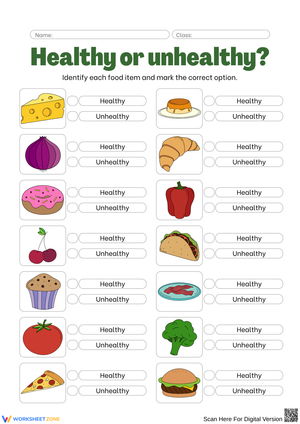
Nutrition worksheets use the MyPlate framework as their organizing structure. Students sort food picture cards into five groups — fruits, vegetables, grains, protein, and dairy — before most of them can reliably read the group labels. The sorting format matters here: five-year-olds can perceive visual variety on a plate long before they can reason about nutrient density, so worksheets that ask "which lunch has more colors?" generate real thinking from students who would glaze over a list of nutritional rules.
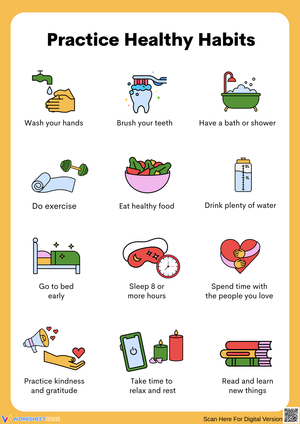
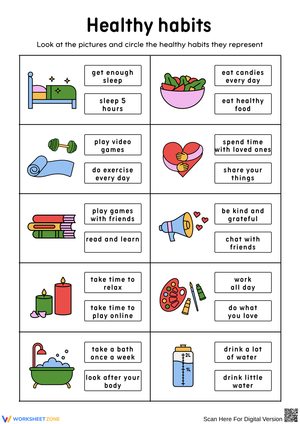
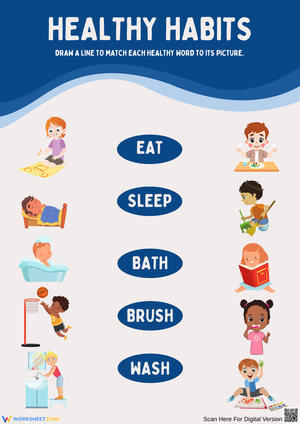
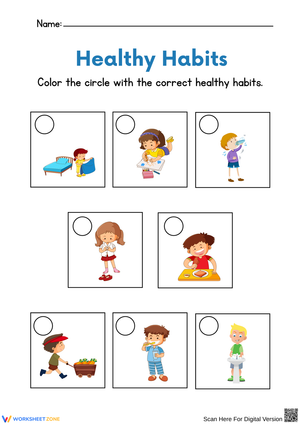
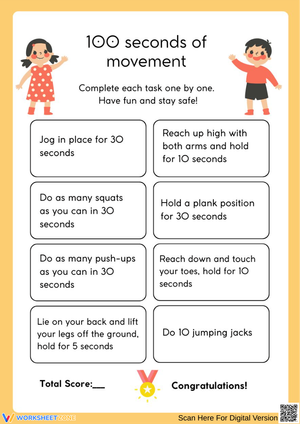
Hygiene worksheets focus on handwashing and dental care. The handwashing worksheet presents the five-step sequence — wet, soap, scrub, rinse, dry — as a picture-ordering task. Students number the steps or cut and paste them into the correct order. Dental care worksheets cover proper brushing and food choices that protect teeth, connecting directly back to the nutrition strand. Physical activity worksheets ask students to circle images of activities that get the body moving and typically include a simple tracking strip — a row of boxes to mark each day they got active.
Sleep and safety each get their own worksheets. The sleep worksheet is among the most discussion-rich in the set: students draw their own bedtime routine, which surfaces wide variation in what happens at home and opens a natural conversation about why the body needs rest. Safety worksheets use safe/not-safe sorting to address pedestrian awareness, fire safety, and knowing when to find a trusted adult.
Mistakes Students Make That These Worksheets Help You Catch
The MyPlate sorting worksheet reliably produces two specific errors. First, students place juice boxes in the fruit group — a distinction the worksheet format actually helps address, since a well-designed nutrition worksheet shows a juice box and an apple as separate images and invites students to consider whether they belong together. Second, and more persistently, students sort cookies, fruit snacks, and chocolate milk as "healthy" because those foods appear at home in contexts that feel safe and familiar. That is not a worksheet flaw; it is a teaching moment the worksheet creates, and worth pausing the class to discuss.
On handwashing sequencing worksheets, the most consistent error is placing the drying step before the rinsing step. Students reason that you dry things after they get wet, so drying feels like the logical move right after scrubbing. Pairing the completed worksheet with a real sink walk-through — where students feel the soap residue that remains when rinsing gets skipped — closes that gap in a way that re-explaining the sequence on paper will not.
Building These Worksheets Into Your Weekly Health Routine
Each of these kindergarten healthy habits printable worksheets activities is formatted to fit inside fifteen minutes, which means teachers can work them into a short science block, a morning meeting warm-up, or the focused window right before lunch without clearing space for a full lesson period. Most kindergarten health instruction happens in small daily increments rather than long dedicated units, and these worksheets fit that reality.
One approach that works well: spend a full week on a single habit before introducing the next. A week of handwashing — sequencing worksheet on Monday, brief review and class discussion on Thursday, actual sink practice on Friday — produces noticeably better retention than moving through all five habit areas in a compressed sprint. Each worksheet stands alone and can be revisited without requiring the others to be taught first, which makes that pacing easy to sustain.
A practical modification worth trying with the daily habit trackers: slide them into heavy-duty dry-erase pockets. Students mark the tracker with a dry-erase marker each morning and wipe it clean at the end of the week. That same worksheet functions for an entire month without reprinting — especially useful for water intake, active play, and teeth-brushing trackers, where the instructional value comes from repetition over time rather than from completing the task once.
Sending worksheets home extends the learning beyond dismissal. A completed MyPlate worksheet sent home on Friday can prompt a dinner-table conversation that a verbal summary of the lesson probably would not. A one-sentence note in the weekly family communication — "Ask your child to explain where they put the broccoli and why" — gives parents a specific starting point rather than a general heads-up about the health unit.
Adjusting the Set for a Range of Learners
The visual format of these kindergarten healthy habits printable worksheets activities works naturally in mixed-ability groups. Students who are not yet reading independently complete the sorting and sequencing worksheets using pictures alone, while stronger readers use the text labels as an additional layer to cross-check their decisions. Neither group needs a different version of the worksheet to access the same core task.
For students ready for a greater challenge, extend any sorting worksheet by asking them to explain their reasoning verbally or through a labeled drawing. A student who can correctly sort food images into MyPlate groups is ready to articulate why chicken belongs in the protein section and not the vegetable section — a higher-order task the base worksheet supports without requiring. For students who struggle with fine motor tasks like cutting and pasting, running the same sequencing activity on a large chart as a whole-class exercise gives those students full access to the lesson without the frustration of handling small paper pieces under time pressure.
Standard Alignment
These worksheets align to the National Health Education Standards (NHES), specifically Standard 1, which asks students to comprehend concepts related to health promotion and disease prevention, and Standard 7, which asks students to demonstrate health-enhancing behaviors. At the kindergarten benchmark, NHES 1.2.1 states that students should be able to identify that healthy behaviors affect personal health — exactly what the nutrition sorting, handwashing sequencing, and physical activity identification tasks address. NHES 7.2.1 asks students to demonstrate a variety of healthy practices, which maps directly to the bedtime routine drawing task and the daily habit trackers. Teachers in districts using the Next Generation Science Standards will find a natural connection to NGSS K-LS1-1, which addresses what living things need to survive — a useful umbrella for explaining to five-year-olds why sleep, food, water, and movement all belong in the same conversation.
Frequently Asked Questions
How do the handwashing worksheets connect to actual classroom practice?
The sequencing worksheet is most effective when paired with a real sink visit the same day. Have students complete the cut-and-paste or numbering task at their seats first, then walk them through the actual steps at the classroom sink while referring back to their ordered pictures. That combination — paper task followed by physical practice — moves the sequence from paper knowledge to body memory, which is what matters when a five-year-old is standing at the sink between lunch and read-aloud with soap on their hands.
What's the best approach when students have very different food backgrounds at home?
Lead with observation rather than evaluation. The sorting worksheets work best when the first question is not "is this healthy?" but "where does this go on the plate?" Students who eat primarily rice, beans, tortillas, or other cultural staples can sort accurately once they understand what each plate section represents. Framing the lesson around plate variety — a colorful plate — rather than "good food vs. bad food" keeps the activity inclusive and avoids the implicit judgment that makes some families uneasy with school nutrition lessons.
Are these worksheets appropriate for formative assessment, or are they strictly practice activities?
Most of the kindergarten healthy habits printable worksheets in this set function as formative checks rather than summative assessments — they show you where a student's understanding is on a given day, not whether they have mastered the standard. The MyPlate sorting worksheet and the handwashing sequence worksheet both produce visible evidence of student thinking that a quick teacher scan can capture before the activity ends. For more formal documentation, a photo of the completed worksheet alongside a brief student dictation — "tell me why you put this food here" — gives richer evidence than the worksheet alone.
Clear All