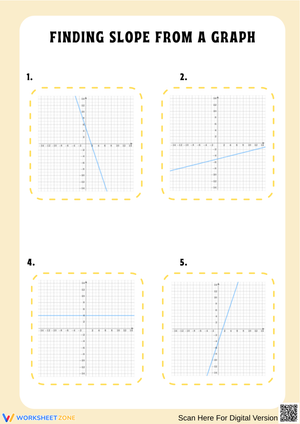
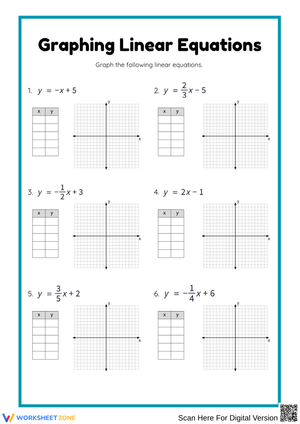
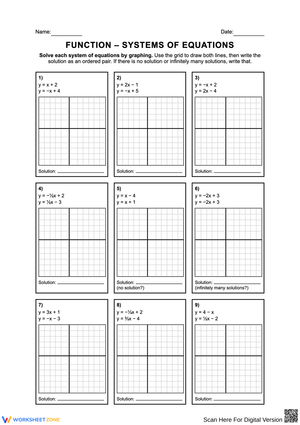
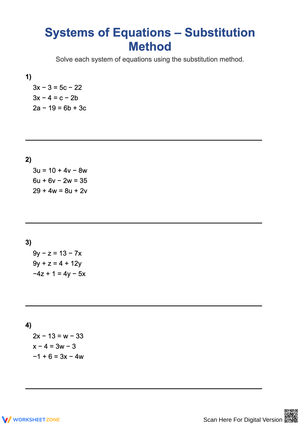
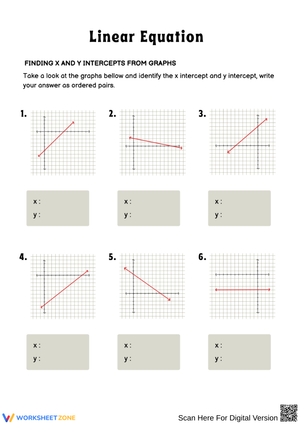
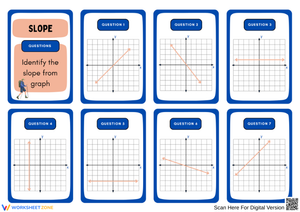
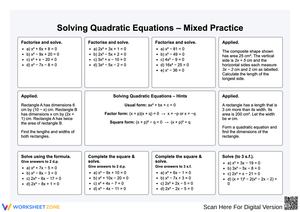
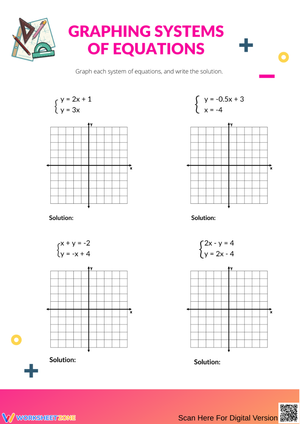
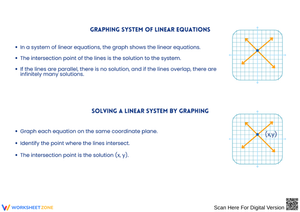
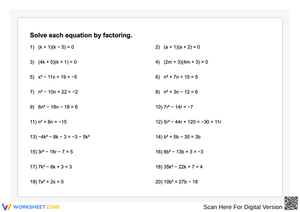
These equations pdf worksheets for 9th grade give algebra teachers a set of standalone, printable practice resources that cover every core equation type students encounter in their first year of high school math. The set spans one-step through multi-step linear equations, systems solved by three distinct methods, literal equations, and introductory quadratics — the equation skill areas where procedural fluency either firms up or fractures before students reach Algebra II.
The Specific Skills Targeted Across the Set
Four main equation categories drive the practice:
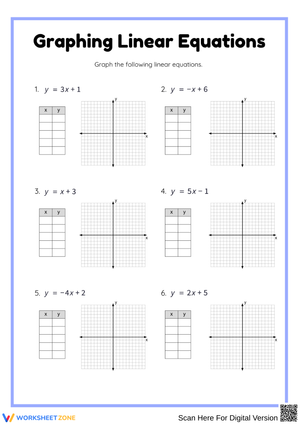
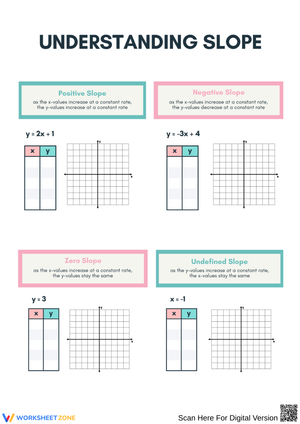
- Linear equations in one variable — one-step, two-step, and multi-step problems involving distribution and variable terms on both sides of the equal sign
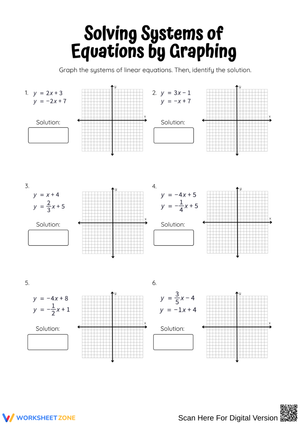
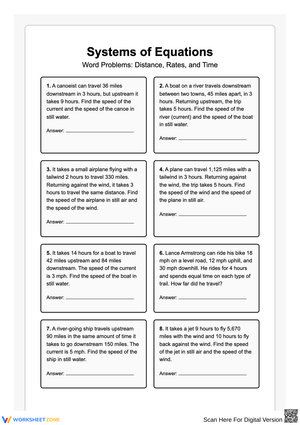
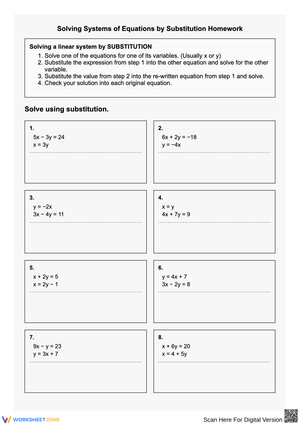
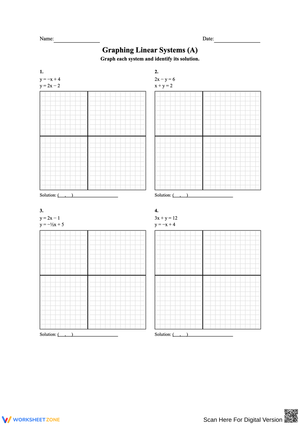
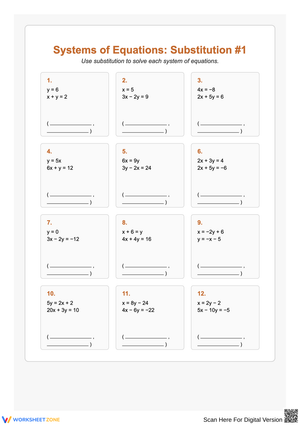
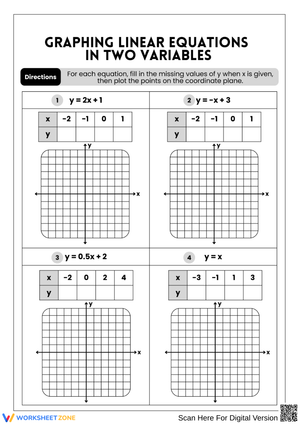
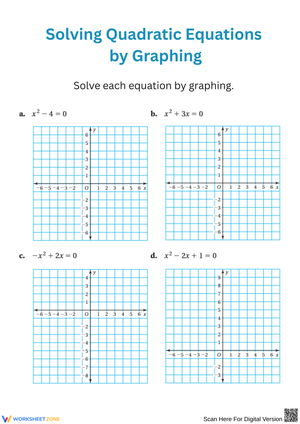
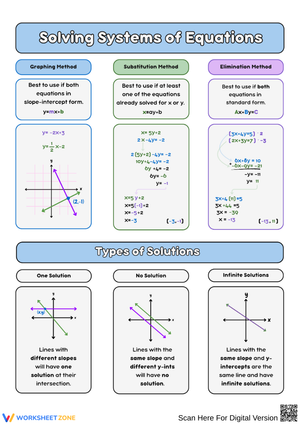
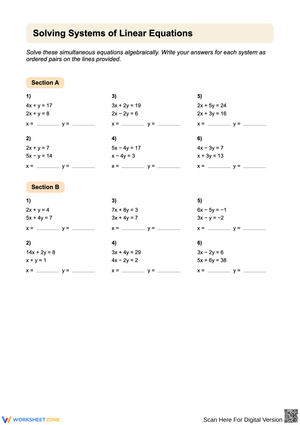
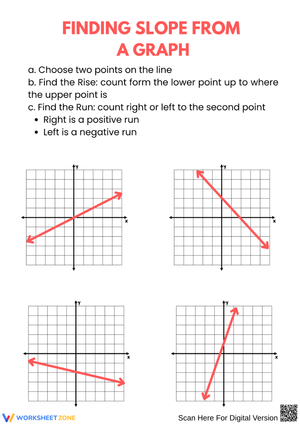
- Systems of equations — graphing, substitution, and elimination taught separately before students encounter mixed-method problems
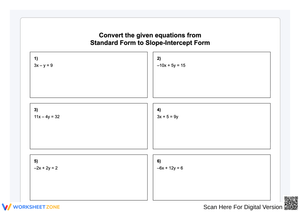
- Literal equations — rearranging formulas like d = rt or A = ½bh to isolate a named variable
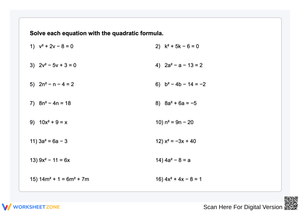
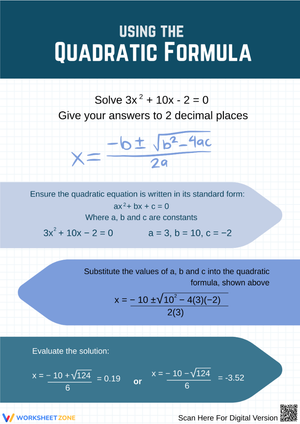
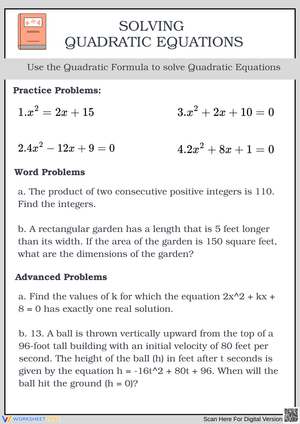
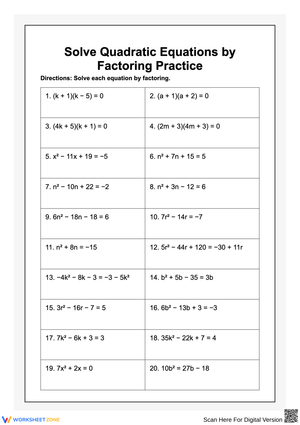
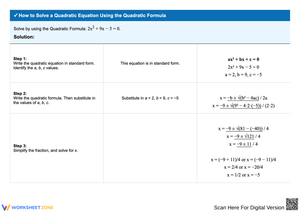
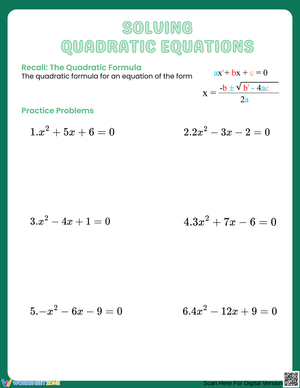
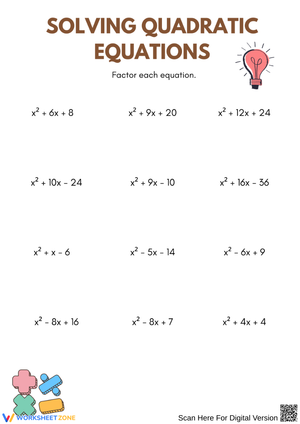
- Introductory quadratics — factoring, the zero-product property, and perfect square trinomials
The linear equation worksheets build deliberately from single operations toward multi-step problems with distribution. That sequencing matters because students who move from one-step to multi-step work too quickly tend to treat the distributive property as optional — they skip the written step and then lose track of the sign on the second term. Keeping the early worksheets focused on building that written habit before increasing complexity makes a measurable difference in how students handle the harder problems.
The method-by-method approach to systems is worth noting separately. Students who encounter all three methods in a single mixed worksheet before they've practiced each one individually treat method selection as a guess. Teaching one method per worksheet, then introducing choice only after students are comfortable with all three, produces more deliberate decision-making — and cleaner work.
Common Mistakes Teachers Should Watch For and Address
Sign errors during distribution are predictable, but the specific form shifts by equation type. When students distribute a negative — say, in -2(3x - 5) — a reliable portion of any class will write -6x - 10 rather than -6x + 10, because they apply the sign correctly on the first term and then drop it on the second. These worksheets surface that error because they include enough consecutive distribution problems that the pattern shows up clearly across student work rather than appearing as an isolated mistake you might miss when scanning quickly.
Literal equations produce a distinct category of confusion. Students who solve 3x + 7 = 16 fluently will stall on solving ax + b = c for x. The letters don't signal "same procedure" to most ninth graders — they register as a different, harder kind of problem. The practical fix is to run the literal equation worksheet the same day students complete a matching numerical-variable set, placing them side by side so the identical algebraic structure becomes visible in both. That parallel comparison cuts the stalling time considerably.
A third consistent issue: students solving systems write a single value rather than an ordered pair, particularly when substitution leads them to find x before y. They stop at x = 3 and consider the problem solved. Building a verification step into the worksheet — one line asking students to substitute their solution back into both original equations — catches this more reliably than any reminder written on the board.
Standard Alignment
The primary standard connecting equations pdf worksheets for 9th grade to formal Algebra I instruction is HSA-REI.B.3, which addresses solving linear equations and inequalities in one variable. In classroom terms, this isn't a capstone standard — it's an entry competency that teachers address in the first weeks of the course and rely on as assumed knowledge for every unit that follows. The systems worksheets align with HSA-REI.C.6, literal equation practice connects to HSA-CED.A.4, and introductory quadratic work falls under HSA-REI.B.4. Together, these four standards cover the algebraic reasoning strand from the opening weeks of Algebra I through the end of the course.
Fitting These Worksheets Into Your Algebra I Lesson Sequence
The most productive slot for equations pdf worksheets for 9th grade is the last ten to fifteen minutes of a guided-instruction lesson, when students shift from watching modeled examples to attempting problems on their own. That's the moment when confusion is closest to the surface and you are still in the room to catch it — not the next morning when procedural errors have already calcified into habit. The row-game format works especially well here: one student solves the left column of a worksheet, a partner solves the right, and the problems are built so that different equations in the same row yield the same numerical answer. Mismatched answers force the pair to locate the error together before raising a hand.
Bell ringers are a natural second application. Three to five problems from the linear equation worksheets settle students into a math mindset while you take attendance and give you immediate formative data on the previous day's instruction. For homework, the multi-step and systems worksheets work best on nights that follow a full period of direct instruction, when students have enough guided practice behind them to attempt the problems independently without losing momentum partway through.
Adapting the Practice Set for Students at Different Readiness Levels
Using equations pdf worksheets for 9th grade with a mixed-ability class comes down to problem selection rather than building entirely separate materials. The linear equation worksheets tier themselves naturally by equation type — one-step problems for students rebuilding confidence with integer operations, two-step problems for students working toward grade-level fluency, and multi-step problems with variables on both sides for students ready for extension. A clear sense of which problems belong in which tier removes any need to print different versions for different students.
For students who freeze when a problem looks unfamiliar — which happens most often during literal equations and the graphing portion of systems — partially worked problems are more effective than simplifying the task itself. Write the first two algebraic steps in lighter font or present the equation at the line where students typically stall, then ask them to complete from there. This preserves the cognitive demand of the task without reducing what students actually practice.
Advanced students benefit from removing the method cues. Most systems worksheets indicate which solving method to use; stripping that instruction and asking students to choose — and briefly justify their choice in writing — adds a layer of mathematical reasoning that goes beyond procedural accuracy. That decision-making habit matters for students heading into honors Algebra II or pre-calculus the following year.
Frequently Asked Questions
What equation types are standard in a 9th-grade algebra course?
Most Algebra I courses cover linear equations in one variable, systems of linear equations, literal equations, and introductory quadratics. The sequencing is predictable: linear equations in one variable anchor the first quarter, systems follow in the second, and quadratics appear in the third or fourth quarter depending on pacing. Each worksheet in this set targets one equation type at a time, making it straightforward to match practice to wherever your class currently sits in that sequence.
Do the worksheets include answer keys?
Yes. Each worksheet comes with a step-by-step answer key showing the full solving process, not just the final value. For algebra, that distinction matters: a student who arrives at x = 4 through an incorrect procedure needs to see exactly where the working diverged, not just that the number is right. The step-by-step format also makes grading more efficient — you can scan student work against the key line by line rather than re-solving each problem from scratch.
Are these worksheets appropriate for students who entered 9th grade below grade level?
The early worksheets in the linear equation sequence — one-step and two-step problems with positive integer coefficients — are accessible for students still solidifying their work with integers. Once multi-step equations appear, however, students who have persistent gaps in integer arithmetic will hit a wall. Pairing one of the early linear equation worksheets with a brief integer operations review beforehand tends to be more productive than pushing through the sequence at the same pace as the rest of the class.














 Interactive Worksheet Maker
 Quiz Maker
 Word Search Maker
 Crossword Puzzle Maker
 Word Scramble Generator
 Sentence Scramble Generator
 Handwriting Worksheet Generator
 Name Tracing Generator
 Fill In The Blank Generator




 BACK TOSCHOOL