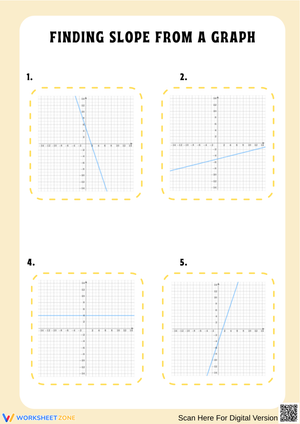
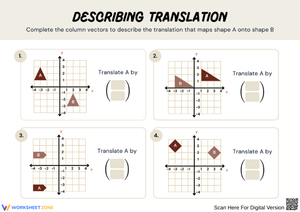
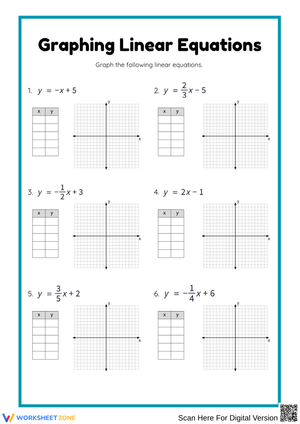
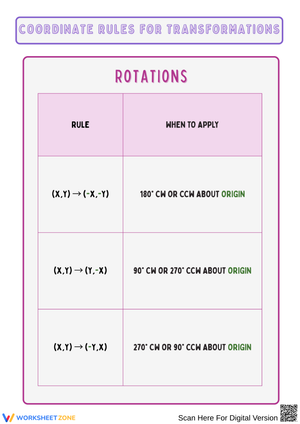
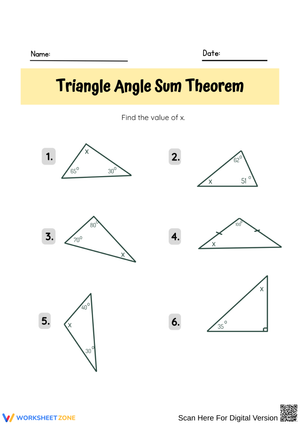
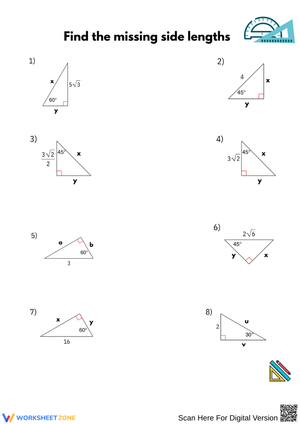
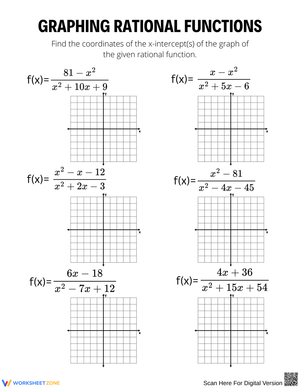
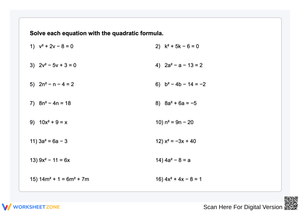
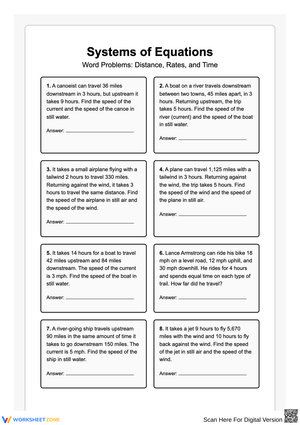
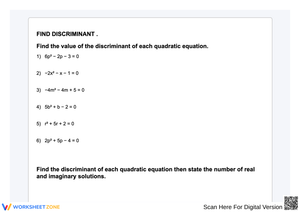
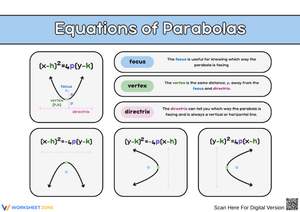
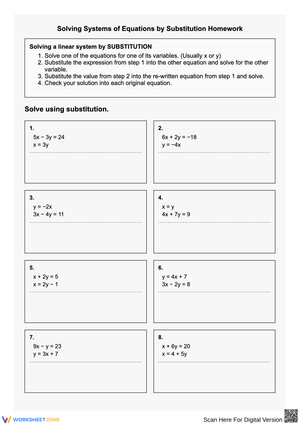
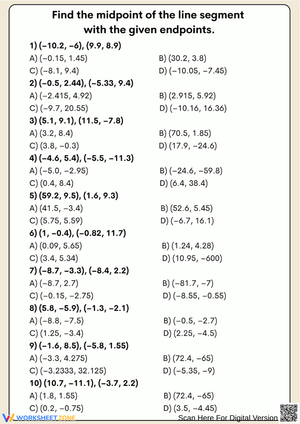
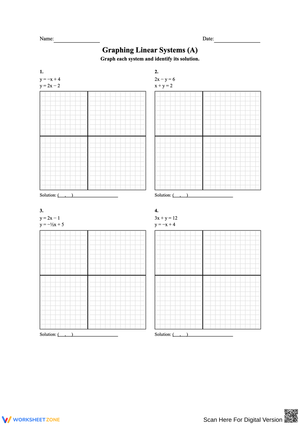
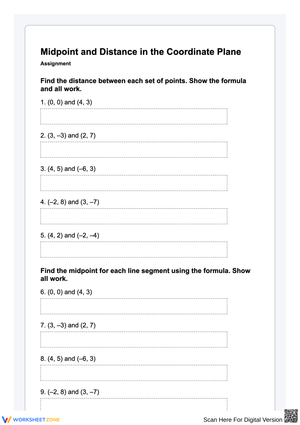
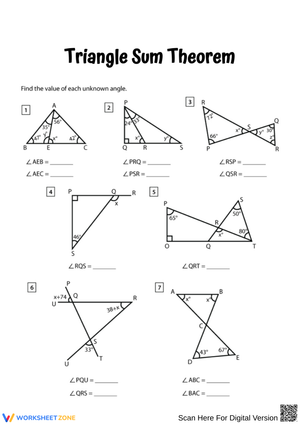
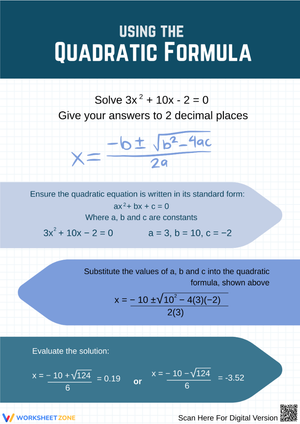
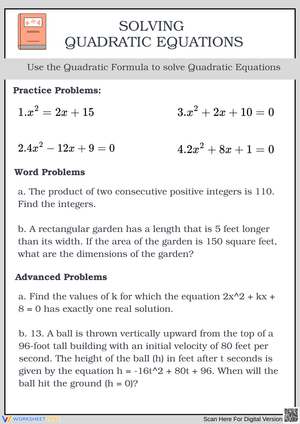
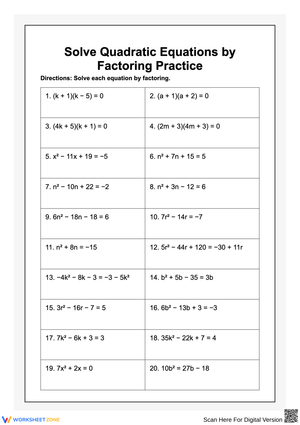
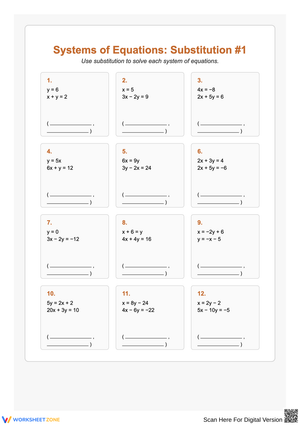
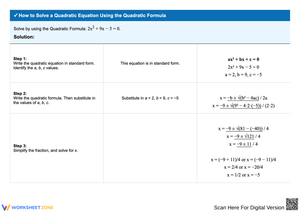
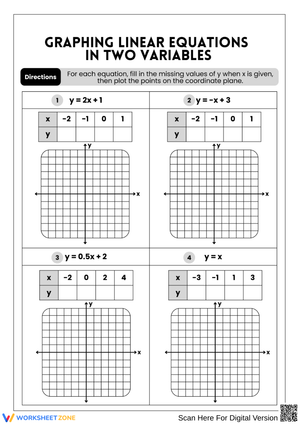
These 9th grade math worksheets resources give Algebra 1 teachers direct, printable practice across the four domains that define 9th grade math: linear equations and inequalities, systems of equations, functions, and polynomial operations. The PDF format earns its keep here — fractions, coordinate planes, and exponent notation hold their formatting whether a student prints at home on a worn inkjet or the building photocopier runs 30 copies before first period.
The Specific Skills Each Worksheet Targets
Algebra 1 is not one skill — it is a sequence of interconnected ideas that build across the year, and each worksheet addresses a distinct point in that sequence.
- Linear equations: Students solve one- and two-step equations, then move to multi-step problems involving distribution, combining like terms, and variables on both sides.
- Inequalities: Worksheets pair equation work with inequality notation, including graphing solution sets on number lines and interpreting what those solution sets represent in context.
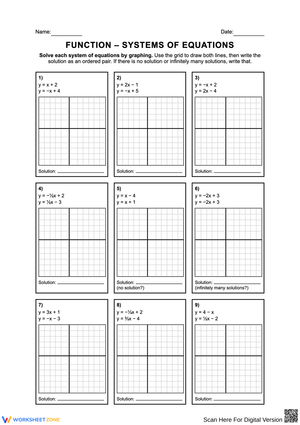
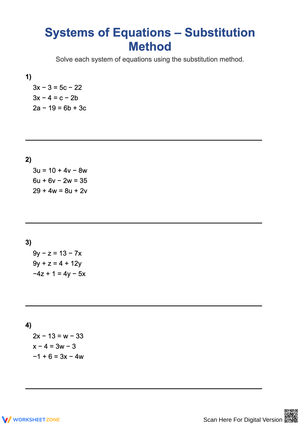
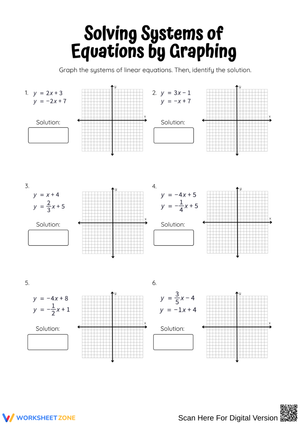
- Systems of equations: The set includes separate worksheets on graphical interpretation, substitution, and elimination — each method practiced in isolation before problems ask students to choose strategically.
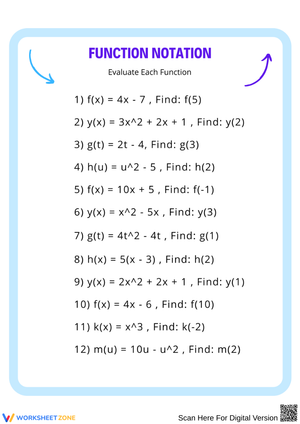
- Functions: Students classify relations using the vertical line test, identify domain and range from graphs and tables, and evaluate functions written in f(x) notation.
- Polynomials and factoring: Worksheets move through adding and subtracting polynomials, multiplying binomials, and factoring — covering greatest common factor, difference of squares, and trinomials in the form x² + bx + c.
Algebra 1 Error Patterns to Watch and Address
The mistakes that show up in 9th grade Algebra 1 are predictable enough that experienced teachers learn to anticipate them before a worksheet even comes back. The most persistent one involves the distributive property with subtraction. Students who handle 2(x + 3) without hesitation will write -(x - 4) as -x - 4, dropping the sign change on the second term. This error surfaces on equation worksheets, on factoring worksheets, on systems problems — anywhere a negative coefficient precedes a quantity in parentheses.
Inequality work produces a second cluster. Students learn to flip the inequality symbol when multiplying or dividing both sides by a negative number, but the rule often stays tied to simple one-step problems. When that same step appears midway through a four-step problem, the flip gets skipped. Structuring practice so this step comes up repeatedly across problems of different lengths — rather than only on a dedicated inequalities worksheet — helps students carry the rule past the context where they first learned it.
Factoring trinomials is its own category. A student who correctly factors x² + 2x - 15 as (x + 5)(x - 3) may turn around and write x² - 2x - 15 as (x - 5)(x + 3) — the constant term checks out, but the middle term is wrong. The factors are paired with incorrect signs. Catching this in whole-class discussion before independent practice starts is more efficient than correcting it one worksheet at a time after the fact.
Where These Worksheets Fit in the Teaching Week
Bell ringers are the most effective use of these worksheets. A short set of four or five problems placed on desks before students arrive produces focused work time during those otherwise chaotic opening minutes. When the problems draw on the previous day's material, the warm-up functions as spaced retrieval — recall that builds retention without a quiz grade attached.
Exit tickets are the second strong application. At the last eight minutes before dismissal, a worksheet trimmed to three or four targeted problems gives a fast read on who has the concept and who needs re-teaching. A mix of two procedural problems and two applied problems is more diagnostic than either type alone. That information shapes the next day's opening before five days of compounding confusion make intervention harder.
For homework, the 9th grade math worksheets format integrates cleanly into most learning management systems. Students download, print, and photograph their completed work for submission — or annotate the PDF directly in apps like Notability or Adobe Fill and Sign if your school has that infrastructure. Either way, the mathematical formatting survives the trip intact.
Tailoring the Set for Students at Different Levels
Ninth grade Algebra 1 classes rarely arrive with uniform preparation. Some students come with solid pre-algebra fluency; others are still working through gaps from 7th and 8th grade. The most direct adjustment is sequencing: a student who struggles with two-step equations works through the linear equations worksheets before touching systems. A student who already has that fluency moves faster and spends more time on factoring, where most students hit their first real wall regardless of prior preparation.
For students who need more structured support, writing two or three worked examples at the top of a worksheet before copying — using the same format the problems follow — provides a reference without removing the problem-solving demand. For students who finish quickly, asking them to write their own word problem that models the equation type on the worksheet shifts the task from procedural execution to mathematical reasoning. That increase in cognitive demand requires no separate worksheet, just a different prompt written in the margin.
Standard Alignment
The 9th grade math worksheets resources align to the Common Core State Standards for High School Algebra. Linear equations and inequalities work maps to HSA-REI.B.3, which requires students to solve linear equations and inequalities in one variable. Systems content aligns with HSA-REI.C.6, solving systems of linear equations exactly and approximately. Function worksheets address HSF-IF.A.1 and HSF-IF.A.2, establishing the formal definition of a function and requiring students to use and interpret f(x) notation. Polynomial and factoring work falls under HSA-SSE.A.2, which asks students to identify structure in expressions and use that structure to rewrite them.
In practical classroom sequencing, HSA-REI.B.3 typically occupies the first marking period, making the linear equations worksheets natural early-year material. The function standards cluster into mid-year once students have enough equation fluency that f(x) notation does not become the primary obstacle. Factoring usually lands in the third quarter, when HSA-SSE work extends into solving quadratics by factored form.
Frequently Asked Questions
Do these worksheets cover Algebra 1 only, or do they include geometry content?
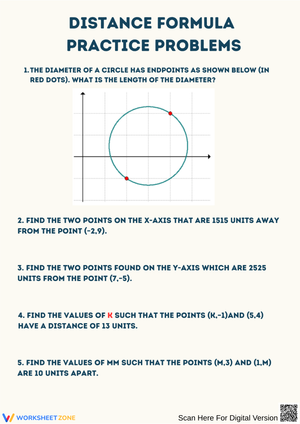
The set focuses on Algebra 1: equations, inequalities, systems, functions, and polynomial operations. Coordinate plane work appears in the context of graphing linear equations and functions, but the worksheets do not address geometric theorems, proofs, or measurement. Teachers in integrated math courses will want to supplement with dedicated geometry resources for those units.
Can these worksheets be used for credit recovery or retake preparation?
Yes. Each worksheet in the set targets a discrete skill rather than mixing several concepts together. A student who struggled with systems but passed linear equations works through just the systems worksheets without revisiting material already mastered. That specificity matters when instructional time is limited and needs to go exactly where the gap is.
How do these worksheets move students from procedural problems toward word problems?
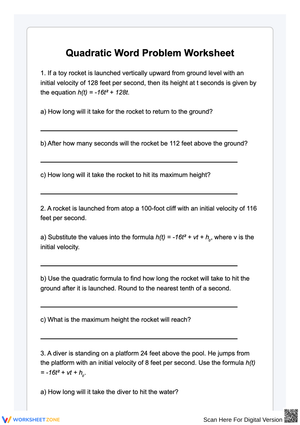
Each major topic area includes worksheets that progress from straight procedural problems into applied problems requiring students to set up equations from written scenarios. The applied problems use contexts common in Algebra 1 — rate and distance, mixture, and cost-revenue situations — so students build the translation skill alongside the solving skill. Word problems are not held as a separate unit; they appear within the same worksheet where the procedural practice lives.
Do these work for 8th graders enrolled in Algebra 1?
The 9th grade math worksheets content targets Algebra 1 standards regardless of grade placement. Accelerated 8th graders in Algebra 1 cover the same HSA-REI and HSF-IF standards, so the worksheets transfer without adjustment. The problem complexity and reasoning demands are calibrated to early high school math, which fits both groups equally well.














 Interactive Worksheet Maker
 Quiz Maker
 Word Search Maker
 Crossword Puzzle Maker
 Word Scramble Generator
 Sentence Scramble Generator
 Handwriting Worksheet Generator
 Name Tracing Generator
 Fill In The Blank Generator




 BACK TOSCHOOL