




























Views
Downloads

Essential Plant Cell Coloring Worksheet | Grade 4-8

Paste this activity's link or code into your existing LMS (Google Classroom, Canvas, Teams, Schoology, Moodle, etc.).
Students can open and work on the activity right away, with no student login required.
You'll still be able to track student progress and results from your teacher account.
This Grade 4-8 science worksheet helps students identify and memorize the primary organelles of a plant cell through a guided coloring activity. By engaging the psychomotor domain, learners build a strong conceptual foundation of cellular biology. This resource provides a clear visual model that simplifies complex structures into an accessible format for classroom or home use.
At a Glance
- Grade: 4–8 · Subject: Science
- Standard:
MS-LS1-2— Develop and use a model to describe parts of a cell- Skill Focus: Plant Cell Organelle Identification
- Format: 1 page · 7 coloring tasks · Answer key included · PDF
- Best For: Initial cell structure introduction or emergency sub plans
- Time: 15–25 minutes
What's Inside
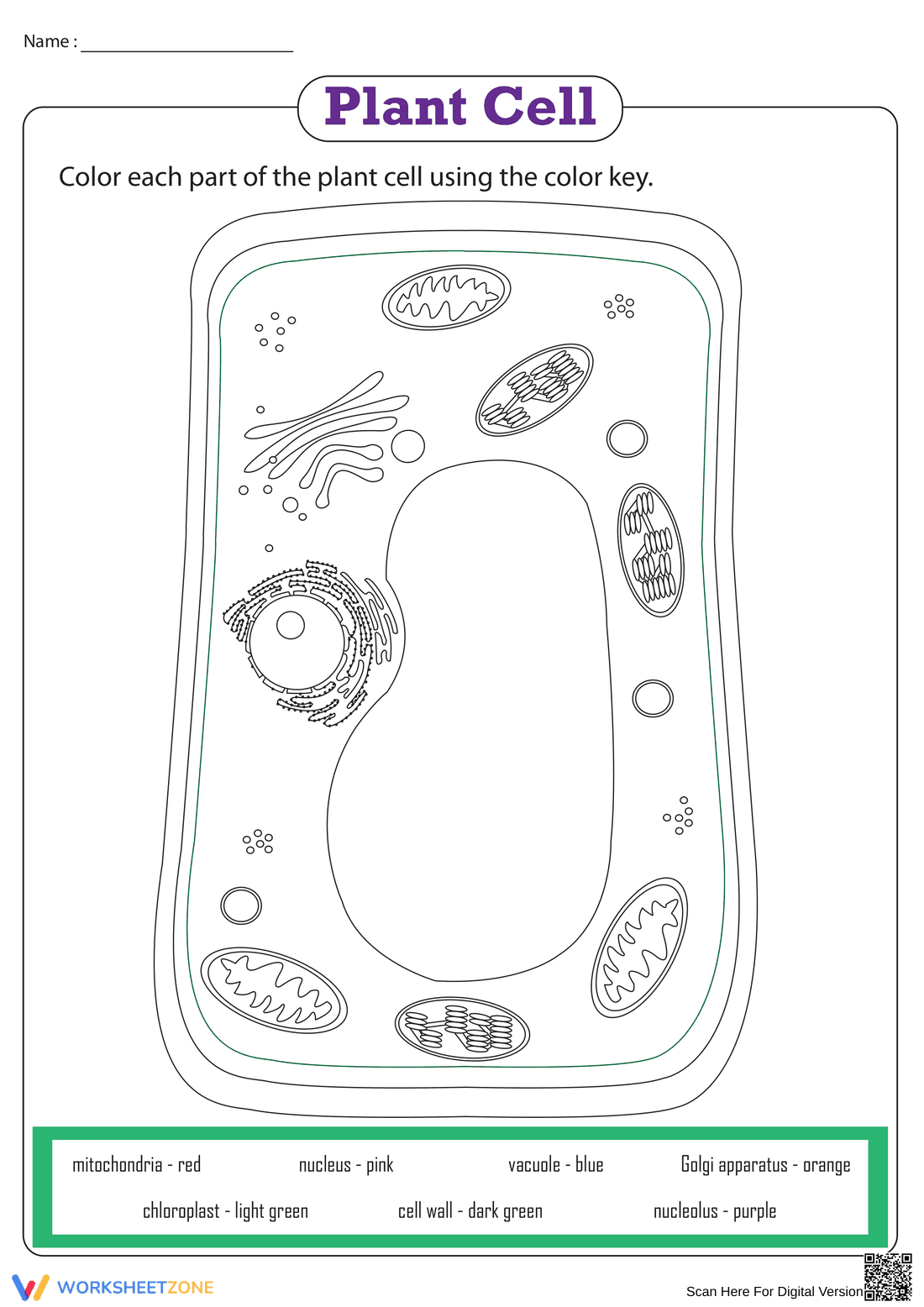
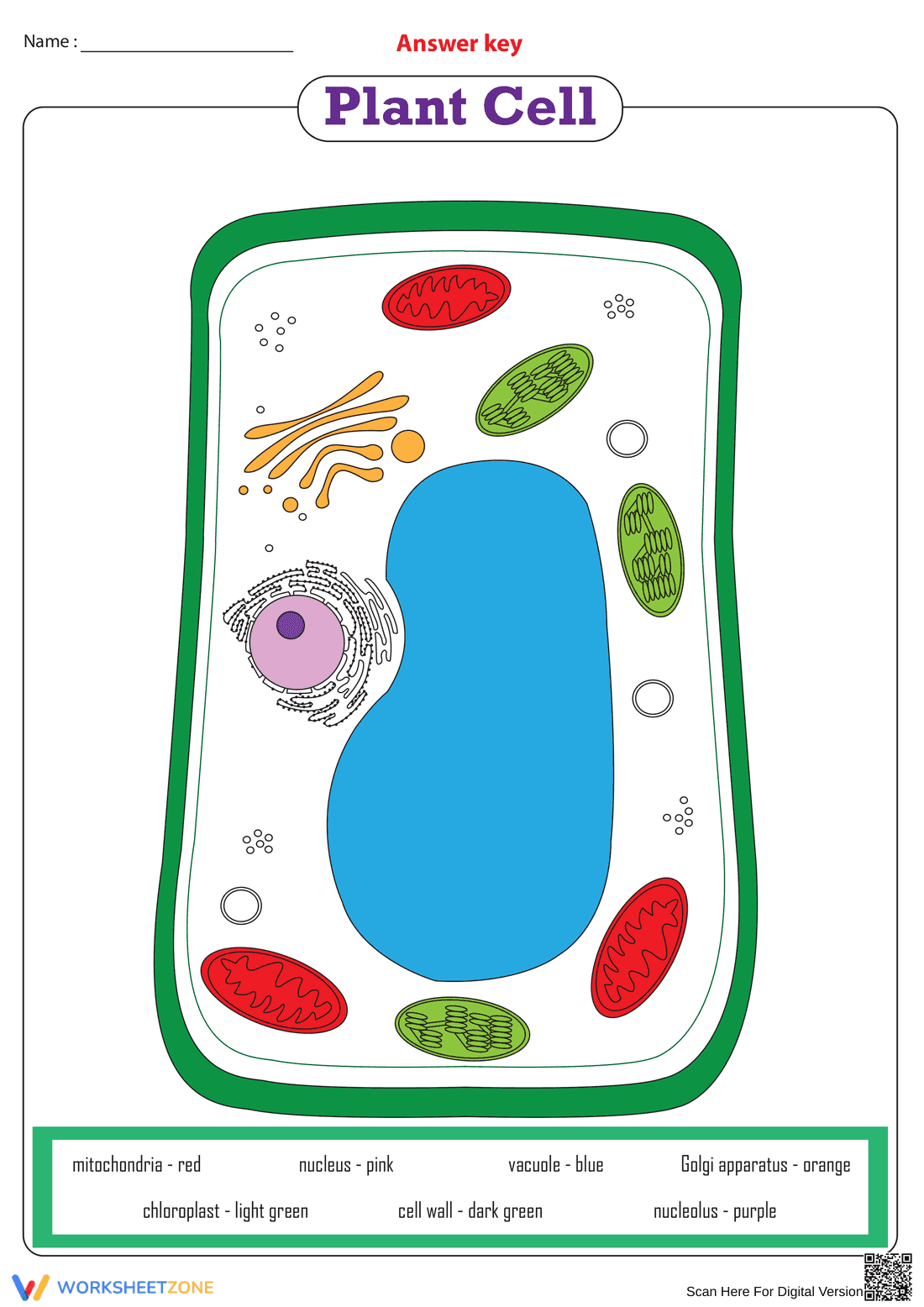
This PDF package includes a high-resolution coloring page featuring a detailed plant cell. Students identify and color seven key structures: the nucleus, nucleolus, mitochondria, chloroplasts, Golgi apparatus, vacuole, and the cell wall. A corresponding color-coded answer key is included to facilitate quick grading or student self-correction, ensuring accurate identification of organelle boundaries.
Zero-Prep Workflow
The workflow for this resource is designed for maximum efficiency in busy classrooms. Teachers can print the required number of copies in under 1 minute. Distribution takes approximately 30 seconds as the worksheet is self-explanatory with a clear color key at the bottom. Reviewing the finished work with the provided answer key takes less than 2 minutes of active instruction time. Total teacher prep time is estimated at under 2 minutes, making it an ideal choice for emergency sub plans or quick lesson transitions.
Standards Alignment
This resource aligns with MS-LS1-2: "Develop and use a model to describe the function of a cell as a whole and ways the parts of cells contribute to the function." By coloring the specific organelles, students create a visual model that distinguishes between the various internal structures necessary for cell survival and growth. This standard code can be copied directly into lesson plans, IEP goals, or district curriculum mapping tools.
How to Use It
Use this worksheet as a quiet, focused activity immediately following a direct instruction lesson on plant biology. It serves as an excellent formative assessment tool; as students color, walk around the room to observe if they can distinguish between similar-looking structures like chloroplasts and mitochondria. The expected completion time is 15–25 minutes, depending on the detail of coloring and student grade level.
Who It's For
This worksheet is designed for students in upper elementary through middle school (Grades 4–8) who are beginning their study of life sciences. It is particularly helpful for visual and tactile learners who benefit from hands-on interaction with diagrams. Pair this resource with a reading passage about organelle functions or a labeled versus unlabeled anchor chart to reinforce vocabulary retention and structural recognition.
According to research by Fisher & Frey (2014), visual models and guided practice like this plant cell diagram are critical for moving students toward mastery of complex scientific concepts. The coloring process forces students to spend time looking closely at the spatial relationships between the nucleus, vacuole, and cell wall, which improves long-term memory of structural biology. Studies from RAND AIRS 2024 emphasize that high-quality, zero-prep printables reduce teacher burnout while maintaining standards-aligned instructional integrity. This MS-LS1-2 worksheet provides the necessary guided practice bridge by using a pre-labeled key to direct student discovery of cellular architecture, ensuring all learners can access grade-level science content effectively. This approach supports universal design for learning principles by providing multiple means of representation.


