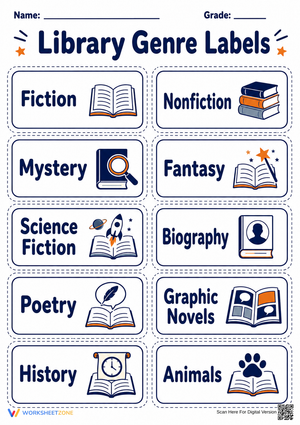
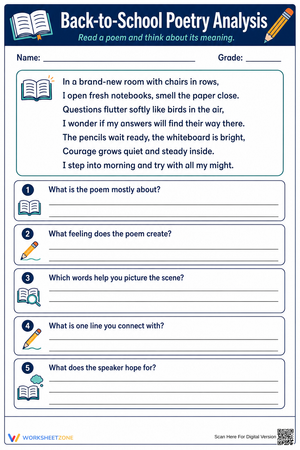
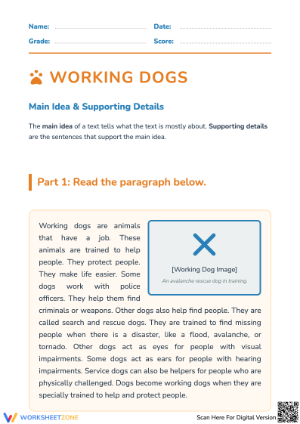
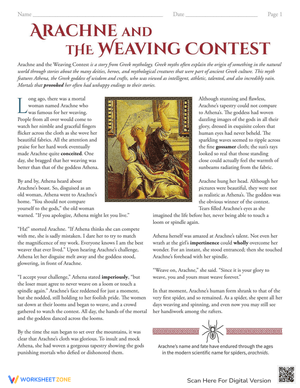
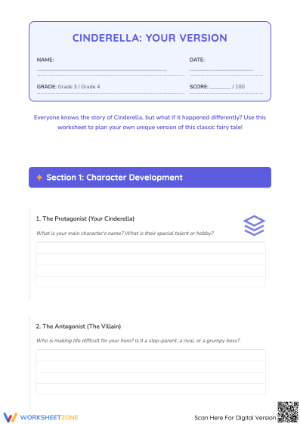
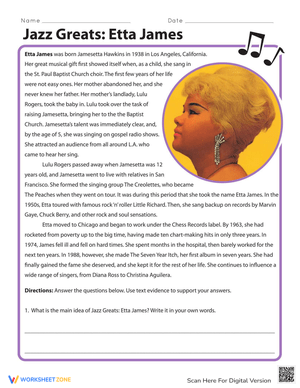
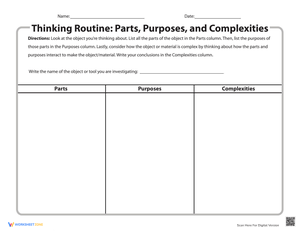
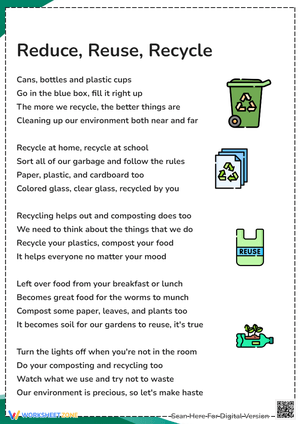
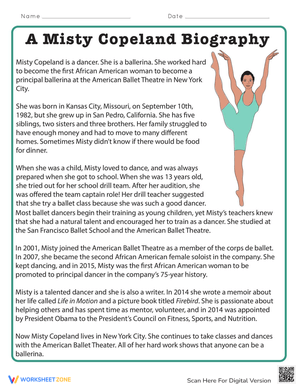
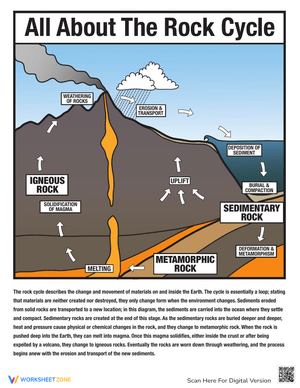
These reading genres and types printable worksheets for 4th grade treat genre identification as what it actually is — a reading skill, not a vocabulary exercise. Students who can recite that "drama uses stage directions" often still circle "fiction" when handed a play excerpt, because they haven't practiced finding evidence under timed, independent conditions. Each worksheet in this set asks students to read a short passage, locate the features that signal a genre, and write a brief justification — so teachers can see exactly where the reasoning breaks down.
What Students Practice Across the Set
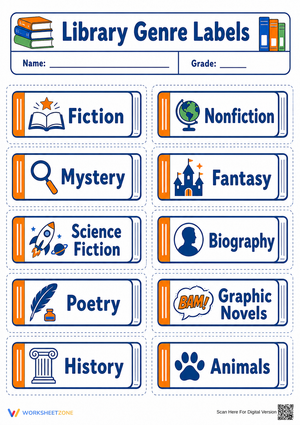
Fourth graders work with six genres that appear consistently in Grade 4 ELA: fiction, poetry, drama, biography, history text, and science-related nonfiction. The worksheets also address the distinction between genre (the category — fiction, poetry, biography) and text type (the writing's purpose — narrating, explaining, comparing). Teaching both terms pays off in classroom discussion: students move from "it's a story" to "it's fiction because it has invented events and a character facing a problem," which is the level of specificity Grade 4 reading standards expect.
Tasks across the set include:
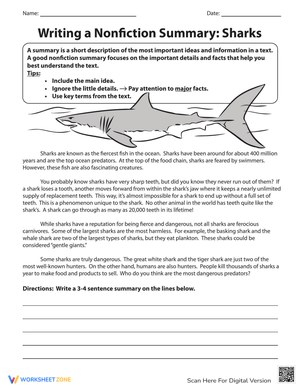
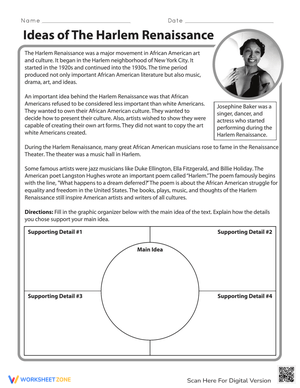
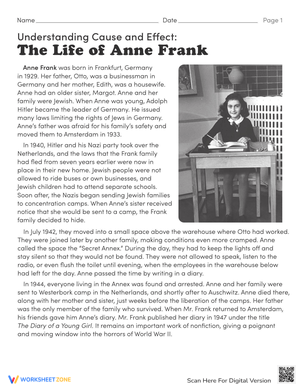
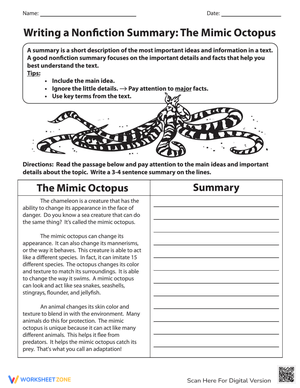
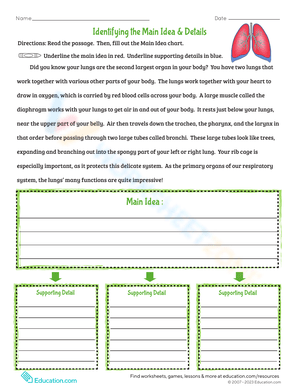
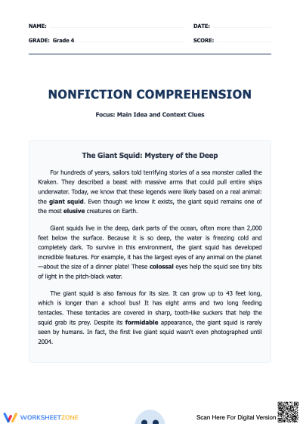
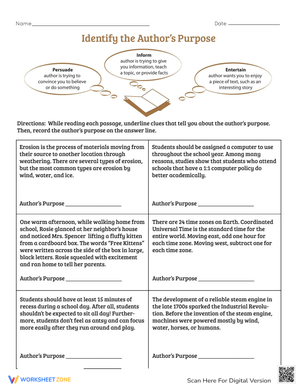
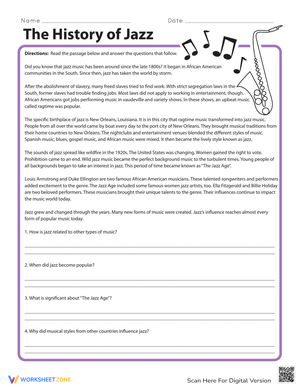
- Passage identification: Students read a short excerpt, name the genre, and underline at least two clues that support their answer.
- Feature hunts: Students annotate a passage by marking specific elements — dialogue tags, line breaks, headings, dates, speaker labels — before naming the genre.
- Genre sorts: Students categorize short excerpts or text feature cards and record one piece of evidence for each grouping decision.
- Short written explanation: Students complete a sentence frame or open response explaining why a passage belongs in one category rather than another.
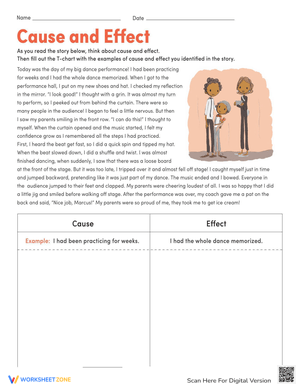
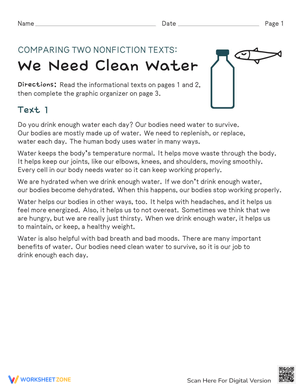
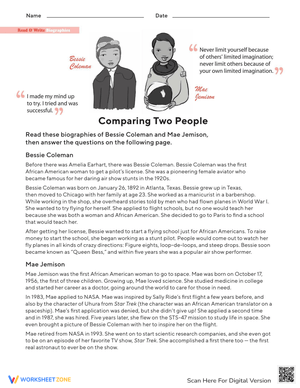
- Comparison tasks: Students examine two passages and explain what is structurally the same and what is different.
Genre Identification Errors That Surface in Student Work
The most persistent confusion across grade levels is drama versus fiction. Both genres have characters, both have dialogue, and both can involve made-up events. Students who learn "fiction has characters and dialogue" will mark a play as fiction until they have practiced looking specifically for speaker labels followed by a colon, lines of speech without quotation marks, and stage directions in parentheses. A single teacher think-aloud — "I see a name, a colon, then a line of speech, but no quotation marks anywhere — that combination tells me I'm reading a drama" — does more to fix this than a definition review.
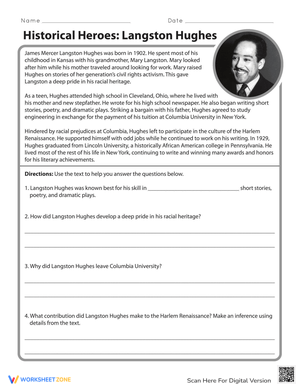
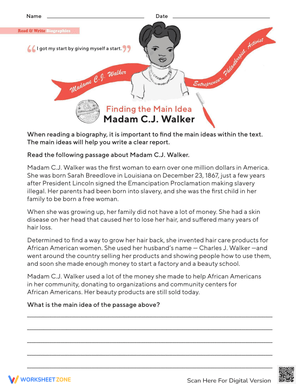
Biography creates its own consistent confusion. Students frequently label any text that mentions a real person as biography, even when that text is a science article about a researcher's findings or a history paragraph discussing a president's decision. The correction that works best is a direct question: is the entire text about this person's life, or does this person simply appear in it? When using reading genres and types printable worksheets for 4th grade, it is worth raising that distinction before independent practice, because students who haven't heard it yet will produce confident wrong answers on every biography-adjacent passage.
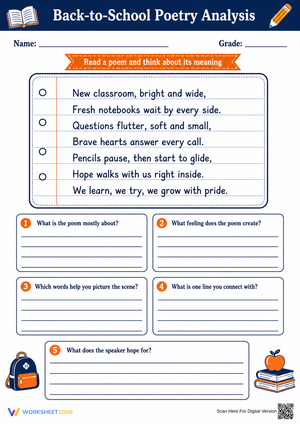
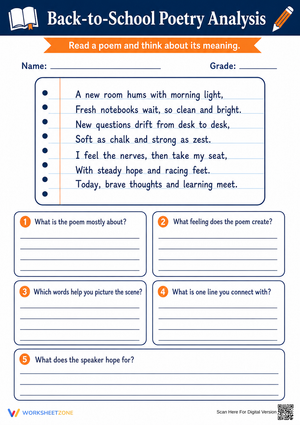
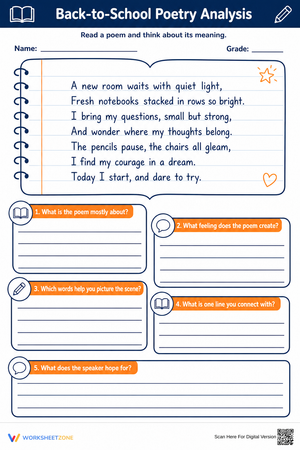
Poetry is subtler. Students see line breaks and write "poetry" immediately, even when they're looking at a dramatic monologue or a formatted list. The reliable fix is to teach students to check for rhythm, repeated language, and deliberate word placement — not just whether lines stop before the margin — so the identification habit holds across unfamiliar texts.
Building These Worksheets Into the ELA Block
A reliable entry point is the opening minutes of independent reading time. A feature-hunt worksheet placed face-down on desks and flipped at the start of the block primes students to notice text structure the moment they open a book — which is the transfer the lesson is working toward anyway. Eight minutes is enough for most feature-hunt and identification tasks at this grade, making them workable before whole-class instruction begins.
For small groups, the genre sort format generates the most productive conversation. Have students sort individually first, then compare groupings before anyone writes anything down. The disagreements are the lesson: "I put this in fiction because there are characters" is exactly the moment to work through why biography also has characters but still isn't fiction. The worksheet becomes a record of that reasoning rather than just an answer sheet.
For whole-class use, a brief model using the notice-name-prove routine — notice a clue, name the genre, prove it with one text detail — followed by independent application on the same worksheet type gives students a reliable path when multiple clues are present and some point in different directions. Reading genres and types printable worksheets for 4th grade used this way stay connected to instruction instead of feeling like tasks dropped in from somewhere else in the curriculum.
Standard Alignment
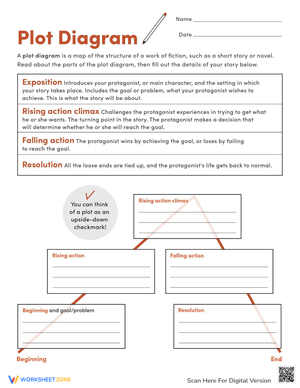
These worksheets align with CCSS.ELA-LITERACY.RL.4.5, which asks students to explain major differences among poems, drama, and prose, and to refer to structural elements including verse, rhythm, cast of characters, and stage directions. They also connect to CCSS.ELA-LITERACY.RI.4.5, which requires students to describe the overall structure of informational texts and use text features to locate and interpret information. In classroom terms, those two standards together define the fourth-grade expectation: students should read widely across text forms and name what makes each one structurally distinct. The identification-plus-evidence format directly practices the skill both standards assess — not just labeling a genre, but pointing to the structural features that confirm the call.
Differentiating These Worksheets Across Ability Levels
For students still working on foundational genre recognition, limit early practice to two genres at a time — fiction and informational text first, then poetry and drama — before introducing biography and specialized nonfiction subtypes. Narrowing the options reduces the decision load without watering down the skill. A small reference card showing two or three visible features per genre gives these students a way to check their thinking rather than doing the identification for them.
For students who identify genres accurately but write thin justifications, the short-response component is where to push. One effective extension: ask them to rewrite a passage opening in a different genre — take a biography excerpt and rework the first two sentences as fiction, for example. That task requires students to hold genre features precisely enough to manipulate them, which is well past labeling and works as a genuine challenge rather than more of the same task.
Students who struggle with reading fluency in grade-level passages still benefit from the feature-hunt format because they can scan for structural markers — a name followed by a colon, a heading in bold, a line that ends before the right margin — without reading every word for meaning. That makes the genre identification task more accessible without removing the core skill each worksheet is targeting.
Frequently Asked Questions
What genres do these worksheets cover?
The set covers fiction, poetry, drama, biography, history text, and science-related informational nonfiction. Several worksheets place two genres side by side so students practice comparing structural features, not just identifying them in isolation.
Do students need prior instruction in all six genres before using the worksheets?
No. The worksheets work for both introduction and review. Early in a unit, use single-genre identification worksheets after direct instruction on that genre's features. Later in the unit or semester, use mixed-review worksheets that ask students to distinguish genres without being told which one appears on the page.
How long does a typical worksheet take to complete?
Most fourth graders finish a passage identification worksheet with a short written response in eight to twelve minutes. Sort tasks and comparison worksheets run slightly longer — closer to fifteen minutes — when students are expected to record evidence for each decision rather than simply place cards into groups.
Do these worksheets support test preparation?
Reading genres and types printable worksheets for 4th grade address the evidence-based reasoning that state ELA assessments test in both literary and informational reading sections. Students who practice finding textual evidence to support a genre call are building the same close-reading habit that multiple-choice passage analysis items and short constructed-response prompts require. The format isn't isolated test drill — it is the underlying skill those items measure.












 Interactive Worksheet Maker
 Quiz Maker
 Word Search Maker
 Crossword Puzzle Maker
 Word Scramble Generator
 Sentence Scramble Generator
 Handwriting Worksheet Generator
 Name Tracing Generator
 Fill In The Blank Generator