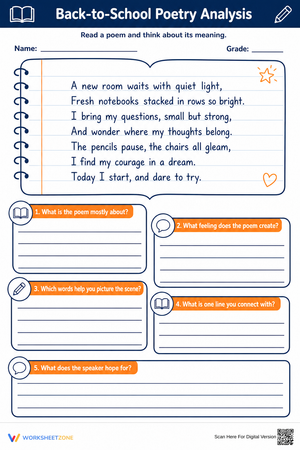
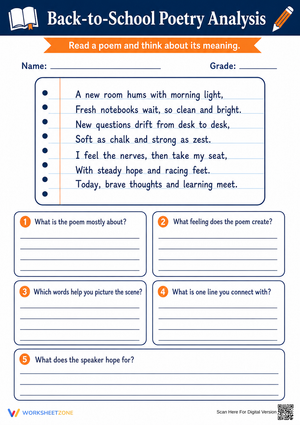
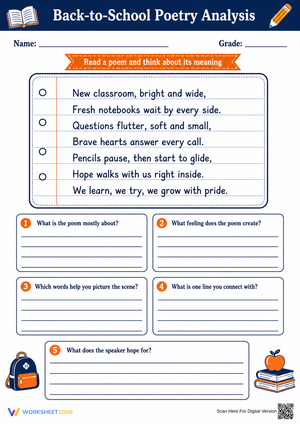
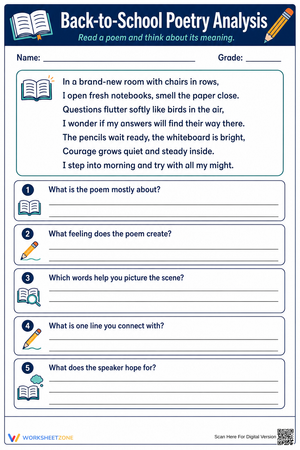
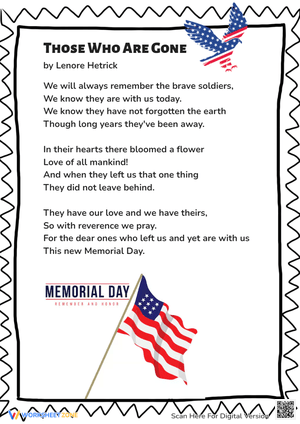
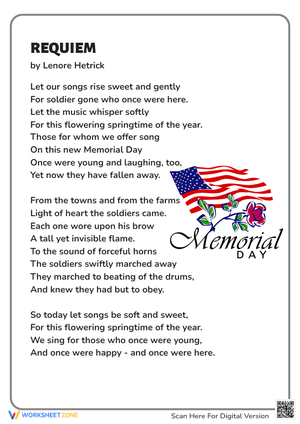
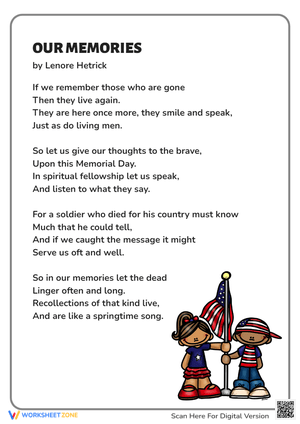
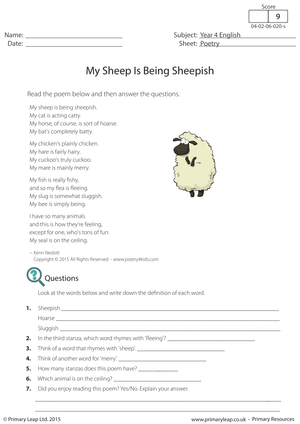
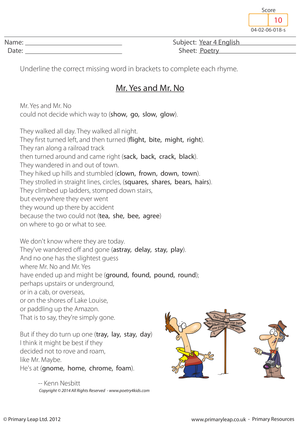
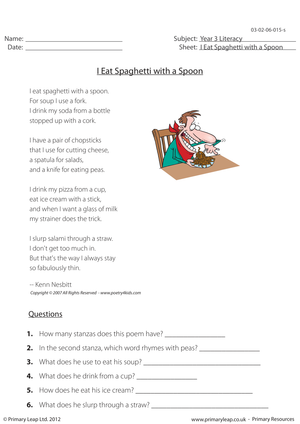
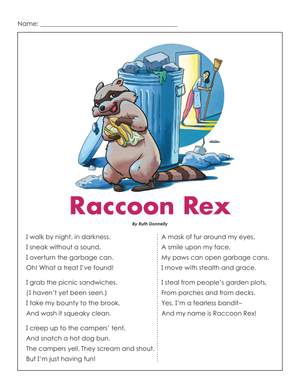
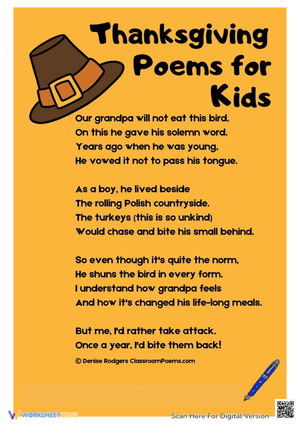
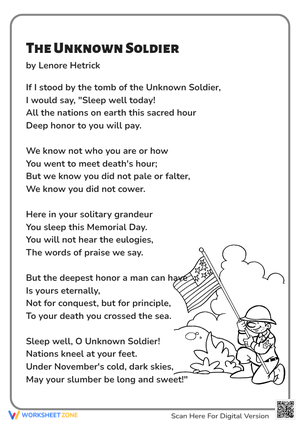
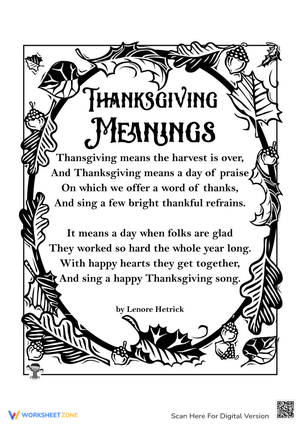
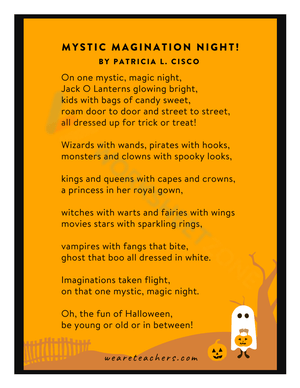
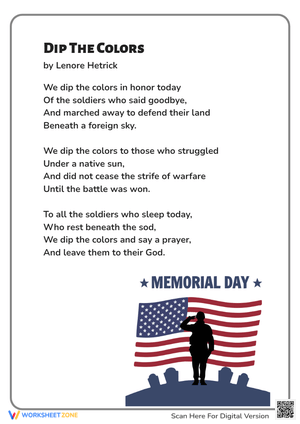
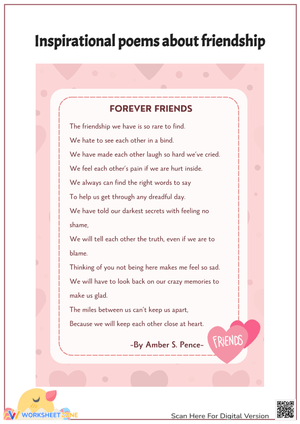
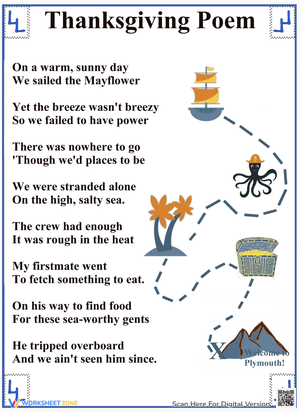
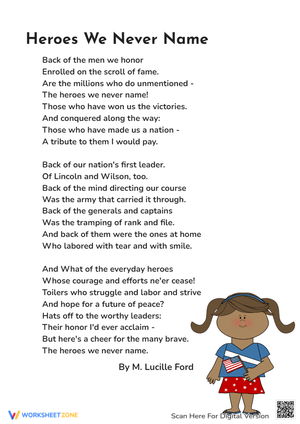
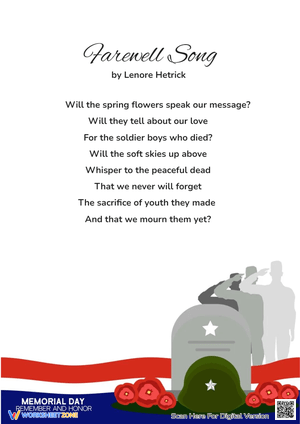
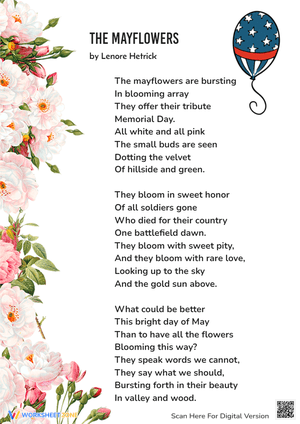
These 4th grade poems printable worksheets resources give teachers a direct path into RL.4.5 work — the stanzas, line breaks, and figurative language that Grade 4 students are expected to identify and explain. The set covers multiple poetic forms, from haiku to narrative verse to free verse, and includes both analysis tasks and structured writing frames. Each worksheet targets a specific skill so teachers can pull one into a lesson without overhauling the whole unit.
What Students Practice Across the Set
The worksheets move through four major skill clusters. First, students work on poetic structure: counting stanzas, reading line breaks as intentional pauses, and explaining how white space creates rhythm that prose does not. Second, students practice figurative language identification, categorizing similes, metaphors, personification, and onomatopoeia in short poems. Third, speaker and tone exercises ask students to mark first-person clues, describe the speaker's mood, and explain how specific word choices signal that mood. Fourth, students use writing frames to compose their own haiku, acrostic poems, and free-verse pieces, applying the structural rules they have just analyzed.
Several worksheets in the 4th grade poems printable worksheets set pair a short poem with a prose passage on the same subject — a technique that makes the genre comparison concrete rather than abstract. Students mark how the poem breaks information into lines rather than sentences and annotate where the rhythm would fall apart if a particular line break were removed. That side-by-side task tends to stick better than a genre definition alone.
Student Misconceptions Worth Catching Early
The figurative language categories trip students up more than teachers expect. Students who correctly label "as fast as lightning" as a simile will still circle "the trees bowed their heads" as a simile because it involves comparison — they have not yet registered that no comparison word like like or as appears. The distinction between metaphor and personification is similarly blurry for many fourth graders: they see both as "weird comparisons" and resist applying separate labels. Worksheets that ask students to first underline the figurative phrase and then explain what two things are being compared — or what human quality is being assigned — slow the process down enough for that distinction to actually surface in their thinking.
Free verse generates a reliable classroom argument: "Is this really a poem if it doesn't rhyme?" Students who absorbed the idea that poems must rhyme in earlier grades sometimes reject free verse as a legitimate form. The most direct answer is to hand them a worksheet that asks them to rewrite two free-verse lines as a single prose sentence and then mark what disappears — the pause, the emphasis, the breath the line break creates. Once students physically merge those lines into prose, most of them accept that something was lost.
Ways to Work These Worksheets Into Your Planning
The analysis worksheets work well as pre-reading warm-ups before a shared reading lesson. Give students five to seven minutes with a short poem, let them annotate independently, and then open class discussion from what they marked. That independent-first sequence surfaces more genuine observations than launching straight into teacher-led discussion — students come in with something to say.
The writing-frame worksheets fit naturally into the back half of a poetry unit, once students have enough exposure to a form to try their own. Haiku frames work especially well as a Monday warm-up after morning meeting: the 5-7-5 syllable count gives reluctant writers a clear constraint, which paradoxically makes starting easier. For literacy center rotations, the figurative language hunt tasks are self-contained enough to run without direct teacher support — students read, mark, categorize, and check. These 4th grade poems printable worksheets resources also work as fast-finisher tasks during independent reading blocks, since each worksheet is short enough to complete in one sitting but requires real analytical thinking rather than simple recall.
Standard Alignment
The set aligns to RL.4.5 (Common Core ELA-Literacy), which asks fourth graders to explain major differences between poems, drama, and prose and to refer to structural elements — verse, rhythm, meter — when writing or speaking about a text. RL.4.5 is the first standard that names meter explicitly, which is why Grade 4 is where syllable-counting exercises like haiku analysis belong in the sequence rather than appearing in third grade. The figurative language work connects to RL.4.4, which requires students to determine the meaning of words and phrases as used in a text, including figurative and connotative meanings.
In classroom terms, most teachers address RL.4.5 during a dedicated poetry unit — often in spring — but the figurative language worksheets can drop into any read-aloud debrief throughout the year whenever a poem surfaces. The speaking-about-text component of RL.4.5 makes annotation a natural partner to accountable talk structures: students mark up a worksheet first, then use their notes as a reference during discussion rather than trying to hold interpretations in working memory.
Adapting the Set for Students at Different Stages
For students still building phonological awareness, the rhyme scheme worksheets provide a concrete, auditory entry point before moving to figurative language. Identifying an ABAB pattern requires less interpretive risk than explaining a metaphor, which makes it a reasonable place to build confidence first. Once students can reliably mark end rhyme, the same worksheet can be extended by asking them to write one new line that continues the pattern.
Advanced readers benefit most from the speaker-and-tone worksheets and the free-verse analysis tasks — both require inferential thinking beyond surface identification. Asking a strong reader to explain why a poet chose to end a line after "the sky" rather than "the sky fell" produces exactly the kind of reasoning RL.4.5 demands at the upper end of grade-level expectations. Students in the middle of the range benefit most from the paired poem-and-prose worksheets: seeing both versions reduces the guesswork about what makes poetic structure distinct, and it gives them a clear comparison to reference rather than a definition to memorize.
Frequently Asked Questions
How do these worksheets specifically address RL.4.5?
RL.4.5 requires students to name and explain structural elements — stanza, line, verse, meter — and to compare poems with prose and drama. Each analysis worksheet asks students to do exactly that: label structures, count stanzas or syllables, and in several cases rewrite a stanza as a prose sentence to make the structural difference visible. The standard also calls for students to refer to those elements when speaking about a text, so the annotation process on each worksheet builds the vocabulary students reach for during discussion rather than leaving it passive.
Can these worksheets run in a literacy center without teacher support?
Most of the analysis tasks are self-sufficient for a center rotation. The figurative language identification work and the rhyme scheme worksheets ask students to underline, label, and explain specific textual evidence — work a fourth grader can do independently once the terms have been introduced. The writing-frame worksheets may need a brief check-in the first time through, especially the haiku frame, because students frequently miscount syllables in multisyllabic words and will produce lines that are off by one syllable without noticing.
What do I do when students insist free verse is not a real poem?
This comes up reliably in fourth grade. The most direct move is to use the free-verse worksheet that asks students to rewrite two lines as a prose sentence and mark what disappears — the pause, the line emphasis, the way the break slows a reader down. Once students physically collapse those lines into prose, most accept that something was lost. A few will still push back, and that is actually a productive argument to have: it shows they are thinking about what poetry is supposed to accomplish, which is the real point of the unit.
Do the worksheets include answer keys?
The 4th grade poems printable worksheets set includes answer keys for the figurative language and structural analysis tasks. Figurative language identifications sometimes carry more than one defensible answer — whether "the stars danced" is best labeled personification or metaphor is a legitimate classroom discussion — so the keys note where multiple responses are acceptable. For the writing-frame worksheets, no answer key applies, but the structural requirements (syllable counts, required line count, letter constraints in acrostics) give teachers a clear checklist for a quick review.












 Interactive Worksheet Maker
 Quiz Maker
 Word Search Maker
 Crossword Puzzle Maker
 Word Scramble Generator
 Sentence Scramble Generator
 Handwriting Worksheet Generator
 Name Tracing Generator
 Fill In The Blank Generator