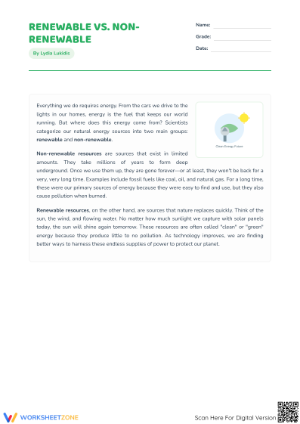
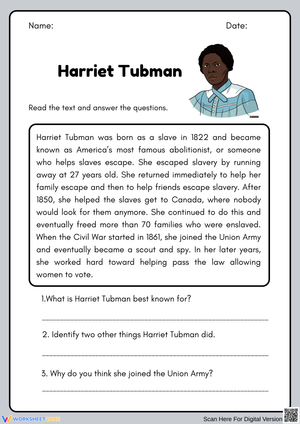
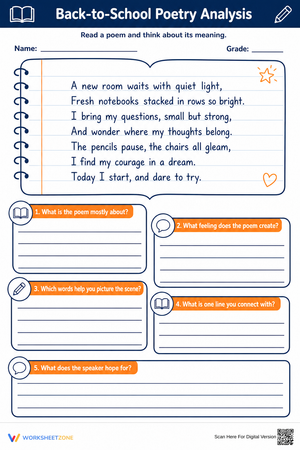
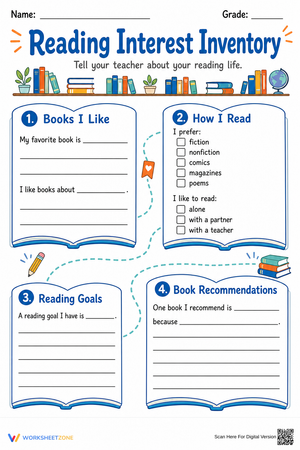
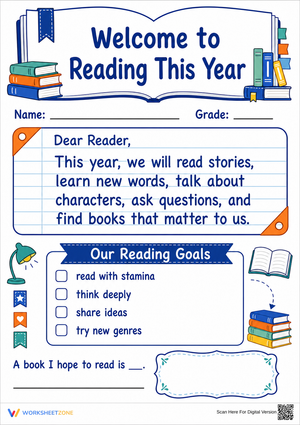
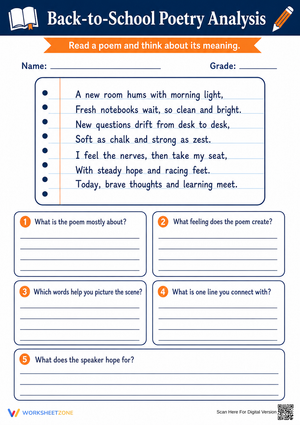
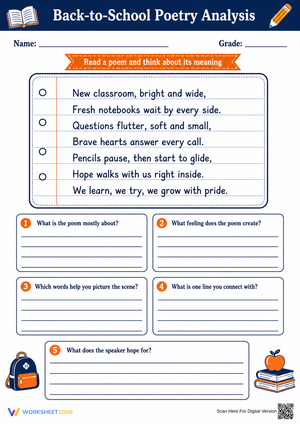
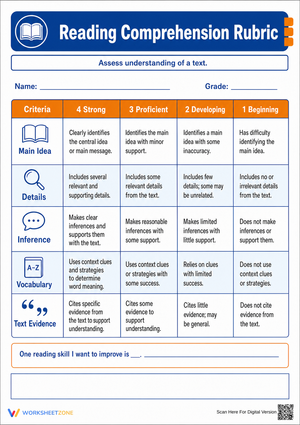
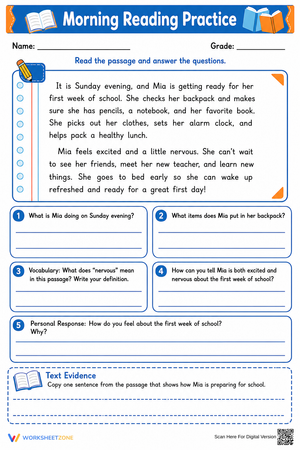
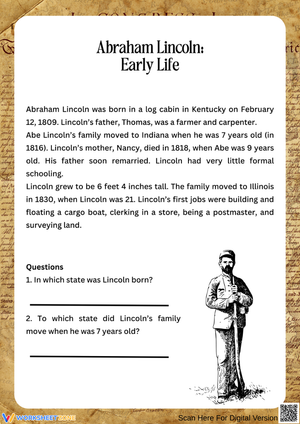
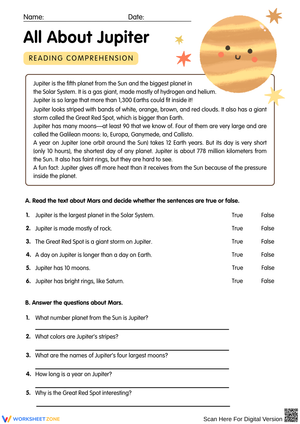
These 4th grade reading pdf worksheets give teachers a ready-made tool for one of the most instructionally demanding transitions in elementary literacy — the grade where fluent decoding stops being sufficient and analytical reading has to take over. Each worksheet pairs a leveled passage with questions that move students from literal recall into inference, text structure analysis, and evidence-based response. The set covers both literary and informational texts, because those two genres make genuinely different comprehension demands and students need practice in both.
Skills These Worksheets Build
Fourth grade is the year students are expected to stop being passive readers and start interrogating texts. The worksheets target the four skill clusters that carry the most instructional weight at this level.
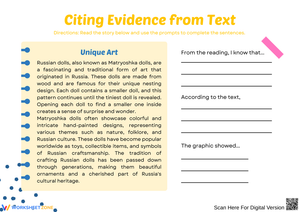
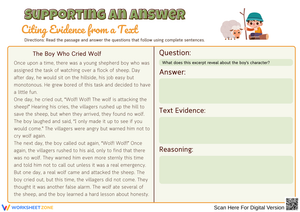
- Inference from text evidence: Students answer questions that cannot be resolved by lifting a sentence from the passage. They synthesize details from multiple locations in the text to explain a character's motivation, identify an unstated theme, or reach a conclusion the author implies but never states directly.
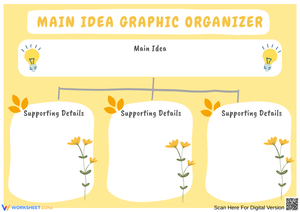
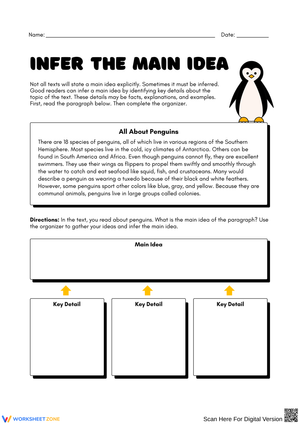
- Main idea and supporting details: Informational worksheets ask students to identify the central claim of a passage and then distinguish it from the examples, statistics, or anecdotes the author uses in support.
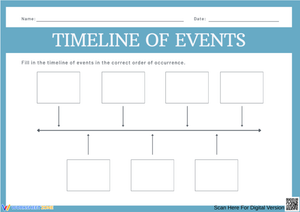
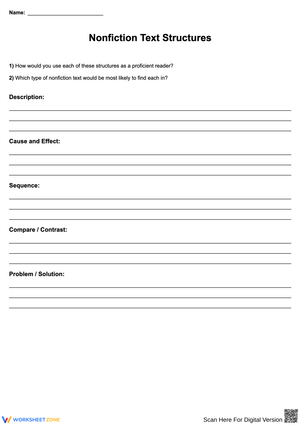
- Text structure: Students determine whether a passage uses cause and effect, compare and contrast, problem and solution, or chronological order — and explain how that organizational pattern shapes meaning. Several worksheets include a diagram students complete before answering comprehension questions.
- Vocabulary in context: Rather than isolated word-list drills, vocabulary questions are embedded inside each passage. Students use surrounding sentences to define domain-specific or academic words as they appear in authentic context.
Literary passages include realistic fiction, historical narratives, and a handful of short poems. The poetry selections are deliberate — inference in a poem requires fundamentally different reading moves than inference in a science article, and students who practice exclusively with prose arrive at standardized assessments underprepared for verse.
Frequent Student Errors Worth Catching Early
The most consistent problem on inference questions is students substituting retrieval for inference. A student asked "Why does Elena keep returning to the abandoned house?" will write, "Because it says in the story she goes back to the house." That is not an inference — it's a copy. The question stems on these worksheets are written specifically to block that move. When a question begins with "Based on details throughout the passage" or "What do the author's word choices suggest about...," students cannot satisfy it with a single-sentence lift from the text.
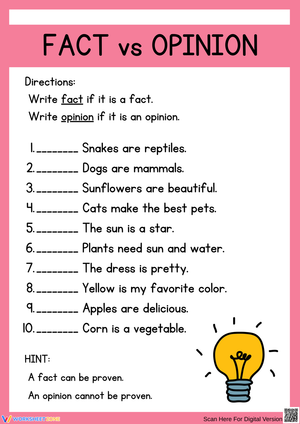
Main idea errors follow an equally predictable pattern. Students almost always identify the most striking or memorable detail in a passage as the main idea. A passage about ocean pollution generates answers like "Plastic bags kill sea turtles" — which is a supporting example, not the central point. After returning these worksheets, posting two or three anonymized student responses side by side and asking the class to decide which is the main idea does more instructional work than repeating the definition.
Text structure produces a third cluster of consistent errors. Students frequently confuse sequence with cause and effect — they see events described in chronological order and mark "time order" even when each event is explicitly causing the next. A brief anchor chart posted during independent work gives students a reference point while the question is still in front of them.
Getting the Most From These Worksheets Each Week
The most productive approach is to assign one passage at the start of the week and return to it across three sessions rather than using a new passage every day. Monday: students read for gist and answer the literal questions. Wednesday: they return to the same passage for inference and vocabulary work. Friday: a short constructed response with two pieces of textual evidence required. By the third encounter, students are reading analytically rather than casually. This repeated-reading structure also cuts preparation time — one passage per week instead of five.
During guided reading rotations, one group can work independently on a reading worksheet while the teacher meets with another group for direct instruction. The structured question format keeps the independent group on task without requiring constant check-ins. These 4th grade reading pdf worksheets connect naturally to content-area units as well — a passage about the Lewis and Clark expedition or the water cycle reinforces social studies or science knowledge while producing real ELA practice, which is useful on days when the schedule doesn't allow a dedicated literacy period.
Standard Alignment
The worksheets address the following Common Core ELA standards at the Grade 4 level:
- RL.4.1 / RI.4.1 — Cite details and examples when explaining what a text says explicitly and when drawing inferences. Every worksheet includes inference questions requiring students to identify specific textual evidence.
- RI.4.2 — Determine the main idea of an informational text and explain how key details support it. Main-idea questions appear on every informational worksheet; several pair the question with a graphic organizer for mapping claim and support.
- RI.4.5 — Describe the overall structure of a text. Text-structure worksheets ask students to identify the organizational pattern and explain how it shapes the passage's meaning.
- RL.4.3 — Describe a character, setting, or event using specific details from the text. Character-analysis questions require at least two pieces of evidence per response.
- L.4.4a — Use context clues to determine the meaning of unknown words. Vocabulary questions are embedded within each passage rather than placed in a separate section.
State reading assessments at Grade 4 consistently require students to respond to literary and informational passages with evidence — the same format used throughout this set. Students who have practiced these skills on individual worksheets are working within a familiar structure by the time testing arrives.
Adapting the Set for Different Reader Levels
These 4th grade reading pdf worksheets span a complexity range that covers the majority of fourth-grade readers, roughly 640L to 820L, with passages at both ends of the band. Students reading below grade level work with shorter, less syntactically dense passages while targeting the same core standards; their questions address the same skills at a more accessible entry point. Students reading above grade level receive longer passages with heavier academic vocabulary and multi-clause sentence structures, plus an extension prompt at the bottom of the worksheet asking them to compare the passage's argument or theme to another text they've read recently.
For students who stall when they encounter unfamiliar text features — sidebars in informational articles, or stanza breaks in poetry — pre-highlighting two or three anchor sentences before distributing removes the paralysis without reducing the reading demand. The questions stay unchanged; students simply have a starting point rather than a blank page. That small adjustment produces a measurable difference in how much work reluctant readers actually complete during independent practice time.
Frequently Asked Questions
Are the passages in this set leveled?
Yes. The set includes passages across a range of complexity levels to support differentiation during independent reading practice. Each worksheet is labeled with an approximate Lexile range so teachers can match passages to student reading levels without additional assessment tools.
How long does each worksheet typically take to complete?
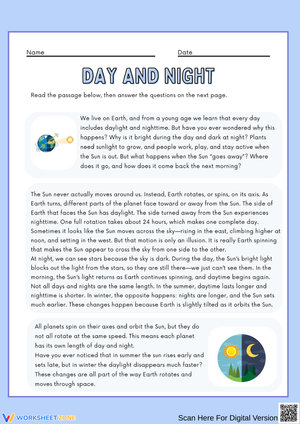
Most passages run 150 to 250 words, and question sets contain five to eight items. Expect students to spend 15 to 20 minutes per worksheet during independent work time — long enough to require sustained focus, short enough to fit a single practice block without cutting into direct instruction.
Can these worksheets be used digitally?
Yes. Upload any of the PDFs to a digital annotation platform and students can type responses directly on the document. The format transfers cleanly to Google Classroom or any learning management system, and students submit completed files for review without printing. Teachers running hybrid or remote models find that 4th grade reading pdf worksheets hold up in digital environments without reformatting — the passage-and-questions structure works equally well whether students read on screen or on paper.












 Interactive Worksheet Maker
 Quiz Maker
 Word Search Maker
 Crossword Puzzle Maker
 Word Scramble Generator
 Sentence Scramble Generator
 Handwriting Worksheet Generator
 Name Tracing Generator
 Fill In The Blank Generator