




























Views
Downloads
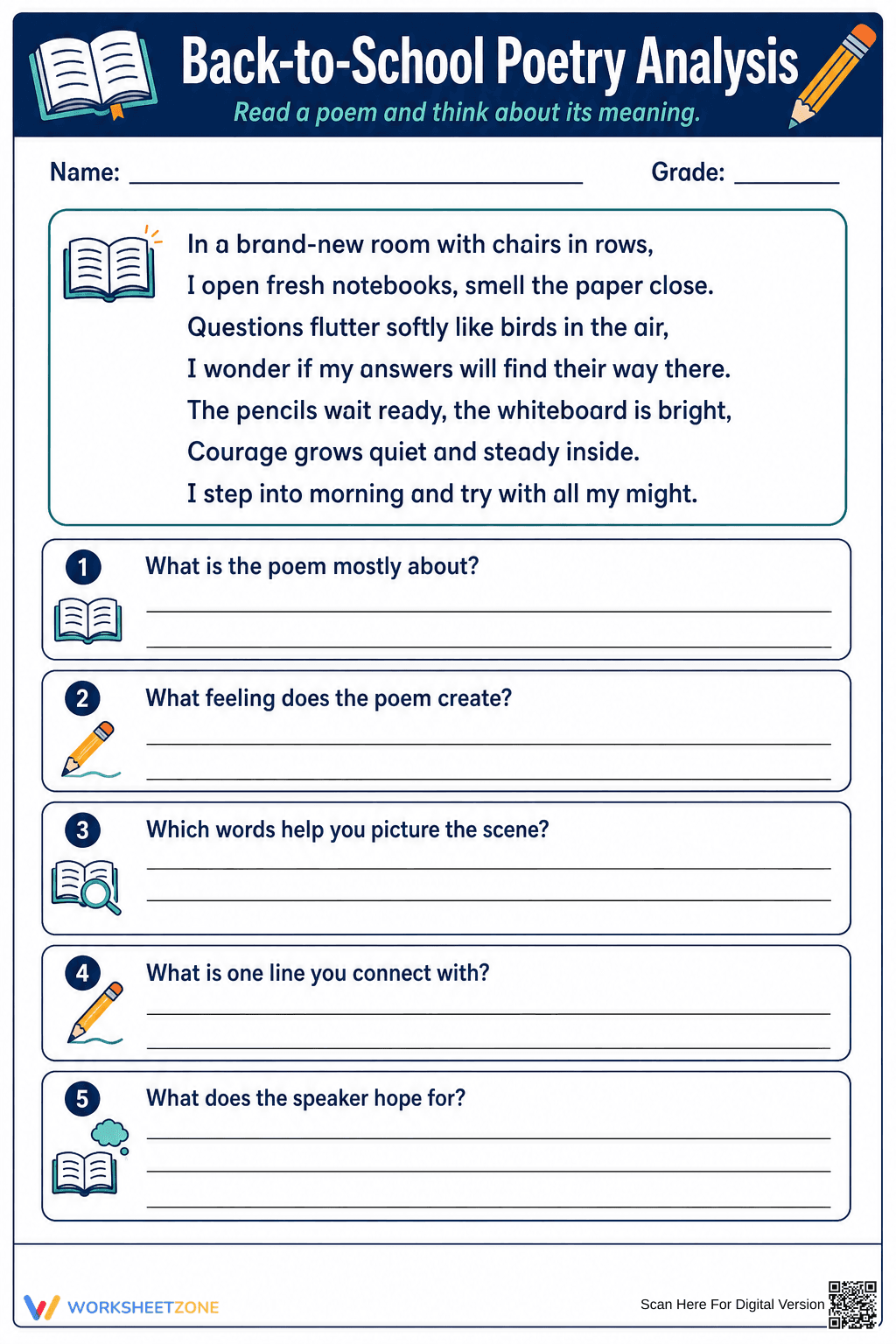

Grade 4 Poetry Analysis — Printable No-Prep Worksheet

Paste this activity's link or code into your existing LMS (Google Classroom, Canvas, Teams, Schoology, Moodle, etc.).
Students can open and work on the activity right away, with no student login required.
You'll still be able to track student progress and results from your teacher account.
This Grade 4 poetry analysis worksheet helps students determine the main idea and mood of a text while identifying sensory language. By reading an original back-to-school poem and answering five targeted questions, learners build essential reading comprehension skills. The structured format encourages students to connect personally with the text.
At a Glance
- Grade: 4 · Subject: ELA
- Standard:
CCSS.ELA-LITERACY.RL.4.2— Determine a theme of a poem from details- Skill Focus: Poetry Analysis
- Format: 1 page · 5 problems · Answer key included · PDF
- Best For: Independent practice or morning work
- Time: 15–20 minutes
This single-page resource features an original seven-line poem about the first day of school, highlighting themes of fresh notebooks and quiet courage. Below the text, students find five open-ended response questions with defined answer lines. The layout includes visual cues like book icons to guide learners. A complete answer key is provided to streamline grading.
Zero-Prep Workflow
This resource is designed for immediate classroom implementation.
- Print (1 minute): Simply download the PDF and print a class set. The black-and-white friendly design ensures crisp copies.
- Distribute (1 minute): Hand out the worksheet during morning work, literacy centers, or as a quick formative assessment.
- Review (3 minutes): Use the included answer key to quickly check student responses or guide a whole-class discussion on poetic imagery.
With a total teacher prep time of under two minutes, this worksheet is an excellent addition to any emergency sub plan.
Standards Alignment
This worksheet is directly aligned to CCSS.ELA-LITERACY.RL.4.2, requiring students to determine a theme of a story, drama, or poem from details in the text. It also supports CCSS.ELA-LITERACY.RL.4.4 by asking learners to identify words and phrases that create specific feelings or imagery. Both standard codes can be copied directly into lesson plans, IEP goals, or district curriculum mapping tools.
How to Use It
Use this worksheet during the first week of school as a low-stakes introduction to poetry analysis, ideally after a brief mini-lesson on identifying mood. Alternatively, use it as an independent literacy center activity where students can practice reading fluency and comprehension. As a formative assessment tip, observe which lines students choose to connect with personally; this provides valuable insight into their emotional readiness. Expected completion time ranges from 15 to 20 minutes.
Who It's For
This resource is primarily designed for fourth-grade students, though it serves as an excellent review for fifth graders or a supported challenge for advanced third graders. The clear, uncluttered layout and relatable topic make it accessible for diverse learners, including those who benefit from chunked reading tasks. Pair this worksheet with a classroom anchor chart on poetic devices to provide additional scaffolding for students who need it.
Effective reading comprehension instruction requires students to actively engage with texts through structured questioning. By aligning to CCSS.ELA-LITERACY.RL.4.2, this resource prompts learners to determine a theme of a poem from details, fostering deeper analytical thinking. According to Fisher & Frey (2014), providing students with accessible, high-interest texts paired with text-dependent questions significantly improves their ability to infer meaning and identify structural elements like mood and imagery. This poetry analysis worksheet applies these evidence-based practices by combining a relatable back-to-school poem with targeted prompts that require students to cite specific words and phrases from the text. Regular practice with this focused material builds the stamina and critical thinking skills necessary for advanced literary analysis, ensuring students are prepared for comprehensive reading assessments and future academic success.


