4th Grade Folktales worksheets: Exploring Traditional Literature
These 4th grade folktales worksheets resources give teachers ready-to-print reading passages and analysis tasks that span the full range of traditional literature subgenres students are expected to distinguish by the end of elementary school. The set doesn't stop at basic plot comprehension — it pushes toward the comparative reading work that RL.4.9 actually demands, asking students to track how cultures from different continents use the same underlying story structures to arrive at different lessons about human behavior.
The Specific Skills Each Worksheet Targets
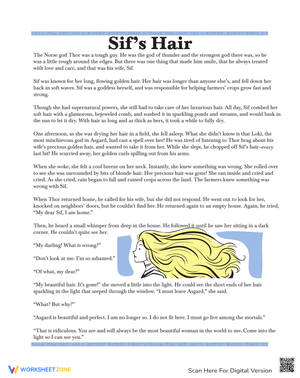
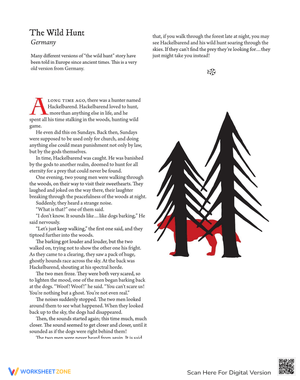
Each worksheet in this 4th grade folktales worksheets set pairs a short reading passage with targeted analysis tasks, so students aren't just reading the story — they are identifying the structural features that mark it as a fable, myth, legend, or tall tale, then explaining how those features serve the story's purpose.
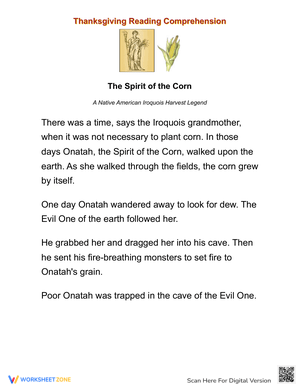
Fable worksheets ask students to separate the events of the story from the stated moral, then evaluate whether the moral actually fits what happens in the text — a step most basic comprehension questions skip. Myth worksheets focus on origin structure: students annotate the passage to mark what natural phenomenon is being explained, which supernatural forces appear, and what values the story implies about the culture that produced it. Legend worksheets ask students to identify which details feel historically grounded and which have been stretched through retelling. Tall tale worksheets focus on hyperbole as a literary device — not just finding examples, but explaining what the exaggeration reveals about the character's place in their community.
The set also includes cross-text comparison work. Pairing a Coyote trickster tale with an Anansi story from West Africa gives students two texts that share a character type but differ sharply in setting, cultural logic, and resolution. The comparison worksheets use Venn diagrams and structured response prompts that move students from surface-level observation ("both have a tricky animal") toward the analytical claim RL.4.9 requires — that different cultures use similar patterns to express different values.
Errors Students Make That Are Worth Anticipating Before the Lesson
The most consistent confusion at this grade level is the myth-versus-legend distinction. Students learn quickly that myths involve gods or supernatural beings, so they start applying that label to almost any old story with unusual events — including legends grounded in real historical figures. A student who reads about Paul Bunyan will often mark him "mythological" rather than recognizing the tall tale's very different cultural origin and comedic intent. Spending five minutes before distributing the worksheets to establish that myths explain how the natural world came to be — the path of the sun, the shape of a mountain range — while legends build around actual history dramatically reduces mislabeling on the written responses.
The rule of three also causes trouble, but in a less obvious way. Students notice the pattern in fairy tales because three pigs and three bears are obvious. In myths, the pattern is less symmetrical — a hero might face three trials that look different on the surface, and students pass right over the repetition without recognizing its structural function. Several worksheets include a bracketing task: students mark and number each trial or attempt directly in the passage before answering any questions. That annotation step makes the pattern visible before students are asked to analyze it.
Flat characters consistently puzzle students who have spent the year reading realistic fiction. They read that a folktale character is "purely good" and flag it as weak — because in the chapter books they know, that would be underdeveloped characterization. A brief whole-class conversation before the fable worksheets, connecting flat characters to the demands of oral storytelling (stories told aloud need memorable types, not psychologically complex individuals), cuts the number of "the author forgot to make the character interesting" responses almost entirely.
Standard Alignment
The primary standard across the set is CCSS.ELA-LITERACY.RL.4.9, which asks students to compare and contrast the treatment of similar themes and patterns of events in stories, myths, and traditional literature from different cultures. In classroom terms, this means students need repeated exposure to varied texts before the comparative claims RL.4.9 requires become reliable — one reading isn't enough. The cross-text comparison worksheets are built specifically to revisit that standard across multiple sessions rather than treating it as a single-lesson check.
Several worksheets also address RL.4.2 (determining theme and summarizing) and RL.4.3 (character, setting, and event relationships). Fable worksheets connect most directly to RL.4.2 because the theme and the stated moral both appear in the text — students practice distinguishing between what the story says literally and what lesson it implies. RL.4.3 work shows up most clearly in the legend and myth worksheets, where students trace how a character's decisions drive the sequence of events toward a culturally specific resolution.
Lesson-Planning Strategies for Getting the Most From These Worksheets
The strongest entry point for the unit is a read-aloud before distributing any worksheets. On the first day, reading Aesop's "The Tortoise and the Hare" aloud — without handing anything out — and then asking students to reconstruct the events from memory gives immediate data on where the class is starting. That five-minute discussion also surfaces the vocabulary confusion around words like moral, fable, and oral tradition before it derails independent work later in the week.
For small-group rotations, the reading passages are short enough to complete within a 15-minute center block. A group working below grade level can focus a single fable worksheet on identifying the moral alone; a group working at or above grade level can work through two myth worksheets and tackle the comparison prompt. The task differentiation lives inside the text selection — neither group needs a different set of directions, just a different passage.
This 4th grade folktales worksheets set also fits well as a Monday warm-up sequence during a traditional literature unit. Distributing one worksheet at the start of the reading block, giving students 10 minutes to read and annotate, then reviewing for five minutes before moving into the core lesson maintains continuity across the week without eating instructional time. The structured response prompts double as formative data — a quick scan of 30 answers to "What makes this a myth and not a legend?" tells you whether the class needs re-teaching before the end-of-unit assessment.
Differentiating These Worksheets Across Ability Levels
Students reading below grade level often struggle less with the folktale content itself than with the academic vocabulary in the comprehension questions — words like "anthropomorphism," "oral tradition," and "moral" slow them down before they can demonstrate what they understood about the actual story. A brief reference card with four or five plain-language definitions attached to the worksheet removes that barrier without changing the intellectual demand of the task.
For students who move through the analysis quickly, the strongest extension is asking them to write a new ending that violates the folktale's structural rules — rewriting a fable so the dishonest character wins, then explaining what moral the new version would teach. That task requires a genuine understanding of how the original was constructed and pushes analytical thinking considerably further than an additional comprehension question.
English language learners often find the flat character types that frustrate native-speaker students actually work in their favor — simplified characterization reduces the inferential load throughout. When possible, pairing an ELL student with a folktale from their heritage culture gives them content knowledge that supports vocabulary access and frequently positions them as the class expert on cultural context during discussion.
Frequently Asked Questions
How does the set handle the distinction between folktales and fairy tales, since students confuse the two constantly?
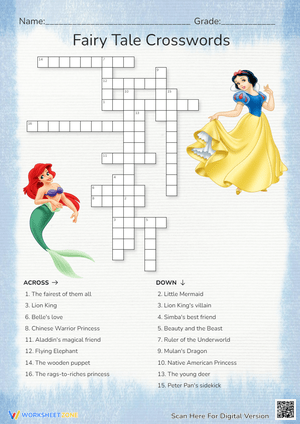
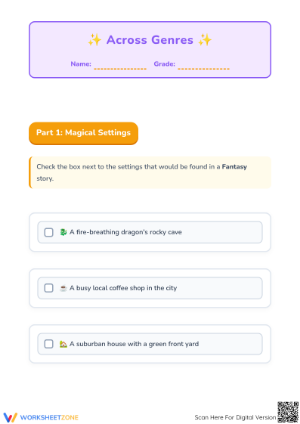
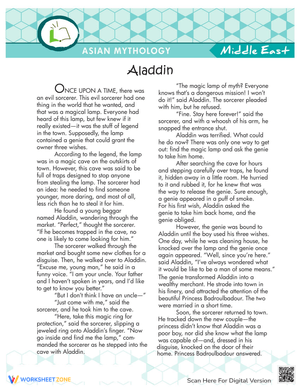
Fairy tales are technically a subgenre of folktale, which is what makes the distinction genuinely tricky. The worksheets treat them as separate categories with separate identifying features: fairy tales involve magic, royalty, and a clear happy resolution, while the broader folktale category includes fables, tall tales, and trickster stories that may involve none of those elements. One worksheet asks students to sort a list of story summaries into labeled categories, which forces the distinction in practice rather than just defining it in a vocabulary box.
Can these worksheets support a writing unit, or are they strictly for reading comprehension?
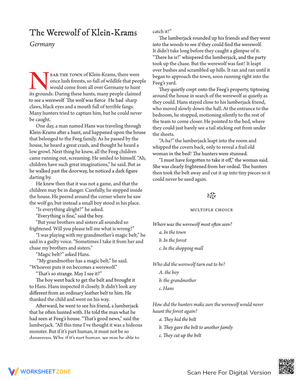
Several worksheets function as mentor text analysis tools that transfer directly into pre-writing work. Once students annotate a tall tale for its hyperbole and three-part escalation structure, they have a clear model for drafting their own. The structural analysis tasks — identifying the rule of three, mapping character motivation, labeling the origin-explanation in a myth — carry over into planning an original traditional story without any additional setup from the teacher. The set is primarily a reading resource, but it fits naturally into a reading-to-writing unit on traditional literature.
What order should I use to introduce the subgenres?
Fables work best first. They are the shortest texts in the set, the moral is usually explicit rather than implied, and most fourth graders have encountered Aesop before — which makes fables a low-anxiety starting point that builds early confidence with the vocabulary and structure. Myths and legends fit well in the middle of a unit, once students are ready for longer texts and more inferential analysis. Tall tales work best at the end; by that point students have enough subgenre vocabulary to articulate exactly what makes tall tales structurally different from the three types they've already studied, and the humor keeps engagement high toward the end of a unit.
How can I use these as formative assessment rather than just practice tasks?
This 4th grade folktales worksheets set lends itself to quick diagnostic checks because the structured response prompts ask students to justify their answers, not just circle a letter. After a myth worksheet, collecting only the "how do you know this is a myth and not a legend?" response from each student takes under a minute to scan and tells you immediately which students are still applying the myth label to any old story with unusual events. That one open-response question is more diagnostic than a full multiple-choice quiz on the same text.
Clear All