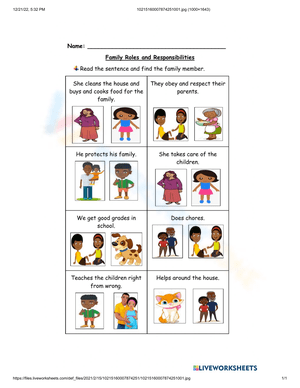
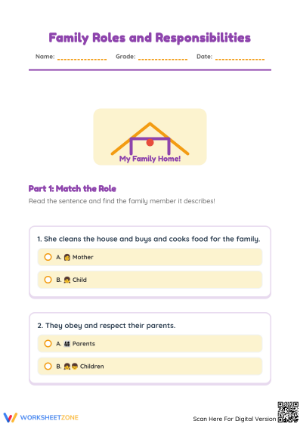
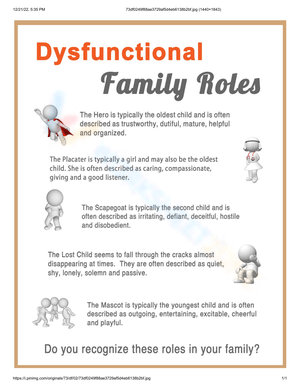
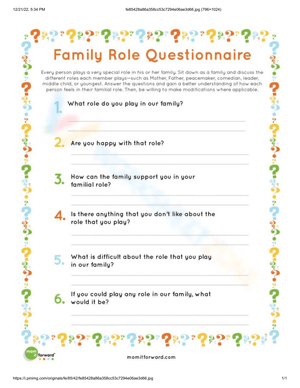
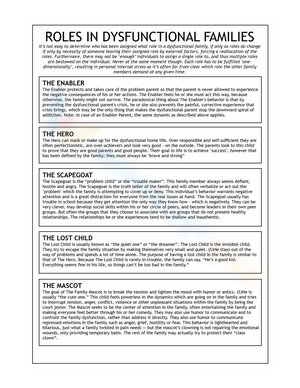
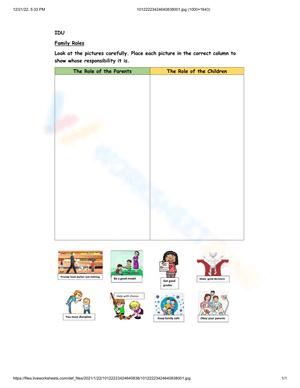
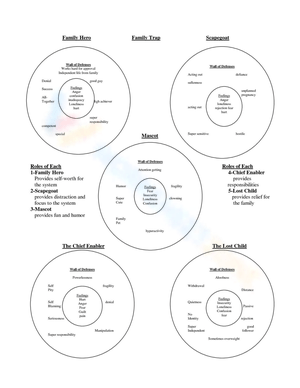
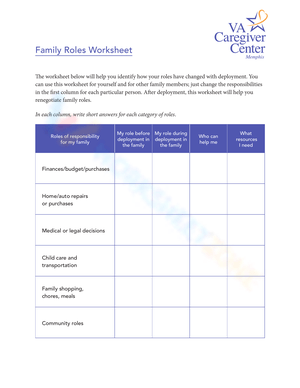
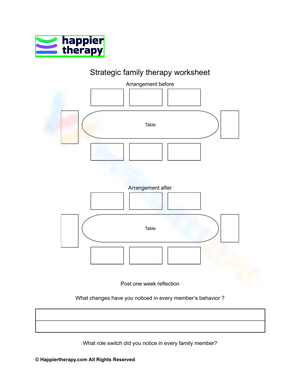
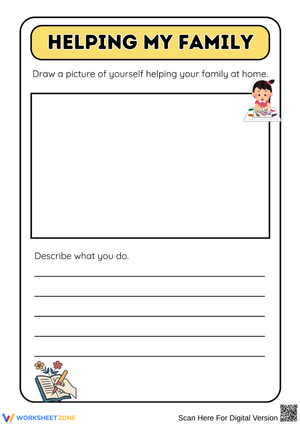
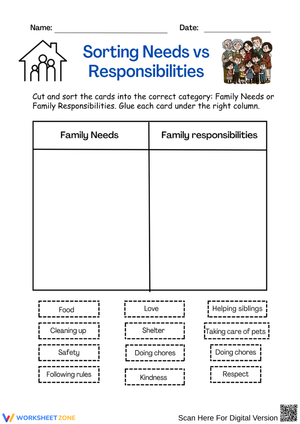
Helping your child understand the roles each family member plays can feel like a big conversation to start, but 4th grade family roles worksheets make it wonderfully approachable. These printable resources guide your fourth grader through reflective prompts about daily responsibilities, from setting the table to helping a younger sibling, encouraging them to see how every contribution matters. Parents who sit alongside their child during these activities often find it opens the door to heartfelt conversations that simply would not happen otherwise. You do not need a classroom setup or a formal lesson plan - just a quiet moment and a printed worksheet.
What makes these worksheets especially valuable is their ability to build confidence step by step. As children complete each activity, they begin to see themselves as contributing members of the household, not just recipients of care. The structured prompts give them a clear framework for thinking about cooperation, gratitude, and accountability - concepts that support both character development and social awareness. Teachers and parents alike find that 4th grade family roles worksheets translate naturally into classroom discussions about community and shared responsibility.
Beyond the immediate lesson, these worksheets strengthen a child's ability to express their thoughts about others clearly and kindly. Working through each section helps students practice articulating why different roles exist within a family and how those roles support everyone's well-being. This kind of reflective thinking pairs beautifully with broader social learning - if you want to extend the experience, exploring our communication skills activities can help children practice expressing appreciation and resolving disagreements in healthy ways.
Every family is different, and 4th grade family roles worksheets are designed to celebrate that diversity while reinforcing shared values like kindness, cooperation, and respect. Whether you use them at the kitchen table on a weekend morning or as a homework supplement after school, these printable pages turn everyday family life into a meaningful learning opportunity. For children ready to explore a broader mindset about growth and effort, our growth mindset worksheets offer a natural next step in their social and emotional development.
Frequently Asked Questions
Question 1: What skills do 4th grade family roles worksheets help develop?
These worksheets build empathy, cooperation, and self-awareness by guiding children to reflect on how each person in the family contributes to the household. Students develop vocabulary around responsibility and gratitude, which supports both their social skills at school and their sense of belonging at home. These are foundational life skills that carry well beyond fourth grade.
Question 2: Are these worksheets suitable for both home and classroom use?
Yes, 4th grade family roles worksheets work well in both settings. At home, they encourage meaningful parent-child conversations about shared responsibilities. In the classroom, teachers can use them as a starting point for lessons on community, social roles, and emotional intelligence. The flexible format makes them easy to incorporate into existing lesson plans or character education programs without additional preparation.
Question 3: How long does it typically take a child to complete one worksheet?
Most fourth graders can complete a single worksheet in about 15 to 20 minutes, making them a practical choice for a quick homework session or a focused classroom activity. Some families prefer to extend the experience by discussing the answers together afterward, which can add another 10 to 15 minutes of valuable conversation time. The pace is entirely flexible and child-led.
Question 4: Can these worksheets be used as part of a broader social-emotional learning curriculum?
Absolutely. 4th grade family roles worksheets align naturally with social-emotional learning goals around self-management, relationship skills, and responsible decision-making. They can complement existing SEL programs by adding a home-life perspective that many standard curricula overlook. Parents and teachers working together can use these printable resources as a bridge between school-based lessons and the real-world examples children encounter every day.