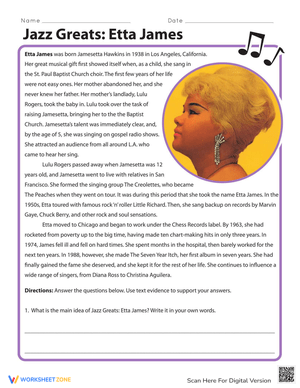
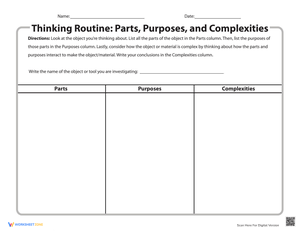
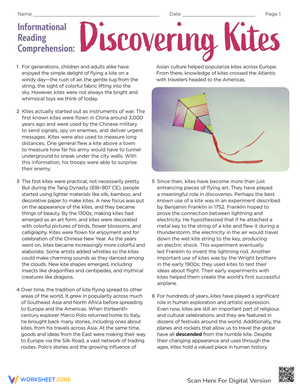
These nonfiction worksheets give teachers targeted practice for the specific comprehension demands of informational text: identifying text features, recognizing expository text structures, distinguishing fact from opinion, extracting the main idea from supporting details, and understanding author's purpose. Each worksheet targets one skill at a time — which matters more than it sounds, because when a student is new to cause-and-effect reading, asking them to simultaneously manage vocabulary and text feature analysis compounds difficulty without adding instructional value.
What's Inside the Set
Six skill areas are covered across the worksheets, with the heaviest practice concentration on text structures and main idea work — the two areas where students need the most repetition before skills transfer to independent reading.
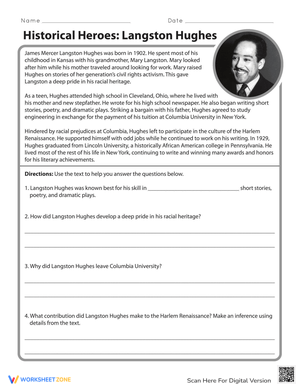
- Text features: Students identify headings, captions, bold terms, indexes, and sidebars, then explain what each feature adds beyond the body text. The explanation step is what separates this from label-and-circle work — circling a caption and knowing why an author includes one are genuinely different tasks.
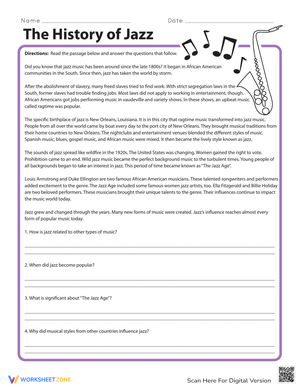
- Expository text structures: Each of the five common patterns gets its own focused practice — description, sequence, cause and effect, compare and contrast, and problem and solution. Students match signal words to structure types, then identify the structure used in real content-area passages.
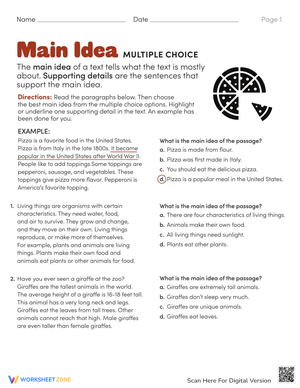
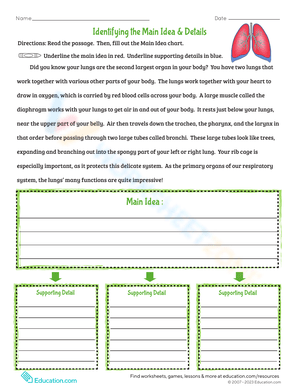
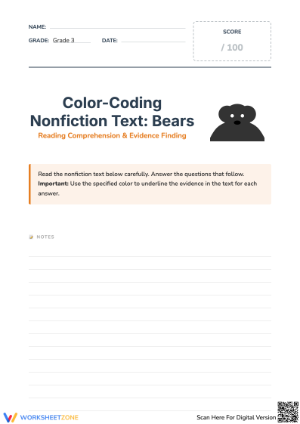
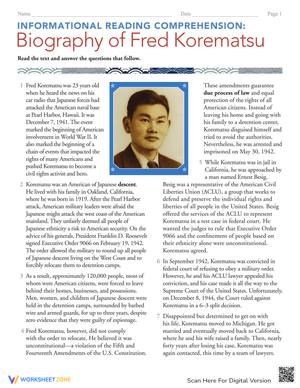
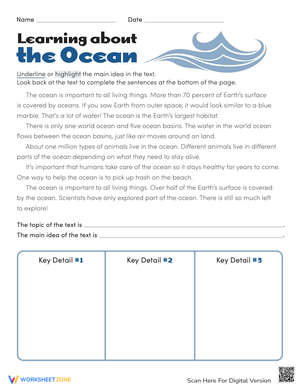
- Main idea and supporting details: Students underline the main idea sentence, then mark each remaining detail as supporting or irrelevant. The irrelevant-detail step forces actual thinking rather than wholesale highlighting.
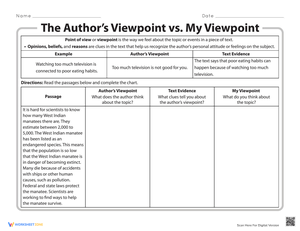
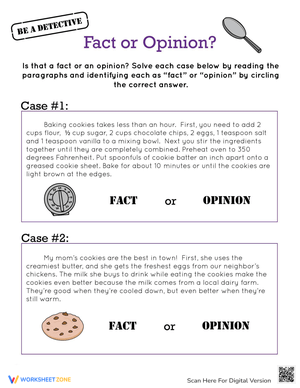
- Fact vs. opinion: Students sort statements and write out their reasoning — no multiple-choice format that lets them guess without committing to a justification.
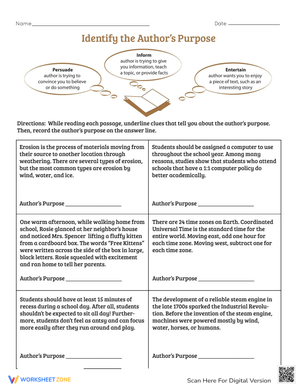
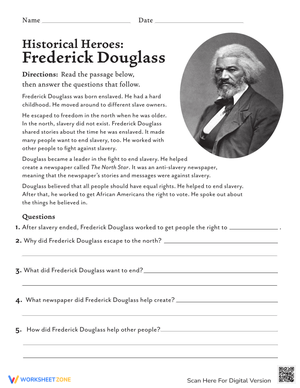
- Author's purpose: Passages drawn from science and social studies contexts; students identify the purpose and cite the specific line of text that led them there.
- Domain-specific vocabulary: Context clue exercises use academic terms from content areas, not the sanitized reading-class sentences that produce correct worksheet answers but poor transfer.
Frequent Student Errors Worth Anticipating and Addressing
The most persistent main idea error is treating the topic as the main idea. When a paragraph is about ocean currents, a large portion of students write "ocean currents" as their answer. That's the topic. The main idea says something about ocean currents — how they form, why they shift, what disrupts them. Teachers need to correct that distinction explicitly, early, and more than once. A worksheet that asks "what is this paragraph mostly about?" in exactly that phrasing actually makes the problem worse, because "ocean currents" is a defensible answer to that question. Better phrasing: "What is the author's most important point in this paragraph?"
In cause-and-effect work, students reverse direction when the effect appears before the cause in the sentence. "The roads flooded because three weeks of rain had saturated the soil" — roughly half a class will mark "flooded roads" as the cause. Signal word instruction helps somewhat, but the more durable correction is teaching students to ask two questions: what came first in time, and what made the other thing happen. Those questions are harder than "find the word because," and they produce sturdier reasoning.
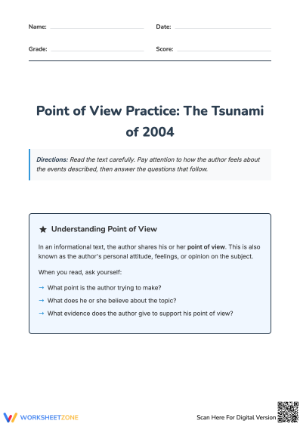
Fact vs. opinion errors cluster around authority statements. Students read "researchers have found that sugar is harmful" and accept it as fact because researchers are scientists. The verifiability of a statement is not the same as the credibility of its source — that distinction is where the most productive classroom conversation lives, and it's the one a worksheet alone cannot fully resolve. Flag those sentences during review.
How to Work These Into Your Instructional Week
These worksheets land best in the day or two after direct instruction on a skill — not the same day. If you model text structure identification on Monday using a projected article, students who immediately receive a nonfiction worksheets to complete will often echo whatever structure you named during modeling. Waiting until Tuesday or Wednesday, after they've read another text independently, surfaces far more honest information about what they've actually retained versus what they absorbed in the moment.
For small-group time, these worksheets do something whole-class assignments rarely deliver: they let you hear student reasoning in real time. Sit with four students working through the fact vs. opinion worksheet and ask one to read a statement aloud and explain their answer before anyone marks it. The explanation surfaces the misconception clearly. These also work as five-minute warm-ups in the week before a reading assessment — one worksheet per day, one skill per day, paced so review feels purposeful rather than frantic.
Standard Alignment
These worksheets address the Common Core informational reading standards most directly assessed in grades 3 and 4: CCSS.ELA-Literacy.RI.3.2 (determining main idea and summarizing key details), RI.3.5 (using text features and understanding how authors structure informational text), and RI.3.8 (distinguishing an author's point of view and separating fact from opinion). The RI.3.5 standard is consistently underteached — text feature identification often gets a lesson or two and moves on, but the standard asks students to explain how features contribute to meaning. That explanatory layer is where most students need sustained practice, and it's where these worksheets spend the most time.
Adjusting These Worksheets for a Range of Learners
Struggling readers hit the wall on text structure and main idea tasks primarily because of passage complexity, not task complexity. The most effective adjustment is passage length, not task simplification. A student reading a year below grade level still needs to practice identifying cause and effect in a real passage — just a shorter one. For the signal word sections of the text structure worksheets, adding a three-word word bank removes one barrier without removing the thinking.
Students ready to move past identification benefit from a production extension: after completing a nonfiction worksheets on compare-and-contrast structure, they write their own two-paragraph comparison using the same graphic organizer — a natural next step that doesn't require a separate activity to plan. For English learners, the image-rich text features worksheets provide a genuine entry point. Explaining the purpose of a diagram requires less English fluency than summarizing a dense passage, but it builds the same analytical habit of asking what the author chose to include and why.
Frequently Asked Questions
What grade levels do these worksheets target?
The passages and tasks are calibrated for grades 3 and 4. Teachers in 5th grade use individual worksheets for targeted review, particularly with students who still write topic labels instead of main idea statements or who consistently reverse cause and effect. Second-grade teachers with advanced readers have found the text features worksheets accessible and productive.
Can these serve as informal assessments?
The explanation-based tasks — particularly fact vs. opinion and author's purpose — give teachers written evidence of student reasoning, not just right or wrong answers. That makes each worksheet more useful as a formative snapshot than a multiple-choice check. Most teachers use these for practice and reserve a separate scored task for formal assessment, but the written justifications on these worksheets are worth collecting before a unit test to identify which students need a targeted reteach.
How should I sequence these across a nonfiction unit?
Start with text features — students need vocabulary for what they're looking at before they can analyze how features support comprehension. Move to text structure next; it's easier to identify organizational patterns when students are already comfortable navigating the text itself. Main idea and author's purpose work well in the second half of the unit, once students have enough content familiarity to think critically about what the author chose to emphasize. Downloading this nonfiction worksheets set with all six skill areas gives enough material to carry a three-week unit without hunting for supplemental resources mid-lesson.












 Interactive Worksheet Maker
 Quiz Maker
 Word Search Maker
 Crossword Puzzle Maker
 Word Scramble Generator
 Sentence Scramble Generator
 Handwriting Worksheet Generator
 Name Tracing Generator
 Fill In The Blank Generator