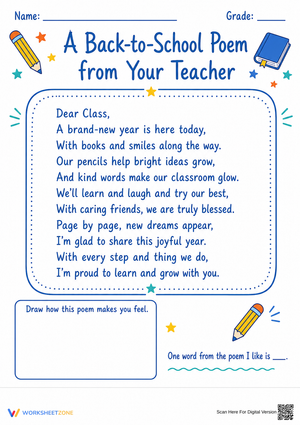
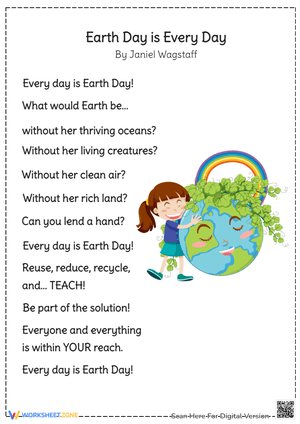
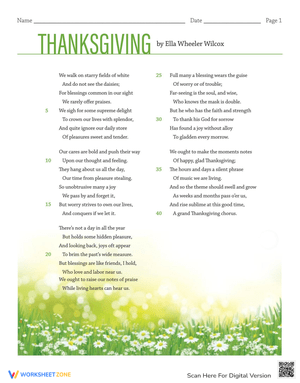
These poetry worksheets resources give teachers a structured entry point into verse study without requiring a full dedicated unit to justify using them. Each worksheet pairs a short reading task with a focused writing response — students aren't just circling devices in isolation, they're applying what they notice to their own drafts. That read-then-write sequence runs consistently through the set and gives even reluctant writers a concrete model before they put pencil to paper.
Concepts Covered Across the Set
The worksheets address both structural and figurative elements of poetry. Students work with:
- Syllable counting and line structure in fixed forms — haiku, cinquain, and diamante
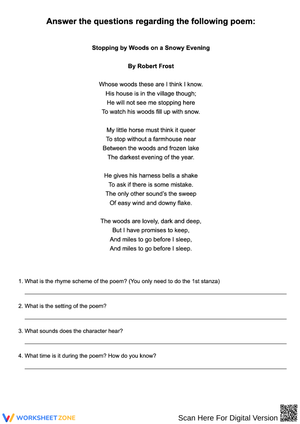
- Rhyme scheme identification through letter labeling (ABAB, AABB, ABCB)
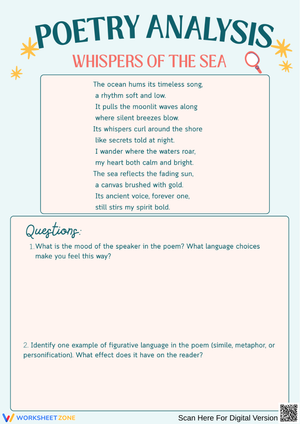
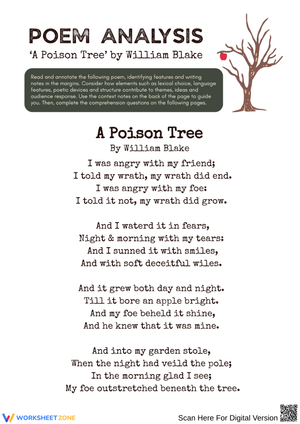
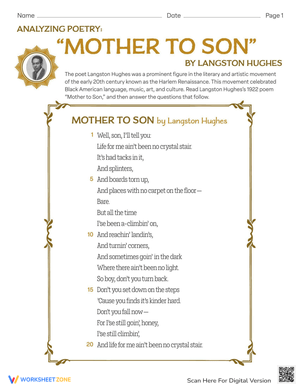
- Figurative language: simile, metaphor, personification, and hyperbole presented in context, not as isolated definitions
- Sound devices: alliteration, onomatopoeia, and assonance with examples students mark directly on the poem text
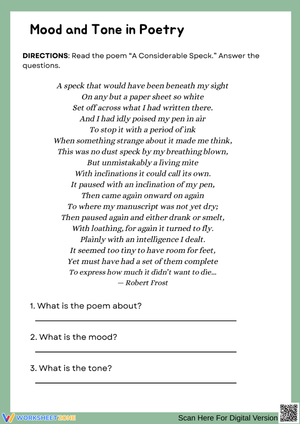
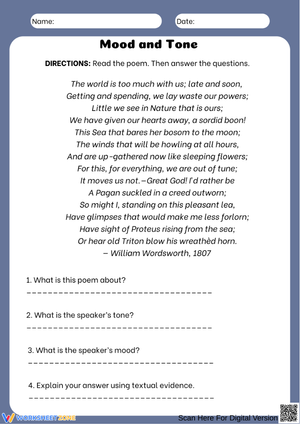
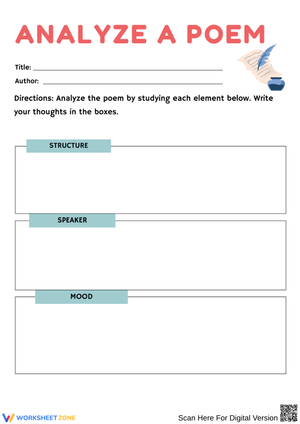
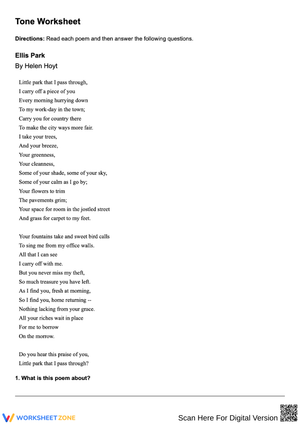
- Mood and tone — students select from a word bank, then justify their choice by citing a specific line
- Theme identification, kept deliberately separate from topic summary throughout the set
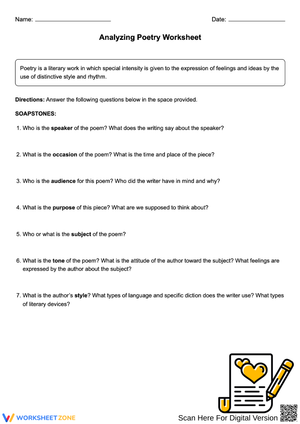
The tone-versus-theme distinction gets its own dedicated treatment because those two concepts get collapsed together in student work more reliably than almost any other pairing. A short imagist poem about fog, for example, will prompt students to write "the theme is weather" — the topic — when the actual thematic work is about stillness and observation. The worksheets push past topic identification by requiring students to complete the sentence frame: This poem suggests that...
Mistakes Students Make That These Worksheets Help You Catch
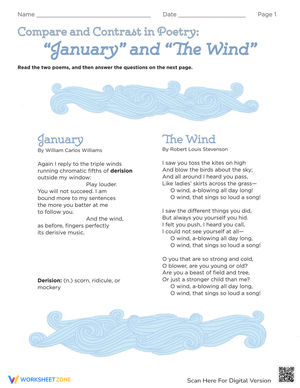
The most persistent error in poetry analysis is treating simile and metaphor as interchangeable labels. Students will correctly identify "the moon is a silver coin" as a metaphor, then circle "her voice was like thunder" and call it a metaphor too — with "like" sitting right in front of them. The worksheets address this by presenting both devices inside the same poem and asking students to label each comparison and explain what distinguishes them. Seeing the two constructions side by side, in context, closes the gap that memorizing separate definitions rarely does.
Syllable counting is another predictable trouble spot, especially with compound words and contractions. "Beautiful" gets counted as two syllables by a surprising number of fourth graders; "can't" sometimes gets counted as two. Several worksheets have students tap syllables before drafting, which catches those errors before they're embedded in a finished haiku that doesn't scan.
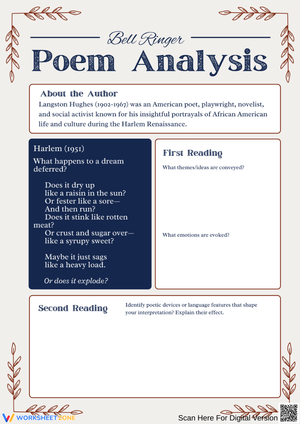
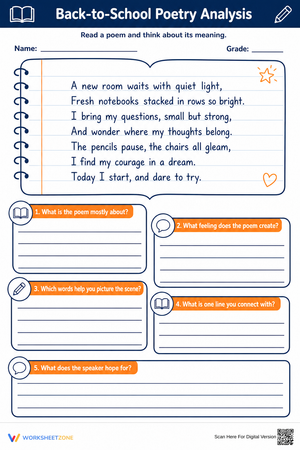
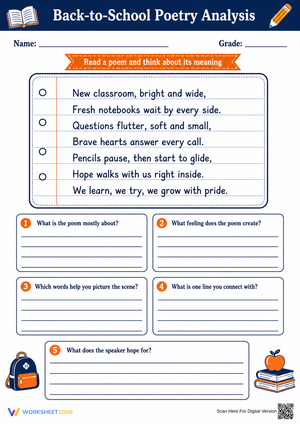
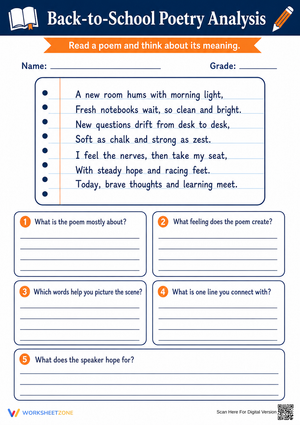
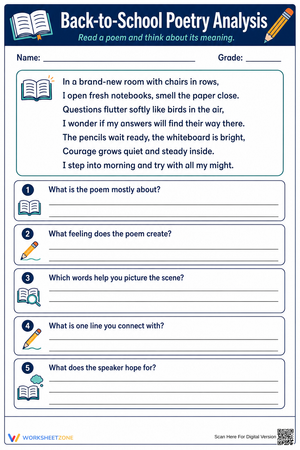
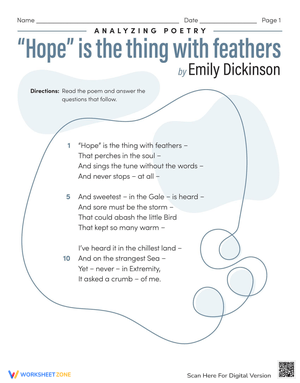
The subtler problem is students who can name a device accurately but stop there. They write "the poet uses personification" and consider the job done. Every analysis prompt in this set follows identification with a second question — What does this do for the reader? — because that second step is where real understanding surfaces, or doesn't. When a student writes "it makes the wind feel threatening, like it wants to hurt someone," that's different from a student who writes "it makes it more interesting." Both answers are visible on the page, and that visibility is useful.
How to Build These Worksheets Into Your Lesson Plans Without Losing Ground Elsewhere
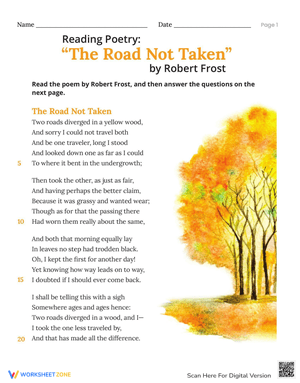
The most practical entry point is a Monday poem: one worksheet, five to eight minutes, projected for the whole class before independent work time. Students get their own copy. You read it aloud once — twice if the meter is worth hearing — and they annotate while you model on the board. By Thursday they've encountered that poem four times. By Friday it belongs to them. That kind of repeated contact within a single week does more for internalization than one long poetry lesson stretched across a month.
The writing-prompt worksheets work well as early-finisher or Friday extension tasks for open-form prompts. The structured-form worksheets — the ones walking students step by step through haiku or cinquain — land better as whole-class or small-group activities where you can intercept syllable miscounts before they're committed to the final draft. Trying those as fully independent tasks the first time usually produces a pile of haiku with six syllables in the middle line and no awareness that anything went wrong.
For teachers running literacy stations, a poetry worksheets focused on a single device — say, personification — works as a timed station activity followed by a partner share. Students mark examples on the poem, write one original example on the back, and leave the station with something to discuss. The station runs itself once students know the format.
Differentiating the Set Across Ability Levels
For students still building reading fluency, pairing any analysis worksheet with an audio read-aloud — even a recorded one played through a classroom device — makes the text more accessible before students try to work with it analytically. The rhythm of the poem becomes a decoding support. Several worksheets include a syllable grid as a built-in counting tool, which is genuinely useful for all learners, not just those who struggle.
Students ready for more challenge are best served by the blank-verse and open-form writing prompts, where there are no structural rules to fall back on. Those worksheets require real decisions about line breaks, white space, and word compression — the kind of choices that reveal whether a student understands how poems generate meaning or has only learned to follow syllable formulas. Pairing an advanced student with a published poem as a mentor text alongside their worksheet prompt gives them a reference point without narrowing their options.
For English Language Learners, the sound-device worksheets make a strong starting point. Alliteration and onomatopoeia are auditory effects before they're conceptual ones — students can hear "the slippery, sliding snake" work before they need the vocabulary to explain why. Adding a short glossary or annotated poem alongside the standard analysis questions adjusts the access level without pulling out the critical thinking the task requires.
Standard Alignment
These worksheets align with several Common Core ELA standards across the upper elementary grades. CCSS.ELA-LITERACY.RL.4.5 asks students to explain major structural differences between poems, drama, and prose — the form-focused worksheets covering haiku, free verse, and limerick address that comparison directly. CCSS.ELA-LITERACY.RL.5.4 covers determining the meaning of words and phrases including figurative language, which maps to the simile, metaphor, and sound-device analysis tasks throughout the set. The writing worksheets connect to CCSS.ELA-LITERACY.W.4.4, which requires students to produce writing appropriate to task and purpose — working within a fixed poetic form makes that standard concrete and assessable rather than abstract.
Frequently Asked Questions
Do these worksheets work across multiple grade levels, or are they specific to one grade?
The set works across roughly grades 3 through 6, though individual worksheets land differently by grade. The haiku and acrostic worksheets are accessible as early as second grade with teacher support. The tone-versus-theme and figurative-language analysis worksheets assume students can read at approximately a late third- or fourth-grade level. Most teachers pull specific worksheets by skill rather than working through the set in order, which gives the resources a longer shelf life across grade bands.
How long does each worksheet take to complete?
Analysis worksheets typically take eight to fifteen minutes for on-level students working independently. Writing worksheets vary more — structured forms like haiku and cinquain usually run five to ten minutes once students understand the syllable rules, while open-prompt worksheets can stretch longer if students are genuinely engaged. Budget more time the first time you use a particular format. The second and third encounters go considerably faster once students know what the task expects from them.
Can these be used for assessment, or are they practice only?
They work well as assessment tools, and several teachers use them precisely that way. The analysis worksheets make clean exit tickets or pre/post checks around a device-focused lesson. For a summative use, the poetry worksheets targeting figurative language identification and effect explanation gives you clear evidence of independent skill application — it removes group discussion and requires written justification rather than circled answers. A two-criterion rubric (identification accuracy plus quality of explanation) is enough to make the data gradeable and defensible.












 Interactive Worksheet Maker
 Quiz Maker
 Word Search Maker
 Crossword Puzzle Maker
 Word Scramble Generator
 Sentence Scramble Generator
 Handwriting Worksheet Generator
 Name Tracing Generator
 Fill In The Blank Generator