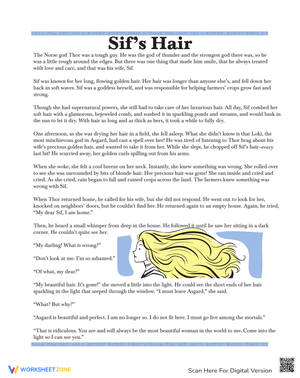
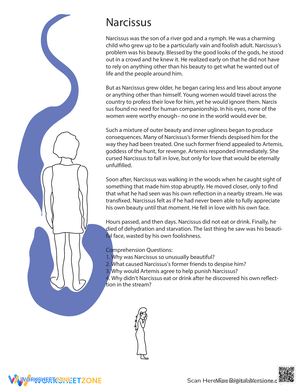
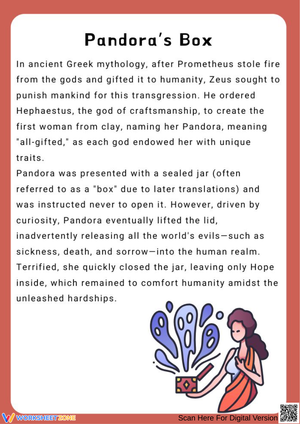
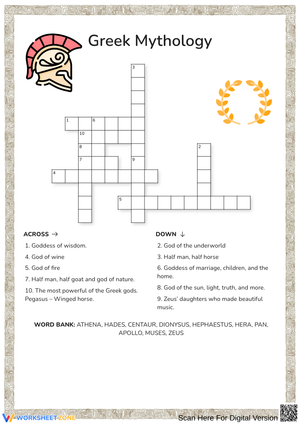
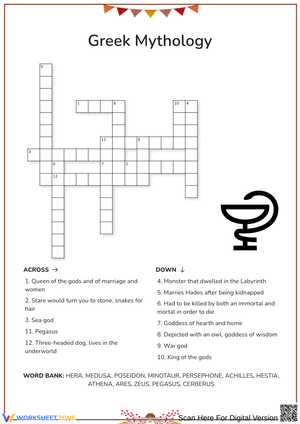
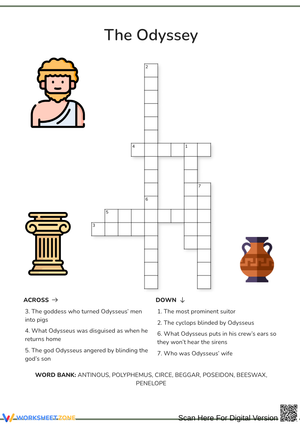
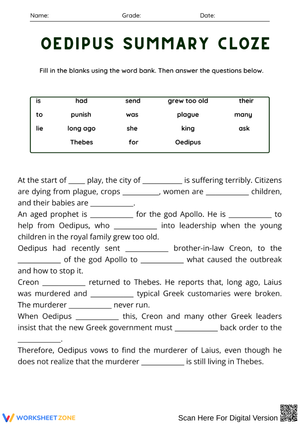
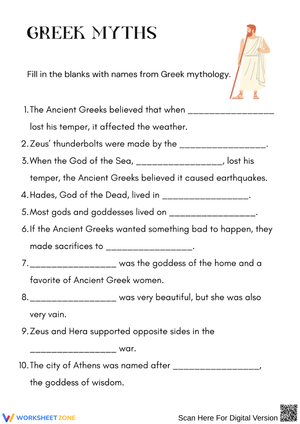
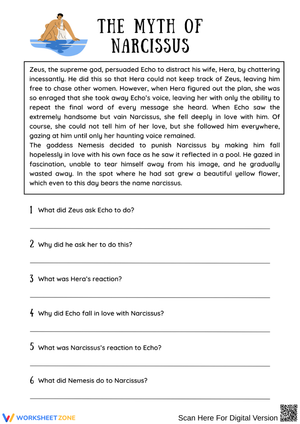
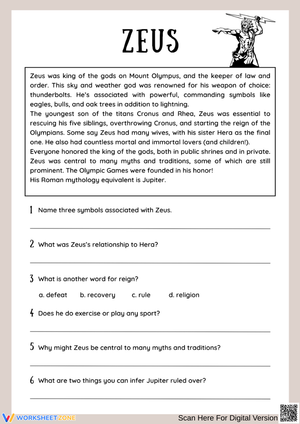
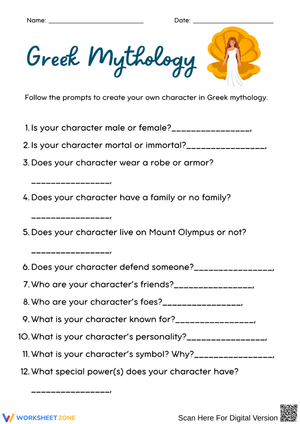
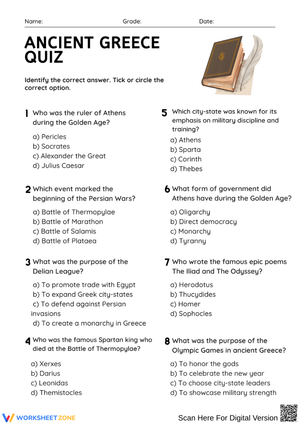
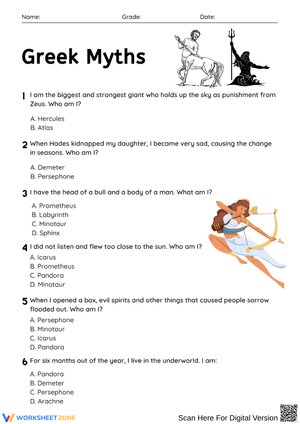
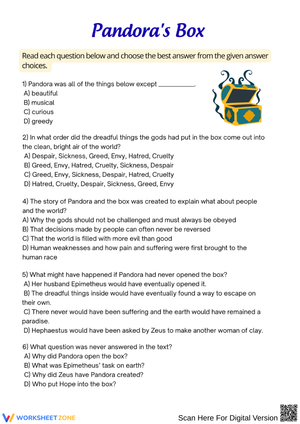
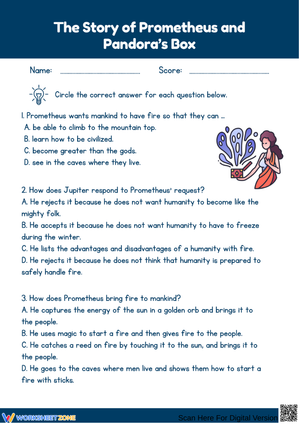
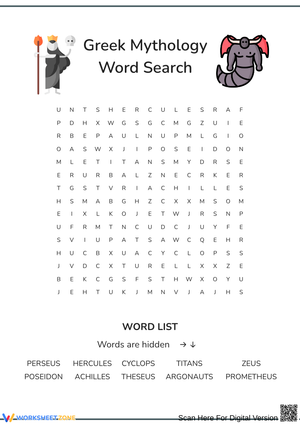
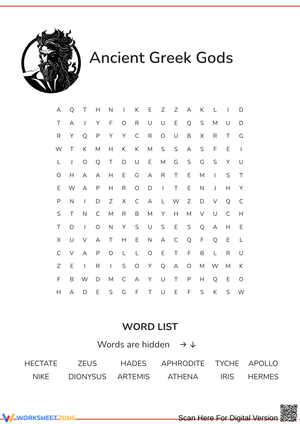
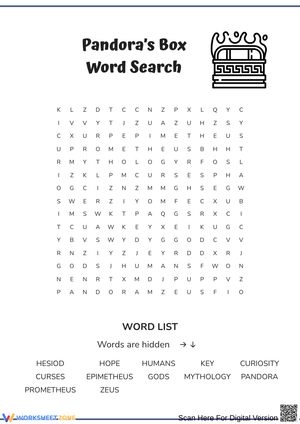
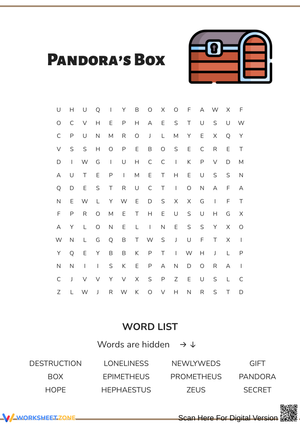
These myths printable worksheets resources give students direct, repeated practice with mythology as a genre — not just reading myths for plot, but learning to recognize the structural and cultural patterns that make mythology distinct from other traditional narratives. Each worksheet targets a specific skill, from identifying supernatural characters and their functions to tracing the natural phenomenon a myth explains, so teachers can drop one into an independent reading block or run the full set as a unit anchor.
What Students Practice Across the Set
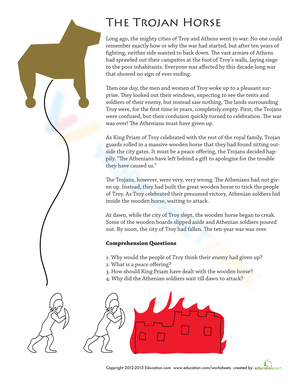
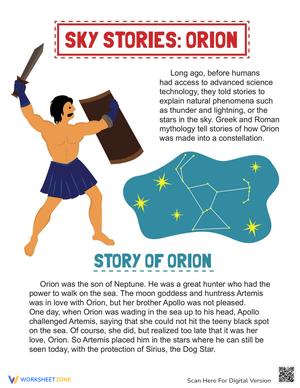
The core of this set is genre-level thinking. Students aren't just reading myths — they're learning to read them as a category with specific defining features. Each worksheet asks students to annotate the elements that mark a narrative as a myth: supernatural beings with cosmological roles, an explanatory purpose rooted in natural phenomena or cultural origins, and a primordial setting that predates human civilization. Students mark these features directly in response boxes, then use those annotations to answer comprehension and analysis questions.
Beyond that foundational identification work, the set covers:
- Character motivation analysis — why Prometheus steals fire knowing the punishment he'll face, what Persephone's choice in the underworld costs her, how trickster figures use cunning rather than strength to reshape the world
- Cause-and-effect mapping, connecting the problem a myth addresses to the narrative that resolves it — a drought, the origin of a specific flower, the first winter
- Evidence-based summary, where students cite the text rather than drawing on prior knowledge of a well-known story
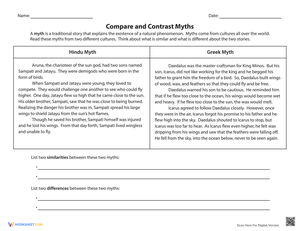
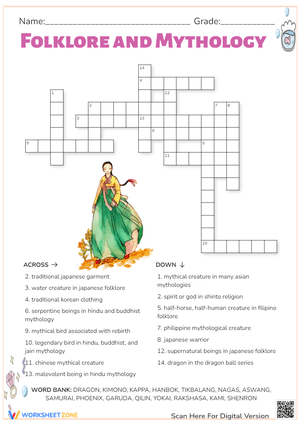
- Cross-cultural comparison, pairing trickster figures from West African, Norse, and Indigenous North American traditions to identify shared story logic across unrelated cultures
- Vocabulary support for proper names and titles that are phonetically unfamiliar — a student who trips over "Persephone" every sentence is spending reading energy on decoding instead of meaning
Errors That Show Up in Student Work — and What to Do About Them
The most persistent confusion is the myth-versus-legend distinction. Students who understand that legends involve exaggerated real events will still classify Paul Bunyan as a myth because he seems too large and extraordinary to be a real person. The issue isn't that they don't know the definition — it's that the supernatural scale of certain legends overlaps enough with myth that a single reading of the definition doesn't hold. These worksheets address this by asking students to identify the timeline and purpose of a narrative, not just its character types. A giant lumberjack in a setting with historical markers (real places, named regions) is a legend. A god shaping the earth before humans existed is a myth. That framing sticks better than the definition alone.
A second reliable error: students read the explanatory purpose of a myth as the moral lesson. They finish a myth about Arachne being transformed into a spider and write "don't be arrogant" in the moral-lesson box — which is true of the story but misses the genre entirely. The myth isn't a fable. Arachne's transformation explains why spiders exist and weave webs; her human pride is the narrative engine, not the point of the story. Worksheets that explicitly ask "what does this story explain about the natural world?" redirect students away from the fable-reading habit they've already internalized.
Building These Worksheets Into Your Lesson Sequence
The most natural entry point is the "before science" move. Before students read a myth about Demeter and Persephone, ask them how people might have explained why crops die every winter without any knowledge of axial tilt or seasonal patterns. This primes the cause-and-effect lens and makes the myth feel like a genuine intellectual solution rather than a strange old story. Then the worksheet does the analytical work of connecting the narrative to that explanatory function.
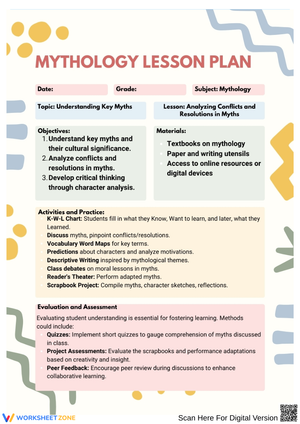
For teachers running a literacy center rotation, a myth-of-the-week station works reliably. Students read a short passage and complete one worksheet independently — a genre checklist, three comprehension questions, one analytical prompt. This consistent, low-stakes exposure builds genre familiarity without monopolizing class time. The pairing approach also holds up well: myths printable worksheets placed alongside a short informational text on the same natural phenomenon — the myth of Phaethon alongside a paragraph on why regions near the equator receive more direct sunlight — creates a genuine discussion about how narrative and scientific explanation both respond to the same human question. The ten minutes before lunch or the end of a Wednesday independent block are both enough time for the passage-plus-one-question version.
Standard Alignment
These worksheets map most directly to CCSS RL.4.9 and RL.5.9, which ask students to compare and contrast stories from the same genre — including mythology — attending to how different texts approach themes and topics. In classroom terms, this means students need to read multiple myths, identify recurring patterns like the theft of fire or the trickster figure, and explain how different cultures address the same narrative problem. That's not a skill students develop by reading one myth for plot; it requires repeated exposure across traditions, which is exactly what this set builds toward.
At the middle school level, CCSS RL.6.9 extends this to comparing a contemporary author's text to its mythological source — a skill that requires students to already hold a solid genre framework in their heads. The character-analysis and genre-identification work in these worksheets gives students that grounding before they're asked to track a myth's influence on modern fiction.
Adjusting the Worksheets for a Range of Learners
For students still building reading fluency, reduce the length of the passage but keep the analytical task intact. A student who reads a two-paragraph version of the Demeter and Persephone story should still answer the same "what does this explain about the natural world?" question as a student who read the full version. The genre-thinking skill doesn't need to be simplified — just the reading load. Pairing those students with a partner for the passage reading while they complete the worksheet independently keeps the analytical work in their hands rather than transferring it to the partner.
Advanced students push further when you remove the question structure rather than adding more questions. Instead of asking them to identify the natural phenomenon a myth explains, ask them to find a second myth from a different tradition that addresses the same phenomenon and build their own comparison without a graphic organizer provided. The myths printable worksheets format works as a starting point for this kind of extension, but capable students benefit from occasionally constructing their own organizational structure rather than filling in one that's already laid out for them.
Frequently Asked Questions
At what grade level do these worksheets fit best?
Most worksheets in this set work well in grades 3 through 6, where mythology appears explicitly in reading standards and students are developing genre awareness alongside comprehension skills. Simplified passages work for late second grade. Middle school teachers use the cross-cultural comparison and character-analysis worksheets for introductory mythology units before students move into more complex literary analysis tasks involving mythological allusions in contemporary texts.
How long does each worksheet typically take?
A passage-plus-analysis worksheet runs about 20 to 30 minutes for on-grade-level readers. Genre identification charts and comparison organizers run shorter — closer to 15 minutes when students already know the passage. Plan for more time during the first week students encounter mythology; the unfamiliar names and story logic slow things down initially but level off quickly once students have read two or three myths.
Can I use individual worksheets without running a full unit?
Yes. Each worksheet stands alone — a mythology passage with targeted comprehension questions doesn't require the others to make sense. For teachers running a full unit, the set moves from genre introduction through cross-cultural comparison in a sequence that avoids repeating skills. The myths printable worksheets format means teachers can also pull one worksheet to accompany a read-aloud or a textbook excerpt without committing to the full sequence.












 Interactive Worksheet Maker
 Quiz Maker
 Word Search Maker
 Crossword Puzzle Maker
 Word Scramble Generator
 Sentence Scramble Generator
 Handwriting Worksheet Generator
 Name Tracing Generator
 Fill In The Blank Generator