If a kindergarten student is just starting to track print with a finger, match spoken words to printed words, and lean almost entirely on pictures to understand a story, that student is likely reading at Guided Reading Level A. This is the entry point of the Fountas and Pinnell Text Level Gradient, and it shapes everything about the comprehension worksheets you should choose for small-group instruction. A Level A comprehension worksheet is not a quiz. It is a support tool that lets an emergent reader show what they understood about a picture-supported text before they can produce full written sentences.
Where Level A Sits in the F&P Text Level Gradient
In the Fountas and Pinnell system, levels are ordered by word count, sentence length, sentence complexity, word repetition, and illustration support. Level A sits at the very start of that gradient and minimizes complexity across every one of those categories. Texts at this level typically carry just one line of print per page, and the illustrations do most of the communicative work.
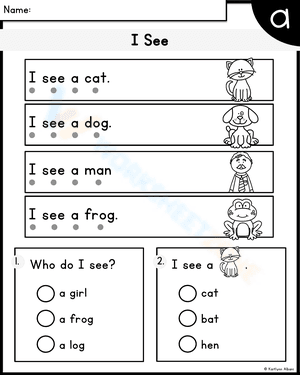
Because Level A texts rely on repetitive sentence patterns and a small, controlled set of high-frequency words, a well-designed worksheet at this level should repeat the same two or three sentence frames the student just read, asking them to match a picture to a word or phrase rather than compose an original answer. This mirrors the actual demand of the text and avoids asking a five- or six-year-old reader to perform a skill several levels above where they currently sit.
What to Look for in a Level A Comprehension Worksheet
Not every printable labeled level a reading comprehension worksheets actually matches the demands of an emergent reader. Before adding one to a guided reading folder, check for a few specific features.
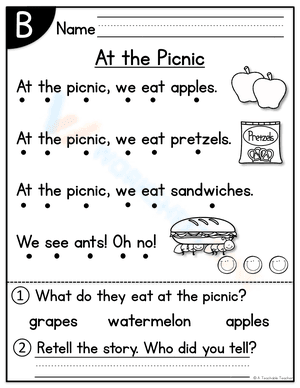
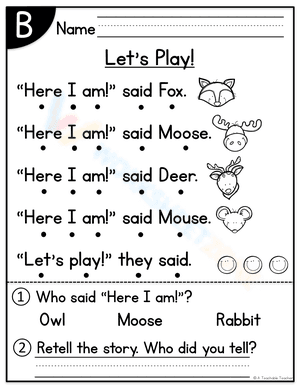
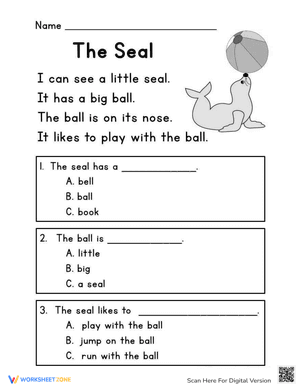
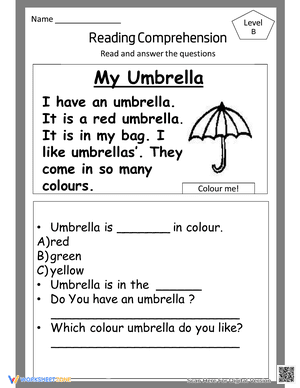
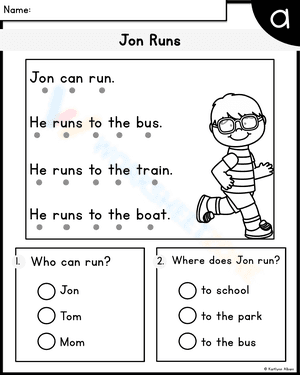
- One simple sentence or phrase per page, matching the sentence load of an actual Level A text
- Large, clear illustrations that carry most of the meaning, not just decorative clip art
- A small set of repeated sight words such as I, see, like, the, and a
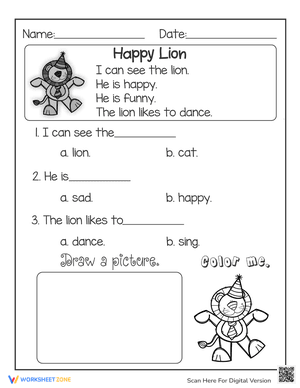
- Picture-matching, circling, or pointing tasks instead of blank lines for writing
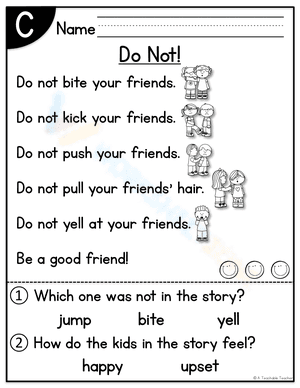
- No inference questions, since Level A readers are not yet ready for multi-step reasoning about text
Worksheets that meet these criteria let a teacher use the same 10-15 minute small-group block to introduce a book, read it together, and immediately check understanding without shifting the cognitive demand away from where the student actually is.
Building One-to-One Word Matching and Sight Word Recognition
At Level A, comprehension and print work are tightly linked. A student cannot understand a sentence they cannot track word by word, so worksheets should reinforce this skill directly. Effective activities include pointing to each word while reading a repeated line aloud, then circling the one word in the sentence that changed from the previous page, such as the name of an animal or color.
Sight word recognition worksheets that isolate words like see, a, the, and I within the same sentence frame used in the leveled book build automaticity. When a student can recognize these words instantly, more of their attention is freed up for connecting the picture to the meaning of the line, which is the actual comprehension goal at this stage.
Classroom Implementation
A practical routine pairs each Level A leveled text with a matching worksheet used across three short sessions rather than one long sitting. On day one, introduce the book, read it together, and have students point to words as they read chorally. On day two, reread the book and complete a picture-matching or word-matching worksheet tied directly to that text. On day three, use a simple retelling worksheet where students sequence two or three pictures from the story in order.
Keep a small folder or bin of Level A worksheets organized by skill: word matching, sight word recognition, and picture sequencing. This lets you grab the right activity quickly during a guided reading block without redesigning materials each week. Rotate which skill each group practices so students get repeated exposure to all three comprehension formats across a two-week cycle, and track which students are ready to shift toward Level B texts and slightly longer worksheet formats.
Frequently Asked Questions
1. What grade level typically reads at Guided Reading Level A?
Level A is most common in kindergarten classrooms, though it can also apply to early first-grade students who are still building foundational print concepts and have not yet moved into more complex sentence patterns.
2. What skills should a Level A comprehension worksheet target?
A Level A worksheet should target one-to-one word matching, recognition of a small set of high-frequency sight words, and picture-based comprehension such as matching, sequencing, or simple identification tasks rather than written response.
3. How is Level A different from Level B in the F&P gradient?
Level A texts generally carry one line of print per page with heavy picture support, while Level B introduces slightly more print per page and small variations in sentence patterns, asking readers to track a bit more text with a little less reliance on illustrations.
4. How can teachers assess comprehension for students who cannot yet write full sentences?
Use picture-based formats such as retelling with sequenced pictures, matching pictures to simple phrases, or pointing and circling tasks that let a student demonstrate understanding without needing to produce independent writing.
5. How often should Level A worksheets be used in a guided reading rotation?
Most classrooms pair one leveled book with a worksheet across two to three short sessions per week, allowing time to introduce the text, reread it, and complete a related comprehension task before moving to a new book.