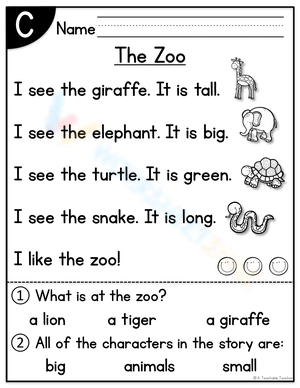
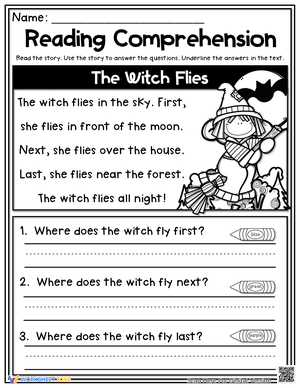
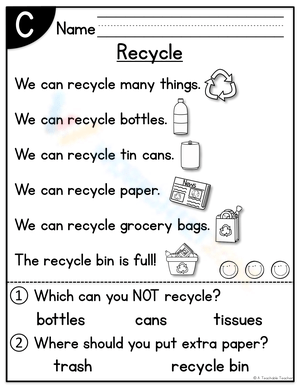
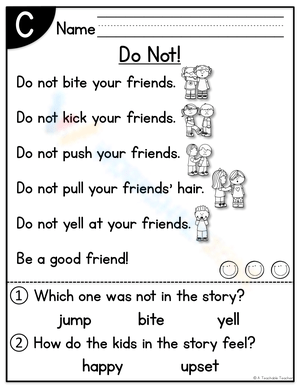
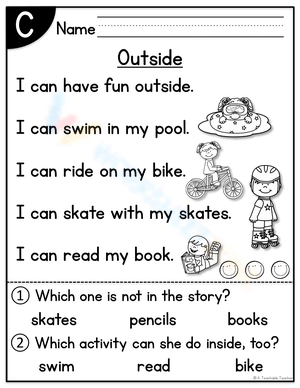
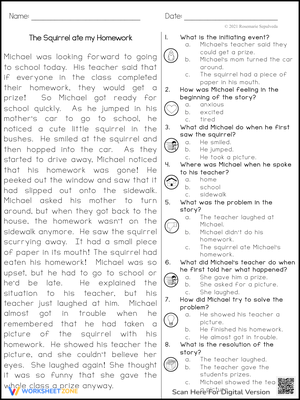
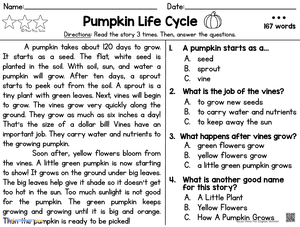
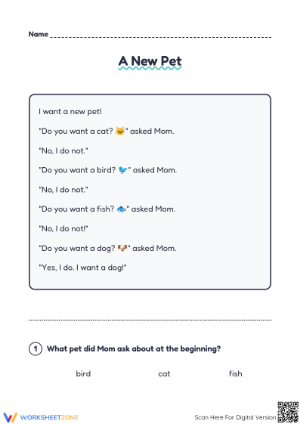
Level C corresponds to roughly grade 1.2, which places it in the late kindergarten through early first grade window for most students. At this stage, readers are moving past single-word or single-line texts and into short, patterned stories with repeated sentence structures. The text load is still light, but the expectation for comprehension has grown: students should be able to name characters, describe the setting, and recall the order of two or three events after a single read.
Because Level C texts typically carry only two to six lines per page, comprehension worksheets at this level work best when they isolate one skill per page rather than stacking multiple question types. A worksheet that asks a student to sequence three picture events, for example, gives a cleaner formative signal than one that mixes sequencing, character identification, and vocabulary on the same page.
Comprehension Skills to Target at Level C
At Level C, comprehension instruction shifts from pure decoding toward the earliest layers of meaning-making. Worksheets should emphasize:
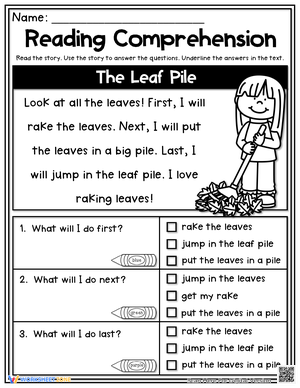
- Retelling the story in the correct order using picture or sentence prompts
- Identifying the main character and setting
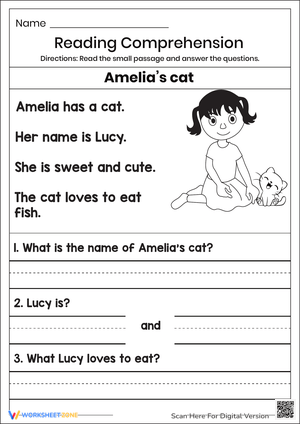
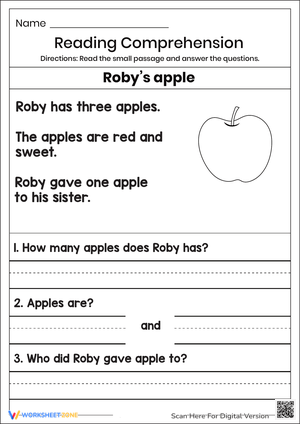
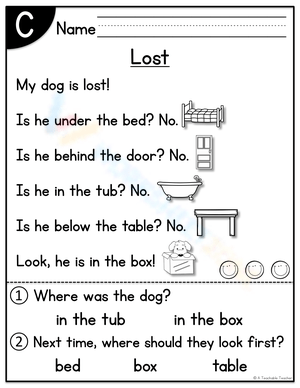
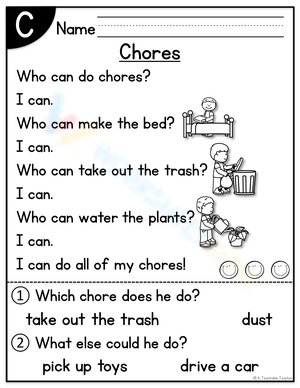
- Answering simple who, what, and where questions tied directly to the text
- Matching pictures to the sentence or event they represent
Avoid inferential or why-based questions at this level. Level C readers are still building literal comprehension, and asking them to infer motive or cause tends to measure listening comprehension rather than reading comprehension, which can muddy your small-group data.
Using Level C Worksheets in Small-Group Guided Reading
Level C comprehension worksheets fit naturally into the independent or partner rotation of a guided reading block. While you pull one small group for direct instruction, another group can complete a retell-and-sequence worksheet tied to a story they read earlier in the week. This keeps the comprehension check low-stakes and gives you a quick artifact to review before the next guided reading session.
A predictable weekly routine works well: introduce the Level C text and preview vocabulary on day one, read together with teacher support on day two, and use the comprehension worksheet independently or with a partner on day three. By day four, students can share their worksheet answers in a quick partner check, which reinforces oral retelling alongside the written response.
Classroom Implementation
To build Level C comprehension worksheets into your weekly plan without adding prep time, batch your materials by story rather than by skill. Pull three or four Level C titles for the month, and prepare a matching set of retell, sequence, and character worksheets for each so you are not creating new materials every week. Store these in labeled folders by guided reading group so a substitute or co-teacher can step in without confusion.
Pair worksheets with a short partner-reading routine: after independent worksheet time, have students trade papers with a partner who read the same story and compare answers before you collect them. This adds a layer of peer accountability and gives students another chance to verbalize their retell, which reinforces the comprehension skill you are targeting.
Frequently Asked Questions
1. What grade level is Guided Reading Level C appropriate for?
Level C corresponds to roughly grade 1.2, which typically places it with students in late kindergarten through early first grade, depending on individual reading development.
2. How is Level C different from Level B and Level D?
Level C sits directly between B and D on the Fountas and Pinnell / Reading A-Z continuum. Compared to Level B, Level C readers handle slightly more text per page and begin retelling with more detail; compared to Level D, Level C still relies heavily on picture support and simple, repetitive sentence patterns.
3. What comprehension skills should Level C worksheets target?
Focus on retelling in sequence, identifying character and setting, and answering literal who, what, and where questions. Save inferential or why-based questions for later levels once literal comprehension is solid.
4. How often should teachers assess a student's progress at Level C?
A quick comprehension worksheet check once or twice per week, combined with a running record every two to three weeks, gives enough data to decide when a student is ready to move toward Level D without over-testing emergent readers.