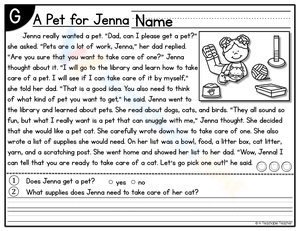
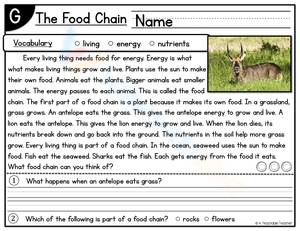
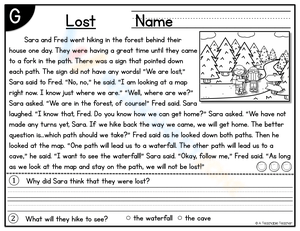
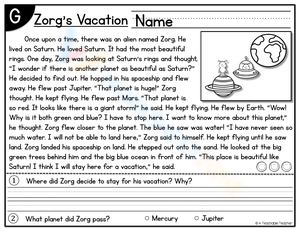
Level G worksheets help teachers keep comprehension practice level-specific
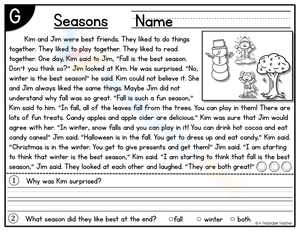
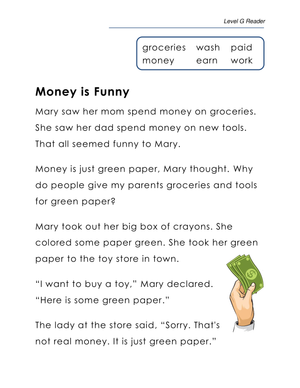
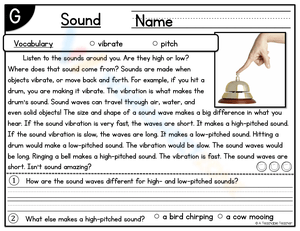
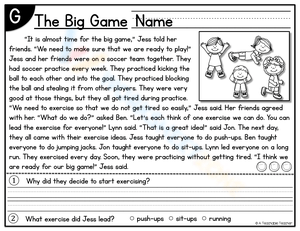
Level G reading comprehension worksheets are most useful when a teacher needs printable passage work that stays within a guided reading band instead of mixing texts from several levels. On Worksheetzone, the Level G collection sits inside English language arts reading resources and appears alongside neighboring bands from Level A through Level M, which makes it easier to plan small-group instruction without sorting through unrelated materials.
For classroom use, that matters because Level G students usually benefit from short, manageable reading tasks followed by text-based questions. Teachers can pull a worksheet for guided reading follow-up, literacy centers, intervention rotations, or take-home review. Instead of building comprehension checks from scratch, they can move directly into instruction and use the worksheet as practice, evidence, or a quick progress snapshot.
The strongest Level G reading comprehension worksheets keep the task narrow: read a short passage, think about meaning, and respond with questions that ask students to return to the text. That tight structure works well when the goal is not just finishing a worksheet, but confirming whether students can understand a brief text with reasonable independence.
Level G usually points to an early guided reading band, even when topics vary
Teachers sometimes see a wide spread of worksheet topics and wonder whether Level G should be treated as an age label or a text-difficulty label. The prefetched research suggests it should be treated as the reading band first. Reading A-Z lists benchmark passages at Level G under Grade 1, and Heinemann's instructional grade-level equivalence chart maps Level G to Basal Grade 1 and Reading Recovery levels 11-12.
That combination is the most useful planning insight on this page: the visible Worksheetzone cards may show a grades 3-5 label in the collection display, but the leveling references from Reading A-Z and Heinemann place Level G in an early guided reading band. In practice, that means teachers should match students to the text complexity of the worksheet, not assume the page label alone defines who should use it.
When that distinction is clear, Level G materials become easier to use in intervention and mixed-ability classrooms. A student in an older grade can still need Level G comprehension practice if the goal is targeted decoding-to-comprehension transfer at that band. Likewise, a younger student may be ready for Level G work because the passage length and question load support independent success.
Strong Level G comprehension practice focuses on meaning, sequence, and evidence
At this level, worksheets should do more than ask for isolated recall. Teachers generally want students to show that they can follow a short text, keep events in order, and answer questions by using details from what they just read. The best Level G reading comprehension worksheets usually support a few core moves:
- Identify who or what the passage is mainly about.
- Retell the beginning, middle, and end in clear sequence.
- Answer literal questions with details from the text.
- Make a simple inference when clues are directly supported.
- Use vocabulary in context without turning the task into a separate word study lesson.
That balance is helpful because Level G students often need comprehension tasks that stay concrete. If the worksheet asks for too much written output, too many abstract questions, or several skills at once, the result may measure stamina or frustration instead of reading understanding. Short passages with a modest question set usually give cleaner evidence.
Teachers should choose Level G worksheets by instructional purpose, not by theme alone
A themed passage can make planning easier, but the better filter is the job the worksheet needs to do in the lesson. Some teachers need an entry task before small group. Others need independent seat work while they confer with another group. Others need a fast check after reteaching. Choosing by instructional purpose helps narrow the set quickly.
A useful selection process is to scan for passage length, question type, and student independence. If students are reading the passage during the lesson, the worksheet should leave enough room for comprehension thinking rather than heavy written production. If it is going home, directions should be simple and the question format should feel familiar.
Here is a practical way to sort options:
- Use shorter passages for fluency-to-comprehension transitions.
- Use straightforward wh-questions for intervention blocks and quick checks.
- Use retell or sequencing prompts when students need story structure reinforcement.
- Use one passage with a small number of questions when assigning homework or sub plans.
That approach keeps the worksheet aligned to the reason it is being assigned. It also prevents a common mismatch: selecting an attractive topic but ending up with a task that demands more writing, background knowledge, or independence than the group can manage.
Classroom Implementation
Level G reading comprehension worksheets fit naturally into small-group reading because they can follow a brief book introduction, echo reading, or independent read of a short passage. After students read, the worksheet gives the teacher a structured way to see who understood the text, who can answer using evidence, and who still needs oral prompting.
In centers, these worksheets work best when routines are already established. Students should know how to read once, reread if needed, and complete a short set of questions without waiting for teacher help on every item. That makes the worksheet a true independent station rather than a disguised teacher-led task.
For intervention, teachers can shrink the workload and keep the discussion strong. One passage and three or four questions may be enough to uncover whether the issue is decoding, monitoring for meaning, or answering in complete thoughts. When used this way, the worksheet becomes a diagnostic teaching tool rather than just extra practice.
It is also reasonable to use Level G worksheets in mixed-ability classes by rotating different reading bands across groups. The key is to normalize that students may work on different texts while still practicing the same overall comprehension routine. Everyone can read, respond, and discuss, even if the passages are leveled differently.
Using Level G materials as targeted banded practice
Worksheetzone presents Level G as part of a broader level-reading pathway, which is helpful for teachers building a progression rather than choosing isolated printables. Reading A-Z places Level G benchmark passages under Grade 1, while Heinemann's instructional equivalence chart aligns Level G with Basal Grade 1 and Reading Recovery levels 11-12. Together, those sources support treating Level G as an early guided reading band when selecting comprehension worksheets for targeted instruction.
Level G worksheets are most effective when used for review, checks, and routine practice
Not every worksheet has to anchor a full lesson. Many teachers get the most value from Level G comprehension printables when they use them as a routine support around core instruction. A short passage with focused questions can confirm understanding after a guided reading lesson, provide a calm warm-up before conferencing, or serve as an organized review before progress monitoring.
These worksheets are also useful when continuity matters. If a classroom uses the same response routine across the week, students spend less energy learning a new format and more energy showing what they understood. That consistency helps teachers compare student performance across several passages instead of guessing whether the format changed the result.
For take-home practice, simple is better. Teachers usually get more usable feedback from one clear Level G worksheet than from a longer packet. Families can support the routine without needing to reteach the lesson, and students can return work that still reflects their own comprehension.
Frequently Asked Questions
1. What reading level does Level G usually correspond to?
Based on the researches, Level G is commonly treated as an early guided reading band. Heinemann maps Level G to Basal Grade 1 and Reading Recovery levels 11-12.
2. What skills should Level G reading comprehension worksheets target?
They should usually target understanding a short passage, recalling key details, retelling in sequence, and answering text-based questions. Simple inference and vocabulary-in-context can fit too, as long as the task remains manageable for the reading band.
3. Are Level G worksheets appropriate for guided reading groups and intervention?
Yes. They fit guided reading follow-up, literacy centers, and intervention because they provide a quick, level-specific way to check whether students understood a short text and can respond with evidence from what they read.
4. How can teachers use Level G worksheets with mixed-ability classes?
Use a shared comprehension routine across groups while varying the passage level. Students can complete similar response tasks, but each group reads text matched to its current band so the work stays accessible and instruction stays targeted.