


























Views
Downloads
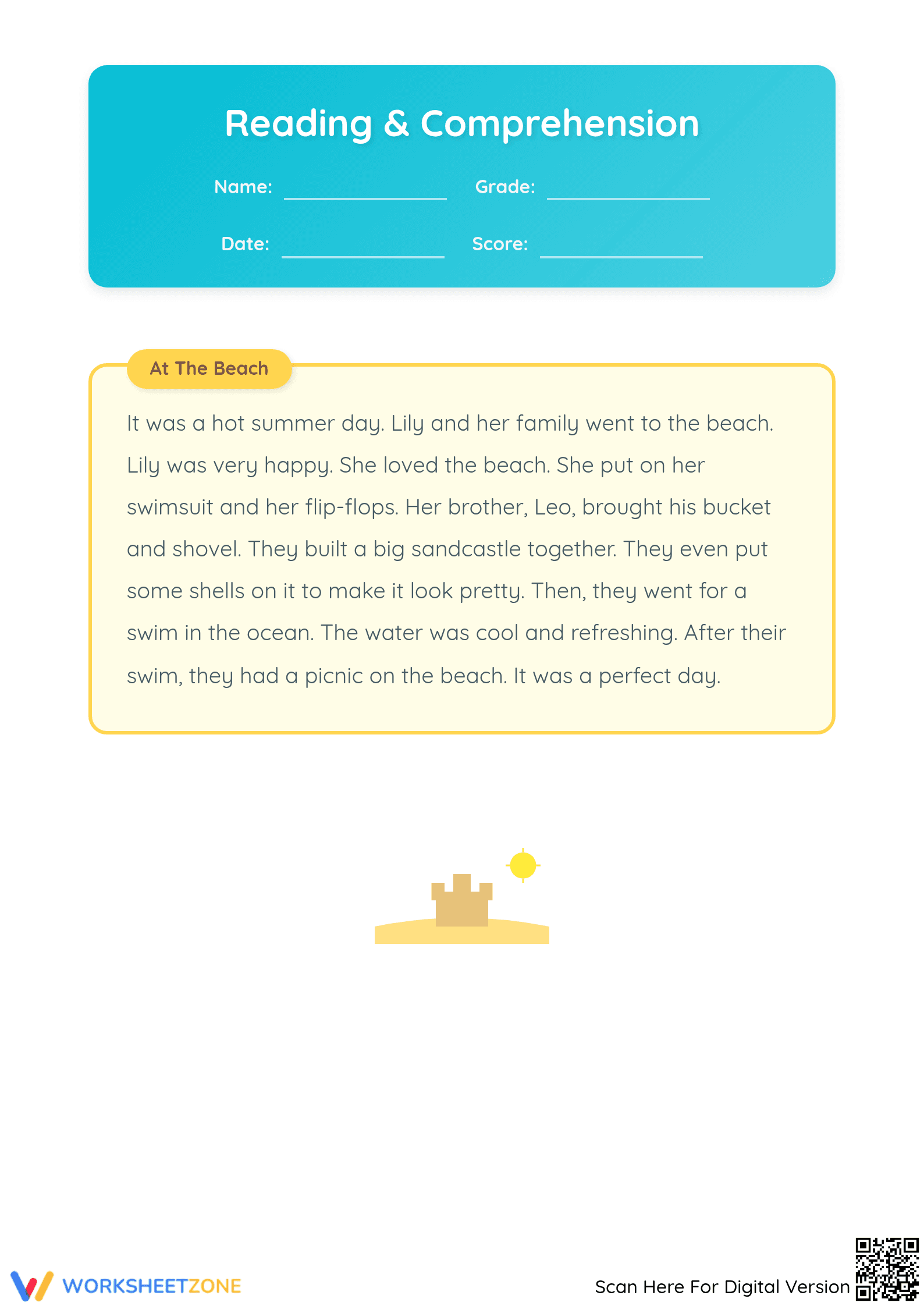
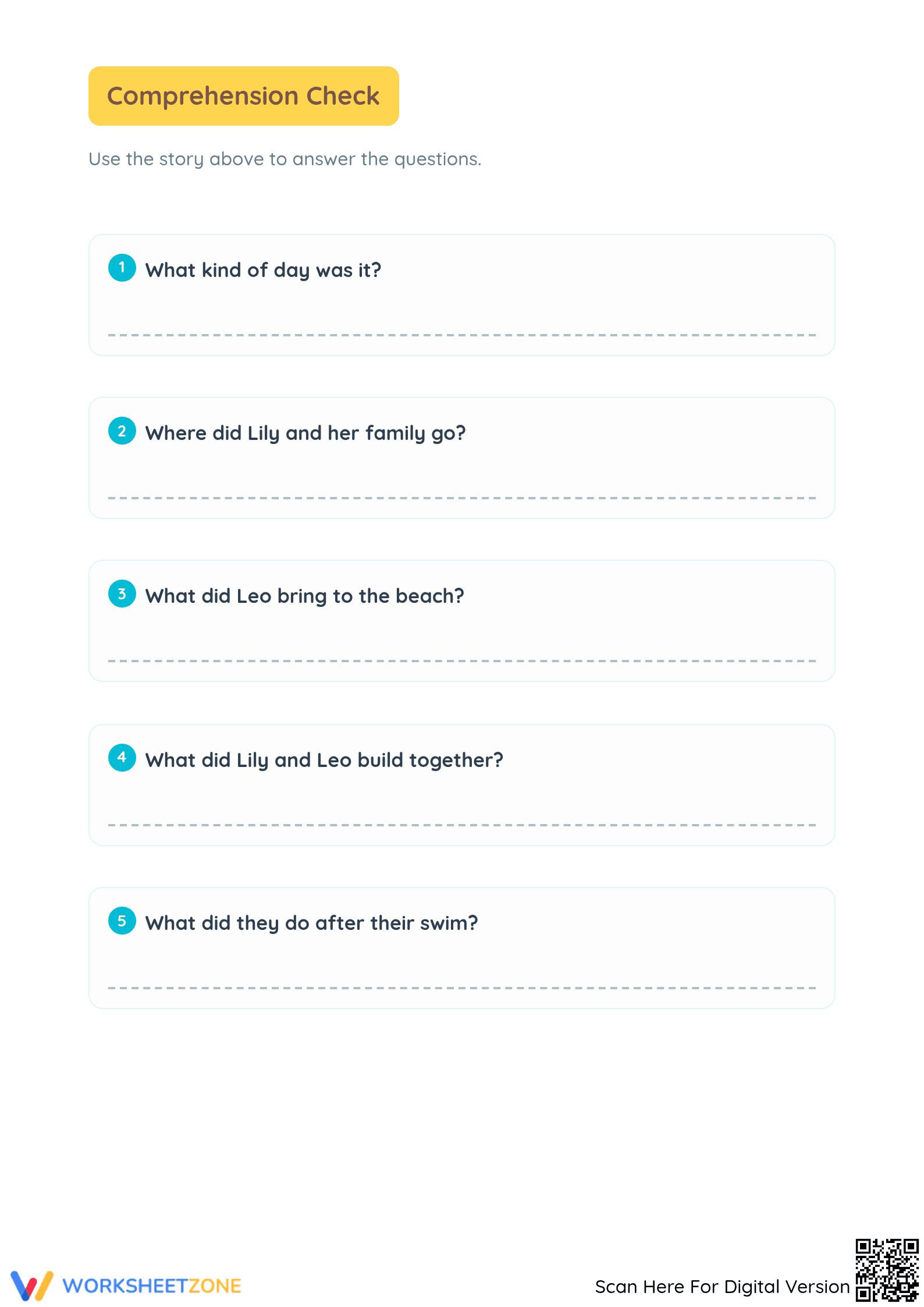
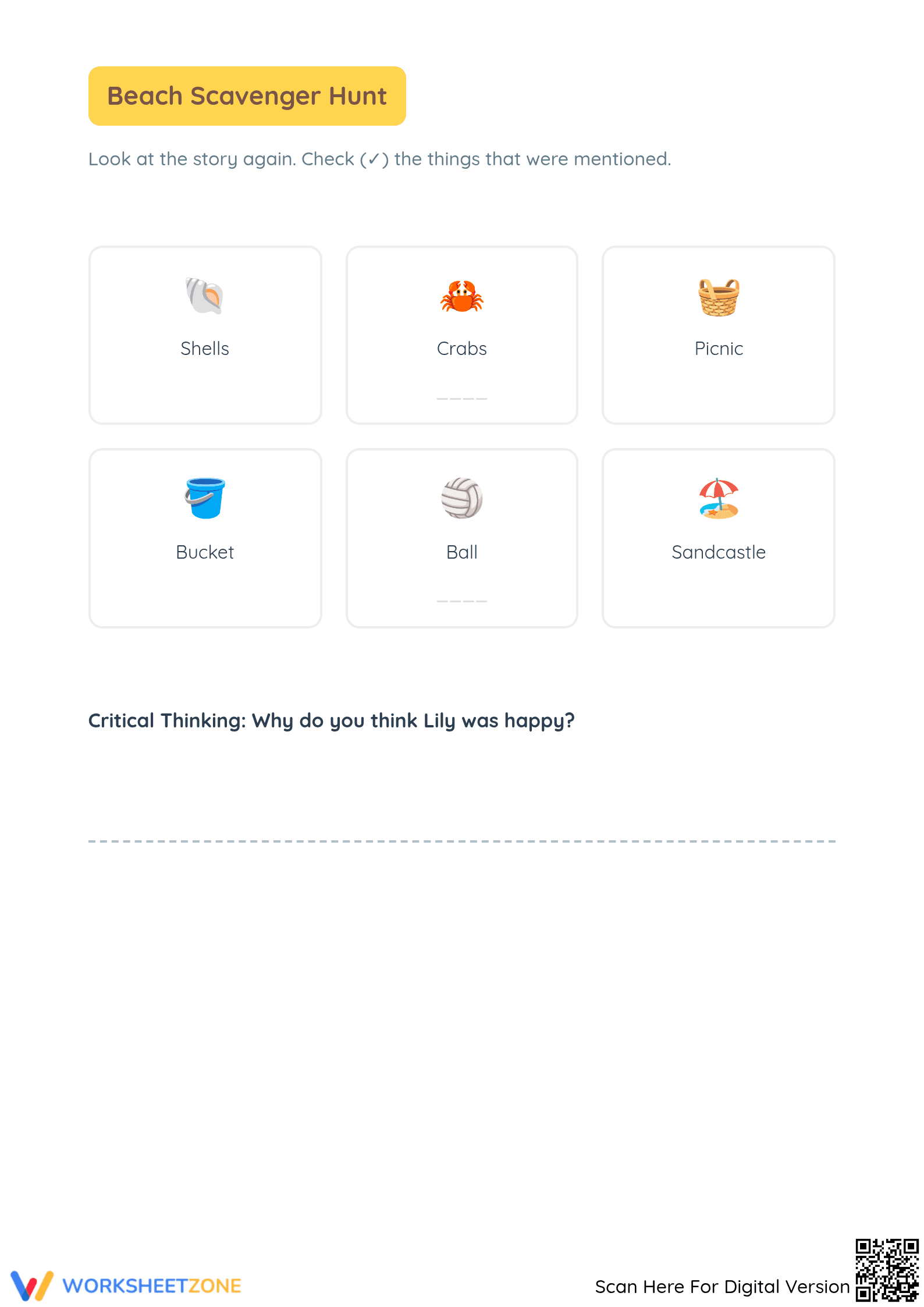

Printable At the Beach Reading Comprehension - Grade 2-5
Paste this activity's link or code into your existing LMS (Google Classroom, Canvas, Teams, Schoology, Moodle, etc.).
Students can open and work on the activity right away, with no student login required.
You'll still be able to track student progress and results from your teacher account.
Reading Comprehension: At the Beach
This "At the Beach" reading comprehension packet provides an engaging narrative about a family's summer day to help students master essential literacy skills. By focusing on literal recall and inferential thinking, the worksheet ensures students can extract meaningful information from text while building their confidence as independent readers. It is a complete, ready-to-use resource for elementary educators.
At a Glance
- Grade: 2-5 · Subject: English Language Arts (ELA)
- Standard:
RL.2.1— Ask and answer questions to demonstrate understanding of key details in a text- Skill Focus: Reading Comprehension & Literal Recall
- Format: 3 pages · 7 problems · Answer key included · PDF
- Best For: Summer-themed literacy centers or morning work
- Time: 15–20 minutes
The packet includes a single-page reading passage followed by a comprehensive set of assessment tools. Students encounter five direct comprehension questions, a visual scavenger hunt to verify text details, and a critical thinking prompt. The structure includes three total pages of student material plus a full answer key, ensuring a clear path from reading to mastery without the need for additional teacher-created materials.
This resource follows a streamlined zero-prep workflow designed for busy classrooms. Educators can print the three-page PDF in under 30 seconds, distribute the packets to students immediately, and utilize the provided answer key for rapid grading in less than one minute. This efficiency makes the worksheet an ideal choice for substitute lesson plans, emergency morning work, or quick formative assessments during summer-themed units.
This worksheet is strictly aligned to the Primary Standard `CCSS.ELA-LITERACY.RL.2.1`, which requires students to "Ask and answer such questions as who, what, where, when, why, and how to demonstrate understanding of key details in a text." It also supports `RL.2.3` by asking students to describe how characters respond to major events. Both standard codes can be copied directly into lesson plans, IEP goals, or district curriculum mapping tools.
To implement this in your classroom, use it as a post-reading check during small-group instruction to gauge immediate comprehension. It also serves as an effective formative-assessment tool where teachers can observe whether students refer back to the text to find evidence for the scavenger hunt. Most students will successfully complete the entire sequence within a 15-20 minute independent work block.
This resource is designed for students in Grades 2-5 who are working on building their foundational reading fluency and evidence-based response skills. It is particularly helpful for learners who benefit from clear, structured layouts and visual cues. This worksheet pairs naturally with a lesson on summer safety or a narrative writing prompt about a favorite outdoor memory or family trip.
According to the ScienceDirect TpT Analysis (2024), high-quality ELA worksheets that integrate literal comprehension questions with critical thinking extensions, like this "At the Beach" resource, significantly improve student engagement and retention of key text details. This worksheet is specifically designed to meet the CCSS.ELA-LITERACY.RL.2.1 standard, requiring students to ask and answer questions about who, what, where, when, why, and how within a narrative context. By utilizing a familiar summer theme, the materials lower the affective filter for younger readers while maintaining rigorous alignment with foundational literacy benchmarks. Research indicates that structured practice in identifying explicit information in a text serves as a necessary scaffold for later developmental stages of literary analysis and complex inferencing. This resource provides the exact type of systematic support needed for Grade 2-5 students to demonstrate mastery in reading literature through evidence-based responses and thematic connections.


