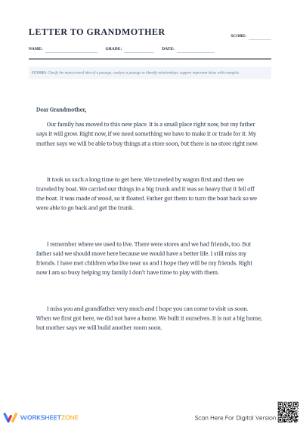
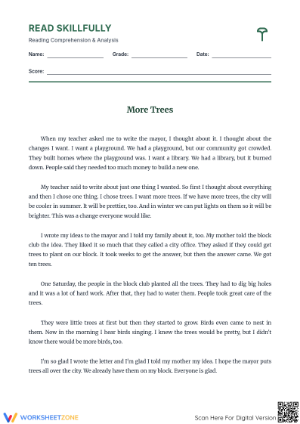
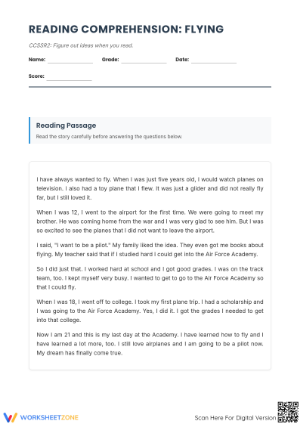
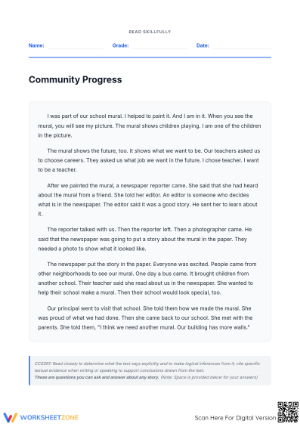
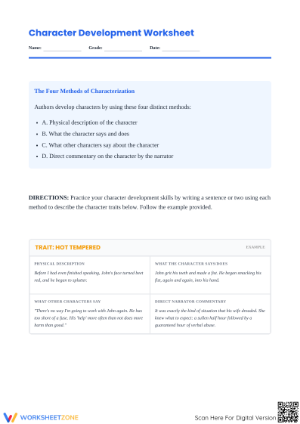
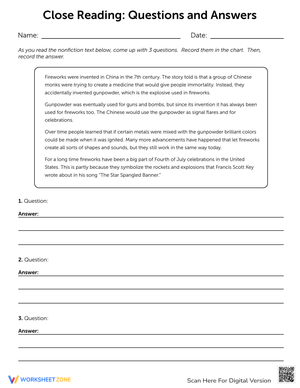
Close reading passages worksheets give teachers a structured way to move students past a single surface-level read and into evidence-based analysis. Instead of assigning a passage and a set of generic comprehension questions, a well-built close reading worksheet sequences the work: students read the same short text multiple times, each pass with a different analytical lens, before they write a response grounded in the text itself.
Why One Read Is Not Enough
A single read-and-answer pass tends to produce surface-level recall. Students can usually locate a stated fact, but they struggle to explain why an author made a choice or how two details connect. Close reading solves this by breaking comprehension into layers: a first read for literal understanding, a second for vocabulary and structure, and a third for inference and interpretation.
Repeated close reading practice is associated with stronger vocabulary retention, improved inferencing, and more evidence-based written responses in classroom use, which is why passage worksheets that separate reads by purpose tend to outperform single-pass comprehension sheets for building citation habits.
Structuring a Worksheet Around Three Purposeful Reads
The most effective close reading passage worksheets mirror the three-read model rather than asking one broad question after a single pass.
- Read 1: What does the text say? Students answer literal comprehension items and identify the main idea.
- Read 2: How does the text work? Students define vocabulary in context and note text structure or author choices.
- Read 3: What does the text mean? Students respond to inference and evidence-based short-answer prompts.
This sequence keeps every question tied to a specific purpose instead of mixing literal and interpretive demands in one pass, which reduces confusion for students who are still building stamina for multiple reads.
Building Annotation Habits Before Independent Practice
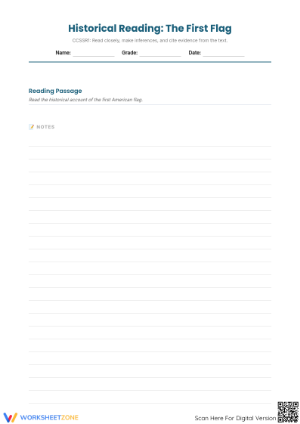
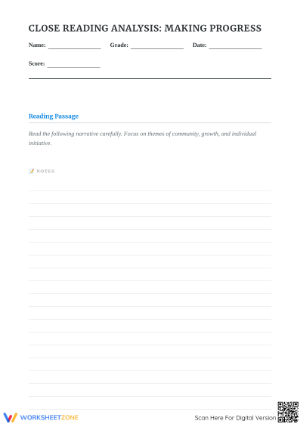
Annotation is a core close reading skill, and students need it modeled directly before they can use it independently on a worksheet. Marking key vocabulary, underlining main ideas, and flagging pivotal details are not skills most students arrive with already in place.
Start with a shared, teacher-led annotation of a short passage on a document camera or shared screen. Narrate your thinking out loud as you mark the text, then hand students a nearly identical passage to annotate on their own. Only after two or three guided rounds should students move to fully independent close reading passage worksheets. Skipping this step is one of the most common reasons close reading worksheets feel unproductive: students are asked to annotate before they know what counts as annotation-worthy.
Aligning Tasks to Citing-Evidence Expectations
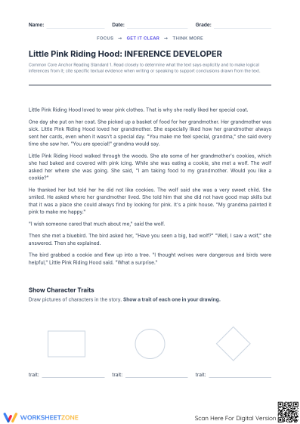
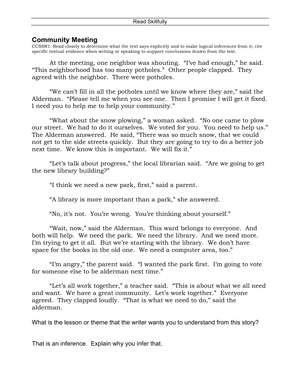
CCSS.ELA-LITERACY.CCRA.R.1 anchors close reading instruction across grade bands. It requires that students read closely to determine what a text says explicitly, make logical inferences, and cite specific textual evidence when writing or speaking. Close reading passage worksheets are one of the most direct ways to practice this standard because they pair a short, manageable text with tasks that require students to point back to a specific line or phrase rather than answer from memory.
When you review or design a worksheet, check that at least one prompt explicitly asks students to underline or quote the sentence that supports their answer. This single move turns a comprehension question into an evidence-citation task and keeps the practice aligned to CCRA.R.1 instead of general recall.
Using Close Reading Passages as a Formative Checkpoint
A close reading passage worksheet placed mid-unit gives you a clear formative snapshot of where students stand on inferencing and evidence use, separate from a full unit test. Because the worksheet already separates literal, structural, and inferential questions, you can score each section independently to see exactly where a student is breaking down. A student who nails the literal questions but stalls on inference-based short answers needs different support than one who struggles with vocabulary in context.
Use this data to regroup students for the next few days of instruction rather than waiting for a unit assessment to reveal the gap. A five-minute scan of the third-read section across a class set often tells you more about who needs re-teaching than a full multiple-choice quiz.
Teacher Tips for Close Reading Passage Worksheets
- Time each read explicitly the first few times you use these worksheets so students build a sense of pacing.
- Color-code annotation expectations: one color for vocabulary, another for main idea, another for evidence.
- Collect the worksheet after the second read occasionally to check annotation quality before students move to written responses.
- Pair close reading passages with a short partner discussion before the final written response to surface evidence students may have missed.
- Keep an answer key that includes the specific textual evidence expected, not just the correct answer choice, so scoring reinforces the evidence-citation goal.
Frequently Asked Questions
1. How many times should students read a passage during a close reading lesson?
Most close reading lessons use three purposeful reads: one for literal comprehension, one for vocabulary and structure, and one for inference and interpretation. Younger students or shorter passages may need only two clearly defined passes.
2. What is the difference between close reading and regular reading comprehension worksheets?
Regular comprehension worksheets usually follow a single read and ask students to recall or locate information. Close reading passage worksheets require multiple reads with different purposes and require students to cite specific textual evidence rather than answer from general recall.
3. How do close reading passages support citing textual evidence requirements?
CCSS.ELA-LITERACY.CCRA.R.1 requires students to cite specific textual evidence when they make claims about a text. Close reading worksheets build this directly into the task by asking students to underline or quote the line that supports each answer.
4. What annotation strategies work best with close reading passage worksheets?
Color-coding by purpose, underlining main ideas, circling unfamiliar vocabulary, and marking pivotal details all work well, but they need to be modeled directly by the teacher before students annotate independently.
5. How can teachers use close reading passages for small-group intervention?
In small groups, slow the passage down by reading it together sentence by sentence and checking understanding after each paragraph. The short length of most close reading passages makes it realistic to complete a full three-read cycle within a single intervention block.












 Interactive Worksheet Maker
 Quiz Maker
 Word Search Maker
 Crossword Puzzle Maker
 Word Scramble Generator
 Sentence Scramble Generator
 Handwriting Worksheet Generator
 Name Tracing Generator
 Fill In The Blank Generator