


























Views
Downloads

CCSSR1 Close Reading: Community Progress — Essential
Paste this activity's link or code into your existing LMS (Google Classroom, Canvas, Teams, Schoology, Moodle, etc.).
Students can open and work on the activity right away, with no student login required.
You'll still be able to track student progress and results from your teacher account.
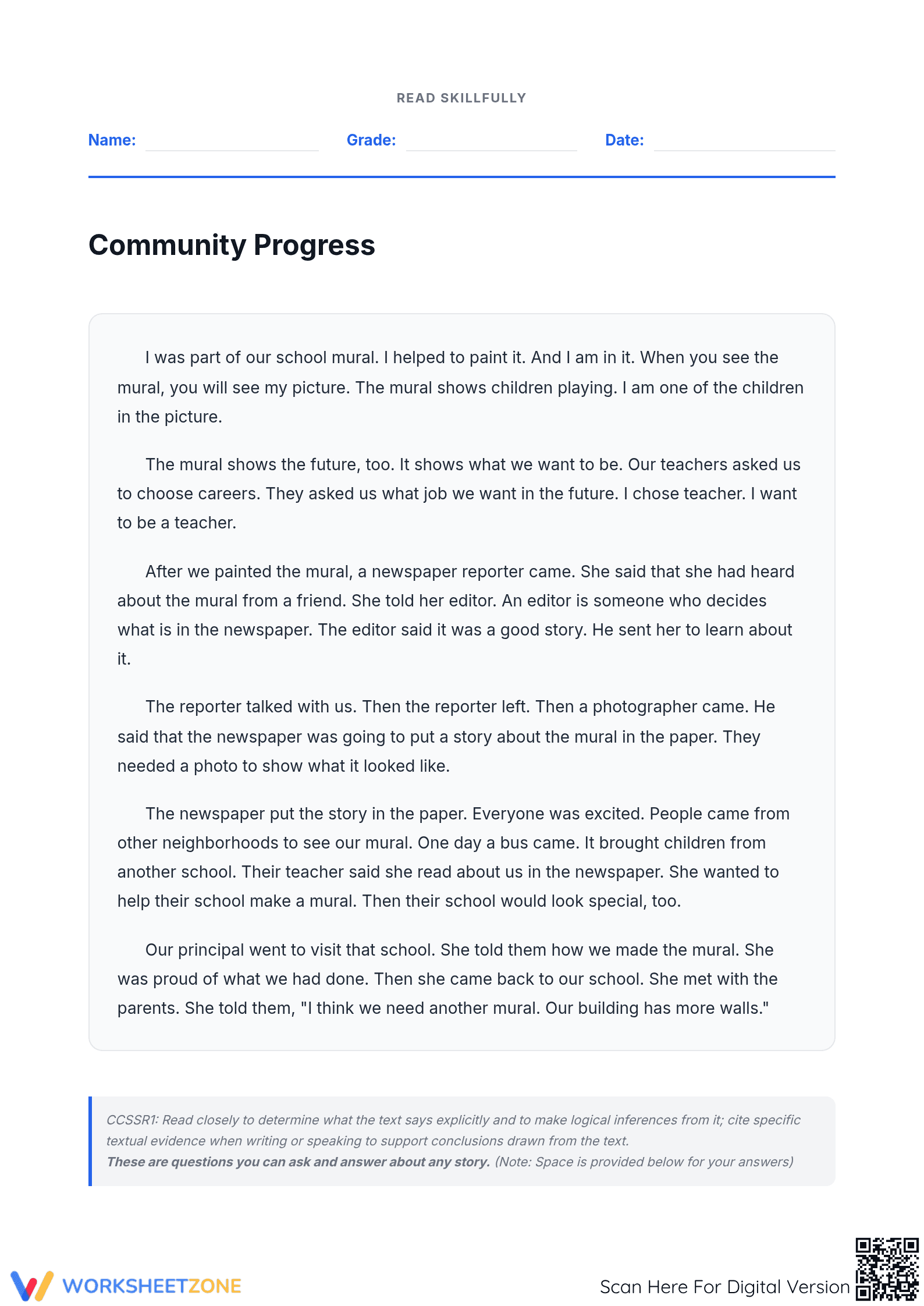
This Grade 5-9 close reading worksheet helps students master textual evidence through the narrative Community Progress. Students engage with a multi-paragraph story to identify explicit details and draw logical inferences. By focusing on character motives and structural sequencing, learners develop the critical thinking skills necessary for high-level reading comprehension and literary analysis.
At a Glance
- Grade: 5-9 · Subject: ELA Reading
- Standard:
CCSSR1— Read closely to determine what the text says explicitly and make logical inferences- Skill Focus: Textual Evidence & Inference
- Format: 2 pages · 5 problems · Answer key included · PDF
- Best For: Formative assessment and close reading practice
- Time: 20–30 minutes
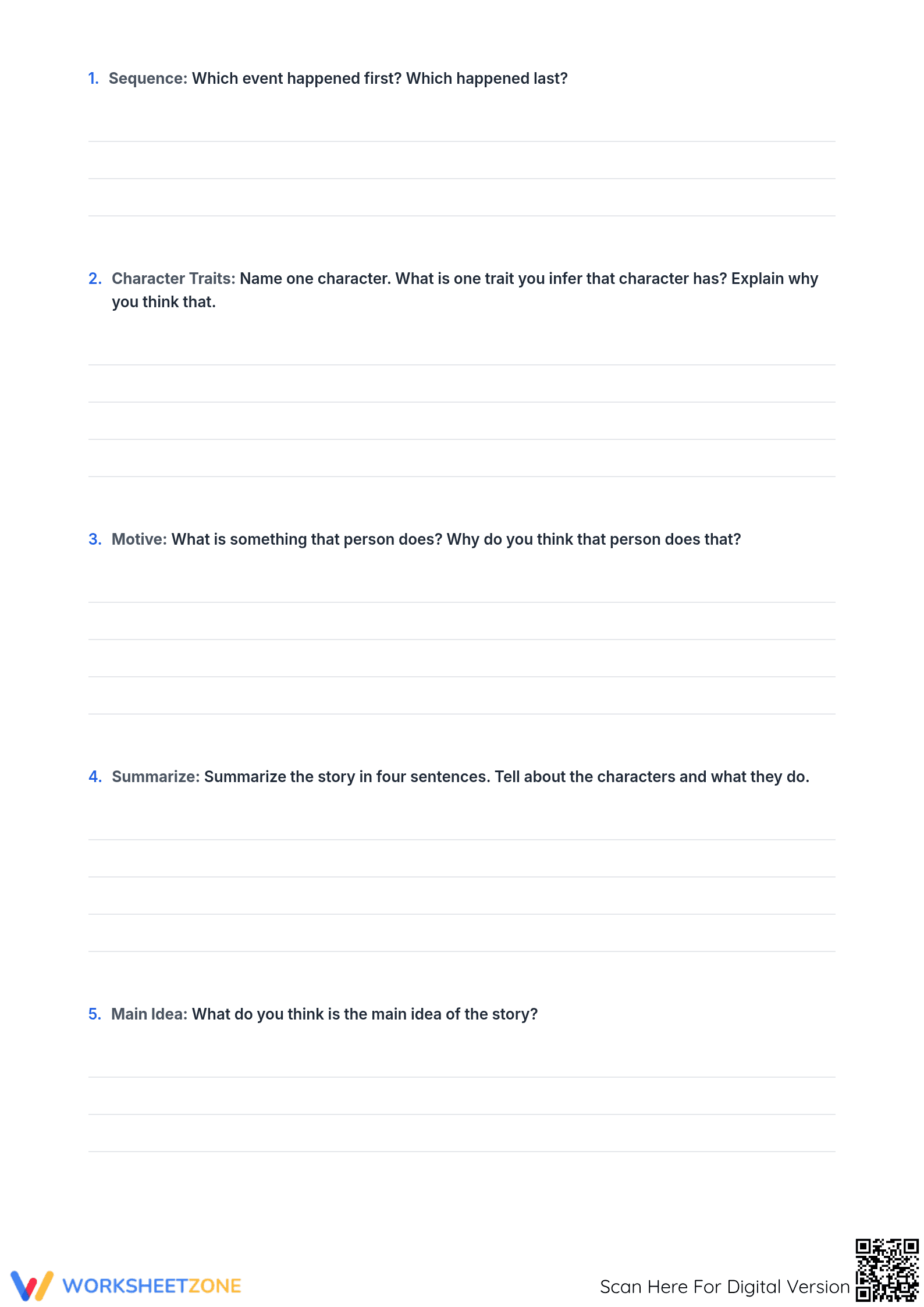
What's Inside: This two-page PDF includes a complete informational narrative titled Community Progress followed by five structured response areas. The tasks require students to sequence events, identify character traits with supporting evidence, analyze motives, write a four-sentence summary, and determine the main idea. The layout provides ample writing lines for student responses and a clear citation of the primary standard.
The worksheet is designed to provide clear evidence of student mastery across three tiers of comprehension. The sequencing and main idea tasks assess Approaching and Meeting levels, while the character trait and motive questions require Exceeding level analysis by demanding logical inferences backed by text. Teachers can use these 5 specific data points to track progress in IEP goals or standard-based gradebooks, ensuring every student meets the rigorous demands of CCSSR1.
Standards Alignment: The primary focus is `CCSSR1`: "Read closely to determine what the text says explicitly and to make logical inferences from it; cite specific textual evidence when writing or speaking to support conclusions drawn from the text." This resource also supports CCSS.ELA-LITERACY.RI.5.2 by requiring a summary of the text. Both standard codes can be copied directly into lesson plans, IEP goals, or district curriculum mapping tools.
How to Use It: Use this worksheet during the independent practice phase of a lesson to assess reading stamina. It serves as an excellent formative assessment after a lesson on making inferences. Teachers should observe if students return to the text to find specific details for the character trait question. Expect completion within 20 to 30 minutes depending on the grade level.
Who It's For: This resource is ideal for middle school students in Grades 5 through 9 who need targeted practice with evidence-based writing. It is particularly effective for English Language Learners due to the clear narrative structure. Pair this passage with an anchor chart on inference versus observation to provide additional scaffolding for struggling readers.
According to the RAND AIRS 2024 report, structured close reading interventions that require students to synthesize information across multiple paragraphs significantly improve long-term retention of informational text structures. This worksheet directly addresses the CCSSR1 standard, which mandates that students read closely to determine explicit meaning and make logical inferences. By engaging with the Community Progress narrative, learners practice the essential skill of citing textual evidence to support their conclusions, a core requirement for college and career readiness. Research from Fisher & Frey (2014) emphasizes that the gradual release approach to complex texts, supported by specific prompts like those found in this 5-task set, bridges the gap between surface-level reading and deep analytical understanding. This resource provides the necessary framework for students to transition from basic recall to high-level synthesis, making it a vital tool for any standards-aligned ELA curriculum.


