Understanding the CER Writing Framework in ELA
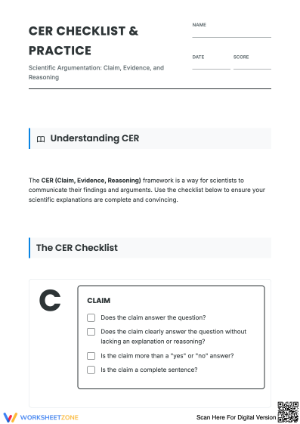
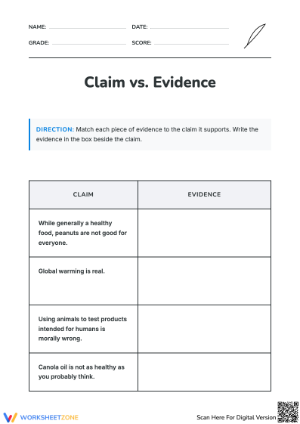
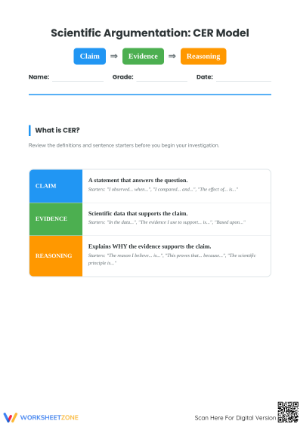
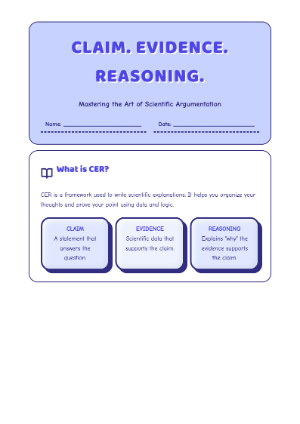
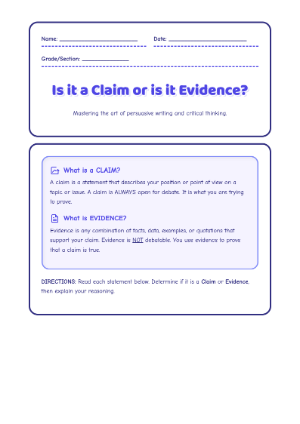
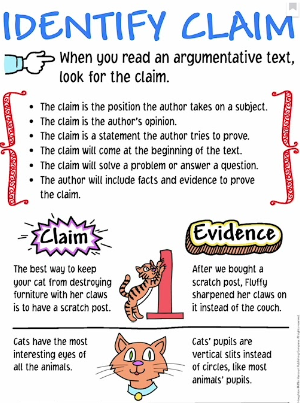
The Claim, Evidence, Reasoning (CER) framework is a foundational critical thinking tool designed to guide students through this complex process. At its core, CER provides a reliable structure that demystifies analytical writing. Instead of staring at a blank page, students learn to break their thoughts down into three distinct, manageable components. The claim is a clear and direct answer to a prompt. The evidence consists of specific details, facts, or direct quotations pulled from the source material. Finally, the reasoning explains exactly how the evidence supports the initial claim.
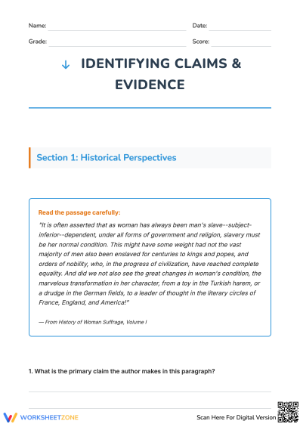
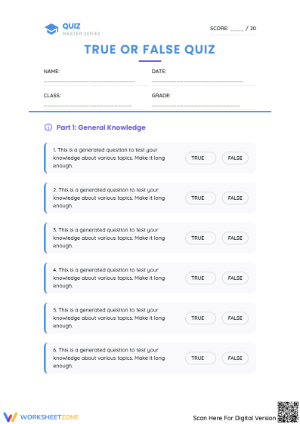
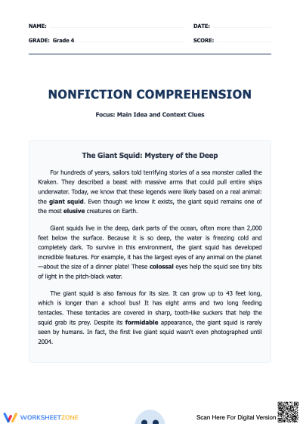
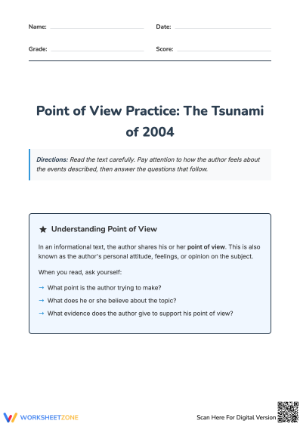
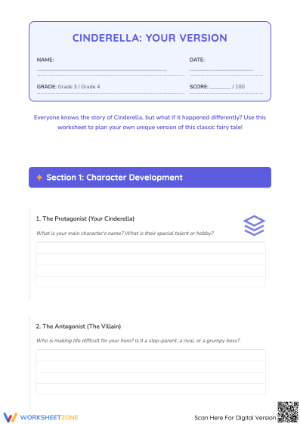
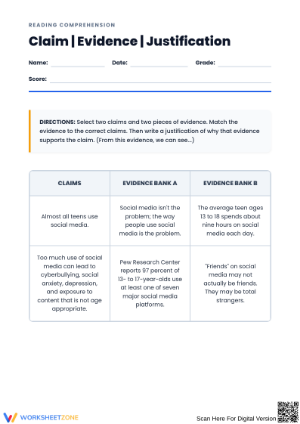
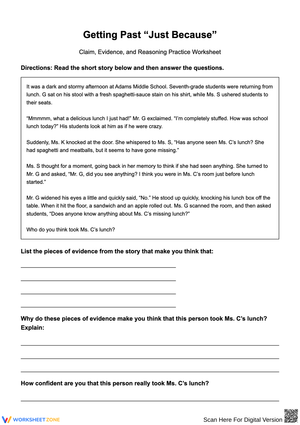
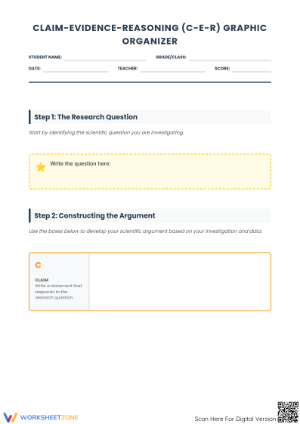
Many students initially believe that stating a fact is the same as making an argument. By introducing targeted practice materials, teachers can systematically correct this misconception. Utilizing a high-quality claim evidence reasoning worksheets allows students to physically separate these three elements before attempting to weave them together into a cohesive paragraph. This visual separation is incredibly beneficial, particularly for middle and high school students who are just beginning to tackle complex literary analysis or informational text responses. By mastering this foundational framework, students develop the analytical habits necessary for success in advanced high school courses and college-level writing.
Why Students Struggle with the Reasoning Component
While most students can easily state a claim and locate relevant evidence in a text, the reasoning component consistently proves to be the most challenging aspect of the framework. Reasoning requires a cognitive leap; students must move beyond simply repeating what the author said and explain the "why" and "how" behind the text. This abstraction is difficult because it demands original thought and a deep understanding of the connection between the quoted material and the overarching argument.
Research into student writing patterns reveals that when the reasoning component is explicitly modeled through guided practice, students are significantly less likely to rely on vague generalizations. By consistently requiring writers to justify their textual selections, teachers can essentially rewire how students process information, shifting them from passive readers into active analytical thinkers.
To overcome this hurdle, teachers must provide focused, step-by-step scaffolding. The best approach involves isolating the reasoning step during instruction. When teachers use a claim evidence reasoning worksheets that dedicates extra space specifically to the reasoning section, it sends a clear visual cue to the student that this is the most important part of their response. Teachers can guide students by asking probing questions such as "What does this quote prove?" or "Why does this detail matter to your overall point?" This active questioning forces the writer to confront the logical gaps in their argument.
Preventing Quote Dumping with Structured Worksheets
One of the most frustrating habits ELA teachers encounter is "quote dumping"—the practice of dropping a direct quotation into a paragraph without any context, introduction, or follow-up analysis. This usually happens when students know they need text-based support but lack the organizational skills to integrate it smoothly. The CER framework is highly effective at preventing this common writing pitfall because it inherently demands a transition between the evidence and the claim.
When students use a well-designed claim evidence reasoning worksheets, they are forced to slow down and consider the function of the quote. The structure makes it impossible to simply drop a quote and walk away, as the "Reasoning" box remains conspicuously empty. This blank space acts as a built-in accountability measure. Furthermore, these worksheets can include prompts that require students to introduce their evidence with context before providing the quotation itself.
According to the article "What is Claim, Evidence, Reasoning?" at https://modelteaching.com/education-articles/claim-evidence-reasoning, this framework is essential for moving students beyond basic comprehension toward advanced analytical thinking, ultimately requiring them to synthesize information and construct logically sound, text-based arguments that clearly connect textual details to their core assertions.
Differentiating CER Templates for Various Grade Levels
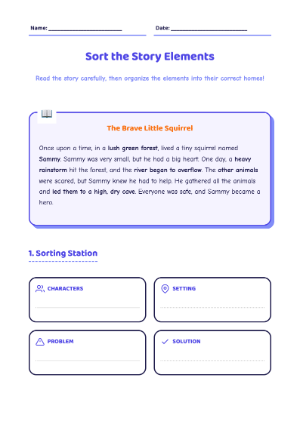
A single approach to the CER framework will not work for every classroom, which is why differentiated templates are important for effective instruction. For upper elementary and early middle school students, a claim evidence reasoning worksheets should be highly structured. These introductory templates often include sentence frames, visual icons, and specific prompts that guide the student through each sentence. The goal at this stage is to build confidence and establish the basic pattern of stating a point, finding a fact, and explaining the connection.
Scaffolding Techniques: Using CER Sentence Starters
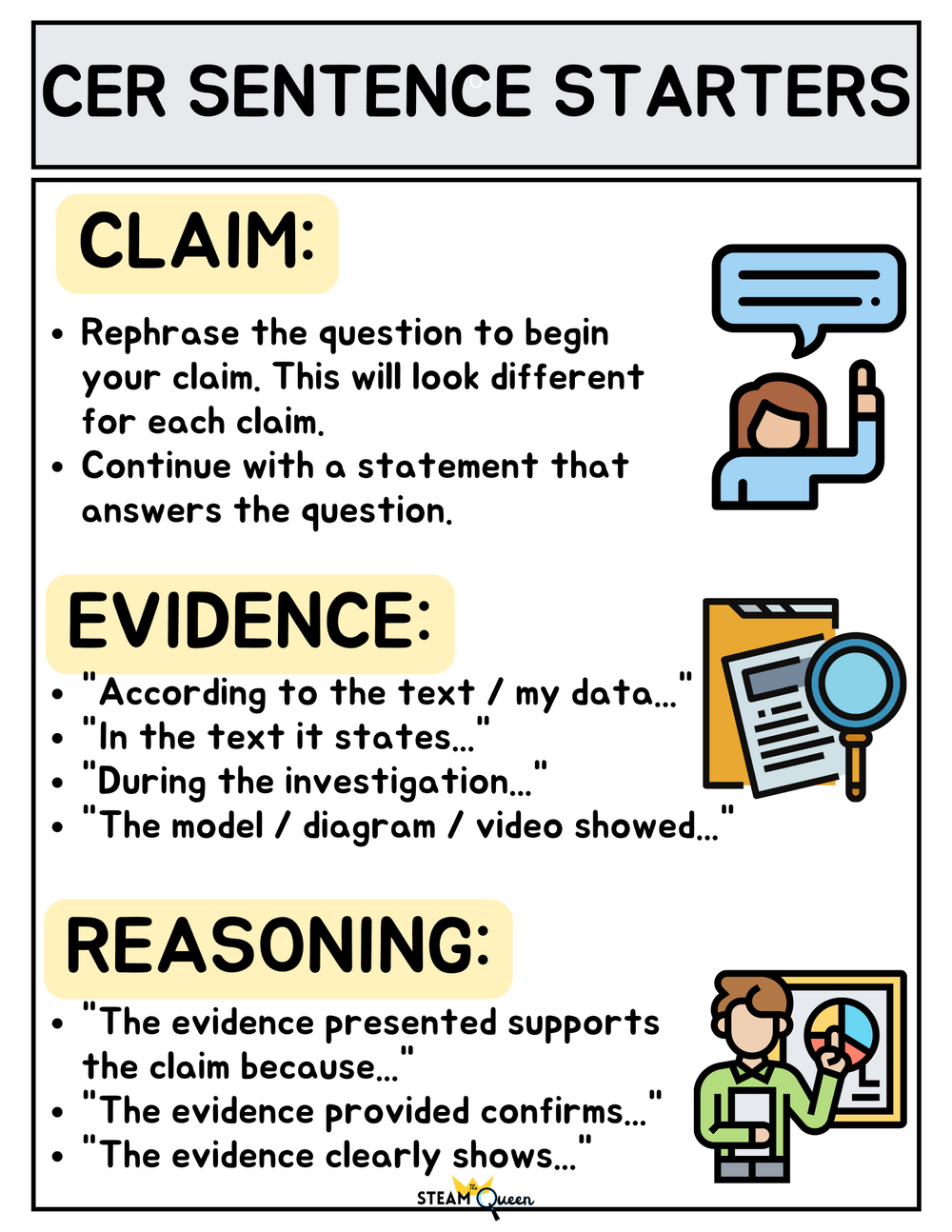
Sentence starters are among the most powerful scaffolding techniques available for teaching the CER framework. Staring at a blank page can induce anxiety and writer's block, even for students who understand the text. Providing a curated list of sentence frames within a claim evidence reasoning worksheets gives students a low-stakes entry point into the writing process. It lowers the cognitive load required to initiate a sentence, allowing the student to focus their mental energy on the actual analysis.
For the evidence section, starters like "The text states that..." or "According to the author..." are standard. However, the reasoning section is where sentence frames truly shine. Phrases such as "This evidence shows that because..." or "This highlights the fact that..." force the student to complete the thought with an explanation rather than a summary. These specific syntactic structures guide the writer naturally into an analytical mode, bridging the gap between the quote and the claim.
Classroom Implementation
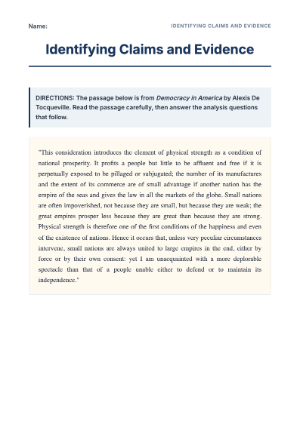
Effectively integrating CER worksheets into the daily rhythm of an ELA classroom requires strategic planning. Rather than treating CER as a standalone writing unit, it should be woven into regular reading assignments, discussions, and assessments. When introducing a new novel or short story, teachers can provide a claim evidence reasoning worksheets to track character development or thematic shifts. This turns passive reading into an active search for evidence.
One highly successful implementation strategy is to use the CER framework for quick formative assessments. Instead of a traditional multiple-choice quiz, a teacher might pose a single, complex question and require a complete CER response. This provides immediate, actionable data on both reading comprehension and writing proficiency. Additionally, peer review activities centered around CER worksheets can be incredibly valuable. When students evaluate each other's reasoning sections, they develop a sharper eye for logical fallacies and weak connections in their own writing.
Grading and Assessing Student Responses
Assessing CER writing can be time-consuming if teachers lack a clear rubric. Because the framework is divided into three distinct parts, the grading process should reflect that structure. A strong rubric will evaluate the claim for clarity and accuracy, the evidence for relevance and integration, and the reasoning for depth and logical connection. By breaking down the grade into these components, teachers can provide precise, targeted feedback.
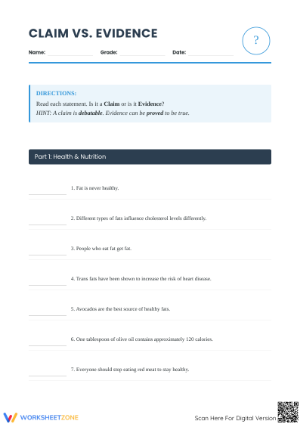
When reviewing a claim evidence reasoning worksheets, teachers should look for common pitfalls. Is the claim actually an argument, or just a statement of fact? Is the evidence accurately quoted and properly cited? Does the reasoning actually explain the evidence, or does it simply restate the claim using different words? Identifying these specific errors allows the teacher to plan focused mini-lessons to address classroom-wide trends.
According to the article "CER in the ELA Classroom" at https://www.itslitteaching.com/cer-ela-classroom, using a standardized grading rubric not only speeds up the assessment process but also provides students with a transparent understanding of expectations. When students know exactly how their reasoning will be evaluated, they are more likely to put deliberate effort into that section. Transparent grading practices build trust and encourage a growth mindset in developing writers.
Frequently Asked Questions
1. How does CER differ from other frameworks like RACES or PEEL?
While RACES (Restate, Answer, Cite, Explain, Summarize) and PEEL (Point, Evidence, Explanation, Link) share similarities with CER, they often serve slightly different purposes. RACES is highly structured for answering specific short-response questions, particularly on standardized tests. PEEL is commonly used for constructing body paragraphs in longer essays. CER is widely considered the most adaptable and foundational framework, focusing intensely on the logical relationship between evidence and the core argument, making it ideal for deep literary and scientific analysis.
2. What are the best sentence starters for students to use when writing reasoning?
The most effective reasoning sentence starters force the writer to explain the significance of the evidence. Excellent examples include: "This detail demonstrates that...", "Because the author states this, we can conclude that...", "This is significant because...", and "This quote proves the claim by showing...". These frames actively prevent the student from merely summarizing the text and push them toward genuine analytical thought.
3. How do you effectively grade CER responses?
Effective grading requires a specific rubric that isolates the three components. The claim should be graded on clarity and accuracy. The evidence should be evaluated based on its relevance to the claim and proper integration. The reasoning must be assessed on how well it connects the evidence back to the claim and the depth of the explanation. Providing separate scores for each component helps pinpoint exactly where a student needs additional support.












 Interactive Worksheet Maker
 Quiz Maker
 Word Search Maker
 Crossword Puzzle Maker
 Word Scramble Generator
 Sentence Scramble Generator
 Handwriting Worksheet Generator
 Name Tracing Generator
 Fill In The Blank Generator