


























Views
Downloads

Character Development Planning Worksheet | Grade 6 Ready
Paste this activity's link or code into your existing LMS (Google Classroom, Canvas, Teams, Schoology, Moodle, etc.).
Students can open and work on the activity right away, with no student login required.
You'll still be able to track student progress and results from your teacher account.
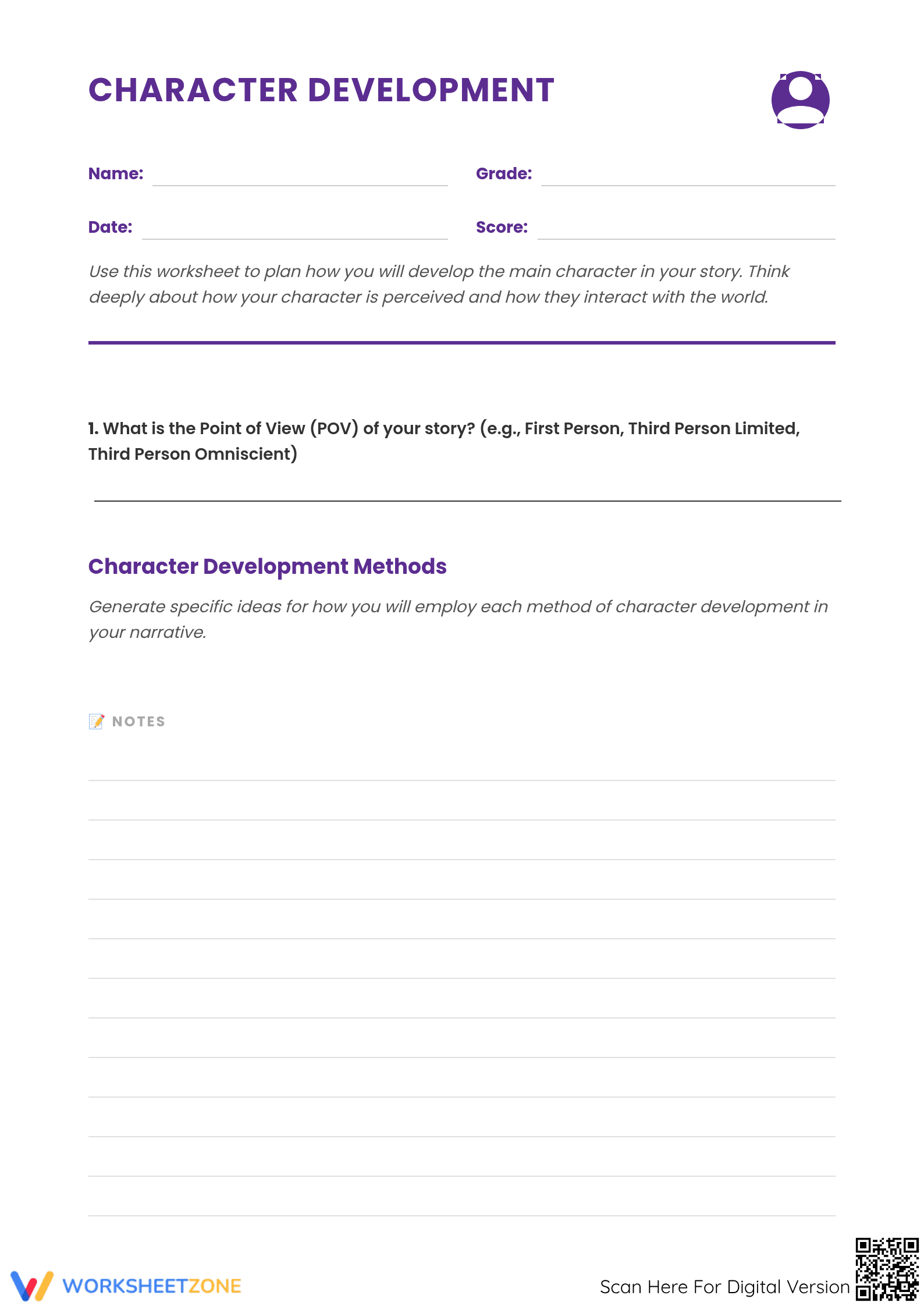
This character development worksheet provides a comprehensive framework for students to design complex, believable protagonists for their narrative writing. By guiding learners through point-of-view selection and specific characterization methods, the resource ensures that every story element serves a purpose. Students will transform vague ideas into fully realized characters with clear arcs and motivations.
At a Glance
- Grade: 6 · Subject: ELA
- Standard:
CCSS.ELA-LITERACY.W.6.3.B— Use narrative techniques like description and dialogue to develop characters- Skill Focus: Characterization & Narrative Arc
- Format: 3 pages · 16 tasks · No answer key · PDF
- Best For: Narrative pre-writing and story planning
- Time: 30–45 minutes
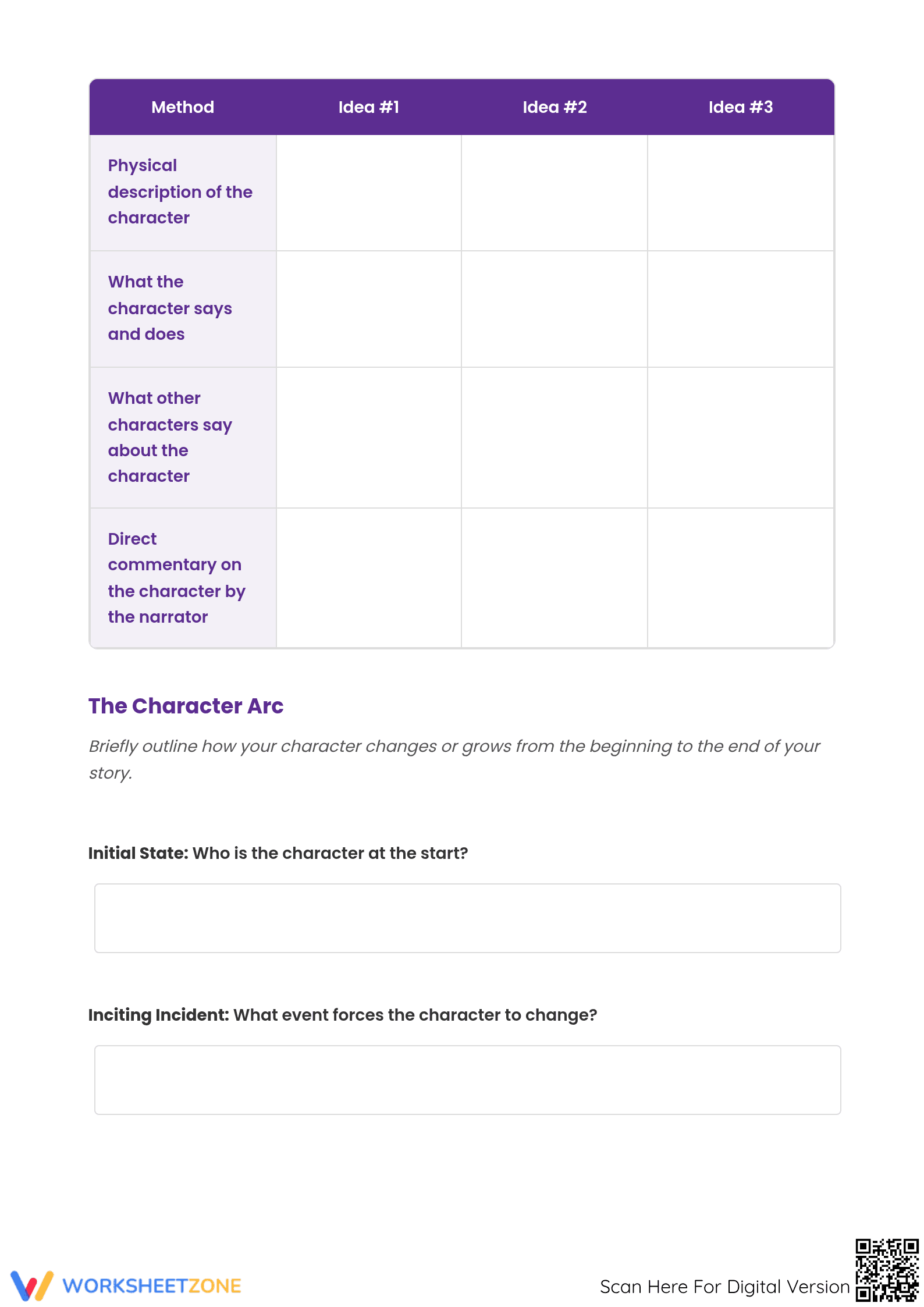
The resource consists of three structured pages. Page one establishes the narrative point of view and provides ample space for initial brainstorming. Page two features a detailed "Character Development Methods" table where students generate three distinct ideas for physical descriptions, dialogue, and narrator commentary. The final section guides students through the character arc, identifying the initial state, the inciting incident, and the final transformation.
Zero-Prep Workflow
- Print: Print the 3-page PDF for each student (30 seconds).
- Distribute: Hand out the worksheets during the pre-writing phase of a narrative unit (1 minute).
- Review: Review student character arcs to provide immediate feedback on story logic and depth (5 minutes).
Total prep time is under 2 minutes, making this ideal for sub plans.
Standards Alignment
This worksheet is primarily aligned with CCSS.ELA-LITERACY.W.6.3.B, which requires students to use narrative techniques to develop experiences, events, and characters. It also supports CCSS.ELA-LITERACY.W.7.3.B by encouraging the use of multiple characterization methods to build complexity. Both standard codes can be copied directly into lesson plans, IEP goals, or district curriculum mapping tools.
How to Use It
Assign this worksheet during the planning phase of the writing process, before students begin their first drafts. It serves as a roadmap that prevents writer's block by providing specific categories for development. Teachers can use the completed sheets as a formative assessment tool to check for narrative logic and character depth before students commit to a full story. Completion typically takes 30 to 45 minutes.
Who It's For
This resource is designed for middle school students in grades 6 through 9 who are working on short stories or personal narratives. It is particularly effective for students who struggle with "showing, not telling" in their writing. Pair this worksheet with a mentor text analysis or a character trait anchor chart to maximize its instructional impact.
Character development is a cornerstone of narrative proficiency, requiring students to synthesize internal motivations with external actions. According to Fisher & Frey (2014), scaffolded planning tools like this worksheet facilitate the gradual release of responsibility by providing a structured framework for complex creative tasks. By isolating specific methods of characterization—such as direct narrator commentary and character dialogue—students move beyond superficial descriptions toward multidimensional personas. This Grade 6-9 resource aligns with CCSS.ELA-LITERACY.W.6.3.B, ensuring that student writing meets rigorous standards for narrative technique. Research from the NAEP indicates that students who utilize pre-writing organizers demonstrate significantly higher levels of coherence and thematic depth in their final drafts. This 3-page PDF bridges the gap between initial brainstorming and a completed character arc, making it a vital component of any secondary ELA writing unit or creative writing curriculum.


