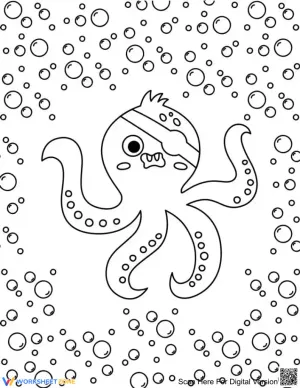
Eight curling arms can turn one ocean animal into a page full of movement, texture, and imagination. Octopus coloring pages give kids a playful way to explore underwater scenes while coloring tentacles, bubbles, coral, shells, fish, and sea plants. An octopus can look silly, clever, mysterious, or magical, depending on the design and the colors children choose.
Some pages may show a smiling octopus floating near coral reefs, while others may feature one hiding in a cave, waving its arms, swimming with fish, or resting on the ocean floor. Younger children may enjoy simple octopus shapes with big eyes and wide spaces to color. Older kids may prefer pages with detailed suction cups, swirling tentacles, seaweed, rocks, starfish, jellyfish, and layered ocean backgrounds.
Coloring an octopus gives children plenty of freedom. They can use soft pink, purple, orange, red, blue, teal, or gray for the body, then add brighter colors to the coral and sea creatures around it. Some kids may create a rainbow octopus, a spotted octopus, or a glowing deep-sea scene. The tentacles are especially fun because children can shade each arm differently, add patterns, or follow the curves slowly as they color.
These pages can also become a gentle learning activity. Parents can talk about how octopuses live in the ocean, move through water, use their arms, and hide in small spaces. Teachers can use octopus coloring pages during ocean animal units, marine life lessons, art centers, summer themes, early-finisher time, or creative writing activities. Children can name the octopus, label its arms, draw more sea animals, or write one sentence about its underwater adventure.
Finished octopus artwork can become ocean posters, bookmarks, handmade cards, classroom displays, journal pages, or story starters. Kids can also cut out the octopus and place it in a paper ocean scene with waves, coral, shells, fish, and bubbles. With swirling arms and endless color possibilities, octopus coloring pages help children enjoy ocean-themed creativity while practicing focus, patience, and careful coloring.
Frequently Asked Questions
Question 1: What makes octopus coloring pages fun for kids?
Octopus coloring pages are fun because the animal has a unique shape with eight arms, big eyes, and lots of curved lines. Children can color each tentacle differently, add patterns, or create a full underwater background. The theme works well for kids who enjoy ocean animals, sea adventures, and playful designs with plenty of creative freedom.
Question 2: Can octopus coloring pages support ocean learning?
Yes, octopus coloring pages can support simple ocean learning. Adults can use the page to talk about where octopuses live, how they move, what their arms are used for, and why they are interesting sea animals. Teachers can connect the activity to marine life lessons, ocean habitats, animal body parts, or creative writing prompts.
Question 3: What colors can children use for octopus coloring pages?
Children can use pink, purple, orange, red, blue, teal, gray, or brown for the octopus. They can also use bright colors for coral, fish, bubbles, shells, and seaweed. Since octopus pages often feel imaginative, kids can try rainbow tentacles, spotted patterns, soft shading, or glowing deep-sea colors to make the artwork more personal.
Question 4: How can kids turn an octopus coloring page into a craft?
Kids can cut out the colored octopus and glue it onto a handmade ocean scene with waves, sand, coral, shells, and fish. They can also add yarn tentacles, paper bubbles, glitter details, or a short caption. Finished pages can become bookmarks, classroom decorations, summer crafts, ocean posters, or storybook covers.