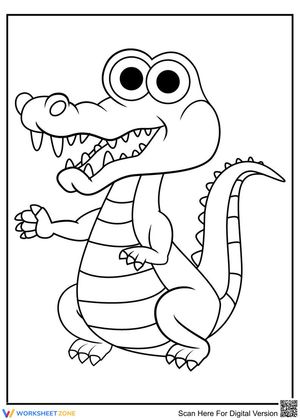
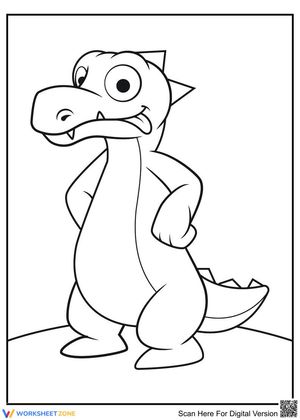
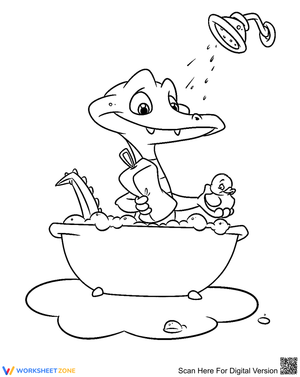
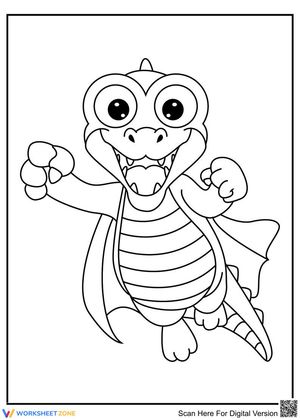
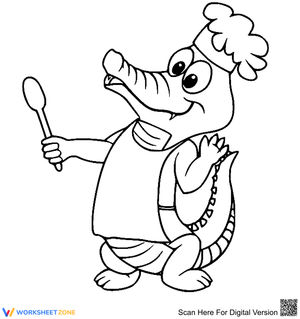
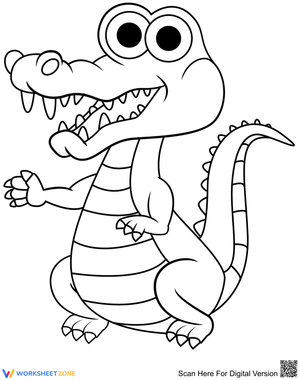
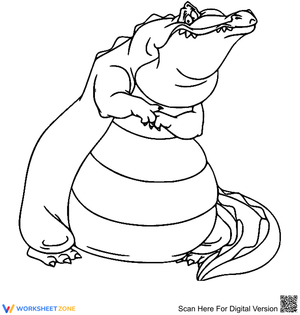
There is a quiet magic that happens when a child picks up a crayon and faces a fresh black-and-white illustration. Alligator coloring pages open a doorway to the swamp, inviting young learners to slow down, observe, and engage with one of nature's most ancient reptiles. Each line of an alligator's ridged back or scaled tail becomes a detail worth studying, turning what feels like play into genuine scientific observation. Worksheetzone has gathered a collection of these printable sheets to help students connect with biology in a hands-on, meaningful way.
Coloring is far more than a quiet pastime for children. As students trace the outline of an alligator's broad snout or fill in the texture of its leathery hide, they are building fine motor skills and strengthening hand-eye coordination. The focused attention required to stay within lines and choose colors thoughtfully mirrors the kind of careful observation that life science lessons encourage. These alligator coloring pages give students a creative outlet while reinforcing vocabulary around reptile anatomy, habitats, and behavior that teachers introduce during class.
One of the richest details in any alligator illustration is the environment surrounding the animal itself. Cypress trees, murky water, and marsh grasses frame these ancient creatures in their natural swamp habitat, giving students a sense of place as they color. Teachers can use these printable worksheets as a visual anchor during lessons about North American wildlife or wetland ecosystems. Pairing the activity with lighthearted content such as animal jokes for kids creates a relaxed classroom atmosphere that keeps students curious and engaged throughout the lesson plan.
For older students, working with these alligator coloring pages can serve as a mindful transition between high-energy activities and focused academic tasks. The repetitive, rhythmic motion of coloring helps settle busy minds and brings attention back to the subject at hand. Teachers looking to build comparative thinking skills can encourage students to notice similarities and differences by also exploring crocodile coloring pages, prompting discussions about how two related species differ in snout shape, habitat range, and behavior.
Worksheetzone designs these alligator coloring pages with both classroom practicality and student enjoyment in mind. Whether used as a lesson warm-up, a learning center activity, or a take-home assignment, these PDF-ready sheets fit naturally into any teacher's toolkit. Parents will also find them useful for sparking science conversations at the kitchen table. Bring the world of reptiles into your next science unit and let students experience the wonder of the natural world one carefully colored alligator at a time.
Frequently Asked Questions
Question 1: What age group are these alligator coloring pages designed for?
These alligator coloring pages are suitable for a wide range of learners, from early elementary students in kindergarten through grade five. Worksheetzone offers designs with varying levels of detail, so teachers and parents can choose simpler outlines for younger students and more intricate illustrations for older students who want a greater challenge during classroom activities or at-home practice.
Question 2: How can teachers use alligator coloring pages in a science lesson?
Teachers can use these printable sheets as a visual introduction to reptile biology, asking students to label body parts such as the snout, scales, and tail while they color. The activity pairs well with read-alouds, nature documentaries, or structured discussions about swamp habitats. Using a coloring worksheet as a lesson anchor helps students retain information through the dual-coding of visual art and verbal instruction.
Question 3: Are these alligator coloring pages printable as PDF files?
Yes, all alligator coloring pages available through Worksheetzone are designed for easy PDF printing. Teachers can print individual sheets or full sets directly from the site without any special software. The clean black-and-white line art is optimized for standard classroom printers, making it simple to prepare materials quickly for a lesson plan, learning center, or homework packet.
Question 4: How do alligator coloring pages support fine motor skill development?
Coloring within detailed line art strengthens the small muscles in a child's hand and improves pencil grip and control. Alligator illustrations often feature textured scales, irregular edges, and narrow spaces that require precise movements, giving students meaningful fine motor practice. For younger learners especially, this kind of structured art activity builds the hand strength and coordination that support handwriting and other academic skills.