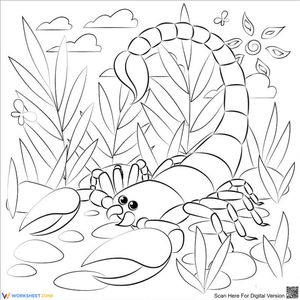
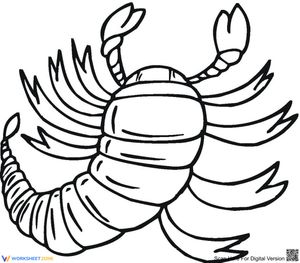
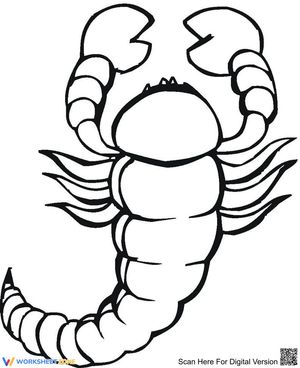
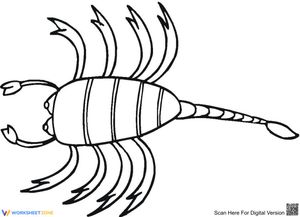
I still remember the afternoon a student pointed to a scorpion illustration in a science book and asked, "Can we color one of these?" It was a small moment, but it opened a conversation about arachnids, desert ecosystems, and the surprising beauty found in nature's most misunderstood creatures. That is exactly the kind of curiosity that scorpion coloring pages can spark in a classroom or at the kitchen table at home.
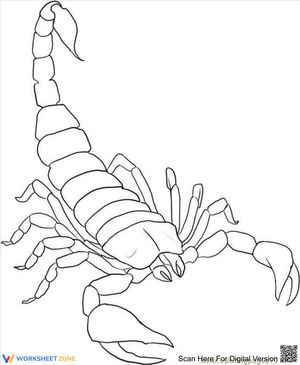
Scorpion coloring pages give children a chance to look closely at the anatomy of these remarkable arachnids - the segmented tail, the sturdy pincers, and the compact body that has helped them survive for millions of years. As children choose colors and fill in the details, they are quietly building fine motor skills, practicing concentration, and developing a visual vocabulary for the natural world. The activity feels like art, but the learning runs much deeper than the page.
For teachers, these pages work well as a quiet warm-up before a science lesson on arthropods or desert habitats. Pair them with a short discussion about where scorpions live and how they protect themselves, and students arrive at the lesson already engaged. Parents can use the same pages on a rainy afternoon, turning a simple printable into a springboard for questions about animals and ecosystems. If you enjoy pairing art with broader nature study, you might also explore insect and arthropod activities for young learners that connect drawing and hands-on science for early childhood classrooms.
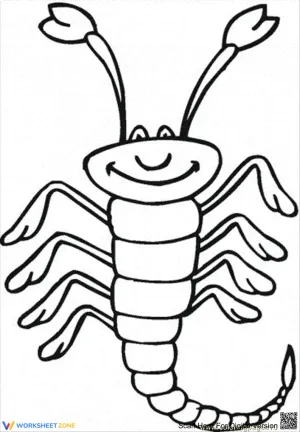
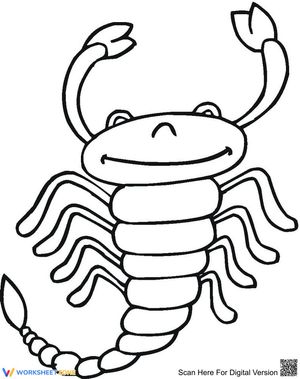
Worksheetzone offers a range of scorpion coloring pages designed for different skill levels, from bold outlines that work well for younger children to more detailed illustrations that challenge older students. Every sheet is printable and ready to use without any extra preparation. If your students enjoy animal-themed art, our turtle coloring pages collection offers another fascinating creature to explore alongside scorpion coloring pages throughout the school year.
Frequently Asked Questions
Question 1: What age group are scorpion coloring pages best suited for?
Scorpion coloring pages are suitable for children ages 4 and up. Simpler outline designs work well for preschoolers and kindergarteners, while more detailed illustrations of scorpion anatomy are a great fit for elementary students. Teachers can select pages based on the skill level and focus of each student in their classroom or home setting.
Question 2: How can teachers use scorpion coloring pages in a science lesson?
Teachers can introduce scorpion coloring pages as a visual warm-up before lessons on arachnids, desert ecosystems, or animal adaptations. Students label body parts while coloring, reinforcing vocabulary and observation skills. The activity supports discussion about how scorpions differ from insects, helping build accurate scientific understanding in a low-pressure, creative format that suits all learners.
Question 3: Are scorpion coloring pages appropriate for classroom use?
Yes, scorpion coloring pages are appropriate for classroom use. They connect well to science units on animals, habitats, and biodiversity. Because scorpions are real animals with educational significance, these pages give students a meaningful context for their artwork. Worksheetzone designs are age-appropriate and focused on learning outcomes that support curriculum goals for teachers and parents alike.
Question 4: What skills do children develop by coloring scorpion pages?
Children develop fine motor skills, color recognition, and hand-eye coordination through coloring. Working on scorpion coloring pages also encourages patience and attention to detail, as the segmented body and curved tail require careful work. Beyond physical skills, children build observation habits and a natural curiosity about the animal world that supports broader science learning throughout the year.