




























Views
Downloads
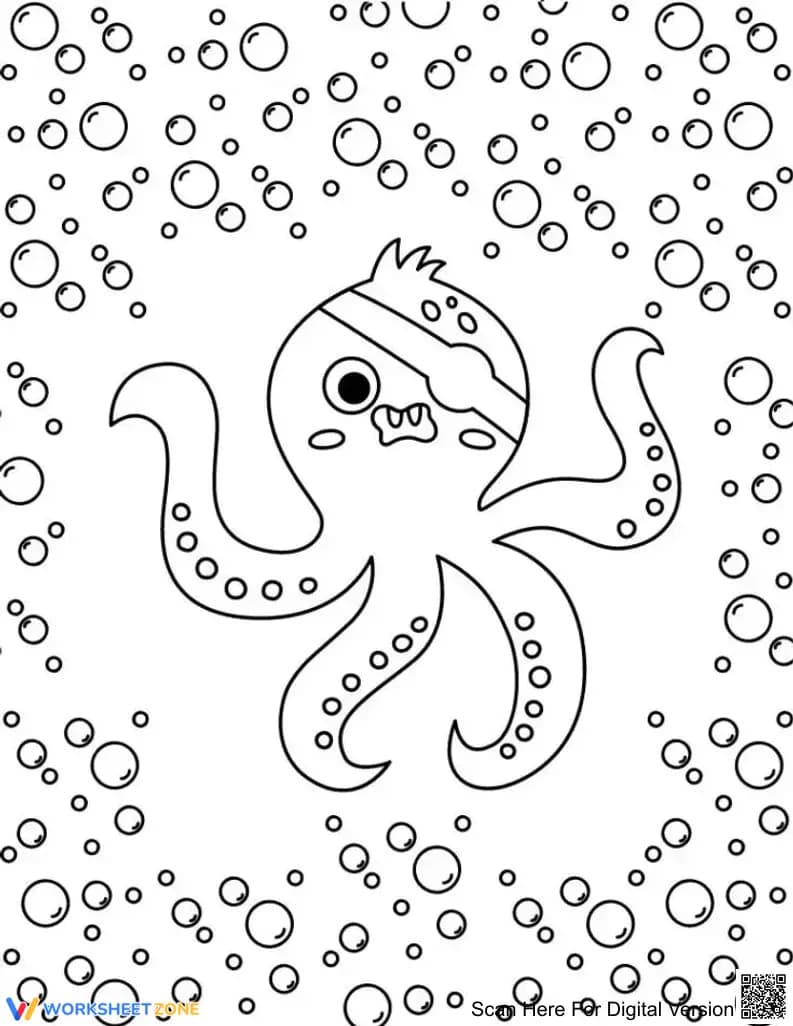

Pirate Octopus Coloring Page | Essential Grade K-5

Paste this activity's link or code into your existing LMS (Google Classroom, Canvas, Teams, Schoology, Moodle, etc.).
Students can open and work on the activity right away, with no student login required.
You'll still be able to track student progress and results from your teacher account.
This Pirate Octopus coloring worksheet provides a high-interest creative outlet for students to develop essential fine motor skills and hand-eye coordination. By focusing on a whimsical marine character, the activity encourages imaginative play while strengthening the pincer grasp necessary for handwriting. Students will enjoy detailing the octopus and the surrounding bubbles in this ready-to-print resource.
At a Glance
- Grade: K-5 · Subject: Arts & English
- Standard:
VA:Cr1.1.Ka— Engage in exploration and imaginative play with materials- Skill Focus: Fine motor control and creative expression
- Format: 1 page · 1 task · No answer key needed · PDF
- Best For: Early finishers and creative brain breaks
- Time: 15–20 minutes
The worksheet features a large, central illustration of a pirate octopus complete with an eye patch and friendly expression. Surrounding the character are dozens of bubbles of varying sizes, providing multiple opportunities for students to practice precision coloring. This 1-page PDF is designed with clean, bold lines to support younger learners who are still mastering spatial awareness and boundary control.
Teachers can implement this activity with a total prep time of under 2 minutes. First, print the single-page PDF for your entire class or small group. Second, distribute the sheets along with crayons, markers, or colored pencils. Third, review the completed work to observe student grip and color boundary awareness. This zero-prep workflow makes it an ideal choice for emergency sub plans or transition periods.
This resource aligns primarily with VA:Cr1.1.Ka, which requires students to engage in exploration and imaginative play with materials. Additionally, it supports CCSS.ELA-LITERACY.SL.K.5 by providing a visual display that can be used to describe a character or setting. Both standard codes can be copied directly into lesson plans, IEP goals, or district curriculum mapping tools.
How to Use It
Use this worksheet during a "Pirate" or "Ocean" thematic unit to reinforce vocabulary. It works best as a quiet-time activity after direct instruction or as a formative assessment tool to observe a student's pencil grip and focus. Expect students to spend 15 to 20 minutes completing the page, depending on their level of detail.
Who It's For
This activity is designed for Kindergarten through Grade 5 students, with a primary focus on early elementary learners. It is particularly effective for students requiring fine motor intervention or as a calming task for neurodivergent learners. Pair this worksheet with a picture book about sea creatures or a pirate-themed anchor chart to extend the learning experience.
According to the RAND AIRS 2024 report on early childhood development, structured creative activities like coloring play a vital role in developing the intrinsic muscles of the hand required for later writing proficiency. This Pirate Octopus worksheet aligns with standard VA:Cr1.1.Ka, focusing on the student's ability to engage in exploration and imaginative play with artistic materials. Research from Fisher & Frey (2014) suggests that visual literacy tasks provide a low-stakes entry point for vocabulary acquisition, particularly for English Language Learners. By integrating thematic elements like pirates and marine life, educators can bridge the gap between creative expression and narrative storytelling. This resource provides a high-quality, 1-page printable format that supports the gradual release of responsibility by allowing students to exercise autonomy in color selection and spatial reasoning. It serves as a foundational tool for fine motor development in primary classrooms and supports early literacy through visual engagement.


