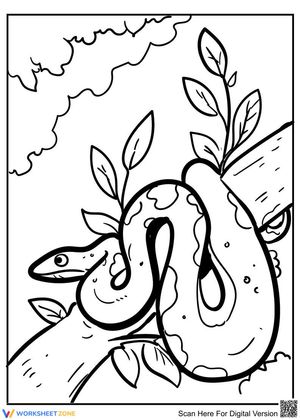
Educational Value of Snake Coloring Activities
In the primary classroom, engagement often begins with visual and tactile experiences that bridge the gap between curiosity and academic content. Snake coloring pages serve as an effective entry point for young learners to explore the biological world while refining the physical skills necessary for academic success. Teachers often search for resources that go beyond simple time-fillers, and high-quality coloring sheets offer a unique opportunity to combine art with science. By focusing on the intricate patterns of a snake's skin, students are encouraged to slow down and pay attention to detail, which is a fundamental component of scientific observation.
Worksheetzone provides a variety of these resources that cater specifically to the needs of teachers looking for versatile classroom tools. When students engage with a coloring page featuring a reptile, they are not just applying color to paper; they are interacting with a representation of a living organism that has specific anatomical features. This interaction provides a platform for teachers to introduce vocabulary related to reptiles, such as scales, cold-blooded, and vertebrates. The repetitive motion of coloring also has a calming effect, which can be particularly beneficial during transition periods or as a focused individual activity following a high-energy lesson.
Integrating Herpetology into Early Elementary Science
Herpetology, the study of reptiles and amphibians, is a fascinating subject that naturally captures the imagination of elementary students. Using snake coloring pages as a supplemental resource can significantly enhance a science unit focused on animal classifications or habitats. National Geographic Kids - Reptiles resources state that snakes are highly specialized animals with unique adaptations, noting that there are over 3,000 species living in diverse habitats on every continent except Antarctica, each possessing scaly, waterproof skin and a lack of limbs that allows them to thrive in various environmental conditions worldwide. Teachers can use these facts to spark discussions while students are coloring, helping them to retain information through a multi-sensory approach.
Moreover, these worksheets can be used as a form of formative assessment. By asking students to color specific parts of the snake—such as the scales or the tongue—and labeling them, teachers can quickly gauge a student's understanding of reptile anatomy. This quick check-in is invaluable in a busy classroom setting, providing immediate feedback without the pressure of a formal test. The visual nature of the coloring pages also supports English Language Learners (ELL) by providing a clear pictorial representation of the vocabulary being introduced in the science lesson.
Developing Fine Motor Skills through Scaly Textures
One of the primary reasons teachers utilize coloring activities is the development of fine motor skills. The act of holding a crayon or colored pencil and staying within the lines requires a high level of hand-eye coordination and muscular control. Snake coloring pages are particularly effective for this purpose because of the repetitive, small-scale patterns inherent in reptile scales. Each scale represents a small boundary that requires precision to fill, challenging the student to adjust their grip and pressure constantly.
Research into early childhood development suggests that the specific task of coloring scaly textures provides a workout for the intrinsic muscles of the hand compared to larger, more open coloring areas, as it forces the brain to coordinate rapid, micro-movements that are essential for future penmanship and refined tool use.
Teacher Tips for Effective Worksheet Use
To maximize the impact of snake coloring pages in the classroom, teachers should consider how they are presented and utilized within the daily routine. One effective strategy is to create a "Reptile Research Station" where students can choose from a variety of coloring sheets along with informational books and specimen models. This self-directed approach encourages autonomy and allows students to follow their specific interests within the broader topic of snakes. Providing a range of coloring tools, including thin-tipped markers and metallic pencils, can also increase student engagement and pride in their work.
Another tip for teachers is to use the finished coloring pages as part of a collaborative classroom display. A "Snake Pit" or "Jungle Canopy" bulletin board can showcase the diversity of student work and create a shared sense of accomplishment. This not only reinforces the scientific concepts learned but also builds community within the classroom. Teachers can have students write a "snake fact" on the back of their page or on a small card to be displayed alongside their artwork, turning the coloring activity into a mini-literacy project.
Exploring Diverse Species: From Cobras to Garter Snakes
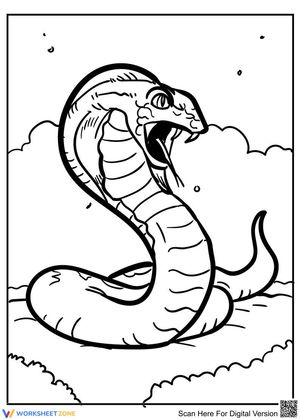
Diversity is a key theme in biological sciences, and snakes offer a wide array of examples to study. From the iconic King Cobra to the common garden garter snake, each species has distinct physical characteristics that can be highlighted through coloring. Teachers can use these variations to teach about geographic distribution and habitat adaptation. For example, a coloring page of a desert-dwelling snake might lead to a discussion about camouflage in sandy environments, while a rainforest species can illustrate the use of vibrant colors for warning or blending into lush foliage.
In addition to physical traits, these pages can help dispel common myths about snakes. Many students enter the classroom with a fear of these animals, but through the process of coloring and learning about their beneficial roles in ecosystems—such as controlling rodent populations—they can develop a more balanced and respectful view of wildlife. Teachers can emphasize that most snakes are not harmful to humans and are an essential part of the natural balance, building a sense of environmental stewardship in their students.
Classroom Implementation: Cross-Curricular Snake Projects
Snake coloring pages can serve as the foundation for more extensive cross-curricular projects that engage students in multiple ways. For instance, in a mathematics lesson, students can measure the "length" of different snake coloring pages using non-standard units like paperclips or Unifix cubes. This brings a hands-on element to measurement concepts while keeping the theme consistent. In language arts, students can use their colored snake as a character in a creative writing piece, describing its "day in the life" using the vocabulary words they learned during the science portion of the unit.
Conclusion
In conclusion, snake coloring pages are far more than simple drawings; they are versatile educational instruments that support a wide range of learning objectives. From developing fine motor skills and hand-eye coordination to providing a gateway into complex biological and geographical concepts, these resources are invaluable for the modern elementary teacher. By selecting high-quality materials from Worksheetzone and integrating them thoughtfully into the curriculum, teachers can create a dynamic and engaging learning environment that honors both the artistic and scientific curiosity of their students.
Frequently Asked Questions
1. What age group are these snake coloring pages most suitable for?
These resources are designed to be adaptable for a wide range of ages, though they are most commonly used in Pre-K through 3rd grade. For younger children, teachers should select pages with larger, simpler outlines and fewer intricate patterns. As students develop better motor control in 2nd and 3rd grade, they can transition to more detailed species like the King Cobra or the Rattlesnake, which offer a greater challenge for precision coloring.
2. How can I use these pages to meet science standards?
Snake coloring activities are excellent for addressing standards related to animal classification, life cycles, and habitat adaptations. Teachers can have students label the parts of the snake, color them according to their natural habitats (e.g., green for rainforests, brown for deserts), or use them to compare the physical traits of reptiles with those of mammals or birds. Referencing reliable sources like National Geographic Kids during the activity helps ensure that the lesson remains grounded in scientific fact.
3. Are there ways to include literacy in this coloring activity?
Absolutely. One common method is to have students write a short descriptive paragraph about their snake on the back of the page. You can also provide "word banks" with terms like "slither," "scales," "venomous," and "camouflage" for students to include in their writing. For younger students, simply tracing the name of the snake species at the bottom of the page helps reinforce letter formation and vocabulary recognition.
4. How do these worksheets help with classroom management?
Coloring is a naturally calming activity that helps students focus and transition between different parts of the school day. Teachers often keep a stash of these pages for students who finish their work early, ensuring that they have a productive and quiet task to complete. They can also be used as a "cool down" activity after recess or as a reward for positive classroom behavior, helping to maintain a consistent and peaceful learning environment.
5. Can I use these for group projects?
Yes, many teachers use these pages as part of a larger collaborative mural. Each student can color a different snake species, which are then cut out and placed on a large paper "jungle" or "desert" background. This encourages students to work together and see how their individual contributions fit into a larger whole. It also provides a great opportunity for students to teach each other about the specific snake they researched and colored.