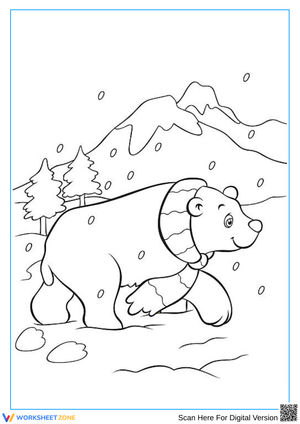
Start with a snowy scene: a quiet sheet of ice, a fluffy bear cub, and a wide Arctic sky waiting for color. Polar bear coloring pages can help children step into a cold-weather world filled with icebergs, snowflakes, paw prints, icy water, and gentle wildlife moments. The theme feels calm and easy to enjoy, but it also has enough detail to keep kids interested as they imagine where the bear is walking, swimming, or resting.
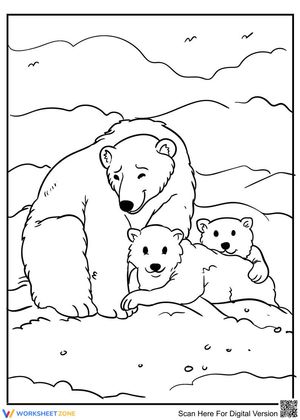
Different designs can create different Arctic stories. A simple polar bear outline may be best for younger children who need large spaces and clear shapes. A more detailed page might show a mother bear with her cub, a bear standing near icy waves, or a winter background with mountains, stars, snow, and northern lights. Children can also add their own details, such as fish in the water, a trail of footprints, a snowy cave, or clouds drifting across the sky.
Although polar bears are usually white, kids still have many creative coloring options. Light gray, pale blue, soft beige, cream, and lavender can help show shadows in the fur. Deeper blues can make the ocean or sky stand out, while green northern lights, silver snowflakes, or warm sunset colors can make the scene more exciting. This helps children learn that coloring white animals is not about leaving the page blank, but about using gentle shading and background contrast.
Parents can use these pages for winter crafts, quiet afternoons, animal-themed activities, or screen-free art time. In the classroom, they work well for Arctic habitat lessons, wildlife units, seasonal displays, art centers, or creative writing prompts. A teacher might ask students to label ice, water, snow, cub, and paws, while a parent might invite a child to tell a short story about where the polar bear is going. These small extensions make the page more interactive without turning it into a formal assignment.
Children can turn their completed pages into winter posters, bookmarks, greeting cards, journal decorations, or Arctic animal displays. They can cut out the bear and place it in a handmade snowy habitat with paper icebergs, snowflakes, mountains, and clouds. A short caption, bear name, or extra background detail can make the artwork feel complete. With soft winter scenery and gentle animal charm, polar bear coloring pages give kids a creative way to explore Arctic life through color and imagination.
Frequently Asked Questions
Question 1: What makes polar bear coloring pages interesting for kids?
Polar bear coloring pages are interesting because they combine a familiar animal shape with a unique Arctic setting. Children can color the bear, snow, ice, water, cubs, paw prints, and winter sky. The page can feel peaceful, adventurous, or playful depending on the design. Kids also enjoy adding their own details, such as snowflakes, fish, caves, or northern lights, to make the scene more personal.
Question 2: How can children color a white polar bear creatively?
Children can use very light shading instead of leaving the bear completely blank. Pale blue, soft gray, cream, beige, and light lavender can show shadows and fur texture. The background can also help the bear stand out. Blue water, purple sky, green northern lights, silver snowflakes, and dark rocks can create contrast while keeping the polar bear bright and snowy.
Question 3: Can polar bear coloring pages support Arctic habitat learning?
Yes, polar bear coloring pages can gently support Arctic habitat learning. Adults can talk about snow, ice, cold water, cubs, paw prints, and other animals that may live in icy regions. Children can also draw extra habitat details around the bear, such as icebergs, fish, seals, or mountains. This keeps the activity creative while helping kids connect the animal to its environment.
Question 4: What can kids do with finished polar bear coloring pages?
Finished polar bear coloring pages can become winter wall art, classroom displays, bookmarks, handmade cards, story prompts, or nature journal pages. Kids can also cut out the bear and glue it onto a larger Arctic scene made with paper snow, clouds, and ice. Adding a name, caption, or short sentence about the bear’s adventure can make the finished artwork feel more complete and meaningful.