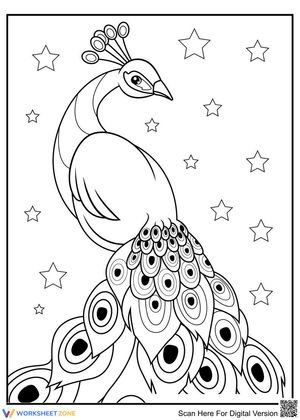
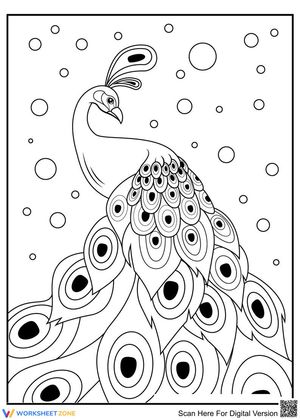
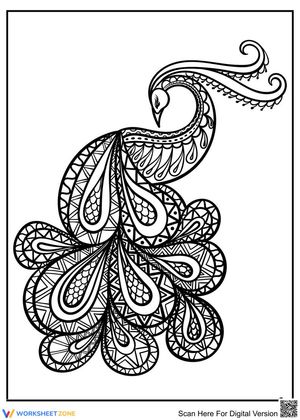
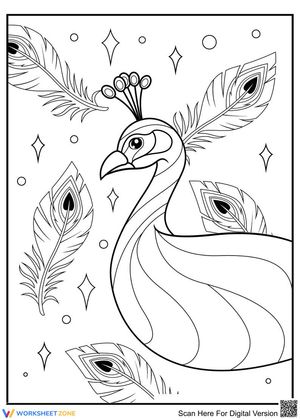
I remember the afternoon I first handed out peacock coloring pages to a group of restless third-graders who had already lost interest in the lesson. Within minutes, the chatter stopped. Every student leaned in close, choosing colors, tracing the fan-shaped tail feathers, and quietly comparing their choices with the person sitting next to them. That one simple printable turned an ordinary classroom moment into something genuinely memorable.
What makes peacock coloring pages so effective is the level of detail they invite students to engage with. The layered feathers, the eye-shaped patterns, and the curved neck all require careful attention, which naturally sharpens focus and fine motor control. Teachers often notice that students who struggle with traditional worksheets respond differently to these nature-inspired designs - they slow down, they concentrate, and they feel proud of the results. For more ideas that build these same physical skills, the resource at fine motor skills activities for young learners pairs well with coloring sessions.
Curiosity about the natural world is one of the best entry points into learning, and the peacock is a perfect subject. Students start asking questions on their own: Why are the feathers so colorful? How do peacocks move? What kind of habitat do they live in? A set of peacock coloring pages can open a conversation about birds, ecosystems, and even basic biology without a single lecture. That organic curiosity is something every teacher hopes to spark, and it is genuinely satisfying to watch it happen through art.
Parents who use Worksheetzone at home have shared similar experiences. A quiet evening activity that keeps a child engaged while building patience and hand coordination is genuinely hard to find. Peacock coloring pages fit naturally into after-school routines, weekend projects, or even travel kits. They work without screens, without supplies beyond a few colored pencils, and without any setup time at all. If your child enjoys bird-themed designs, the printable collection at bird coloring pages for kids offers a wider range of avian subjects to explore together.
Whether you are a teacher building a calm-down corner, a parent looking for screen- creativity, or a student who simply loves birds, peacock coloring pages from Worksheetzone offer something worth returning to. Download a sheet, set out the colors, and let the details of each feather guide the work. The focus, the patience, and the sense of accomplishment that follow are always worth it.
Frequently Asked Questions
Question 1: What age group benefits most from peacock coloring pages?
Peacock coloring pages are well suited for children ages 4 through 12. Younger students enjoy the large, open feather shapes, while older students appreciate the detailed eye patterns and symmetry. Teachers in preschool through early elementary grades use them regularly during art periods, calm-down routines, and nature study lessons.
Question 2: How can teachers use peacock coloring pages in the classroom?
Teachers can incorporate these printable sheets into science units on birds and habitats, use them as a transition activity between lessons, or set them up in an art or calm-down corner. They work well as a quiet independent task and can be paired with a brief discussion about peacock anatomy, color patterns, or animal behavior.
Question 3: Are peacock coloring pages useful for developing fine motor skills?
Yes. The detailed feather patterns on peacock coloring pages require precise hand movements, which help students develop grip strength, pencil control, and hand-eye coordination. These are foundational skills for writing and other academic tasks. Regular coloring practice with intricate designs like peacock illustrations supports steady fine motor development over time.
Question 4: Can parents use these sheets as part of a home learning routine?
Peacock coloring pages fit easily into a home learning routine. Parents can use them as a focused quiet-time activity, a creative project on weekends, or a calm transition before homework. They require only basic coloring tools, making them practical for everyday use without any special preparation or materials needed.