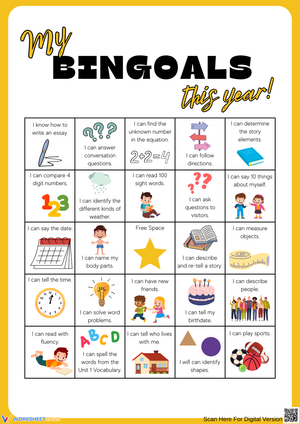
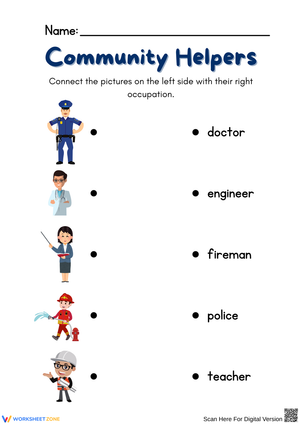
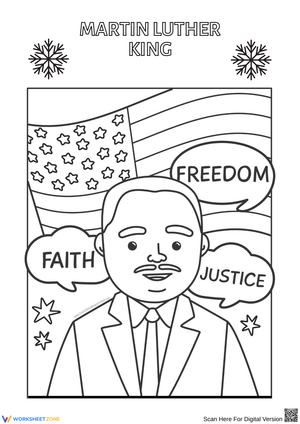
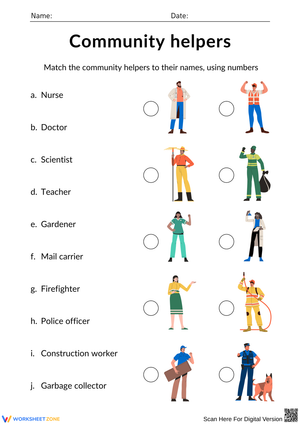
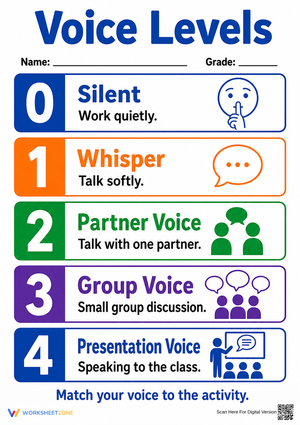
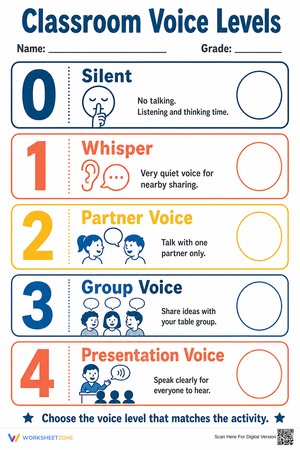
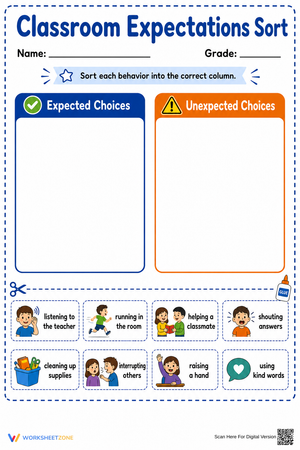
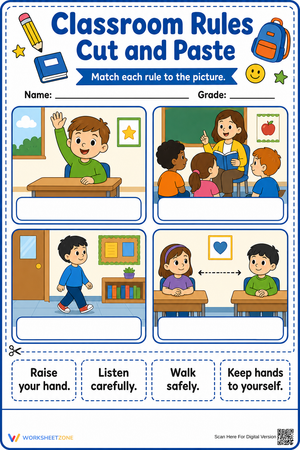
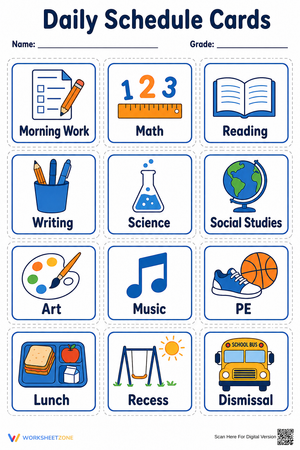
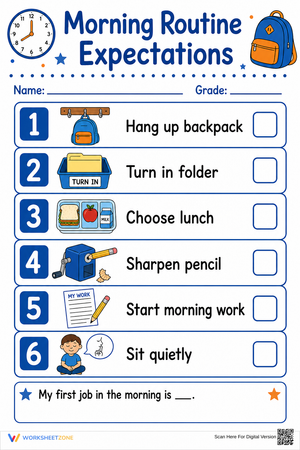
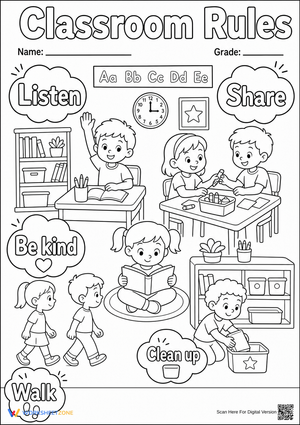
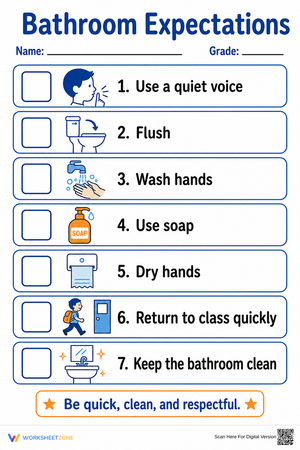
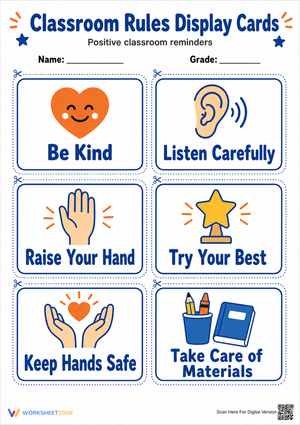
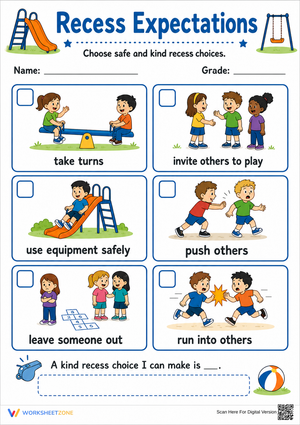
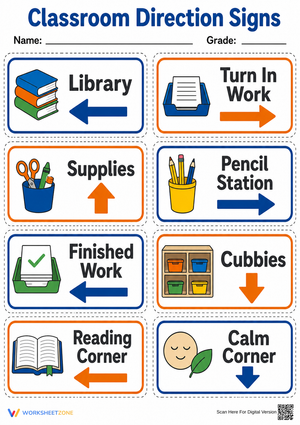
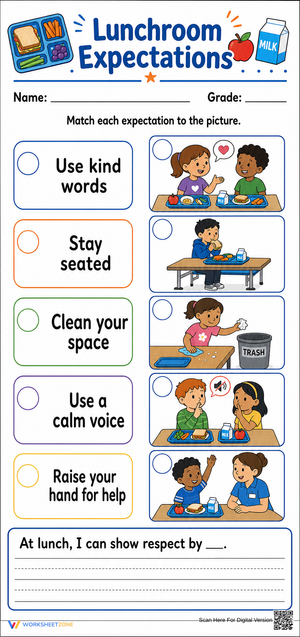
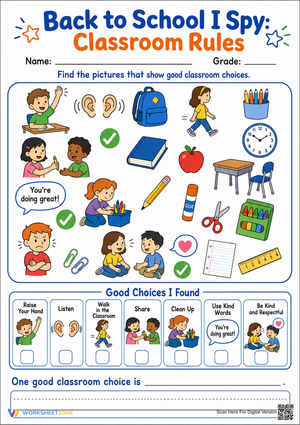
These kindergarten social studies worksheets printable resources give teachers practical tools for covering self, family, community helpers, maps, and civic concepts in the short, visually driven blocks that define most kindergarten days. The set spans the core topics kindergarten social studies typically addresses — from family roles and school rules to needs and wants, map symbols, and national symbols — using formats like picture matching, cut-and-paste sorting, and draw-and-talk prompts that match what five-year-olds can actually do independently.
What These Worksheets Cover
The topics follow the outward-expanding model most kindergarten units use: starting with the child, moving to family, then school, then the broader community. Each worksheet targets one concrete concept so the task stays manageable and the social studies idea has room to land.
- Self and family: Activities on family roles, home routines, and personal responsibilities anchor early lessons to students' lived experience.
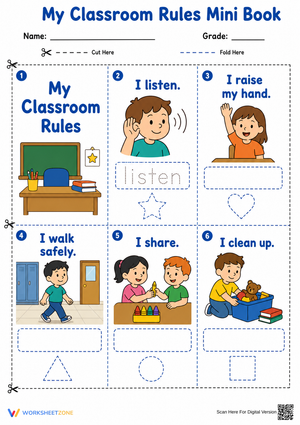
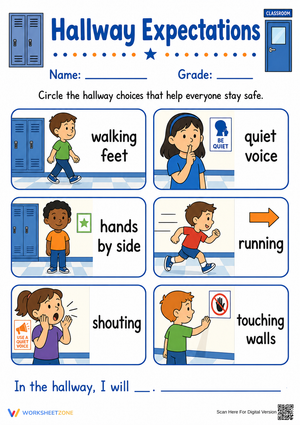
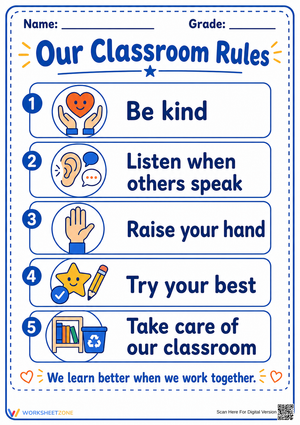
- School rules and helpers: Worksheets on sharing, taking turns, and classroom jobs connect directly to the daily routines students are already practicing.
- Community helpers: Sorting and matching activities introduce jobs like firefighter, mail carrier, nurse, and teacher by focusing on the tools and tasks that define each role.
- Needs and wants: Cut-and-paste sorting activities let students categorize pictures into the two groups — a concept that generates genuine disagreement among five-year-olds every single time.
- Maps and location: Simple symbol-matching activities introduce the idea that a map represents a place rather than being the place itself — a distinction that takes more than one lesson to stick.
- National symbols and citizenship: Coloring and identification activities bring in the flag, the pledge, and basic civic vocabulary in an age-appropriate way.
Worksheet Formats That Work at This Age
Kindergarteners cannot sustain a written response without significant support, and worksheets that require multiple lines of text tend to become letter-tracing exercises rather than social studies work. These resources rely on picture matching, tracing key words like family or rule, cut-and-paste sorting, coloring scenes, and draw-and-talk prompts that let students respond through pictures and conversation. Each worksheet keeps its task visible at a glance — students should know what to do before the teacher finishes giving directions.
The draw-and-talk format is worth singling out. When students draw a community helper and then describe the drawing aloud, teachers get richer evidence of understanding than the completed worksheet shows on its own. A student who draws a nurse and explains "she helps people when they're sick and uses a special tool to check your heart" understands community helpers differently from one who draws the same image but cannot say more than "she's a helper." The oral layer is part of the assessment, not an afterthought.
Building These Into Your Week Without Overcomplicating It
The most reliable pattern in classrooms that use kindergarten social studies worksheets printable resources well is pairing each worksheet with a short oral routine before students pick up their pencils. Name the topic, show the pictures on a document camera, ask two or three quick questions — "What do you see here?" "Have you ever seen this person in your neighborhood?" — then model the first item together. That sequence keeps the worksheet from becoming isolated seatwork and gives children a bridge from the paper to what they already know.
A practical efficiency worth repeating: once students have learned one worksheet format — say, a cut-and-paste sort — keep that same structure across multiple topics. Introduce it in September for classroom rules, use it again in November for community helpers, and again in January for needs and wants. The familiar format lowers the overhead so students spend their attention on the social studies concept, not on decoding new directions. Sub plans become easier too, because the format needs almost no explanation from whoever is covering the class.
- Morning work: A quick matching or tracing worksheet that revisits the current unit topic while students are still settling in.
- Read-aloud extension: Follow a picture book about family or community with a sorting or draw-and-talk worksheet tied to the same concept.
- Center rotations: A sorting or coloring worksheet runs independently once it has been introduced whole-group.
- Small-group check-in: Bring a handful of students together with a matching worksheet and talk through each answer instead of having them work silently.
- Friday review block: The last 10 minutes before weekend dismissal — when a new lesson would be wasted — gives the week's concept one more exposure without adding planning burden.
Misconceptions to Anticipate Before You Hand These Out
The needs-and-wants sort produces the most predictable disagreement. Students almost always categorize pets as needs, and many will argue that a tablet or bicycle belongs in the needs column because "I use it every day." This is not a wrong answer to correct quickly — it is an opening for the actual conversation about what "need" means. The worksheet gives the structure; the discussion is where the concept gets built.
Map symbol worksheets surface a different confusion. Many kindergarteners treat the map as literally the place — the small square on the worksheet is the actual building, not a symbol for it. Students will say the map is "too small" or try to count steps across it as if it represents real distance. That tells you the abstraction hasn't clicked yet. Plan to return to the map worksheet a second time after stepping outside to look at the school building, then comparing it to what the symbol shows.
Community helper worksheets occasionally trip up students whose experience doesn't match the images. A child from a rural area may have never seen a subway conductor. A student whose parent is a nurse may insist nurses don't wear the uniform pictured. Acknowledge those responses rather than override them — they show students connecting content to real life, which is exactly what the early social studies curriculum asks them to do.
Adapting the Set for Mixed-Ability Classrooms
Kindergarten classes routinely include emerging readers, English learners, and students with different fine-motor strengths. A few targeted adjustments keep the content goal intact while making each worksheet more accessible to more students.
- For emerging readers and ELL students: Read directions aloud and point to each image before students begin. Adding a picture-label card in the student's home language alongside the worksheet takes two minutes of prep and removes a significant barrier.
- For students who struggle with scissors: Pre-cut the sorting pieces before the lesson. The sorting concept is what matters; cutting is a separate skill that should not stand in the way of the social studies objective.
- For students who freeze on open-ended prompts: Narrow the draw-and-talk task to a choice between two options ("draw a firefighter or a mail carrier") rather than an open invitation. The choice removes the paralysis without reducing the content demand.
- For students who move through tasks quickly: Ask them to write or trace the category label after sorting, or draw one additional example not shown on the worksheet.
These adjustments work best when set up before the lesson rather than improvised mid-instruction. Having pre-cut pieces in a separate bag, picture-label cards clipped to the worksheet, and an extension prompt written on a sticky note means the teacher stays free to circulate and observe rather than manage materials on the fly.
Frequently Asked Questions
Do these worksheets require reading ability?
No. Each worksheet uses picture-based tasks — matching, sorting, coloring, and drawing — that do not require students to read independently. Directions are short enough to deliver aloud in one sentence. For kindergarten social studies worksheets printable resources to work in a class with emerging readers, the teacher reads the direction once, models the first item, and students work from the visual cues on the worksheet itself.
How long does a typical worksheet take in class?
Most students finish in 8 to 12 minutes during an independent work period. Cut-and-paste sorting worksheets run a bit longer when students are still building scissor skills — closer to 15 minutes if cutting is part of the activity rather than pre-done by the teacher. The oral discussion that follows usually takes another 3 to 5 minutes and consistently produces the most useful evidence of understanding.
Can the same worksheet formats carry across different units, or do students need to relearn the task structure each time?
The formats repeat deliberately across topics, so a student who learns how to do a cut-and-paste sort in one unit transfers that process to the next. The content changes; the structure stays consistent. Once a format is introduced, deploying it again with new vocabulary and new images costs almost no instructional time.
How do these work for formative assessment versus graded practice?
Kindergarten social studies worksheets printable resources function best as formative checks, not summative grades. A completed sorting worksheet tells you whether a student can categorize needs and wants with picture support — it does not tell you whether the student could explain the concept independently. What students say during the follow-up share-out is often more revealing than what appears on the completed worksheet. Use the oral discussion as evidence; use the worksheet as the record.