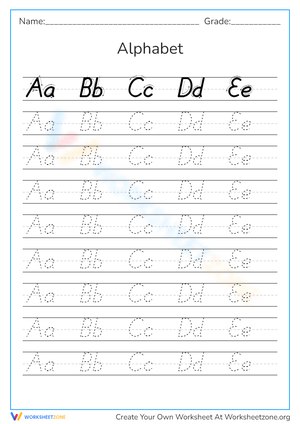
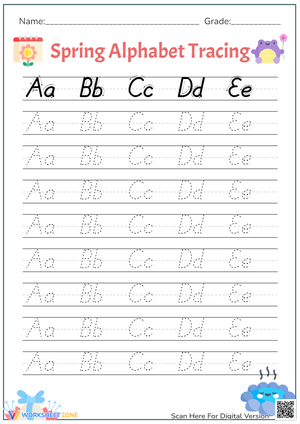
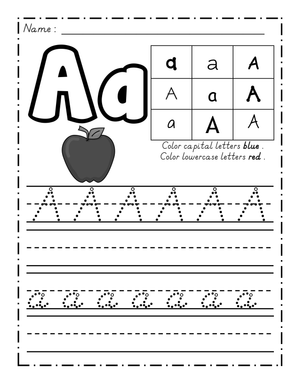
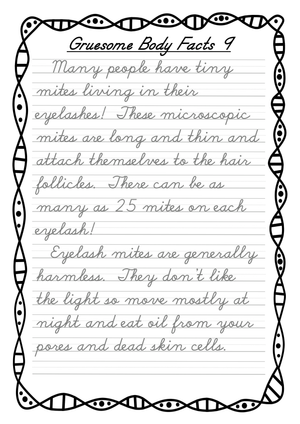
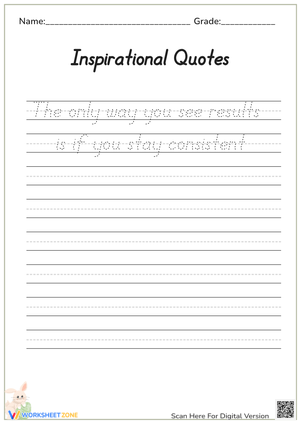
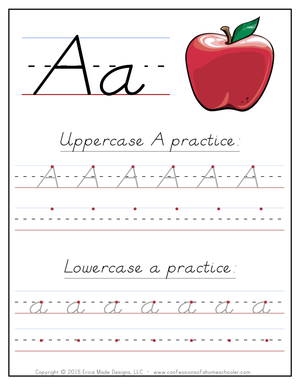
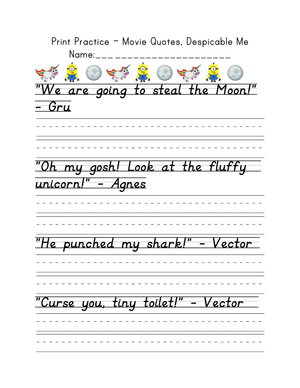
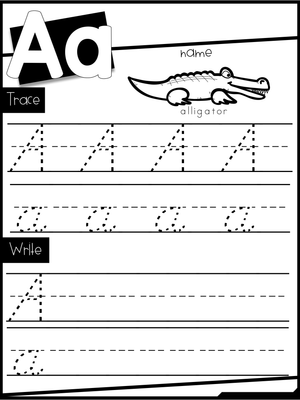
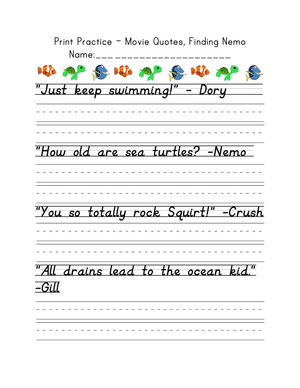
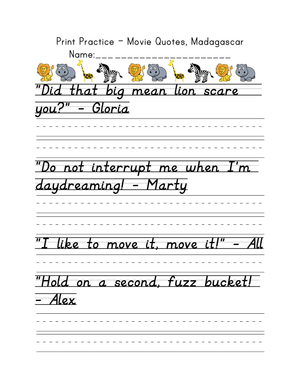
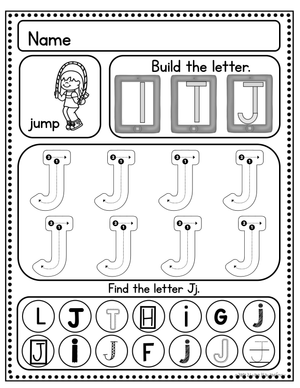
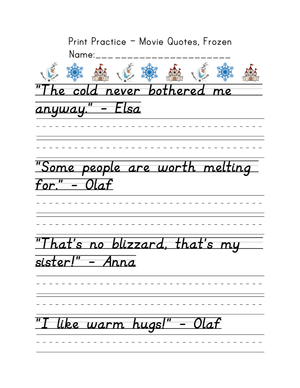
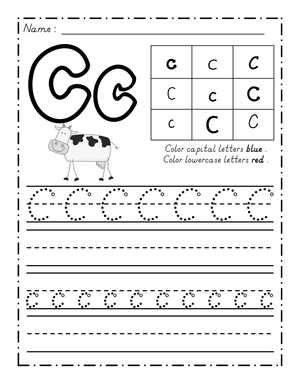
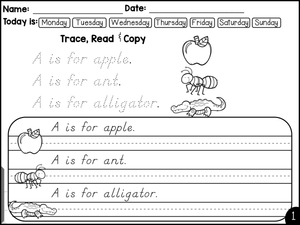
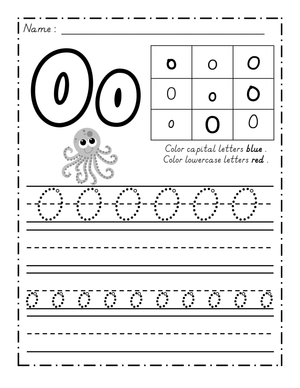
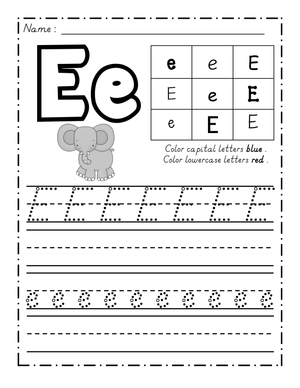
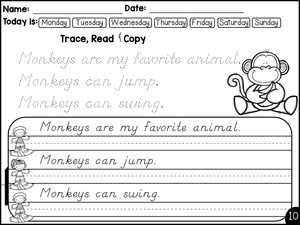
D'Nealian handwriting worksheets teach a slanted, continuous-stroke print style developed by Donald Neal Thurber in the 1970s. Instead of the vertical, disconnected strokes found in traditional ball-and-stick manuscript, D'Nealian letters lean slightly to the right and include small lead-in and exit tails on many letters. Those tails are meant to mimic the connecting strokes students will later use in cursive, so the print alphabet already looks a little like a rehearsal for joined writing.
For kindergarten and first grade teachers, this matters because handwriting instruction is rarely just about penmanship. It ties directly into letter recognition, fine motor development, and early reading fluency. A worksheet set built around D'Nealian letterforms gives students repeated practice tracing and copying these slanted shapes, usually starting with straight-line letters before moving into curved and looped forms.
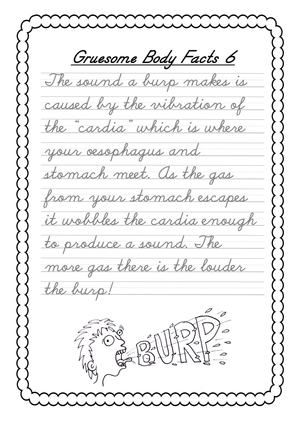
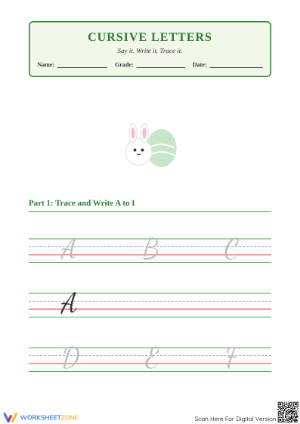
Does D'Nealian Ease the Cursive Transition?
The transition-to-cursive argument is the main reason many schools chose D'Nealian in the first place, so it deserves a direct answer. The research is genuinely split. One comparison study found a stronger correlation between D'Nealian instruction and early reading gains in first grade, which is a meaningful finding for reading-focused primary teams. But that same study found Zaner-Bloser students pulled ahead on cursive quality by second grade, suggesting the slanted print style does not guarantee a smoother handwriting jump later on.
For teachers, the practical takeaway is not that one method wins outright. It is that D'Nealian worksheets can support the visual bridge to cursive shapes, but they are not a substitute for direct, explicit cursive instruction when that time comes. If a school already uses D'Nealian in K-1, continuing with matched cursive worksheets keeps the letterform logic consistent for students.
Using D'Nealian Worksheets to Address Letter Reversals
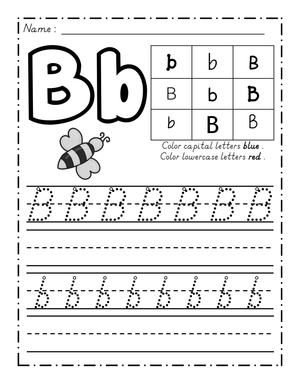
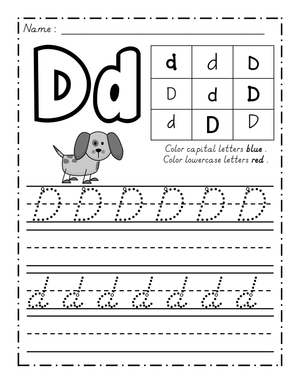
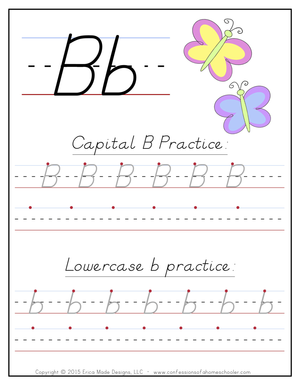
One of the more useful classroom applications of D'Nealian worksheets is reversal reduction. Letters like b and d, or p and q, are common reversal pairs for young writers, and the slanted, continuous-stroke design is intended to make each letter's starting point and direction more distinct. Because D'Nealian letters carry small directional tails, some students find it easier to remember which way a letter leans and where the pencil should start.
That said, the Sunform comparison study is a useful check on overconfidence here: fewer reversals in one study did not translate into cleaner letter formation overall, and some D'Nealian writers produced more distorted shapes. Worksheets alone will not fix reversals for every student. Pairing D'Nealian tracing pages with verbal cues, such as naming the starting dot and the direction of travel, tends to work better than tracing practice by itself.
Classroom Implementation
D'Nealian handwriting worksheets fit most naturally into short, frequent practice blocks rather than long single sessions. A few practical ways teachers use them:
- Daily five-minute warm-ups where students trace and then independently copy two or three letters before literacy block begins.
- Small-group intervention stations for students who consistently reverse specific letters, using worksheets that isolate those letter pairs.
- Fine motor centers that pair D'Nealian tracing sheets with playdough letter formation or sand-tray practice for students who need more sensory input.
- Spelling and phonics tie-ins, where the same week's letter-sound focus becomes the handwriting worksheet focus, so students practice writing the letters they are also decoding.
Progress monitoring matters more than worksheet volume. A quick weekly check of five to six letters, rather than grading every worksheet, gives teachers a faster read on which students still need targeted support before moving to new letterforms.
Frequently Asked Questions
1. What is D'Nealian handwriting and how is it different from regular manuscript?
D'Nealian is a slanted, continuous-stroke print style developed in the 1970s, designed to look closer to cursive than the upright, disconnected letters used in traditional ball-and-stick or Zaner-Bloser manuscript.
2. Does D'Nealian handwriting help students transition to cursive more easily?
Evidence is mixed. One study found a link between D'Nealian and stronger early reading scores in first grade, but the same study found Zaner-Bloser students scored higher on cursive quality by second grade.
3. Is there research evidence that D'Nealian improves handwriting outcomes?
A 1993 review by Steve Graham found no credible evidence that D'Nealian produces better handwriting quality than traditional manuscript, and a separate kindergarten study found the Sunform method outperformed D'Nealian on letter formation accuracy.
4. What grade levels typically use D'Nealian handwriting worksheets?
D'Nealian worksheets are most common in kindergarten through second grade, where teachers introduce letter formation and prepare students for a later transition into cursive writing.
5. How can teachers use D'Nealian worksheets to address letter reversals like b and d?
The slanted, directional strokes in D'Nealian letters can help some students distinguish reversal-prone letters, though worksheets work best paired with verbal cues about starting points and stroke direction rather than used alone.












 Interactive Worksheet Maker
 Quiz Maker
 Word Search Maker
 Crossword Puzzle Maker
 Word Scramble Generator
 Sentence Scramble Generator
 Handwriting Worksheet Generator
 Name Tracing Generator
 Fill In The Blank Generator