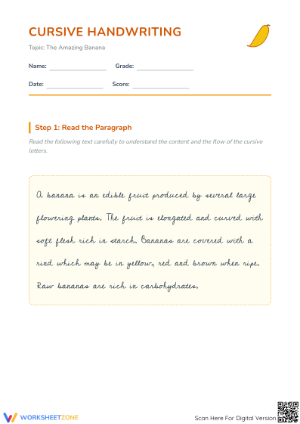
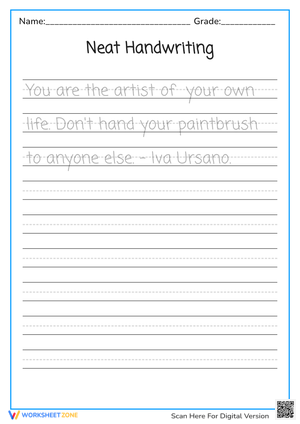
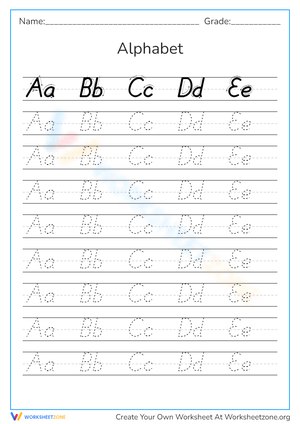
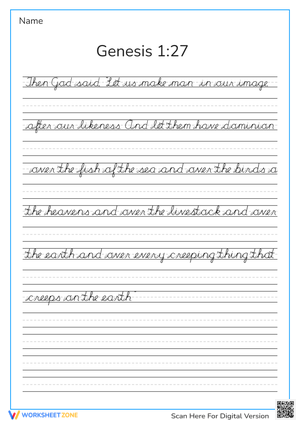
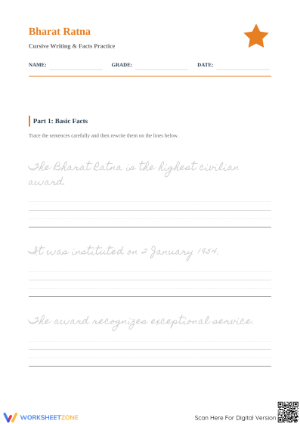
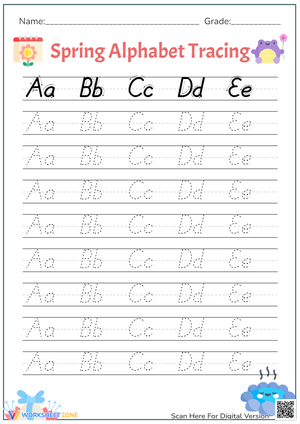
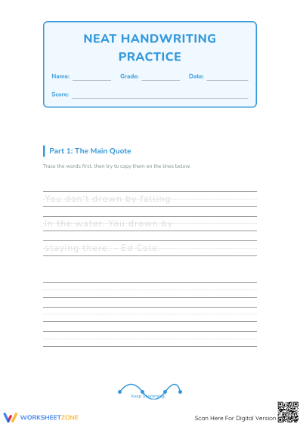
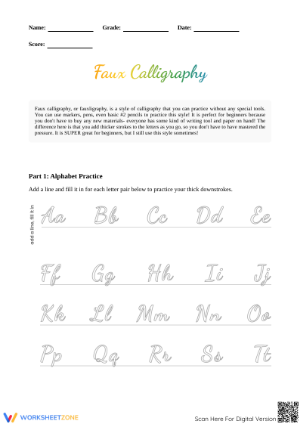
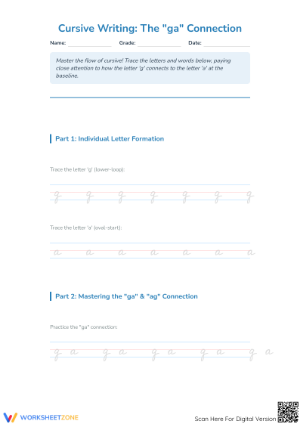
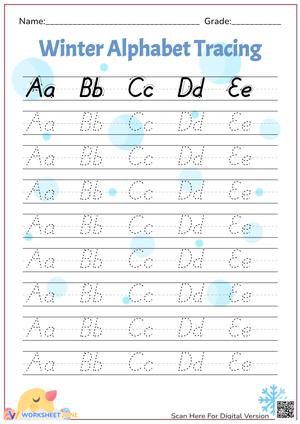
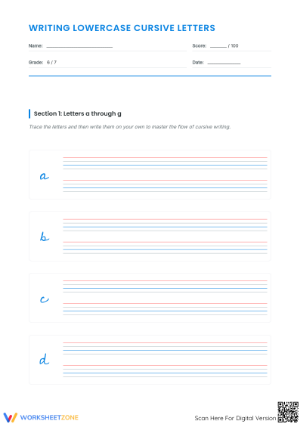
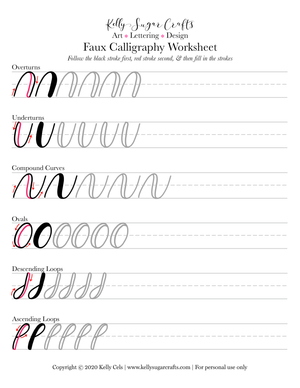
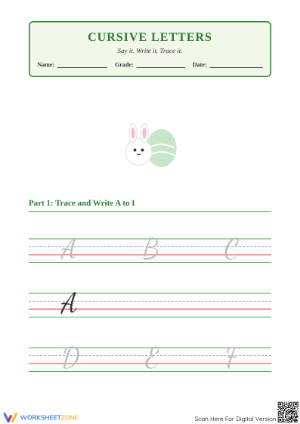
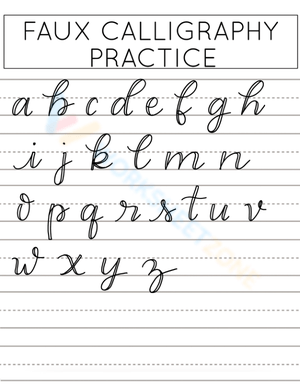
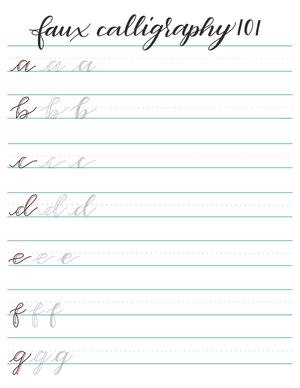
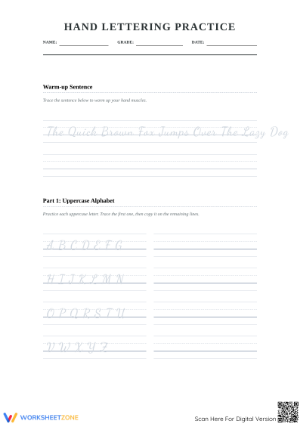
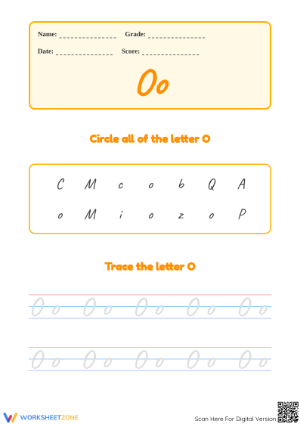
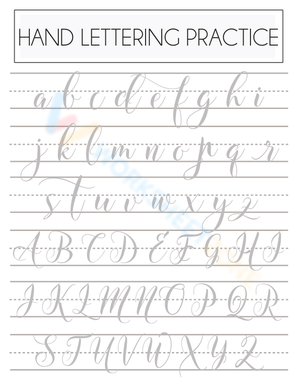
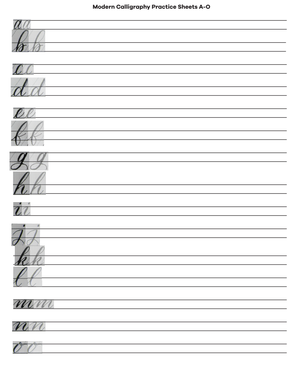
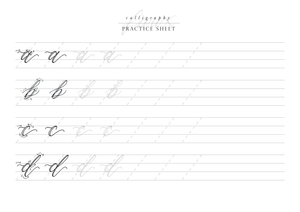
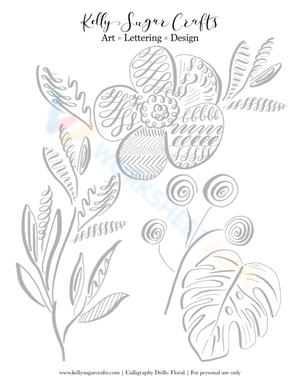
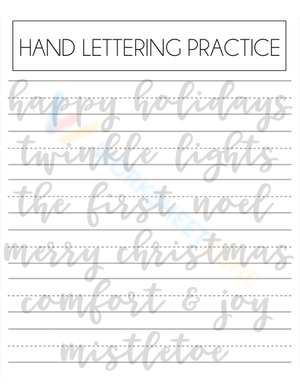
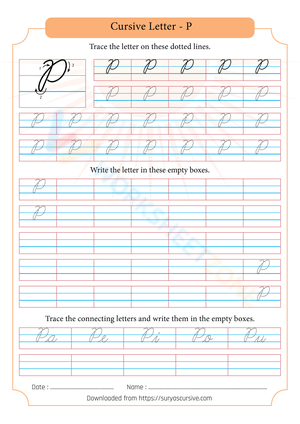
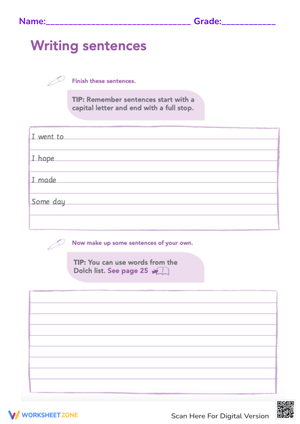
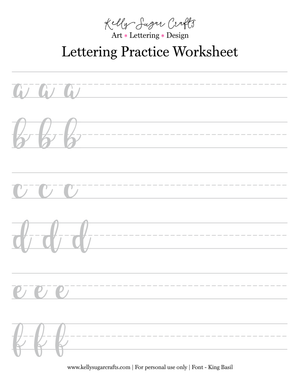
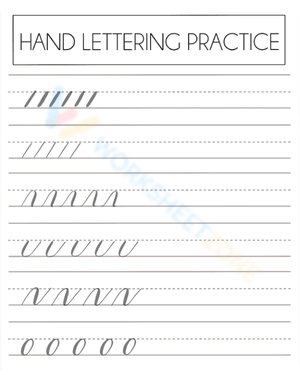
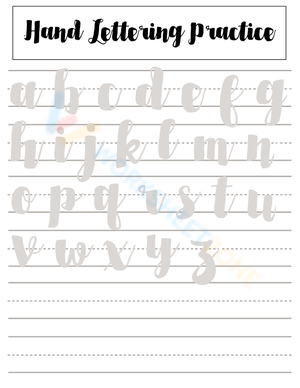
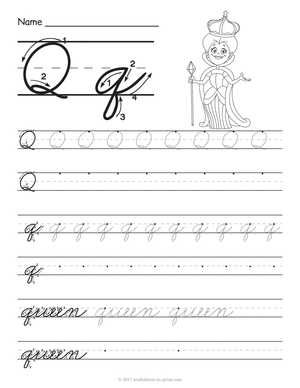
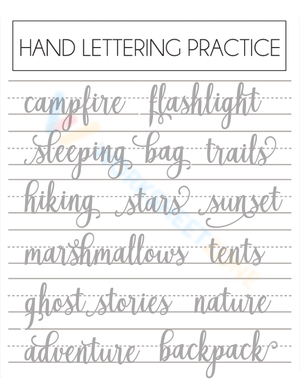
Calligraphy writing worksheets give teachers a structured way to slow students down and focus on how letters are actually formed. Instead of racing through a worksheet page, students trace stroke by stroke, which reinforces the same pencil control and letter-shape awareness that everyday handwriting depends on. For classrooms already running a handwriting block, morning warm-up, or fine motor center, calligraphy sheets fit right in without requiring a separate curriculum. The tracing lines and guided paths help students feel the rhythm and spacing of letters in a way that's different from copying printed text or writing freely on blank lines.
What Age and Skill Level These Worksheets Fit Best
Calligraphy practice works best with students around age 7 and up who already have basic pencil control and letter recognition in place. Younger students who are still learning to form individual letters typically need standard tracing and formation practice first. Once students can consistently produce recognizable letters, calligraphy worksheets offer a next step: refining spacing, slant, and stroke consistency in a way that feels new and motivating rather than repetitive. Even upper-elementary and middle school students benefit from calligraphy practice, particularly those who struggle with legibility or fine motor control, or students looking for an art-adjacent enrichment activity that still builds practical writing skill.
No Special Pens Needed: Accessible Tools for Every Classroom
One practical advantage of calligraphy writing worksheets is that most work fine with a standard pencil or a fine-tip marker. Students do not need a dip pen, brush pen, or specialized nib to build the underlying skill of controlled, deliberate strokes. That makes calligraphy practice easy to fold into any classroom budget, whether it is used as a whole-class activity, an early-finisher option, or a small-group intervention tool. Teachers working with tight supply budgets or who need materials students can take home can print calligraphy worksheets and have students use tools they already own.
Calligraphy Practice and the Cursive Instruction Comeback
Calligraphy and decorative-lettering practice also connects to a broader shift happening in state policy. As of the 2025-2026 school year, roughly 22 to 25 US states have laws or standards requiring cursive or handwriting instruction, a number that has grown steadily since only 14 states had such requirements in 2016. This trend reflects a renewed recognition that explicit handwriting instruction matters for literacy development.
For teachers in states adopting or expanding cursive requirements, calligraphy worksheets offer an engaging bridge between required cursive standards and voluntary enrichment practice. Even in states without mandates, calligraphy sheets can support teachers who want to weave handwriting skill-building into their existing reading and writing programs without treating it as an add-on.
Teacher Tips
A few ways to put calligraphy writing worksheets to work without adding prep time:
- Use a single calligraphy sheet as a 10-minute warm-up before writing workshop, so students arrive with steadier hand control and a mindset focused on careful letter formation.
- Add calligraphy pages to an early-finisher bin or indoor recess station, since they require no instruction to start and keep hands and minds engaged.
- Pull small groups for targeted letter-formation review using calligraphy tracing lines instead of plain handwriting sheets, which can feel repetitive to students who are already struggling.
- Pair calligraphy practice with an art-integration lesson or a career-day tie-in on the history of lettering and calligraphy as a profession, giving the skill extra classroom relevance.
- Keep a rotating portfolio or folder of finished calligraphy pages so students can see their own progress in stroke control over a grading period.
- Use calligraphy worksheets during handwriting intervention blocks, particularly with students who need extra practice in fine motor strength or consistent letter sizing.
Frequently Asked Questions
1. What age or grade level is appropriate to start calligraphy worksheets?
Calligraphy worksheets work best with students around age 7 and up who already have basic pencil control and can form recognizable letters. Younger students typically benefit more from standard letter-formation practice first.
2. Do students need special calligraphy pens to use these worksheets?
No. Most printable calligraphy worksheets are designed to work with a standard pencil or a fine-tip marker, so no specialized calligraphy pen or nib is required to get started.
3. How often should calligraphy practice be scheduled in class for best results?
Short daily sessions of about 10 to 15 minutes tend to build skill more effectively than occasional longer sessions, making calligraphy practice a good fit for a brief daily warm-up or rotation station.
4. How does calligraphy practice support handwriting and fine motor goals versus regular handwriting worksheets?
Calligraphy worksheets slow students down and emphasize deliberate stroke control, spacing, and letter shape, which reinforces the same fine motor skills used in everyday handwriting while feeling fresh and engaging to students.
5. Can calligraphy worksheets be used for handwriting intervention or small-group support?
Yes. Because calligraphy tracing lines guide stroke direction and spacing closely, they work well in small-group or one-on-one intervention settings where a teacher is targeting specific letter-formation goals or building hand strength for students who need extra support.












 Interactive Worksheet Maker
 Quiz Maker
 Word Search Maker
 Crossword Puzzle Maker
 Word Scramble Generator
 Sentence Scramble Generator
 Handwriting Worksheet Generator
 Name Tracing Generator
 Fill In The Blank Generator