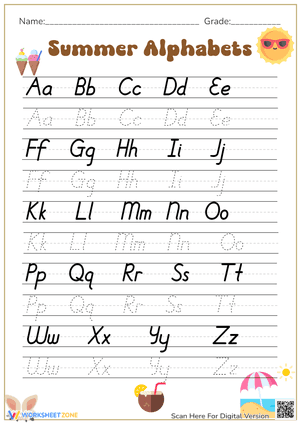
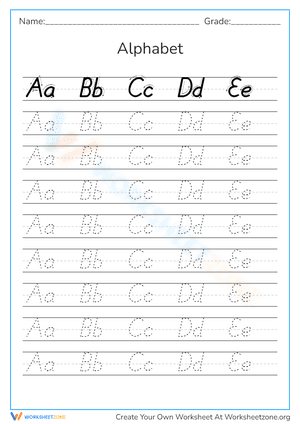
Start by naming the handwriting problem you want to fix
Before you print a stack of improve handwriting worksheets, decide what better actually means for the students in front of you. Some kids reverse b and d, some float letters above the baseline, and some grip the pencil so tightly their hand tires after two lines. Each problem calls for a different page. When you match the worksheet to the specific breakdown, a five-minute practice block does more than a generic tracing sheet ever will.
Teachers who plan intervention, small-group review, or a morning warm-up get the most from worksheets when they treat them as targeted tools. A student who forms letters correctly but slowly needs fluency practice, not more formation drills. A student who forms letters incorrectly needs to relearn the motor path first. Sorting students into those two buckets takes one quick writing sample and saves weeks of misaimed practice.
Use a worksheet as a two-minute diagnostic
The fastest way to choose the right practice page is to give one first. Ask each student to copy a short sentence that uses every lowercase letter, then read the sample for four things: letter formation, size consistency, spacing between words, and baseline control. Circle the two errors that show up most. Those two circles become the assignment for the week.
Most legibility problems trace back to a handful of letters, not the whole alphabet. In classroom screening, letters like a, e, r, and s account for a disproportionate share of misreads because their shapes collapse when written quickly. Assigning a full A-to-Z tracing packet spreads a student's limited practice time thin. A worksheet that repeats the four or five problem letters twenty times each concentrates effort exactly where legibility breaks down.
Turn worksheets into a five-minute daily routine
Handwriting improves through short, frequent reps, not one long weekly session. A five-minute worksheet at the start of the day gives students a predictable on-ramp into writing while you take attendance or check homework. Over a week that adds up to about 25 focused minutes, spaced the way motor learning actually sticks, and students stop dreading the blank line because the format never changes.
A meta-analysis published in PMC reviewed 31 studies covering 2,030 students in kindergarten through grade 6 and found that structured handwriting intervention produced statistically significant gains in writing fluency compared with no instruction or non-handwriting instruction. Short, deliberate practice, repeated often, is what moved the numbers.
Build a small-group intervention block
When formative writing samples or an RTI/MTSS screen flag several students, worksheets give you a ready structure for a pull-aside group. Seat three or four students who share the same error, model the letter path once on your own copy, then have them practice while you watch the first two reps and correct the motor pattern before it repeats wrong.
Keep the group data-light but honest. Photograph one line from each student's page on Monday and again on Friday. Side by side, the change in baseline control or letter size is usually visible within two weeks, and that quick evidence tells you whether to keep the group going, regroup, or graduate a student back to independent practice.
Connect handwriting practice to reading and spelling
Handwriting is not a side skill that competes with literacy time; it feeds it. The Iowa Reading Research Center reports that handwriting instruction in kindergarten improves related literacy outcomes, including letter-name and letter-sound knowledge, spelling, and word reading. When a student writes a letter by hand, they rehearse its shape, its name, and its sound in one motion.
That link changes how you defend the five minutes. A handwriting worksheet that pairs each letter with a keyword and its sound doubles as phonics review. For a first grader, tracing s-s-sun three times reinforces the grapheme, the phoneme, and the motor pattern together, which is why handwriting practice rarely steals time from reading instruction.
Differentiate worksheets by grade band
Foundational formation and fluency practice look different across grades, so the worksheet should too. In K-2, use large letters, clear baselines and midlines, and keep the focus on correct starting points and stroke order. Directional arrows and a single model letter per line help emerging writers who are still building the motor map.
In grades 3-5, shrink the letter size toward grade-level lined paper, add copying tasks that build speed, and introduce cursive where your district expects it. A kindergarten and first-grade intervention study in PMC found that foundational-skill practice raised visual-motor integration, with the largest gains among the youngest writers, so front-load the most explicit formation work in the earliest grades.
Classroom Implementation
Fitting handwriting into a full schedule is a logistics problem, not a curriculum one. Try this rotation: Monday, a two-minute diagnostic copy; Tuesday through Thursday, five minutes of targeted letter or fluency practice; Friday, a repeat of Monday's sentence as a progress check. Store each student's pages in a labeled folder so growth stays visible to you and to them.
- Keep the daily block to five minutes so it never crowds core reading or math.
- Assign only the two or three letters a student actually misses, not the full alphabet.
- Model the stroke order aloud before students write; naming the path speeds the fix.
- Use the same sentence each Friday so before-and-after samples compare cleanly.
- Send a matching page home only as optional reinforcement, never as the primary practice.
One practical note on materials. A structured curriculum study from Zaner-Bloser in Texas in 2025 found a statistically significant positive correlation between adopting a structured handwriting program and third-grade handwriting proficiency, a useful reminder that a consistent worksheet format matters as much as the minutes spent on it.
Frequently Asked Questions
1. How often should I assign handwriting worksheets for measurable improvement?
Short daily practice beats one long weekly session. Aim for five focused minutes four or five days a week. Motor learning depends on frequent, spaced repetition, so a small amount every day produces visible change in baseline control and letter size within two to three weeks.
2. How should I use worksheets with students who have fine motor delays?
Slow down and shrink the target. Start with larger letters, fewer reps, and a thicker pencil or grip, and focus on one letter at a time. Watch the first two attempts and correct the stroke path before it repeats. Add short breaks so hand fatigue doesn't undo the practice.
3. Can handwriting worksheets help with reading and spelling, not just legibility?
Yes. The Iowa Reading Research Center notes that handwriting instruction supports letter-sound knowledge, spelling, and word reading. Writing a letter by hand rehearses its shape, name, and sound at once, so a worksheet that pairs letters with keywords doubles as quick phonics review.
4. How do I choose between print and cursive worksheets by grade?
Match the format to your district's expectations and the student's foundation. Most K-2 students need solid print formation first. Introduce cursive in grades 3-5, and only after print letters are automatic, since a shaky print foundation makes cursive harder, not easier.
5. How can handwriting fit a busy schedule without cutting core instruction?
Attach it to a transition you already run. A five-minute worksheet during morning arrival, after lunch, or before dismissal uses time that is rarely instructional. Because handwriting reinforces spelling and letter-sound skills, the block does double duty rather than competing with reading or math.















 Interactive Worksheet Maker
 Quiz Maker
 Word Search Maker
 Crossword Puzzle Maker
 Word Scramble Generator
 Sentence Scramble Generator
 Handwriting Worksheet Generator
 Name Tracing Generator
 Fill In The Blank Generator