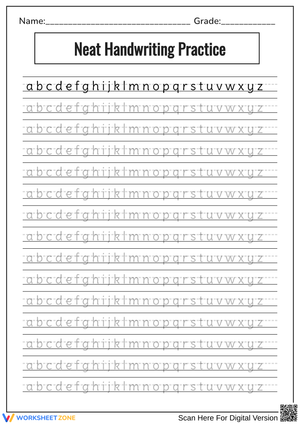
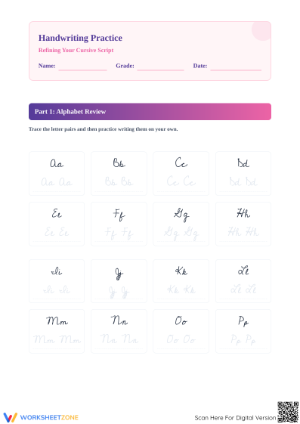
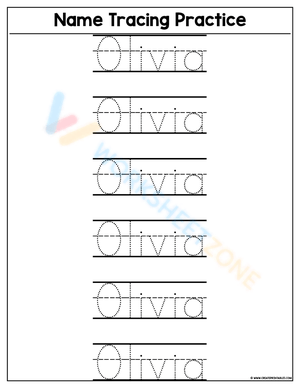
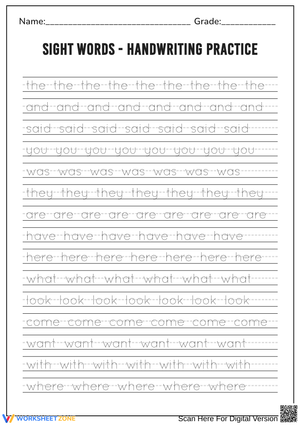
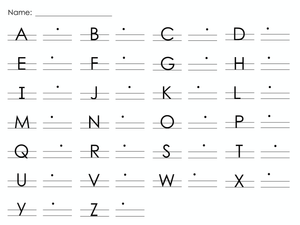
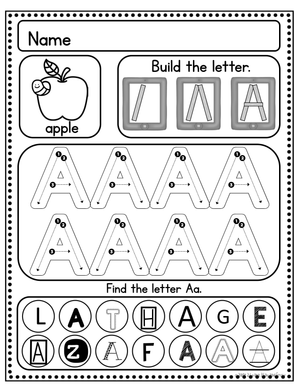
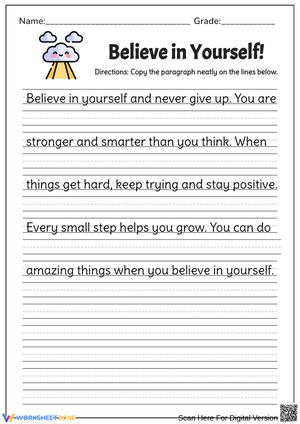
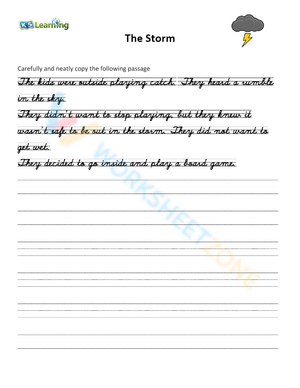
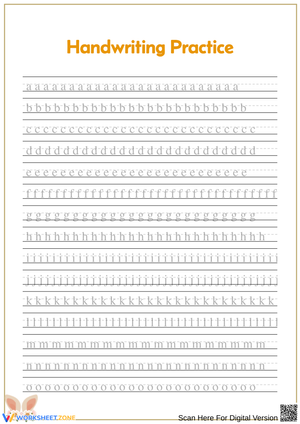
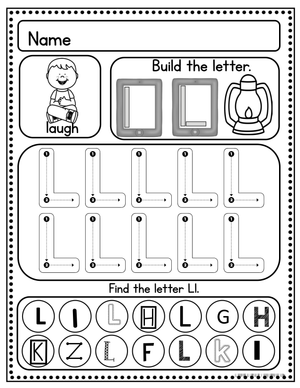
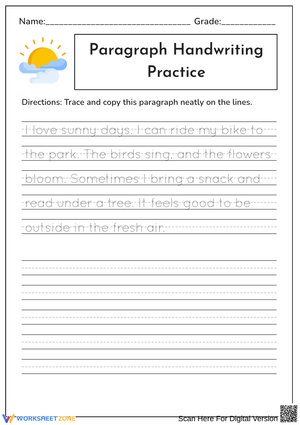
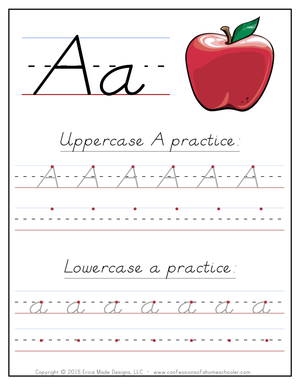
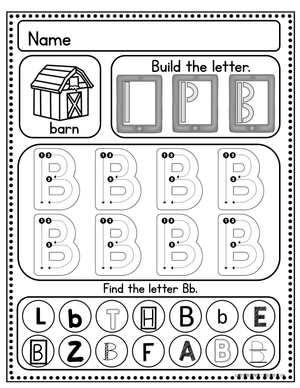
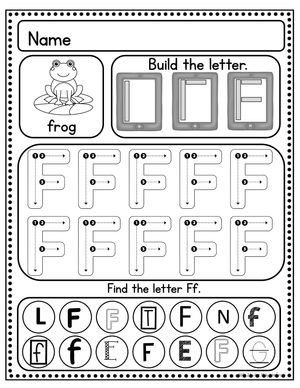
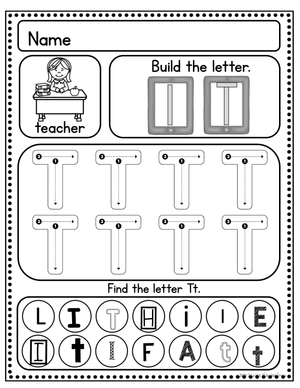
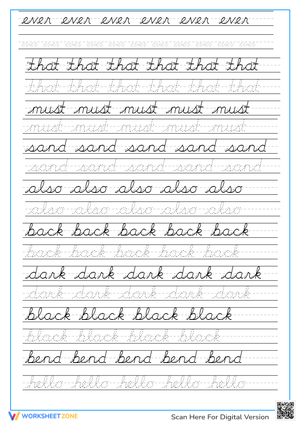
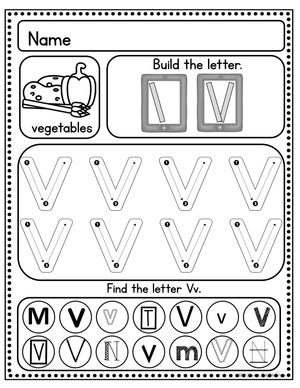
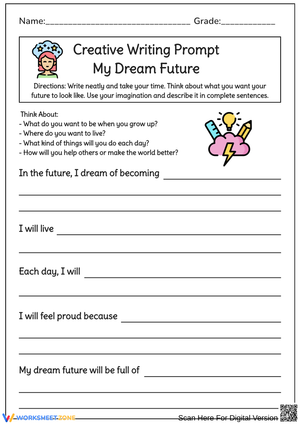
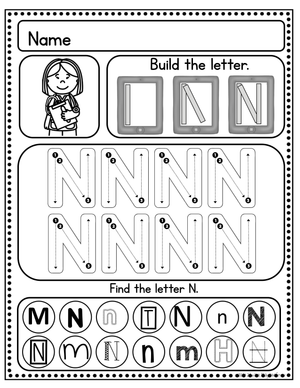
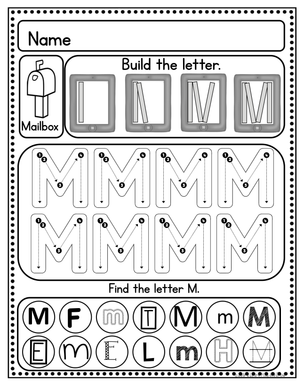
Most handwriting packets move A to Z in order. Handwriting Without Tears worksheets do not. The original curriculum groups letters by how they are formed, starting with frog jump capitals that begin at the top corner and move through similar stroke patterns before mixing in lowercase forms. For a kindergarten or first grade teacher building a worksheet stack, that means the sequence matters as much as the letters themselves.
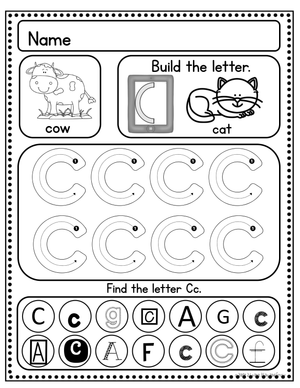
If you are pulling worksheets from multiple sources, sort them by stroke family before you print. Capitals that start at the top and pull straight down or across belong together. Letters that begin with a curve or a frog jump belong in a separate set. Mixing an alphabetical worksheet packet into an HWT-style routine can undo the muscle memory the method is built on, so it is worth spending ten minutes at the start of a unit to re-order your printables by formation group instead of letter name.
Structuring a Daily Handwriting Block Around These Worksheets
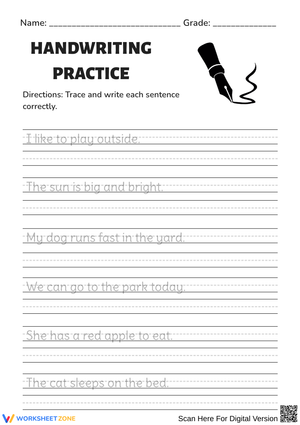
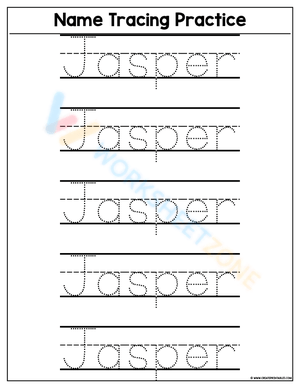
A short, consistent block works better than a long, occasional one. Ten to fifteen minutes a day, five days a week, gives most K-1 students enough repetition to build automaticity without losing attention. Open with a one-minute warm-up using a mat or floor space for whole-body letter formation, then move into the worksheet itself for guided practice, and close with a one-line independent write where students copy a short word or their name.
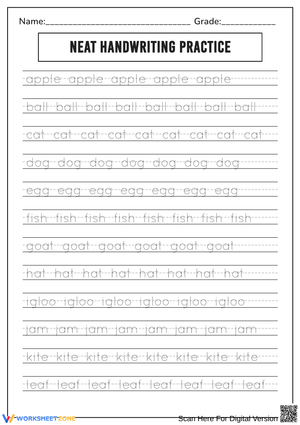
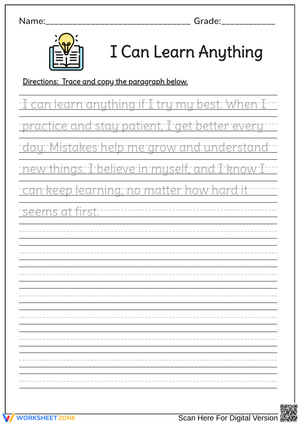
Keep the worksheet portion short on purpose. Two to four lines of a new letter is plenty for a first exposure; asking for a full page tends to produce fatigue and sloppier strokes by the bottom of the page. Save full-page practice for review days once a letter has already been introduced and modeled.
Classroom Implementation
- Sort your worksheet library by stroke formation group before the first week of instruction, not alphabetically.
- Keep daily practice to ten or fifteen minutes with two to four lines of new-letter work, reserving full pages for review.
- Build a simple three or four point legibility rubric and score a sample line every two to three weeks so growth is visible before report cards.
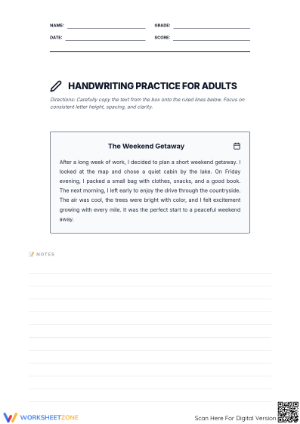
- Stock a range of line widths and grade-appropriate sheets so pre-K, kindergarten, and first grade needs can be met from one shared bin.
- Loop in occupational therapy staff early so push-in support and classroom worksheets stay on the same letter sequence.
Frequently Asked Questions
1. What age or grade level are Handwriting Without Tears worksheets designed for?
The method and its worksheet style are built primarily for pre-K through first grade, with the strongest evidence base in kindergarten and early first grade classrooms, though many special education teams also use the same stroke-based approach with older students who need additional formation practice.
2. How is HWT different from traditional alphabetical handwriting practice?
Instead of teaching letters in alphabetical order, the curriculum groups them by the strokes used to form them, such as frog jump capitals or letters starting at the top corner, which lets students practice a smaller set of motor patterns across several letters at once rather than learning each letter as an unrelated new skill.
3. Can these worksheets be used for special education or occupational therapy intervention?
Yes. Studies on general education classrooms using a consultative HWT approach and studies involving fine motor and visual-motor outcomes both point to the method working well as a small-group or push-in intervention tool, particularly when paired with multisensory steps before the worksheet itself.
4. How often should teachers assign handwriting practice for measurable gains?
Daily short sessions, in the range of ten to fifteen minutes, align with the practice schedules used in the studies showing fall-to-spring score gains, and are more effective than longer sessions held only once or twice a week.
5. Do the worksheets need to be paired with other HWT materials to be effective?
Worksheets alone can support formation practice, but the research base largely reflects classrooms also using the broader multisensory toolkit, such as wood pieces, slates, and whole-body warm-ups, so pairing printable practice with at least one hands-on step before writing is likely to produce stronger results than worksheets in isolation.












 Interactive Worksheet Maker
 Quiz Maker
 Word Search Maker
 Crossword Puzzle Maker
 Word Scramble Generator
 Sentence Scramble Generator
 Handwriting Worksheet Generator
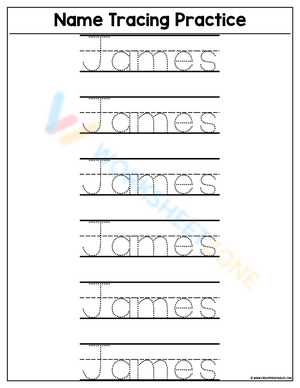
 Name Tracing Generator
 Fill In The Blank Generator