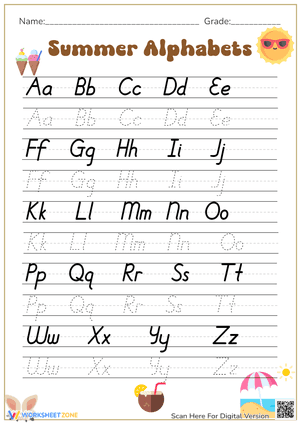
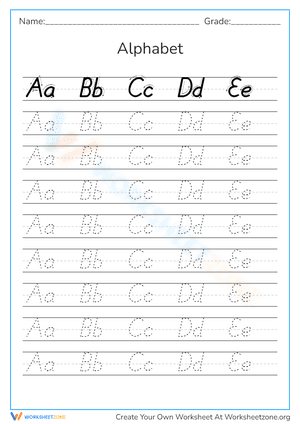
The Role of Handwriting Practice in Early Literacy
According to "The Importance of Handwriting in Early Childhood" from Scholastic, dedicated handwriting instruction is directly linked to higher academic achievement. The research indicates that 60 percent of a student's day involves written tasks, making early mastery essential for long-term classroom success.
Essential Stages of Handwriting Development
It is important to remember that progression through these stages is not always linear. Students may regress slightly when introduced to new challenges, such as writing smaller or transitioning to lined paper. Teachers should continually assess student progress and provide appropriate printable activities that challenge them without causing frustration.
Connecting Handwriting to Spelling and Reading Retention
The physical act of handwriting is deeply connected to broader literacy skills, including spelling and reading comprehension. When children form letters by hand, they activate a specific neural circuit in the brain that is closely associated with reading. This connection means that handwriting practice is not just about producing legible text; it is actively building the brain structures necessary for reading success. Providing high-quality printables ensures that students engage in this essential cognitive work daily.
Recent cognitive psychology research demonstrates that the physical movement required to form letters creates stronger memory traces than typing on a keyboard. When a student physically writes a spelling word, the varied and specific motor actions encode the word more deeply into their long-term memory, leading to a 30 percent improvement in spelling retention over time compared to digital input methods.
As students practice writing spelling words on handwriting worksheets for kids printable pages, they are also reinforcing their phonics knowledge. They must map the sounds they hear to the letters they are writing. This simultaneous engagement of motor, visual, and auditory systems solidifies phoneme-grapheme correspondence. Teachers can maximize this benefit by having students say the sounds of the letters aloud as they write them on the worksheet.
Furthermore, reading comprehension improves as handwriting becomes more automatic. When a student no longer has to dedicate working memory to the mechanics of writing, they can focus entirely on the meaning of the text. They can take better notes, write more detailed summaries, and express their comprehension more clearly.
Therefore, handwriting instruction should never be viewed as an isolated mechanical skill. It is an integral component of a comprehensive literacy program. By utilizing targeted printables, teachers provide the practice necessary to support spelling accuracy, reading fluency, and overall academic achievement.
Classroom Implementation
Rather than isolating writing practice as a standalone subject, effective teachers weave it into various parts of the school day. Morning work is an excellent time to utilize handwriting worksheets for kids printable activities. As students arrive and settle in, a targeted tracing or copying page provides a calm, focused start to the morning while reinforcing essential skills.
Literacy centers offer another prime opportunity for implementation. By setting up a dedicated writing station, teachers can provide differentiated resources tailored to individual student needs. One group might work on uppercase letter formation, while another practices writing full sentences. Rotating thematic printables keeps the center fresh and engaging. For example, autumn-themed tracing pages in October or animal-themed sentence copying in the spring can maintain high levels of student interest.
Small group instruction allows for direct intervention and personalized feedback. During these sessions, teachers can closely observe pencil grip, posture, and stroke sequence. If a student is forming letters from the bottom up, the teacher can immediately correct the habit using a printable worksheet with explicit starting dots. This real-time feedback is invaluable for preventing long-term handwriting difficulties.
Finally, homework assignments can serve as a bridge between classroom instruction and home practice. Sending home a familiar printable activity reinforces what was learned during the day. It also provides parents with a clear understanding of the classroom expectations and gives them a tool to support their child's development. Clear instructions on the worksheet ensure that parents reinforce the correct techniques.
Frequently Asked Questions
1. At what age should handwriting practice begin?
Formal handwriting practice typically begins in preschool or kindergarten, around ages four to five. However, pre-writing activities should start much earlier. Toddlers and preschoolers can develop essential fine motor skills through activities like playing with playdough, threading beads, and scribbling with crayons. When formal instruction begins, it should focus on short, developmentally appropriate sessions using large tracing printables to establish basic strokes before moving on to standard letter formation.
2. What are the benefits of cursive compared to print?
Cursive writing offers several distinct cognitive and practical benefits. The continuous flowing motion of cursive can improve writing speed and reduce the likelihood of letter reversals, such as confusing 'b' and 'd'. It also requires a different type of fine motor control and visual-motor integration, which can further strengthen neural pathways. While print is essential for early reading and basic communication, introducing cursive in the second or third grade provides an alternative method that some students find easier and more efficient once mastered.
3. How can I help students struggling with letter formation?
If a student is struggling, first check their posture and pencil grip, as these foundational elements heavily impact control. Provide targeted handwriting worksheets for kids printable resources that feature large letters, bold guidelines, and clear starting dots. Break down the instruction by grouping letters with similar stroke patterns (e.g., all letters that start with a downward stroke). Finally, incorporate multi-sensory techniques, such as air writing or tracing letters on textured surfaces, before transitioning back to paper-based practice to reinforce the motor pattern.















 Interactive Worksheet Maker
 Quiz Maker
 Word Search Maker
 Crossword Puzzle Maker
 Word Scramble Generator
 Sentence Scramble Generator
 Handwriting Worksheet Generator
 Name Tracing Generator
 Fill In The Blank Generator