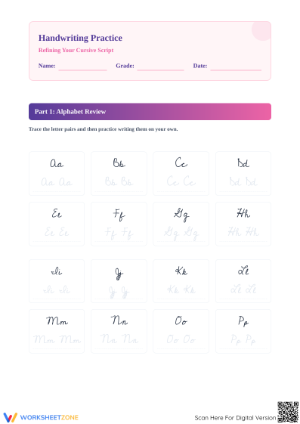
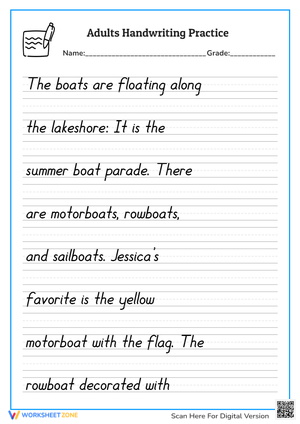
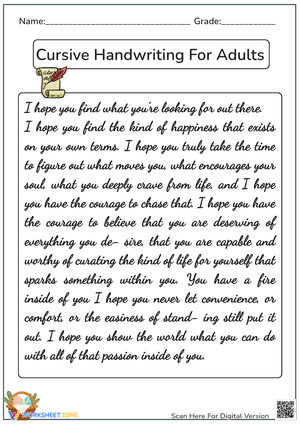
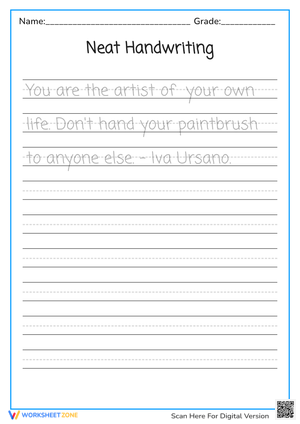
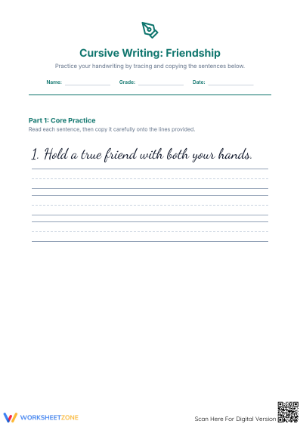
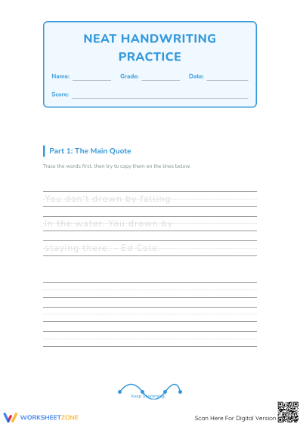
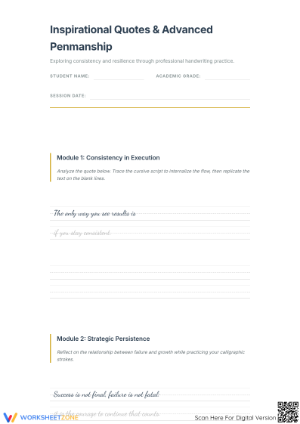
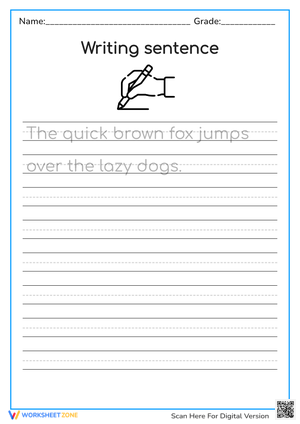
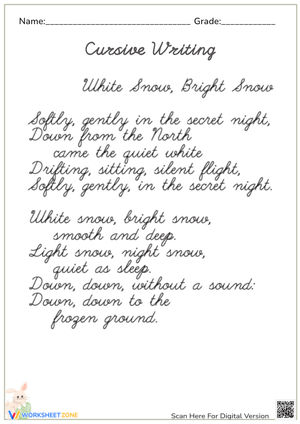
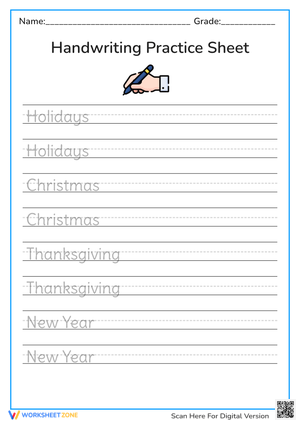
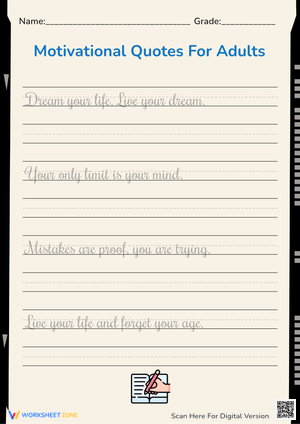
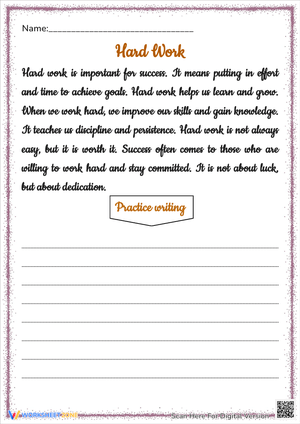
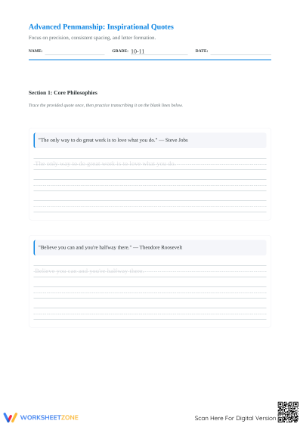
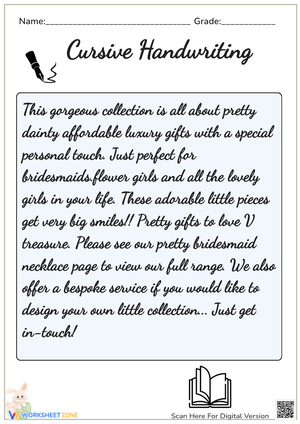
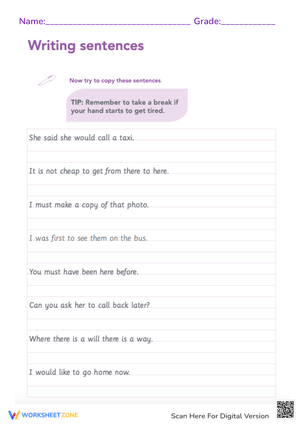
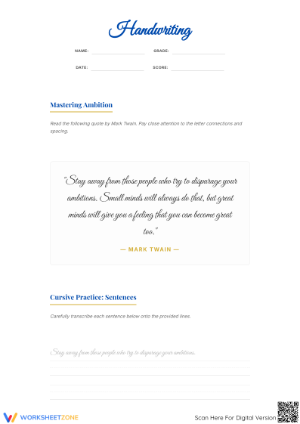
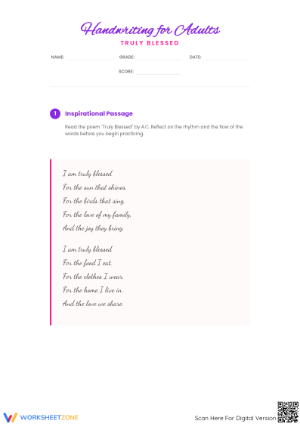
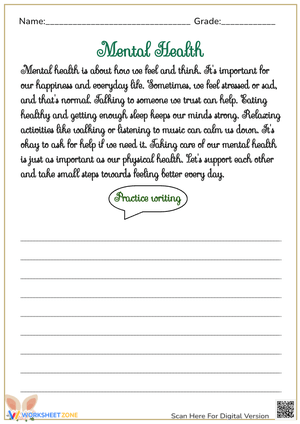
These handwriting worksheets for adults pdf give instructors in adult education, GED programs, vocational training, and community college settings a ready-made progression of penmanship exercises — from motor warm-ups and letter-formation drills to functional writing tasks that mirror real workplace demands.
Skills Covered in These Handwriting Worksheets for Adults
- Stroke warm-up sequences — continuous loops, arches, and wave patterns that rebuild hand-muscle coordination before any letter formation begins.
- Letter-height and x-height consistency — guided baseline and midline exercises that train students to keep lowercase bodies uniform, the single biggest predictor of legible script.
- Slant control — angle-reference grids that help students choose a slant (vertical, 5°, or 10° right-leaning) and hold it across a full page.
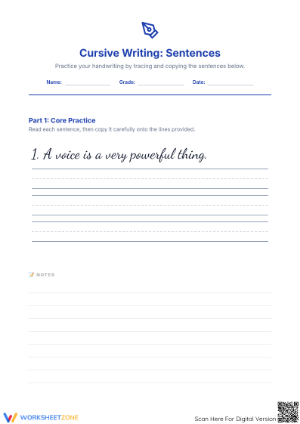
- Connecting strokes for joined writing — isolated drills on entry and exit strokes so cursive transitions feel fluid rather than forced.
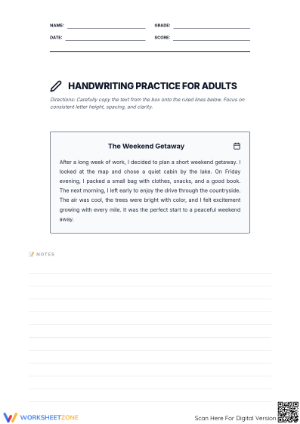
- Functional document tasks — copying address blocks, completing sample form fields, and drafting short professional notes that simulate tasks adults encounter at work or appointments.
- Signature development — blank practice lines with proportion guides for building a consistent, readable personal mark.
Why Structured Practice Works Better at This Level
Adult learners arrive with deeply ingrained motor habits — often years of tense, rushed writing that leaves marks cramped on the right side of each letter and inconsistent in height. A worksheet designed for this population addresses those specific patterns rather than recycling elementary tracing pages that treat the hand as if it has never held a pen. Effective adult penmanship drills separate the skill into discrete components — pressure, rhythm, proportion — so the learner can isolate what is actually going wrong instead of grinding through full sentences hoping improvement happens by repetition alone.
Generic handwriting practice sheets commonly found online fall short in two predictable ways: they either rely on endless alphabet repetition without guiding the learner's eye to a diagnostic target, or they use the same child-directed language and cheerful clip-art borders that many adults find condescending. Worksheets calibrated for mature learners use professional content — memo excerpts, legal signature lines, medical intake phrasing — that makes the connection between improved penmanship and real-world payoff immediately obvious. That relevance is what keeps an adult coming back to a daily fifteen-minute session.
Common Errors These Worksheets Target
- Retracing oval strokes counterclockwise — adults who retrace a and o from the bottom create a thickened left side and a flat top, making letters look like damaged print rather than intentional cursive.
- Variable baseline drop — descenders on letters like g, y, and p extend inconsistently below the line, which disrupts the visual rhythm of a full sentence.
- Grip tension transferring to stroke pressure — heavy pen pressure produces grooves in the paper and causes the hand to fatigue within two or three lines, leading to progressively smaller, more cramped writing by the bottom of the page.
- Ambiguous letter pairs — adult learners frequently conflate n/u and i/e when writing quickly, because the entry and exit strokes are mirror images and speed collapses the distinction.
- Erratic word spacing — gaps between words range from one letter-width to four on the same line, a pattern that signals the writer is not planning ahead to the end of the line before beginning.
- Slant reversal mid-sentence — the first word leans right, later words drift toward vertical or even slightly left, indicating the writer is not using the elbow as a pivot point and is instead steering entirely from the fingers.
Standards Alignment
Adult handwriting practice connects most directly to the College and Career Readiness (CCR) Anchor Standards for Writing, particularly the production and distribution strand, which expects learners to produce writing that is clear and coherent for a range of tasks and audiences. For programs following the National Reporting System (NRS) framework for adult education, legible handwriting supports Level 3 and 4 benchmarks around functional document literacy. Instructors in vocational programs can also tie these materials to workplace readiness competencies outlined by the Secretary's Commission on Achieving Necessary Skills (SCANS), specifically the foundational skill of writing clearly to communicate information in professional contexts.
Test Prep and Formative Assessment Value
A single completed worksheet page tells an instructor a great deal: consistent x-height across all four lines signals that muscle memory is forming; a collapse in letter size toward the bottom of the page points to grip fatigue rather than a knowledge gap; uneven slant that straightens on the final line suggests the student is self-correcting in real time, which means feedback is landing. For programs that include a written-expression component in their exit assessment — such as the HiSET or TASC — legible handwriting directly affects holistic scoring, making these targeted adult penmanship pages a functional bridge between skill-building and test readiness.
Frequently Asked Questions
1. At what point in adult education should handwriting instruction begin?
Introduce a brief penmanship component as early as the first week, even if writing instruction has not formally begun. Early assessment of how a student holds a pen and forms basic strokes reveals motor habits that, left unaddressed, will limit progress in every writing task that follows. A short warm-up routine in the first session also signals that written communication is taken seriously in this classroom.
2. Is cursive or print more useful for adult learners to practice?
Print is the higher priority for most adults because legibility on forms, applications, and official documents is non-negotiable. Cursive is worth adding once print letter shapes are consistent, primarily because connected writing is faster and reduces the pen-lift count — a genuine advantage for someone completing a timed written exam or taking notes during a lecture.
3. How do I help a student who resists handwriting practice because they feel embarrassed?
Frame every session around professional function rather than appearance: the goal is a signature a bank will accept or a form a clinic can read, not beautiful penmanship. Showing students before-and-after samples from other adult learners — not children — normalizes the learning curve and shifts the focus from personal embarrassment to a concrete, achievable workplace skill.
4. Can these worksheets support students with fine motor challenges or disabilities?
Yes, with modifications. Students with reduced grip strength benefit from wider-barrel pens and enlarged worksheet formats; those with tremor-related challenges often find that a weighted pen and slower, deliberate stroke practice improve control more than speed-focused drills. Coordinate with any occupational therapist or disability services contact your program works with before adjusting the approach significantly.












 Interactive Worksheet Maker
 Quiz Maker
 Word Search Maker
 Crossword Puzzle Maker
 Word Scramble Generator
 Sentence Scramble Generator
 Handwriting Worksheet Generator
 Name Tracing Generator
 Fill In The Blank Generator