


























Views
Downloads
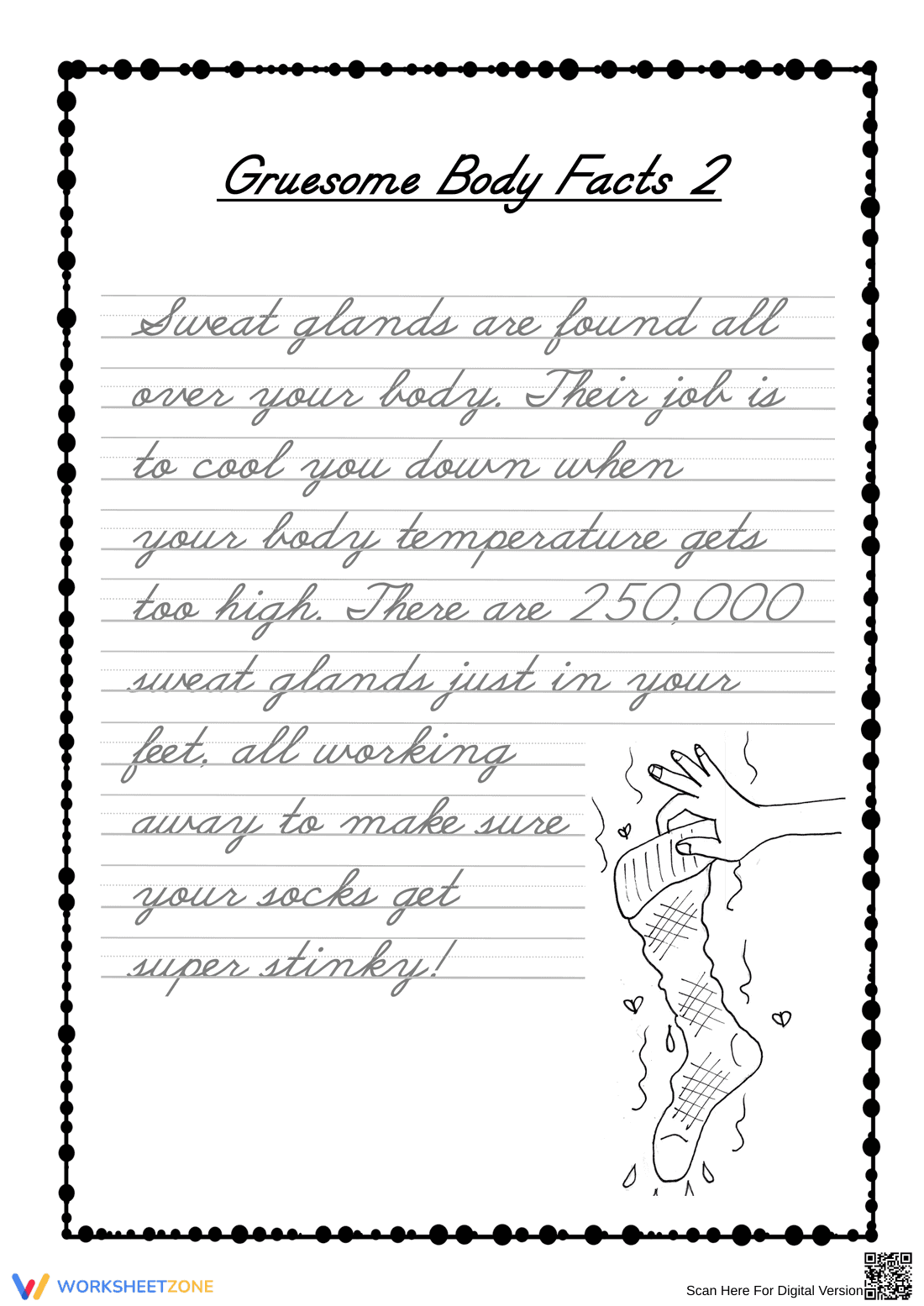

Printable Cursive Practice Worksheet | Grade 3 Science
Paste this activity's link or code into your existing LMS (Google Classroom, Canvas, Teams, Schoology, Moodle, etc.).
Students can open and work on the activity right away, with no student login required.
You'll still be able to track student progress and results from your teacher account.
This cross-curricular handwriting worksheet provides students with engaging cursive practice while introducing fascinating biology facts. By tracing and writing a paragraph about how sweat glands function, third and fourth graders improve their penmanship, build fine motor skills, and reinforce reading fluency with informational science text.
At a Glance
- Grade: 3 · Subject: ELA & Science
- Standard:
CCSS.ELA-LITERACY.W.3.4— Produce clear and coherent writing appropriate to task- Skill Focus: Cursive Handwriting
- Format: 1 page · 1 paragraph · No answer key needed · PDF
- Best For: Morning work or literacy centers
- Time: 10–15 minutes
Inside this single-page resource, educators will find a high-interest science paragraph in clear cursive font on standard handwriting lines. The text explains sweat glands in a fun way that appeals to elementary students. An accompanying illustration adds visual interest for early finishers. The lined format ensures proper guides for letter height, spacing, and slant.
This resource features a zero-prep workflow:
- Print (1 minute): Simply download the PDF and print a class set. The black-and-white design is highly ink-efficient.
- Distribute (1 minute): Hand out the worksheets during morning routines, transitions, or as part of a substitute teacher plan.
- Review (1 minute): Briefly read the paragraph aloud together to ensure students understand the science vocabulary before they begin writing.
Total teacher preparation requires under two minutes, making this an ideal grab-and-go activity for busy educators.
This worksheet aligns with CCSS.ELA-LITERACY.W.3.4: "With guidance and support from adults, produce writing in which the development and organization are appropriate to task and purpose." It also supports cross-curricular connections to Next Generation Science Standards, specifically 4-LS1-1, by discussing internal body structures that support survival. Both standard codes can be copied directly into lesson plans, IEP goals, or district curriculum mapping tools.
Use this cursive sheet as engaging morning work to settle students with a focused task, or as an independent literacy center activity during small group instruction. Formative assessment tip: observe students writing to check for proper pencil grip, fluid connections, and consistent slant. Expect completion in 10 to 15 minutes.
This resource is primarily designed for third and fourth-grade students who have already been introduced to basic cursive letter formation and are ready to practice writing full words and sentences. For differentiation, students who struggle with fine motor control can be provided with a highlighter to trace over the teacher's writing first. This worksheet pairs exceptionally well with a broader life science unit on the human body or a direct instruction lesson on personal hygiene.
Developing fluent handwriting remains a critical component of elementary literacy instruction, even as technology integration increases in modern classrooms. According to a comprehensive RAND AIRS 2024 report on foundational skills, explicit handwriting practice significantly reduces the cognitive load required for transcription, allowing students to allocate more working memory to reading comprehension and content mastery. This worksheet directly supports CCSS.ELA-LITERACY.W.3.4 by requiring students to produce clear and coherent writing appropriate to task. By combining cursive practice with engaging science content about the human body, educators can maximize instructional minutes and foster cross-curricular connections. Regular, brief practice sessions of 10 to 15 minutes have been shown to yield the most substantial improvements in legibility and writing speed, making this targeted, single-paragraph format highly effective for developing automaticity in young writers.


