Why Neat Handwriting Still Earns Class Time
In a classroom full of Chromebooks, it's fair to ask whether handwriting still deserves minutes during the literacy block. For K-3 teachers, the answer is yes. When students can form letters quickly and legibly, they free up working memory for spelling, sentence construction, and ideas. Illegible writing slows drafting, muddies formative assessment, and makes it harder to tell whether a student misunderstood a concept or simply couldn't get it down on the page.
Legible output also protects instructional time you can't get back. When you can read a student's work at a glance, small-group feedback moves faster and conferring stays focused on thinking rather than decoding penmanship. Neat handwriting worksheets give you a structured, repeatable way to build that fluency. The goal isn't decorative penmanship. It's legible, consistent letter formation that a student can produce automatically so their attention stays on the writing task. That's why the strongest practice pages target a specific skill instead of asking children to copy rows without feedback.
The Legibility Factors Worksheets Should Target
Handwriting neatness is not one skill. It breaks down into four measurable factors, and effective worksheets isolate them one at a time:
- Letter formation: starting strokes in the correct place and moving in the correct direction, so letters are built the same way every time.
- Spacing: consistent gaps between letters and words, often the fastest fix for writing that looks messy.
- Sizing: keeping tall letters, short letters, and descenders in proportion.
- Line placement: sitting letters on the baseline and controlling how far they rise or drop.
Research on early elementary writers links legibility directly to fine motor precision, manual dexterity, and visual-motor integration. When you name the exact factor a worksheet trains, you can match the page to the student in front of you instead of assigning generic practice.
How Much Handwriting Practice the Research Supports
Dosage matters more than most schedules assume. Research on handwriting curricula points to roughly 50-100 minutes of instruction per week in grades K-3, delivered in short, frequent sessions rather than one long block. A daily rhythm of 10-15 focused minutes tends to outperform a single 60-minute Friday session because handwriting is a motor skill that improves with distributed repetition.
Here's the practical implication most teachers miss: the reported average of about 70 weekly minutes already sits inside the research range, so the problem is rarely total time. It's distribution and specificity. Five 12-minute blocks aimed at one legibility factor each will move more students than 70 minutes of undirected copying, because each short session gives you a fresh chance to reteach the stroke a child is getting wrong.
National survey research on primary-grade handwriting instruction found that teachers spend an average of about 70 minutes per week teaching handwriting, yet only around 12% report that their college coursework adequately prepared them to teach it, a gap that leaves many classrooms relying on worksheets without a clear instructional plan.
Choosing Worksheets That Do More Than Fill a Page
A worksheet earns its place when it builds in feedback and a clear target. Before you print a set of neat handwriting worksheets, check that each page does at least one of these things:
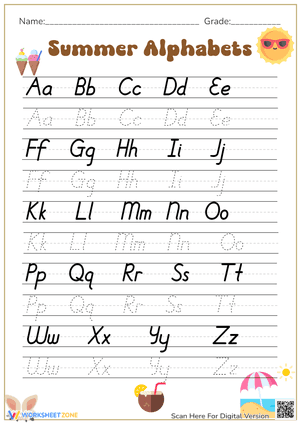
- Models the letter with directional arrows or numbered strokes, not just a faint outline to trace.
- Fades support gradually, moving from tracing to guided copying to independent writing.
- Uses guide lines or a baseline-and-midline format so students can self-check sizing and placement.
- Focuses on a small letter group that shares a stroke, such as c, o, a, and d, so practice reinforces one motor pattern.
One caution worth flagging: tracing alone plateaus quickly. Students can trace a clean letter and still form it incorrectly when the outline disappears, because tracing lets the eye lead without teaching the hand where to start. The best sequences move students off tracing as soon as they can copy from a model, so the motor plan does the work. Rows of the same letter with no model or checkpoint mostly reinforce whatever habit a student already has, including the messy one.
Classroom Implementation
Fold handwriting into routines you already run instead of adding a new subject. A few reliable moves:
- Open the literacy block with a 10-minute warm-up worksheet tied to that week's target letter or spacing goal.
- Say the stroke aloud as students write, 'top, down, lift,' so the verbal cue anchors the motor pattern for the whole group.
- Pair with phonics: practice the letters in the sound you're teaching that day so handwriting reinforces decoding.
- Build in self-assessment: have students circle their single neatest letter on the page, which trains the eye to notice what correct looks like.
Keep sessions short and predictable. Students should know exactly what one thing they're working to improve before the pencil moves.
Using Neat Handwriting Worksheets in Small-Group Intervention
For students with weak fine motor or visual-motor skills, whole-class pages usually aren't enough. Pull a small group and slow the process down. Start with larger writing spaces and heavier modeling, then shrink the guide lines as control improves. Multisensory reps help here: have students trace a letter in the air, on a textured surface, and then on the worksheet, so the movement is stored in more than one channel before they commit it to paper.
Watch pencil grip and posture too. A tight grip or a slumped position undoes even well-designed practice, so a quick reset of feet flat, paper tilted, and relaxed grip before each session pays off. Because kindergartners with weaker spatial relationships and visual-motor integration are more likely to show illegible, slower handwriting by first grade, early small-group practice is genuinely preventive. Targeting these students in the fall with 10-minute daily sessions can keep a formation problem from hardening into a habit.
Quick Progress Monitoring During the Literacy Block
Neat handwriting worksheets double as a fast formative check. Once a week, collect the same short writing sample and score it against the four factors of formation, spacing, sizing, and placement using a simple 1-to-3 scale. You'll see within a few weeks whether a student's spacing is improving even if formation still lags, which tells you exactly what to target next.
Date and keep a couple of samples per student. A quick before-and-after comparison is more persuasive to families and specialists than a general note that handwriting is getting better, and it helps you decide when a student is ready to exit intervention.
Frequently Asked Questions
1. How much time should teachers spend on handwriting practice each week?
Aim for roughly 50-100 minutes per week in grades K-3, split into short daily sessions of 10-15 minutes. Frequent, distributed practice builds the motor pattern more effectively than one long weekly block, since handwriting improves like other motor skills through repetition.
2. What makes a handwriting worksheet effective for improving legibility?
An effective page targets one legibility factor, models the correct stroke, and fades support from tracing to independent writing. Pages that only ask for repeated copying without a model or checkpoint tend to reinforce existing habits rather than correct them.
3. How can teachers use neat handwriting worksheets in intervention?
Pull a small group, use larger writing spaces and heavier modeling, and add multisensory reps like air-writing before students write on the page. Shrink the guide lines gradually as control improves, and reset grip and posture before each short session.
4. What handwriting problems in kindergarten predict later struggles?
Weak spatial relationships and visual-motor integration in kindergarten are linked to more illegible, slower handwriting by first grade. Spotting these students early and targeting fine motor and letter-formation skills can prevent small problems from hardening into habits.
5. How often should students practice with handwriting worksheets to see improvement?
Short daily practice works best. Ten to fifteen focused minutes a day, aimed at one specific factor, typically produces visible gains within a few weeks, faster than sporadic longer sessions that cover everything at once.















 Interactive Worksheet Maker
 Quiz Maker
 Word Search Maker
 Crossword Puzzle Maker
 Word Scramble Generator
 Sentence Scramble Generator
 Handwriting Worksheet Generator
 Name Tracing Generator
 Fill In The Blank Generator