8th grade math pdf worksheets work best when organized by topic — one worksheet for slope and rate of change, a separate one for systems, another for transformations — so teachers can pull exactly the right practice on short notice without editing around unrelated problems. This collection covers the full Grade 8 strand sequence: linear equations, functions, systems of equations, geometry, Pythagorean theorem, exponents, scientific notation, and scatter plots. Every worksheet prints clearly with enough workspace for students to show multi-step solutions, which matters when students are graphing on coordinate planes or writing out equation steps across several lines.
The Grade 8 Content Each Worksheet Targets
Grade 8 is where procedural fluency and conceptual reasoning have to work together for the first time at scale. Students can't just memorize steps — they need to understand why the slope formula produces a rate of change, why two equations with identical slopes never intersect, and why a reflection across the y-axis flips only the sign on the x-coordinate. Each worksheet in this set is built around that dual demand: most begin with direct practice and end with a reasoning prompt or applied problem that asks students to explain or extend their thinking.
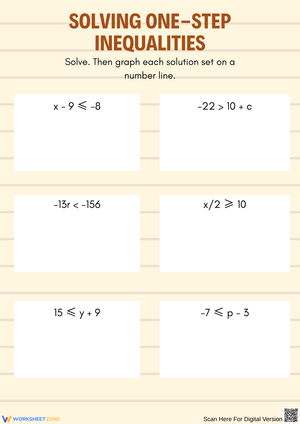
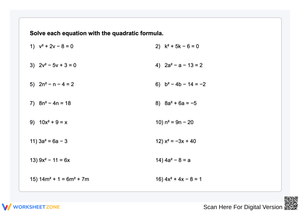
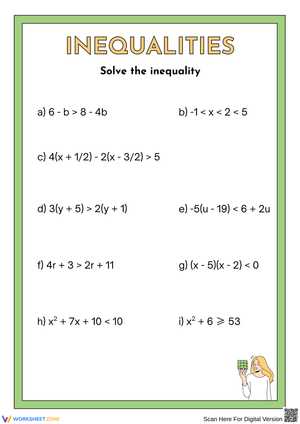
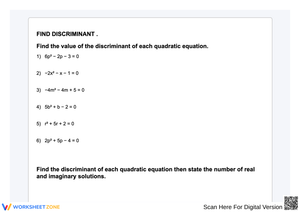
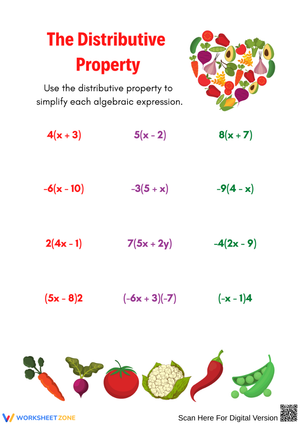
- Linear equations: One-step through multi-step, variables on both sides, distributive property, and word problems with rational coefficients.
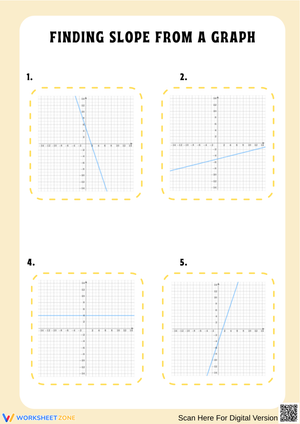
- Slope and rate of change: Calculating from two points, from tables, and from graphs; comparing rates across different representations.
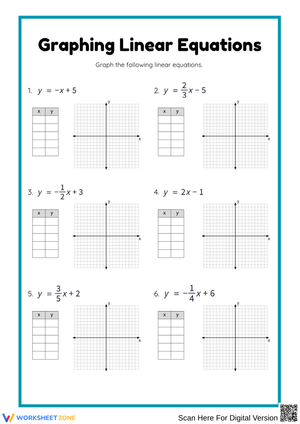
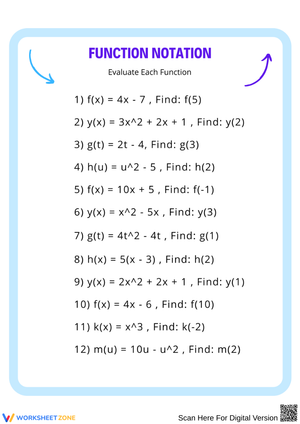
- Functions: Input-output tables, identifying functions from mappings and graphs, graphing linear functions, and comparing two functions given in different forms.
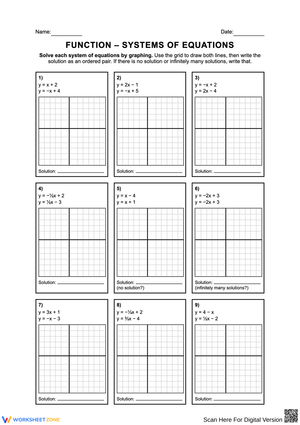
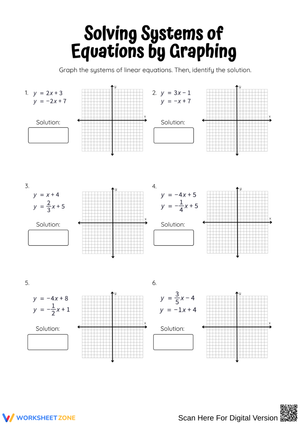
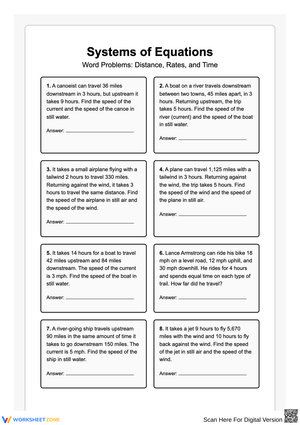
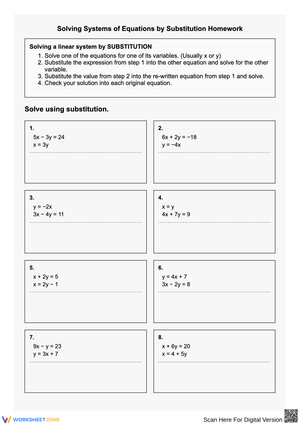
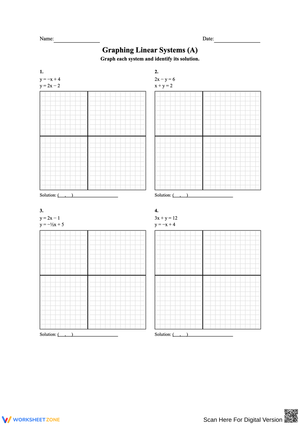
- Systems of equations: Graphing to find points of intersection, substitution, elimination, and interpreting solutions in context.
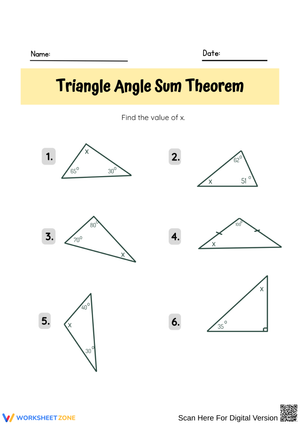
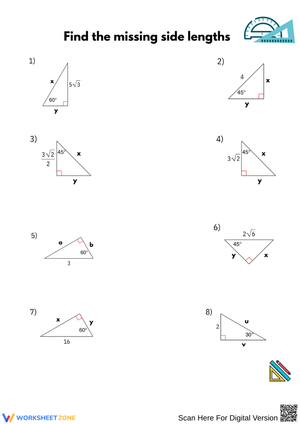
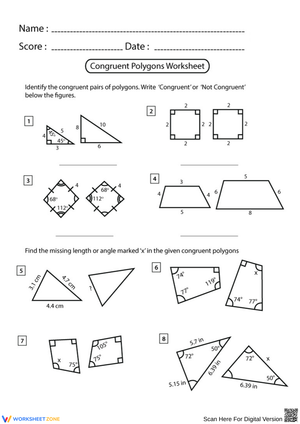
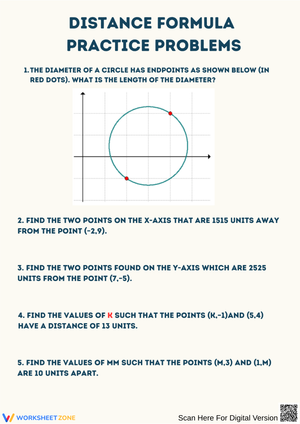
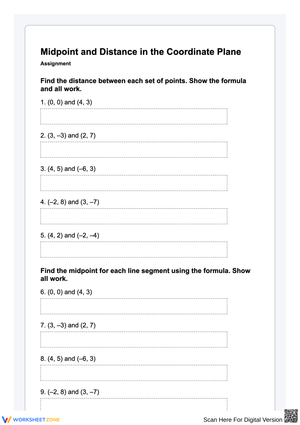
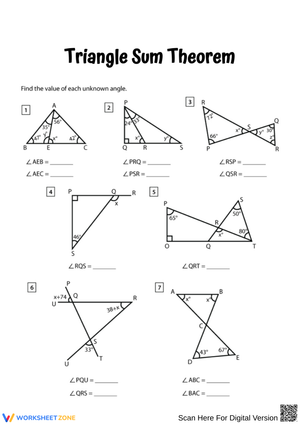
- Geometry and the Pythagorean theorem: Missing side lengths, coordinate distance, angle relationships with parallel lines cut by a transversal, and volume of cylinders, cones, and spheres.
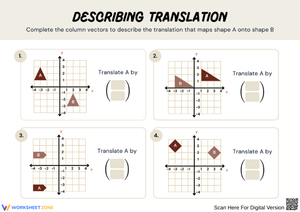
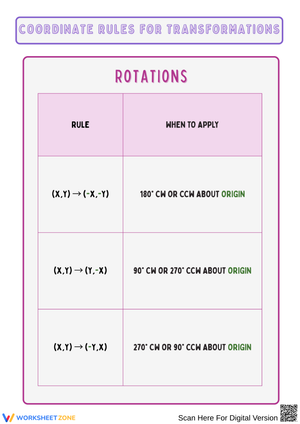
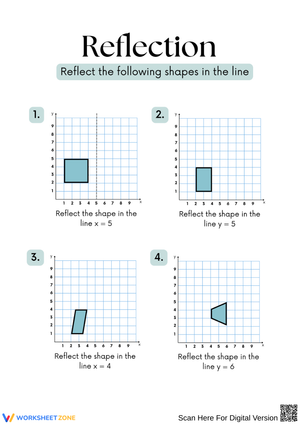
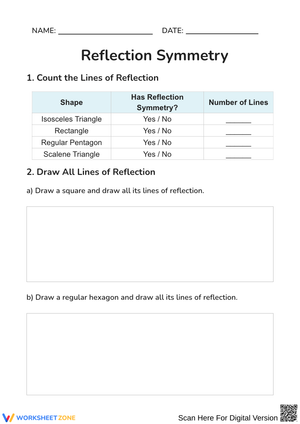
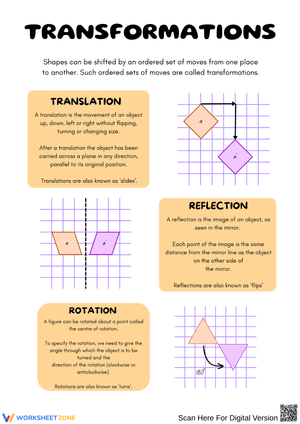
- Transformations: Translations, reflections, rotations, and dilations on the coordinate plane, with congruence and similarity connections.
- Exponents and scientific notation: Integer exponent rules, converting between standard and scientific notation, and operations with numbers in scientific notation.
- Statistics: Constructing and interpreting scatter plots, writing equations for lines of best fit, and reading two-way frequency tables.
Student Error Patterns Worth Anticipating Before They Reach the Test
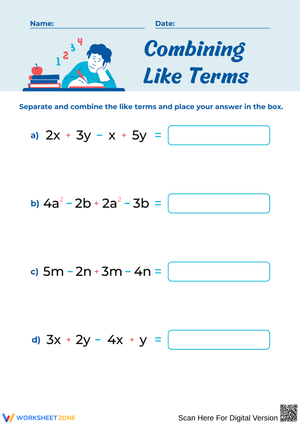
A few mistakes appear so predictably in Grade 8 that you can almost plan around them. The most persistent one in linear equation work: students distribute correctly across the parentheses but then combine unlike terms — writing something like 3x + 5 = 8x by treating a constant and a coefficient term as combinable because they share a recognizable digit. The algebra looks plausible at a glance until the solution doesn't check. Worksheets with enough problems to surface a pattern across several items make this visible before a quiz does.
In systems by substitution, the most common stopping point is one variable too soon. Students substitute an expression correctly into the second equation, solve for that variable, and then hand in x = 4 as a complete answer when the problem asked for an ordered pair. A worksheet with answer blanks labeled x = ___ and y = ___ on every problem enforces the full solution without requiring a separate lecture about it.
Scientific notation errors tend to cluster around direction. Students who fully understand the concept still write 45,000 as 4.5 × 10⁻⁴ rather than 4.5 × 10⁴ because they count the digits correctly but apply the wrong sign rule. A focused worksheet where students convert in both directions — standard form to scientific, then back — interrupts that pattern faster than a homework assignment reviewed a day later.
Fitting These Worksheets Into a Weekly Instructional Rhythm
The most practical structure is to assign one worksheet per class period with a specific purpose attached to each. Monday's warm-up might be three problems from the previous week's topic — a spaced retrieval check before the new lesson begins. Midweek, use the first half of a functions or systems worksheet during guided instruction, then release students to finish the second half independently while you circulate and note who's confused before misunderstandings harden. Friday's session uses a mixed review from the week's content so you know before the weekend whether reteaching is needed on Monday or the class can move forward.
For substitute coverage, 8th grade math pdf worksheets with self-contained directions are far more manageable than open-ended projects. A sub can hand out a Pythagorean theorem or exponent rules worksheet and students know exactly what's expected. Answer keys make post-absence grading fast and reduce the chance that students spend a night practicing errors with no correction.
Exit tickets are another efficient use. Instead of building a separate template, pull two or three problems from the end of whichever worksheet the class used that day — specifically the items that require application or explanation rather than straight computation — and have students complete those before leaving. That gives you formative data on who needs support without adding another document to manage.
Matching Worksheet Version to Student Readiness
Most Grade 8 classes include students still consolidating integer operations alongside students ready for open-ended application problems. A workable approach is to print three versions of the same topic: one with worked examples and a reduced problem count, a grade-level version with standard problem types, and a challenge version that adds error analysis or multi-step reasoning. All three students are working on slope, or transformations, or systems — the learning target stays unified even when the entry point differs.
For students who need additional support, pairing a worksheet with a small reference card — a separate printed strip showing the formula or key procedure — reduces the cognitive demand of holding a multi-step process in working memory while simultaneously computing. This is the same principle behind allowing multiplication table references in earlier grades: when students aren't spending attention retrieving facts they haven't fully automated, more of their thinking goes toward the new skill.
Challenge extensions are often built into the worksheets themselves. A final problem asking students to locate the error in a sample solution, set up a real-world equation before solving, or justify whether a given relationship qualifies as a function gives early finishers a genuine next step rather than more repetition of work they've already demonstrated mastery on.
Standard Alignment
These worksheets align to the Common Core State Standards for Grade 8 Mathematics. Linear equations content addresses 8.EE.7 (solving linear equations in one variable, including equations with rational coefficients and cases requiring the distributive property) and systems practice covers 8.EE.8 (analyzing and solving pairs of simultaneous linear equations by graphing, substitution, and elimination). Function worksheets align to 8.F.1 through 8.F.5, addressing function definition, input-output relationships, linear modeling, and qualitative graph analysis. Geometry and transformation work falls under 8.G.1 through 8.G.5 — covering transformations, congruence, and angle relationships with parallel lines — and 8.G.7 for the Pythagorean theorem. Exponent and scientific notation content aligns to 8.EE.1 through 8.EE.4. Statistics worksheets address 8.SP.1 through 8.SP.4, covering scatter plots, association, lines of best fit, and two-way frequency tables.
In most district pacing guides, expressions and equations run through the first and second quarters, functions and systems occupy mid-year, and geometry plus statistics anchor the final quarter. This set maps directly to that sequence, so teachers can match printable practice to the current pacing calendar without reworking alignment themselves.
Frequently Asked Questions
How many problems should an 8th grade math worksheet include per skill?
For procedural skills — solving equations, converting scientific notation, applying integer exponent rules — somewhere between 12 and 20 problems gives enough items to surface error patterns without dragging into repetition. For conceptual work involving graphs, explanations, or multi-step reasoning, fewer items with more workspace produces cleaner, more complete student thinking. A worksheet that tries to load both skill types into a single assignment often does neither well.
Can these worksheets replace textbook homework assignments?
For focused nightly practice, yes. Most textbook homework sections include more problems than students need and frequently mix too many topics at once, which makes it harder to identify specific gaps the next morning. Assigning one targeted worksheet on the night's skill produces better completion rates and clearer feedback. 8th grade math pdf worksheets organized by topic make that straightforward — teachers assign what matches the day's instruction, nothing more.
What is the most effective way to use these worksheets after a quiz?
Sort returned quizzes by error type before the next class. Students who missed slope problems get a slope-focused worksheet; students who confused reflection and rotation rules get a transformations review. That targeted worksheet, pulled the same day as quiz return, addresses a specific gap rather than running students through skills they've already demonstrated. It turns the quiz into an instructional event rather than just a grade.
Do these worksheets work for intervention settings?
Topic-specific printable worksheets suit pull-out and push-in intervention well because the teacher can match the exact skill to the student's gap. 8th grade math pdf worksheets with fewer items and more workspace are especially practical in those settings — a student still shaky on integer operations doesn't need 25 problems; they need 8 carefully chosen ones with room to show thinking and a teacher present to catch errors as they happen rather than a day later.













 Interactive Worksheet Maker
 Quiz Maker
 Word Search Maker
 Crossword Puzzle Maker
 Word Scramble Generator
 Sentence Scramble Generator
 Handwriting Worksheet Generator
 Name Tracing Generator
 Fill In The Blank Generator