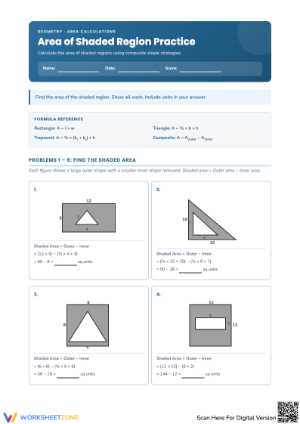
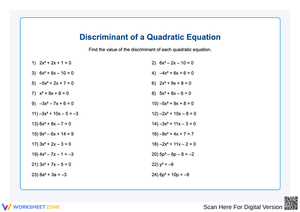
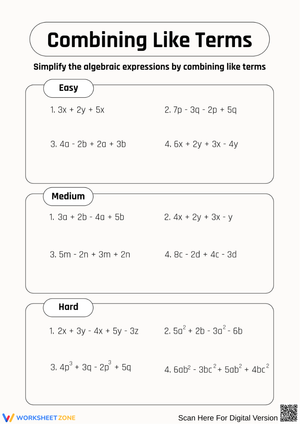
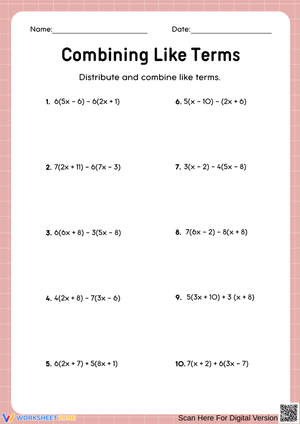
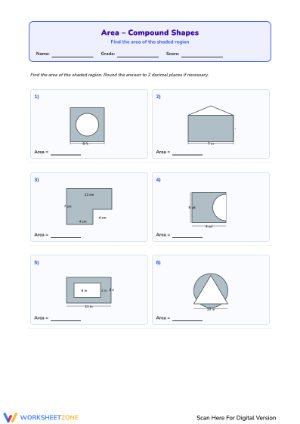
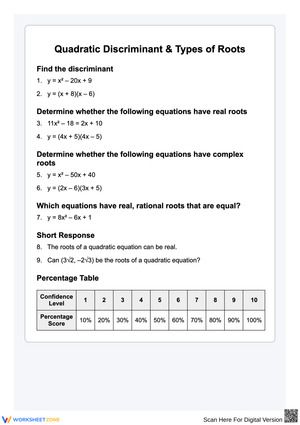
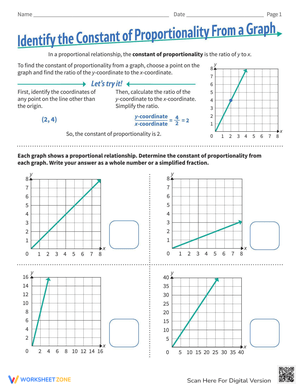
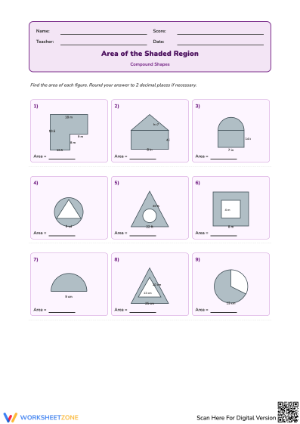
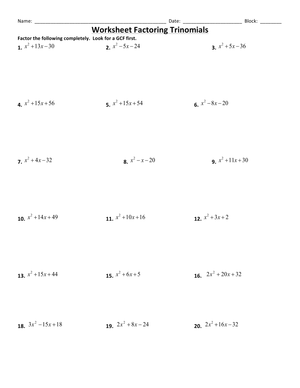
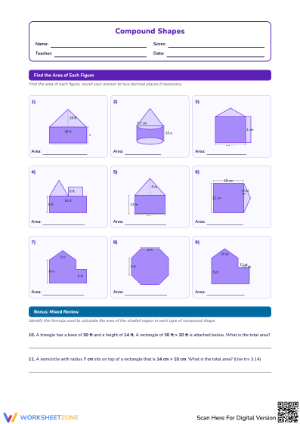
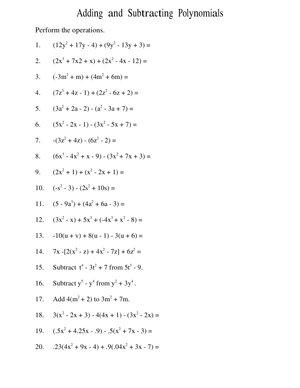
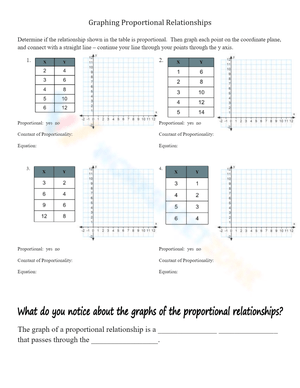
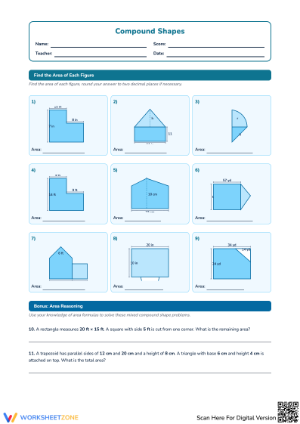
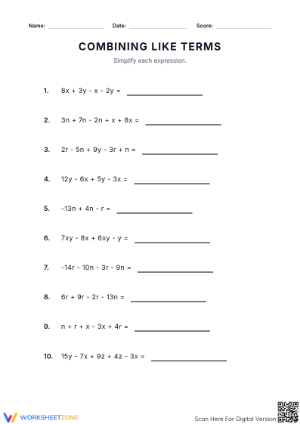
These 8th grade others math pdf worksheets address a specific planning need: ready-to-print, mixed-topic practice that fits almost any part of the school week without requiring teachers to build something from scratch. Each worksheet draws from the full Grade 8 curriculum — equations, functions, geometry, exponents, and data — so students practice real cumulative retrieval rather than repeating a single procedure a dozen times in a row.
Topics Covered in Each Worksheet
Grade 8 math doesn't stay in tidy unit silos once January arrives, and well-built mixed-review worksheets reflect that. The skills that appear across this set include:
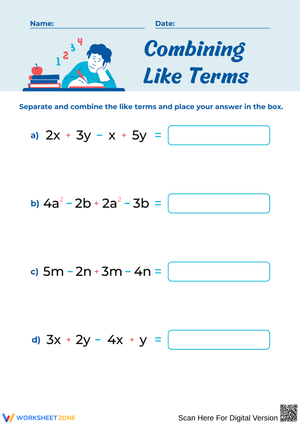
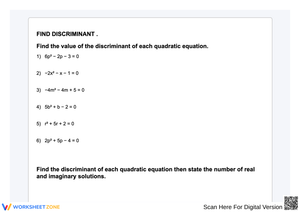
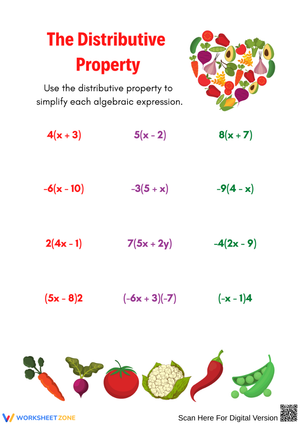
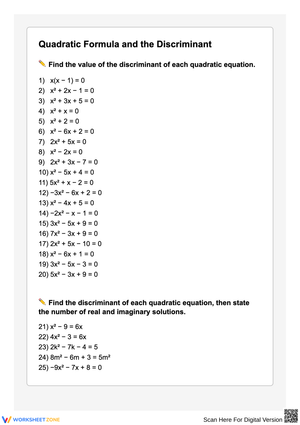
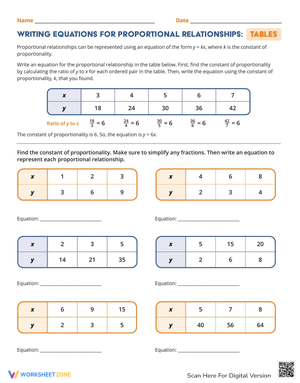
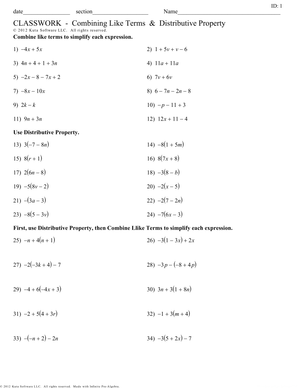
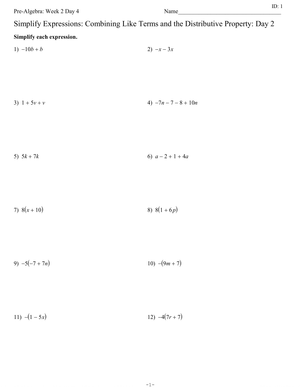
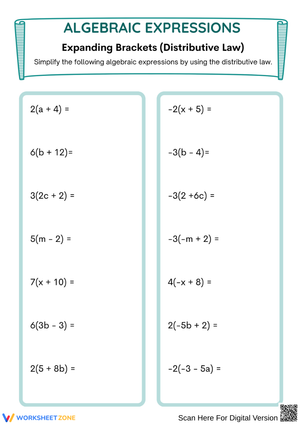
- Equations and expressions — solving one- and two-step equations, simplifying expressions with rational coefficients, equations with variables on both sides
- Functions and linear relationships — reading slope and y-intercept from graphs, tables, and equations; comparing representations; writing linear equations from context
- Exponents and scientific notation — applying product and quotient rules, converting between standard and scientific notation, ordering values in both forms
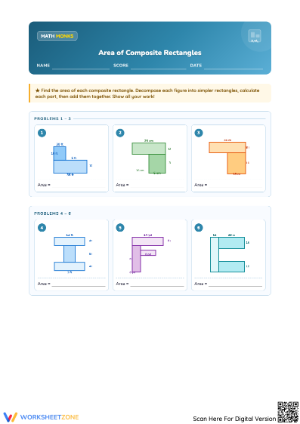
- Pythagorean theorem and geometry — finding missing sides in right triangles, applying the theorem on coordinate grids, calculating volume of cones and cylinders
- Transformations — identifying and describing dilations, reflections, rotations, and translations on a coordinate plane
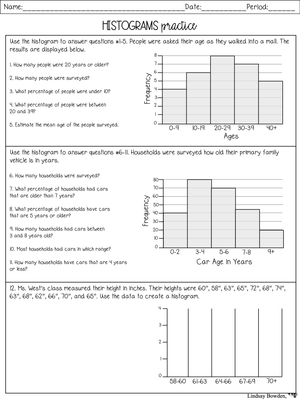
- Statistics and scatter plots — drawing and interpreting lines of best fit, describing association direction and strength, making predictions from a linear model
- Rational and irrational numbers — approximating square roots, placing values on a number line, classifying numbers by type
When a worksheet asks students to solve an equation, then interpret a scatter plot, then apply the Pythagorean theorem in sequence, the shift in cognitive demand is the point. Blocked practice — one skill repeated until it feels manageable — builds a false sense of mastery. Mixed practice builds the flexibility that assessments actually measure.
How to Build These Worksheets Into Your Teaching Week
The most repeatable use is twice-weekly warm-up review. Hand out each worksheet as students arrive, give them eight minutes to work independently, then spend three to four minutes addressing one or two flagged problems before the lesson begins. Within a week the routine becomes automatic — nearly zero daily prep and a consistent read on where students actually stand.
These 8th grade others math pdf worksheets also serve well as intervention materials. When a small group needs support across multiple skills, a single mixed worksheet covers equation solving, graph reading, and geometry concepts in one session rather than requiring separate targeted worksheets for each gap. For an intervention block running only twenty minutes, that efficiency matters.
Sub plans are another reliable fit. Choose worksheets with clear, familiar directions and balanced problem types so students can work independently without a substitute introducing new content. Keep a printed set in a labeled binder and an unexpected absence stops being a planning emergency.
Frequent Student Errors These Worksheets Help You Catch
Scientific notation produces a predictable sticking point when students convert small decimals. A student who writes 6.2 × 10³ = 6,200 correctly will often express 0.0062 as 62 × 10⁻⁴ instead of 6.2 × 10⁻³. The confusion comes from collapsing two separate decisions — moving the decimal point and adjusting the exponent's sign — into one muddled step. They've memorized a direction of movement without internalizing that the sign of the exponent depends on which way the decimal moved.
The Pythagorean theorem produces a classic swap. Most students find the hypotenuse without difficulty. When the hypotenuse is given and a leg is missing, a meaningful portion still adds: given a right triangle with hypotenuse 13 and one leg 5, they compute 5² + 13² = 194 and report √194. The formula was memorized as "square and add" without the conditional logic that distinguishes finding the hypotenuse from finding a leg.
On scatter plots, the most common error isn't identifying the wrong trend — it's drawing the line of best fit through the first and last plotted points rather than through the center of the data cluster. Students end up with a line that passes through actual data points, which feels correct, but the line represents the full dataset poorly. Without an explicit correction, this error persists well past the scatter plot unit.
When reviewing completed work, sorting errors by category — computation, equation setup, misreading a representation, choosing the wrong method — gives more instructional direction than a percentage score. A student who misses four problems for four different reasons needs a different response than one who misses four through the same recurring gap.
Standard Alignment
These worksheets address skills across the four major Common Core State Standards clusters for Grade 8. The primary alignments are CCSS.MATH.CONTENT.8.EE (Expressions and Equations, covering linear equations, systems, and properties of exponents), CCSS.MATH.CONTENT.8.F (Functions, covering function definitions, slope, and linear models), CCSS.MATH.CONTENT.8.G (Geometry, spanning the Pythagorean theorem, congruence through transformations, and volume), and CCSS.MATH.CONTENT.8.SP (Statistics and Probability, including scatter plots and patterns of association).
In most Grade 8 pacing guides, cross-cluster mixed practice becomes most valuable in the second half of the year, once the major domains have been introduced and instruction shifts toward retention and fluency. These worksheets fit naturally into that stretch — particularly the eight to ten weeks before state assessments, when students need practice identifying which skill a problem calls for, not just executing a procedure after being told which one applies.
Adjusting Each Worksheet for a Range of Learners
For students who need more support, two adjustments carry the most weight: reduce the number of active problems and annotate each problem type with the relevant formula or key vocabulary term. A student-built reference card — assembled during earlier instruction, not handed to them — gives struggling learners the prompt they need without eliminating the retrieval demand entirely. Pairing those students to alternate problems also keeps both partners working rather than one watching.
On-level students work through these 8th grade others math pdf worksheets as printed. The variation across problem types keeps the pace from stalling, and the occasional multi-step item creates a natural stopping point for brief whole-class discussion without taking over the work period.
For students ready for extension, the most effective adjustment isn't more problems — it's a justification requirement. Ask a student to solve an equation algebraically and then verify the solution graphically, or write out why their scatter plot line of best fit is more accurate than an alternative they sketch beside it. That kind of reasoning work pushes well beyond correct answers into mathematical explanation.
One genuine limitation worth naming: for students significantly below grade level, the mixed-topic format can create friction that outweighs its benefits. Switching between skill areas amplifies cognitive load in ways that overwhelm students who haven't yet reached fluency in even one of the domains. With those students, working only the problem types where they've had solid recent instruction — and skipping the rest — tends to produce better outcomes than pushing through the full set.
Frequently Asked Questions
What topics should I expect in 8th grade miscellaneous math worksheets?
Well-built mixed worksheets pull from the major Grade 8 clusters: equations and expressions, linear functions, exponents and scientific notation, geometry (Pythagorean theorem, transformations, volume), and statistics. The purpose is cumulative retrieval across connected skills, not isolated unit practice.
How do I work mixed-review worksheets into spiral review without adding to my planning load?
Assign each worksheet as a twice-weekly class opener and hold the routine constant. Students begin working when they sit down, you circulate for five to eight minutes, then address one flagged item as a group before the lesson. Once the routine is established, daily prep drops to almost nothing.
Are answer keys included, and how do I use them for faster feedback?
Answer keys speed up grading and make peer-check and center routines workable. For formative use, ask students to label each missed problem with an error type — computation, setup error, misread the representation — rather than just marking it wrong. That habit turns each checked worksheet into a study tool students can act on before the next assessment.
How do I match worksheet difficulty to different learners?
Sets of 8th grade others math pdf worksheets that include tiered versions — more supported for students below grade level, standard for on-level, and justification-based for advanced learners — give teachers the most flexibility without requiring custom rewrites. When tiers aren't available, adjusting the problem count and allowing a student-built reference card accomplishes most of the same outcome.













 Interactive Worksheet Maker
 Quiz Maker
 Word Search Maker
 Crossword Puzzle Maker
 Word Scramble Generator
 Sentence Scramble Generator
 Handwriting Worksheet Generator
 Name Tracing Generator
 Fill In The Blank Generator