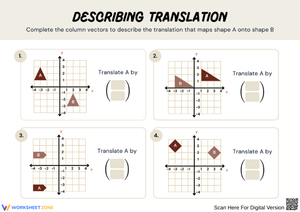
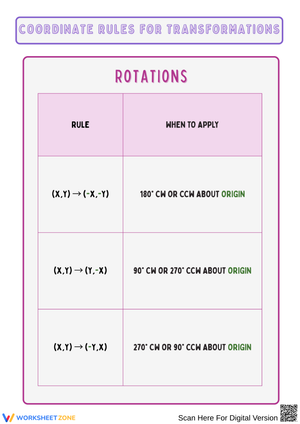
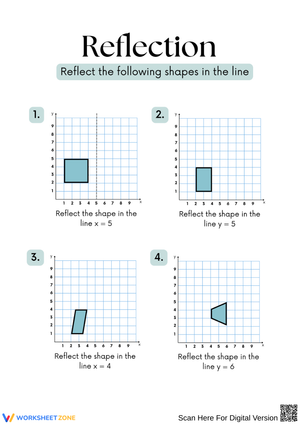
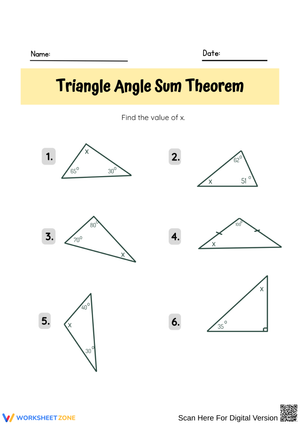
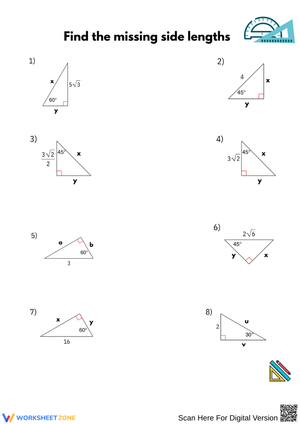
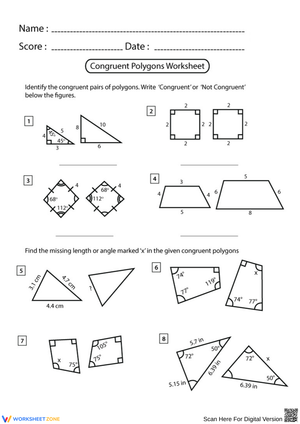
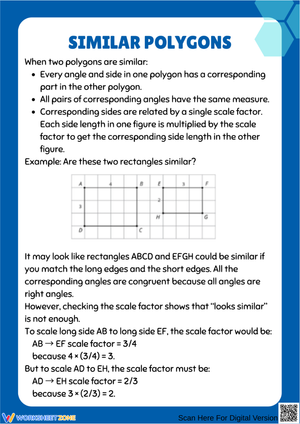
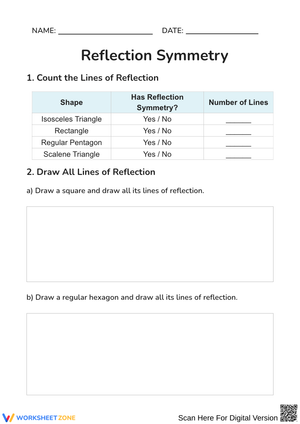
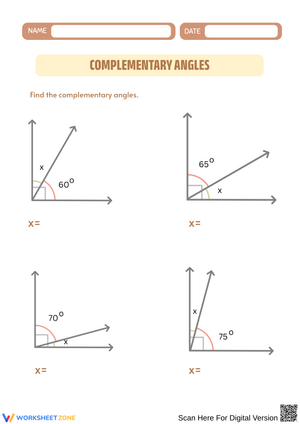
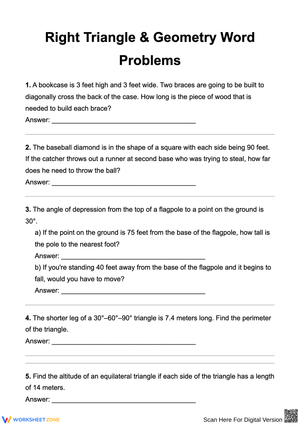
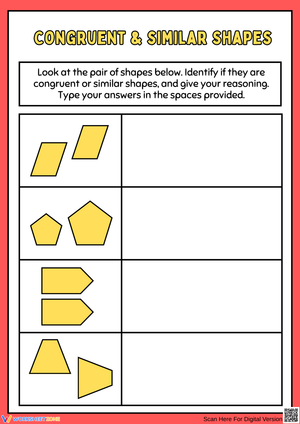
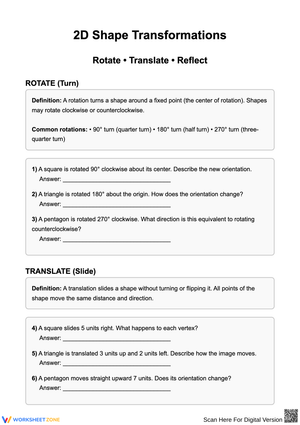
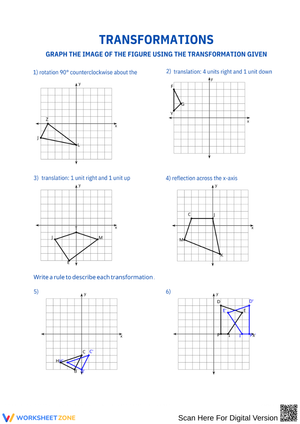
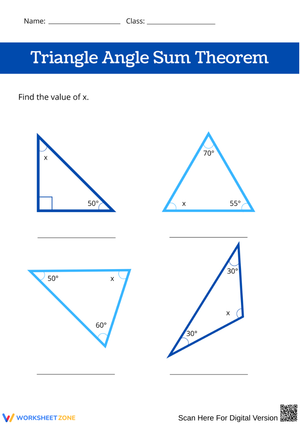
These geometry printable worksheets for 8th grade target the five skill clusters that define the geometry strand at this level: transformations, angle relationships, the Pythagorean theorem, volume of three-dimensional figures, and coordinate-plane reasoning. Each worksheet addresses one of those areas directly, with enough variation in format—diagrams, grids, short written response, multi-step problems—to move from guided instruction to independent practice without printing anything new.
Where Students Go Wrong in 8th Grade Geometry
Three error patterns appear consistently in student work at this level, and knowing them in advance changes how you assign practice.
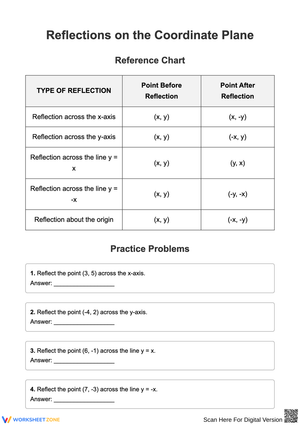
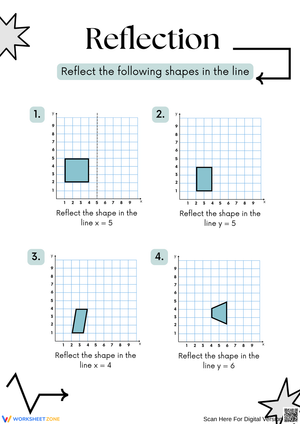
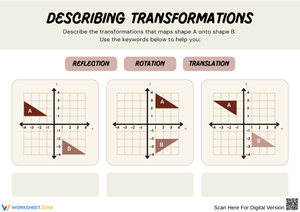
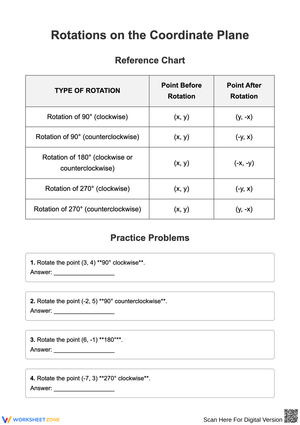
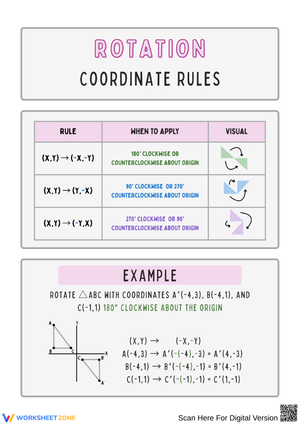
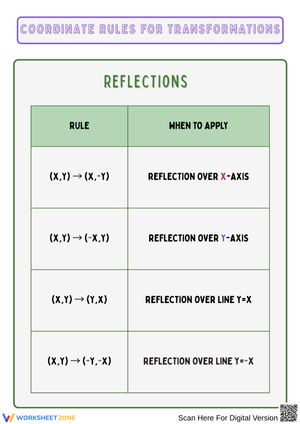
The first shows up in transformations. Students who can draw a reflection over the x-axis by feel will often apply the wrong coordinate rule when asked to write it algebraically—they flip the x-coordinate when reflecting over the x-axis rather than the y-coordinate. These worksheets pair coordinate notation with grid work, which forces students to reconcile the visual move with the algebraic rule rather than relying on one and ignoring the other.
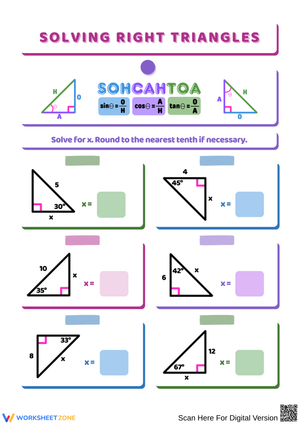
The second is in Pythagorean theorem problems. Many students correctly square the legs and add them, then report that sum as the final answer—skipping the square root because the computation felt finished. This compounds when students reach distance formula work later in the year. Single-step computation items don't expose this error; the worksheets include enough varied problem types that it surfaces before the unit assessment rather than on it.
The third appears in volume. Students who can substitute correctly into the cylinder formula will apply that same formula to cones, dropping the one-third factor because they've encountered it less often. Worksheets that present cylinder, cone, and sphere problems on the same worksheet—without pre-labeling which formula applies—reveal this far more reliably than single-formula practice does.
Skills These Worksheets Build
The set organizes practice into five skill clusters. Within each, the problems move from direct identification and computation toward multi-step reasoning and written explanation.
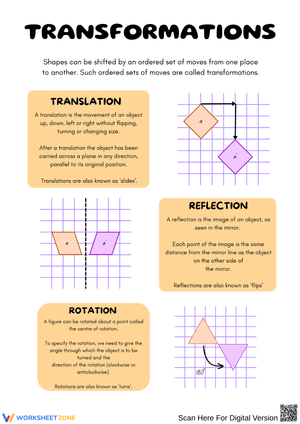
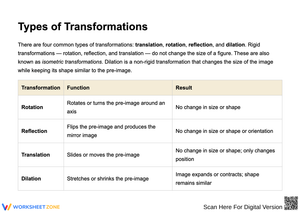
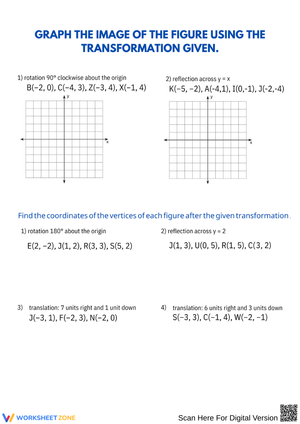
- Transformations and congruence: Students translate, rotate, reflect, and dilate figures on coordinate grids. They identify transformation types from images, write coordinate rules, and compare pre-image to image to determine whether the figures are congruent or similar.
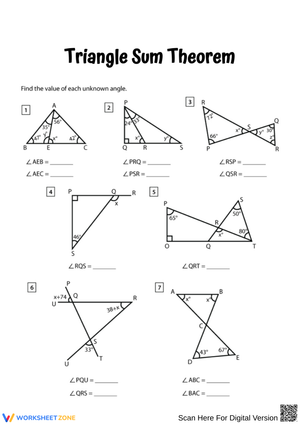
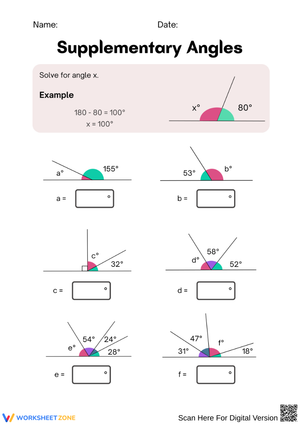
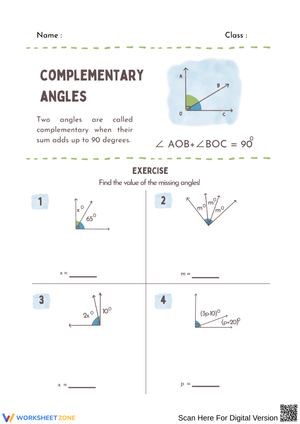
- Angle relationships: Practice includes complementary, supplementary, vertical, and adjacent angles in multi-step diagrams. Students write and solve equations based on angle relationships, reinforcing algebraic thinking inside a geometric context—and laying groundwork for parallel lines and transversal work.
- Pythagorean theorem: Each worksheet in this cluster moves from missing-side computation to distance problems on the coordinate plane and real-world application tasks: the diagonal of a rectangular floor, the height of a ramp, the shortest path between two points.
- Volume of cylinders, cones, and spheres: Problems require both formula recall and formula selection. Some questions supply all the measurements; others embed the figure in a context where students must identify the relevant dimensions before calculating.
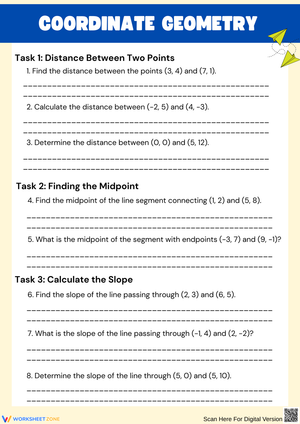
- Coordinate geometry: Students graph figures, apply transformations to ordered pairs, calculate distances, and draw connections between geometric properties and algebraic representations—the kind of integration that shows up consistently on state assessments.
Lesson-Planning Moves That Get the Most From These Worksheets
The most efficient approach is to assign each worksheet a specific instructional role before the week starts. A transformation worksheet used as a Tuesday bell ringer serves a different purpose than the same worksheet used as Thursday's exit check. Deciding the function first—formative check, guided practice, independent application—prevents the common trap of treating every printable as interchangeable homework.
- Monday warm-ups: Pull 3–4 angle relationship or transformation items to rebuild working memory after the weekend. Students tend to retain the visual logic of reflections over breaks but lose the algebraic notation.
- Mid-lesson independent practice: After modeling two or three examples, hand students a focused single-skill worksheet and give them 12–15 minutes to work. Circulate and note where students stall—typically at step two of a multi-step problem, not step one.
- Exit checks: Pull 2 problems from a volume or Pythagorean theorem worksheet. Students who select the right formula and complete the calculation are ready to move on; those who guess the formula or skip the square root are not.
- Friday spiral review: Mix one problem from each skill cluster onto a short mixed review for the last 10 minutes of class. This is where retention gaps—especially the one-third factor in cone volume—reappear most clearly and can be addressed before the unit test.
- Sub plans: Worksheets with answer keys are clear enough for students to work through with a non-math substitute, provided the problems don't rely on assumed prior verbal instruction. These do not.
When the goal is explanation and transfer rather than procedural accuracy, choose a worksheet that includes at least one diagram-based item alongside a short written prompt. Pairing "find the missing angle" with "explain which relationship you used" in the same class period consistently produces stronger retention than repeating either type in isolation.
Standard Alignment
The skills covered in geometry printable worksheets for 8th grade map directly to the 8.G domain of the Common Core State Standards. Transformations and congruence practice aligns to 8.G.A.1 through 8.G.A.5, which ask students to verify properties of rigid motions and reason about angle relationships formed by parallel lines and transversals. Pythagorean theorem work falls under 8.G.B.6, 8.G.B.7, and 8.G.B.8—the last of which specifically addresses distance on the coordinate plane, bridging geometry and algebra in a way that many students find disorienting at first. Volume tasks align to 8.G.C.9. Teachers in states with their own frameworks will find that the underlying progression—from visual transformation to coordinate reasoning to formula application—is consistent with most current grade 8 geometry sequences.
What to Do When Your Class Has Three Different Starting Points
Middle school geometry classes rarely arrive with uniform preparation. Some students are still uncertain on coordinate graphing; others finished 7th grade with solid spatial reasoning and are ready for extension from the first week. The same worksheets can serve both groups when teachers adjust the cognitive demand rather than the topic.
For students who need more support, single-skill worksheets with pre-drawn figures and consistent problem structure reduce enough extraneous demand that students can focus on the target skill itself. A student still building confidence with reflections needs a worksheet where every problem uses the same axis and the same figure orientation—not a mixed set where the visual setup shifts constantly from problem to problem.
For on-level learners, the most productive worksheets combine procedure and brief written response: students find the missing side using the Pythagorean theorem, then label the hypotenuse and write one sentence explaining how they identified it. That keeps the work from becoming purely mechanical without requiring a separate assignment.
When open-ended entry points appear in the set, geometry printable worksheets for 8th grade give teachers something to hand fast finishers that actually extends the math—asking students to construct their own diagrams from ordered pairs before solving, or to determine whether two figures are congruent and justify the answer in writing—rather than simply adding more repetition of the same procedure.
Frequently Asked Questions
Which geometry topics do these worksheets cover?
The set covers the five core areas of the grade 8 geometry strand: transformations (translations, rotations, reflections, dilations), angle relationships, the Pythagorean theorem and its coordinate-plane applications, volume of cylinders, cones, and spheres, and coordinate geometry. Both single-skill and mixed-review worksheets are included across all five topics.
Can these worksheets be used for both instruction and test review?
Yes. Single-skill worksheets support direct instruction and immediate independent practice. Mixed-skill worksheets—particularly those combining angle relationships, Pythagorean theorem, and volume problems—work well as unit review or pre-assessment check-ins. The format stays the same; what changes is which items teachers select and when they assign them.
Do the worksheets come with answer keys?
They do. Answer keys make it practical to use these resources for homework, student self-correction during station rotations, and days when a substitute is covering class. In a period where small groups are rotating, answer-key support lets students verify their work independently rather than waiting for teacher confirmation after each problem.
Are these appropriate for students who are struggling with grade 8 geometry?
For students working below grade level, selecting geometry printable worksheets for 8th grade that target a single skill—paired with brief teacher-led review of the key vocabulary before the worksheet is assigned—makes independent practice significantly more productive. These worksheets do not replace direct instruction, but they give students structured repetition after a concept has been introduced and initial confusion addressed.













 Interactive Worksheet Maker
 Quiz Maker
 Word Search Maker
 Crossword Puzzle Maker
 Word Scramble Generator
 Sentence Scramble Generator
 Handwriting Worksheet Generator
 Name Tracing Generator
 Fill In The Blank Generator