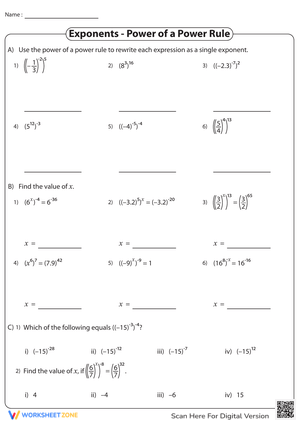
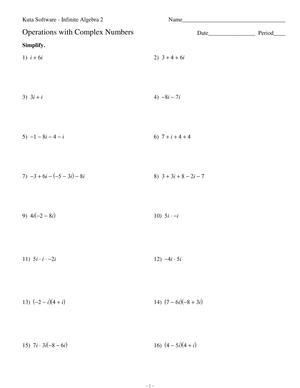
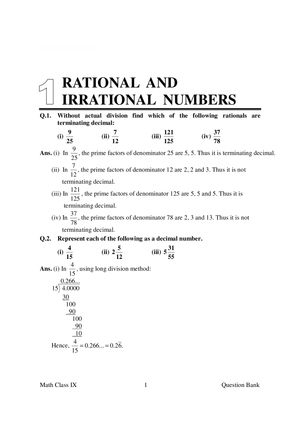
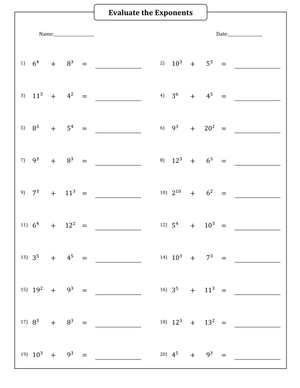
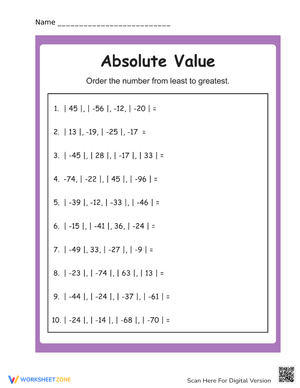
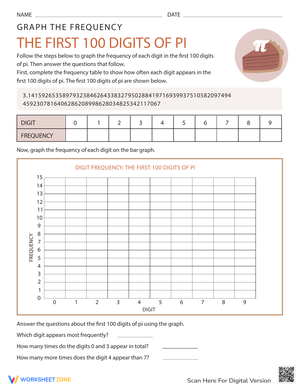
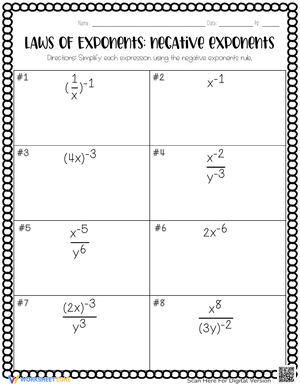
These 8th grade numbers worksheets give teachers print-ready practice across four number domains that define the grade 8 curriculum: rational and irrational numbers, square and cube roots, integer exponents, and scientific notation. Each worksheet targets a single skill or pairs related concepts for mixed review. The set covers what teachers actually need for bell ringers, focused independent practice, intervention groups, and a reliable sub plan.
The Number Skills Each Worksheet Targets
The grade 8 number curriculum asks something genuinely new of students: to move from the rational number system they worked with in grades 6 and 7 into the real number system, which includes values that cannot be expressed as fractions. That transition requires more than vocabulary. Students must classify numbers, place them on a number line, and operate with them — and those three tasks each deserve their own focused practice.
The worksheets in this set address these specific skill areas:
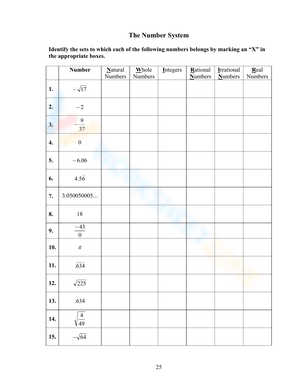
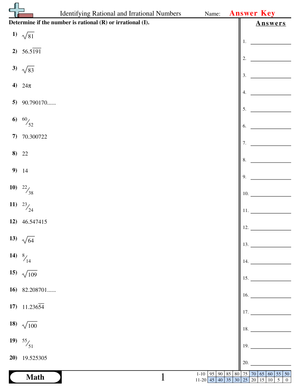
- Classifying rational and irrational numbers: Students sort values, identify whether a decimal terminates or repeats, and explain why numbers like π or √7 belong outside the rational set.
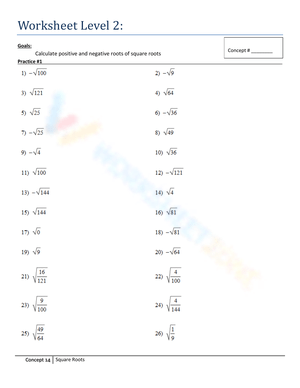
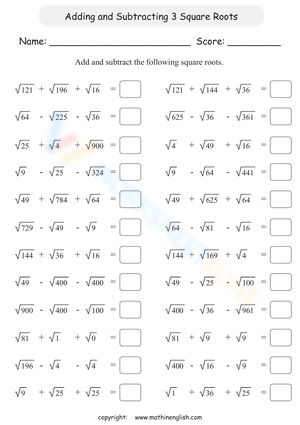
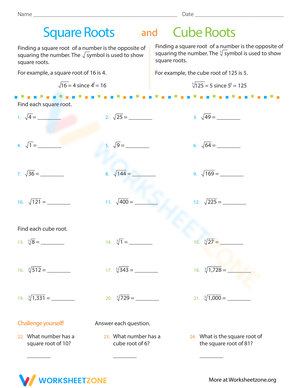
- Estimating square and cube roots: Rather than computing only perfect roots, students locate irrational roots between consecutive integers and refine estimates to the tenths place — including placement on a number line.
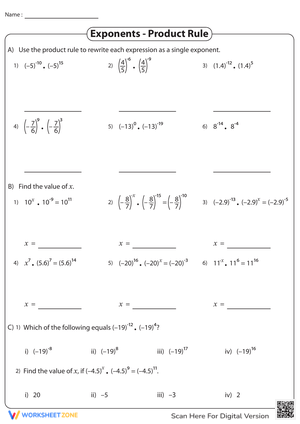
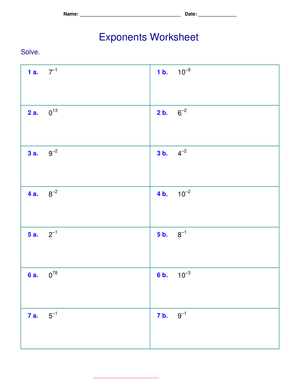
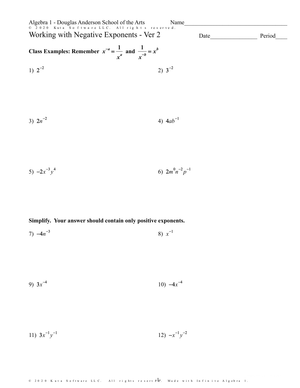
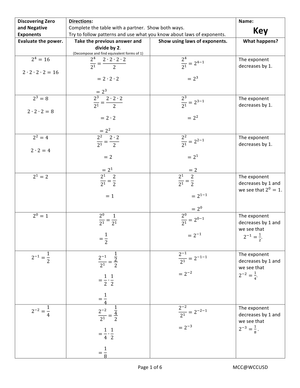
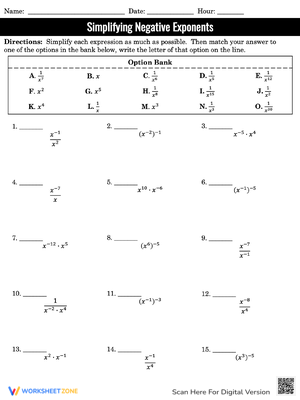
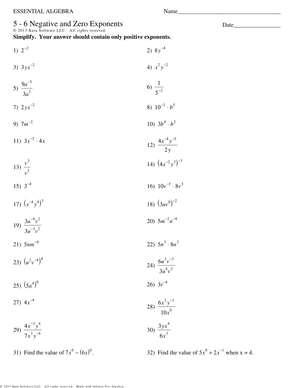
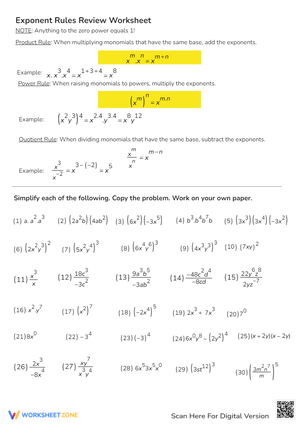
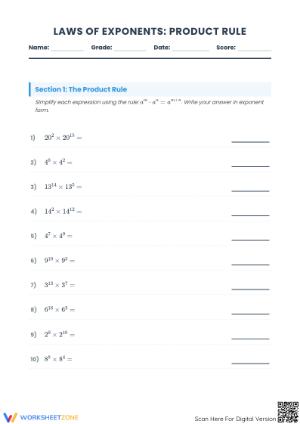
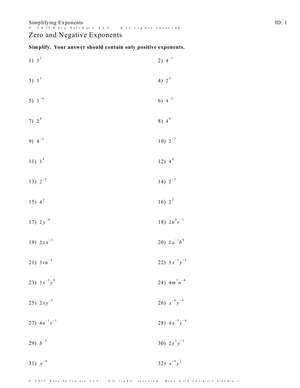
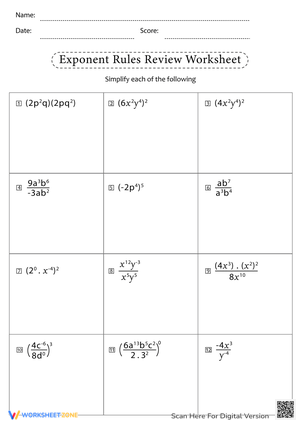
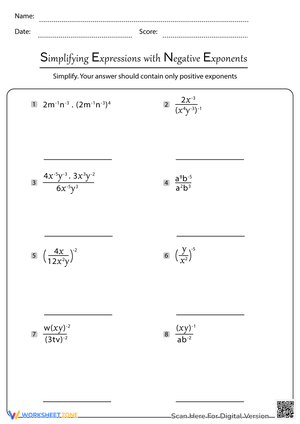
- Evaluating integer exponents: This covers positive and negative exponents, zero exponents, and recognizing the repeated-multiplication structure that underlies the notation rules.
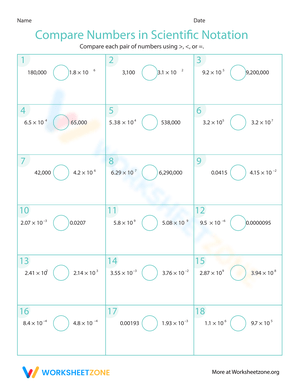
- Working with scientific notation: Students convert between standard and scientific form, order numbers written in both forms, and solve short contextual problems involving very large or very small quantities.
- Mixed number review: One worksheet combines all four skill areas, which makes it particularly useful for revealing gaps before a unit assessment.
The Errors These Topics Reliably Produce
On the rational/irrational classification worksheets, the most consistent mistake involves decimal representation. Students who correctly identify 1/3 = 0.333... as rational will still mark √2 ≈ 1.414... as rational "because you can write it as a decimal." The distinction they miss is that a decimal expansion only proves rationality when it terminates or repeats with a fixed pattern. Worksheets that require a written justification — not just circling an answer — surface this error faster than any multiple-choice format.
On the root estimation worksheets, the most common wrong move is halving. Asked to estimate √50, students frequently write 25, treating the radical as division. The fix is to have them mark perfect squares on a number line first — √49 = 7, √64 = 8 — then decide where √50 lands. That sequence takes about 90 seconds with a number line visual, and it reorients the thinking from arithmetic shortcut to magnitude comparison.
With exponents, the negative exponent error is nearly universal early in instruction. Students read 2^(-3) as −8 because the notation looks negative. Getting students to write the repeated-multiplication meaning before applying any rule is the reliable fix, and the exponent worksheets build that step in rather than jumping straight to rule application.
Scientific notation produces a coefficient error in the other direction. Students who correctly convert 3.5 × 10^4 to 35,000 will then write 62 × 10^(-5) when converting 0.00062 to scientific notation, rather than the correct 6.2 × 10^(-4). The constraint that the coefficient must be at least 1 and less than 10 drops out of memory when the original number is small. Worksheets that pair a standard-to-scientific conversion directly below a scientific-to-standard conversion reinforce both directions at once.
Where These Worksheets Land in a Real Lesson Cycle
In a 50-minute class period, the tightest use for these resources is a four-problem retrieval warm-up drawn from the prior lesson's worksheet — not new material, just a quick recall check before the day's instruction begins. After the mini-lesson, the corresponding focused worksheet gives students 12 to 15 minutes of independent practice while the teacher circulates. The errors visible during that window are the errors worth addressing before students leave. Used this way, the worksheet functions as a formative checkpoint, not an assignment to collect and return days later.
For stations, one worksheet per table works well when the task is self-explanatory. The scientific notation worksheet and the root estimation worksheet are the easiest to station without a teacher present because both have short directions and worked examples at the top. The rational/irrational classification worksheet benefits from a brief whole-class setup before students rotate, particularly around the justification column.
For homework, a range of 8 to 10 problems is more productive than a longer set. Students assigned too many items tend to match the pattern from item 1 and apply it mechanically through the remaining problems, skipping the actual thinking. Shorter assignments with one written explanation at the end produce more honest independent work. The mixed-review worksheet draws from all four skill areas, which makes it better suited as a pre-assessment or in-class review than as a nightly homework assignment.
The 8th grade numbers worksheets in this set also hold up well as sub plans. Each worksheet includes a worked example and a full answer key, so a substitute can run a reliable class period without content expertise. That matters for a topic like irrational numbers, where informal or incorrect explanation from a non-specialist can undo recent instruction.
Standard Alignment
These worksheets align to the Common Core State Standards for Grade 8 Mathematics within the Number System (8.NS) and Expressions and Equations (8.EE) domains.
- 8.NS.A.1 — Know that numbers that are not rational are called irrational. The classification worksheets address this standard directly, asking students to sort values and justify placement rather than simply label them.
- 8.NS.A.2 — Use rational approximations of irrational numbers to compare sizes and locate them on a number line. The root estimation worksheets build this skill through placement tasks before students verify with a calculator.
- 8.EE.A.1 — Know and apply the properties of integer exponents. The exponent worksheets begin with the repeated-multiplication meaning before moving into rule-based shortcuts.
- 8.EE.A.3 and 8.EE.A.4 — Use numbers expressed as a single digit times an integer power of 10, and perform operations with numbers in scientific notation. The scientific notation worksheets cover both conversion and computation, including contextual problems.
Teachers in states with non-CCSS frameworks will find that these same concepts appear under equivalent number strand standards at the 8th grade level, typically in the same instructional sequence — real numbers first, then roots, then exponents and notation.
Reaching Different Learners With the Same Set
The most practical differentiation move with these 8th grade numbers worksheets is not creating separate versions — it is assigning different stopping points on the same worksheet. Every student completes problems 1 through 6. Students who finish early continue to items 7 through 10, which include extension tasks: writing an explanation, generating a counterexample, or placing values in order on a number line without a calculator. The teacher works with a small reteach group during the same window. This keeps materials simple, avoids the visible tracking that comes from distributing obviously different worksheets, and makes differentiation manageable during a full class period.
For students who need more structured support, a printed number line alongside the root estimation worksheet gives a concrete anchor for estimation tasks. A reference card showing that a^(-n) = 1/a^n helps students who understand the concept but need notation support to work independently. The goal is to reduce cognitive load on the symbolism so students can direct their attention to the mathematical reasoning — not to remove the challenge of the problem itself.
Advanced students find the scientific notation worksheet extends naturally into estimation problems involving real-world quantities — the mass of a proton, the distance between galaxies — where the task becomes choosing the right magnitude and rounding appropriately. These extensions work as verbal additions without reprinting anything.
Frequently Asked Questions
Which worksheets work best as a starting point if I'm only selecting a few?
The rational and irrational number classification worksheet and the root estimation worksheet address the concepts students find most unfamiliar at the start of a grade 8 number unit. Both reveal conceptual gaps quickly, especially when students must justify their answers in writing. The scientific notation and exponent worksheets land better once those foundations are in place.
Do the worksheets include answer keys?
Each worksheet in the set includes a complete answer key. For classification and estimation tasks, the keys include brief reasoning notes — not just final answers — so teachers can identify where a student's thinking went wrong, not only whether the answer is correct.
Can these worksheets support students who need reteaching after a unit test?
The focused single-skill format makes the set well-suited for that purpose. When a student misses most of the exponent problems on a unit test, assigning only the relevant worksheet and asking them to complete the first six items before a brief teacher check-in is more effective than re-teaching the entire unit. The 8th grade numbers worksheets in this set were built with that kind of targeted reteaching in mind.
Are these worksheets useful for 7th grade advanced students or 9th grade review?
The content maps to grade 8 CCSS standards, but the skill range makes the set flexible at both edges. Advanced 7th graders moving into the real number system will find the classification and estimation worksheets appropriate. Ninth graders arriving without firm exponent or scientific notation fluency can use the focused worksheets as a compact review — the problems are grade-appropriate in context and presentation, not remedial in appearance.













 Interactive Worksheet Maker
 Quiz Maker
 Word Search Maker
 Crossword Puzzle Maker
 Word Scramble Generator
 Sentence Scramble Generator
 Handwriting Worksheet Generator
 Name Tracing Generator
 Fill In The Blank Generator